TLP:CLEAR · Disclosure is not limited.
Ukraine Faces Major Russian Airstrike with Heightened Civilian Casualties
Time window: Last 1 day · Audience: General analyst · Type: Situation report · DTG: 2026-07-02 14:48Z · Overall confidence: MEDIUM
BLUF
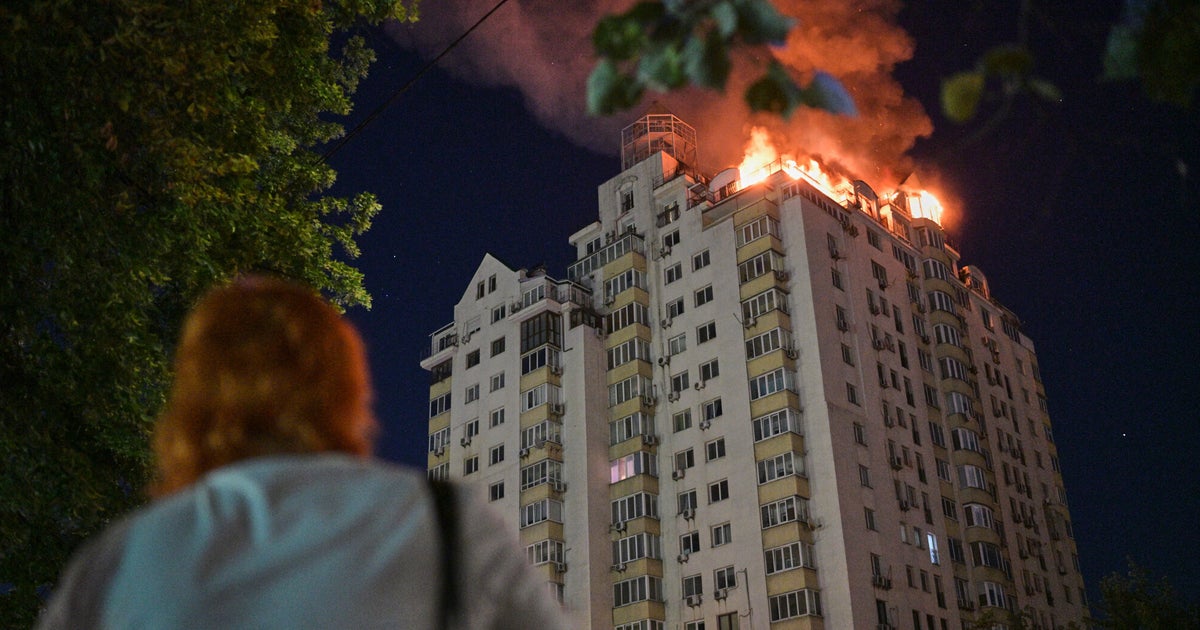
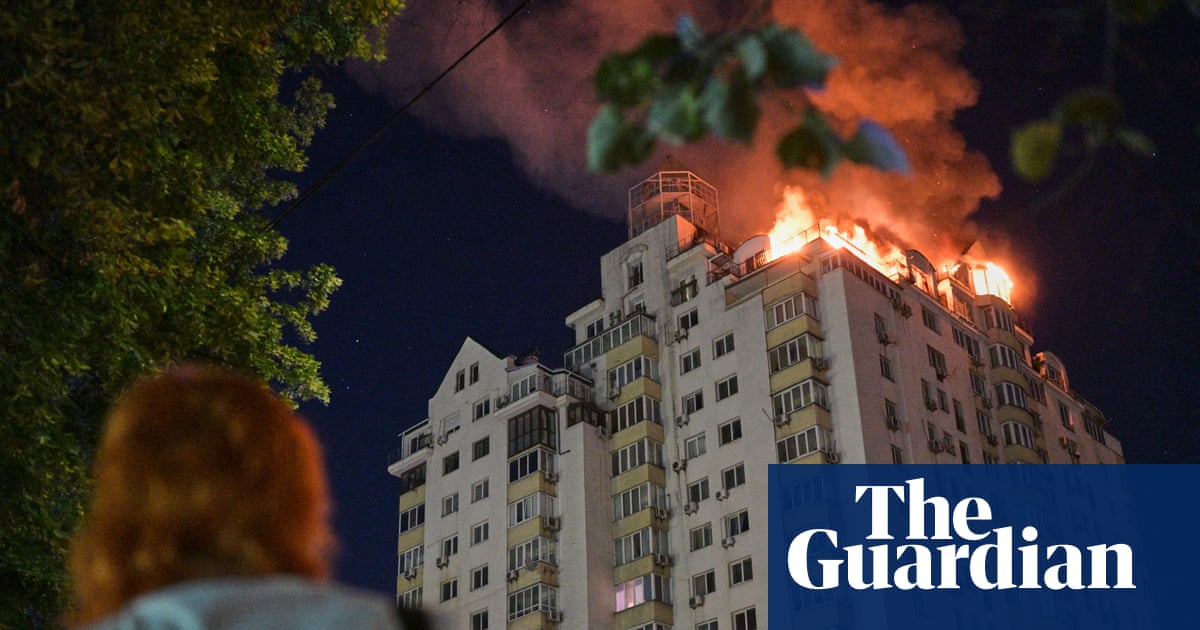
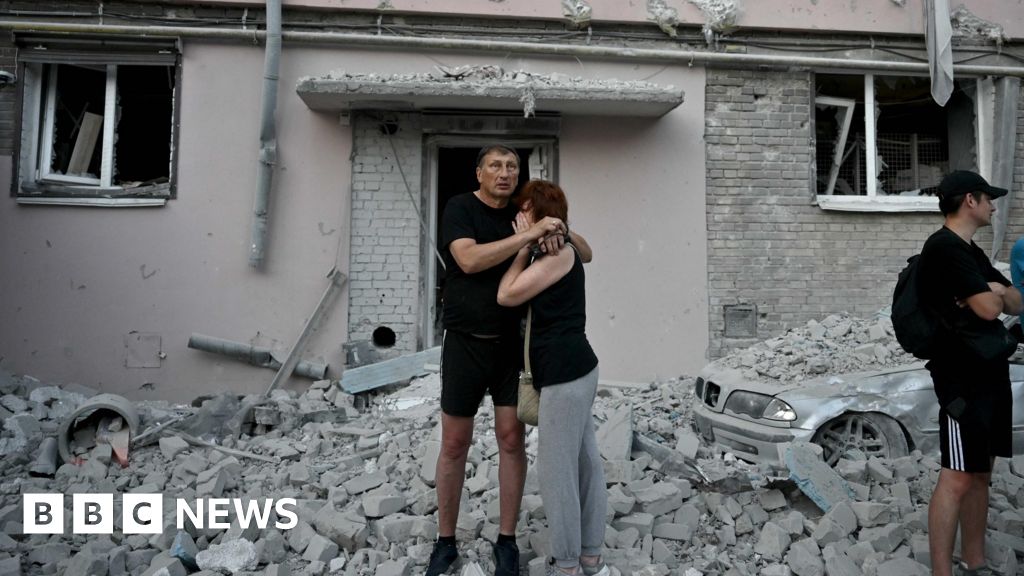
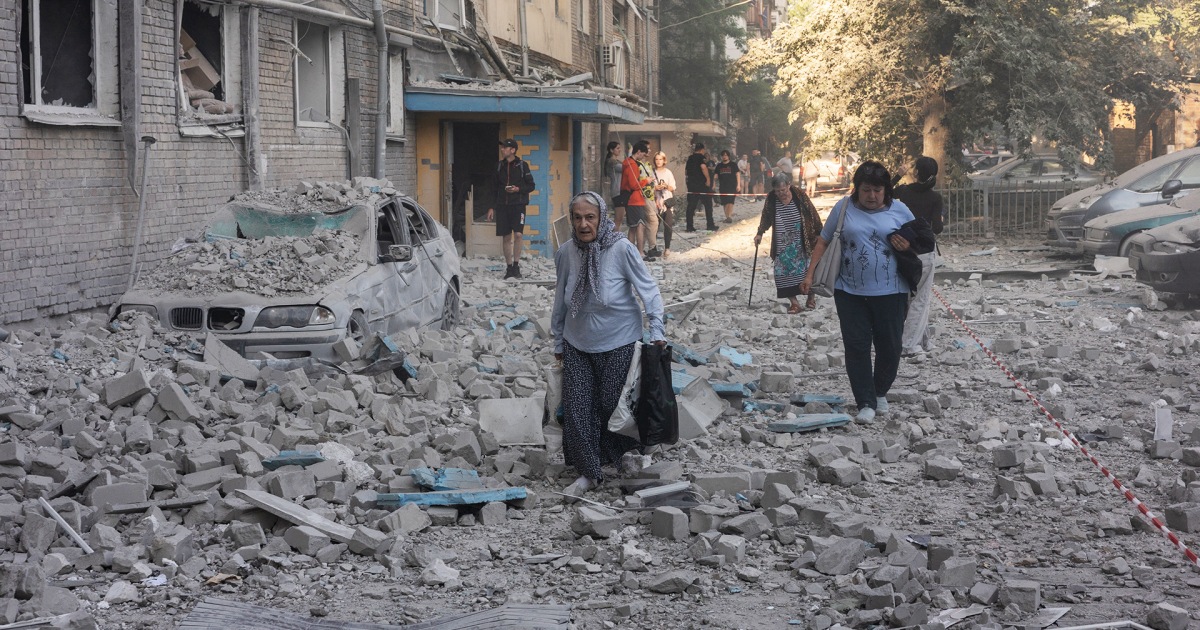
Russia very likely executed its largest combined missile and drone attack on Kyiv of this conflict phase on 2 July 2026, employing 74 missiles and 496 drones that killed at least 13 civilians and injured more than 90 others. Ukrainian forces responded with precise strikes against Russian energy and transportation infrastructure while diplomatic channels remain strained as Kyiv explicitly rejects Moscow's framing of attacks as retaliation. This strike represents a significant intensification beyond the large-scale drone operations reported in the prior briefing period.
Executive summary
Russia has conducted a major coordinated attack against Kyiv involving 74 missiles and 496 drones that caused significant civilian casualties and infrastructure damage across 30 locations. Ukrainian forces have responded with precision strikes against strategic Russian infrastructure including an oil refinery in Nizhny Novgorod and a railway bridge in Luhansk region. Diplomatic relations remain tense as Ukraine calls it immoral to claim these attacks are retaliation for Ukrainian operations while Putin reiterates maximalist goals. The scale and destructive impact of this attack marks a notable escalation beyond the drone-focused operations reported in the previous briefing.
Change from previous assessment
This assessment reflects a significant intensification beyond the pattern described in the prior brief. Whereas the 30 June operations primarily involved 154 drones targeting civilian infrastructure, the 2 July attack employed 74 missiles and 496 drones that directly killed at least 13 civilians and caused more extensive damage to residential buildings. The prior brief documented Ukrainian counterstrikes focused on Crimean infrastructure, while the current assessment documents more geographically distant strikes against Nizhny Novgorod and Luhansk regions. Additionally, diplomatic communications have become more explicit with Ukraine directly rejecting Russia's framing of attacks as retaliation.
Key judgments
- Russia very likely executed its largest combined air attack on Kyiv since the conflict began on 2 July 2026, firing 74 missiles including 24 ballistic systems and 496 drones according to Ukraine's air force reports, marking a significant escalation beyond the drone-focused operations reported in the previous briefing. (Confidence: high · REPORTED)
- I&W: Russian military publicly confirms use of more than 600 combined missile and drone systems against Kyiv within the next five attack cycles (0-14 days)
- I&W: Subsequent Russian attacks consistently employ fewer than 400 combined systems against Ukrainian urban centres for more than 15 days (1-3 months)
- Russian forces almost certainly caused significant civilian casualties and damage to residential infrastructure in Kyiv, killing at least 13 people across multiple districts with six levels of a nine-story building collapsing in the Darnytskyi district and an ambulance station among the damaged facilities. (Confidence: high · REPORTED)
- I&W: Kyiv Emergency Services confirms total fatalities exceeding 25 within 72 hours (0-14 days)
- I&W: UN Office for the Coordination of Humanitarian Affairs verifies more than 500 displaced residents from collapsed structures (1-3 months)
- Ukrainian forces almost certainly struck critical Russian infrastructure hours after the Kyiv attack, successfully hitting one of Russia's largest oil refineries in the Nizhny Novgorod region and a railway bridge over the Siverskyi Donets River in Luhansk region. (Confidence: medium · REPORTED)
- I&W: Russian Energy Ministry reports refinery operations suspended for more than 48 hours (0-14 days)
- I&W: Commercial satellite imagery shows sustained bridge structural failure blocking river traffic (1-3 months)
- Ukraine very likely explicitly rejects Moscow's framing of attacks as retaliation, with Foreign Minister Andrii Sybiha stating it is immoral to claim the Russian strikes were responses to Ukrainian operations during his Japan visit on 2 July 2026. (Confidence: high · REPORTED)
- I&W: Ukraine formally files diplomatic protest with UN Security Council referencing retaliation claims (0-14 days)
- I&W: Russian Ministry of Foreign Affairs publishes detailed justification directly linking attacks to Ukrainian operations (1-3 months)
- Russia is very likely intensifying its focus on Ukrainian urban centres as an operational priority, with consecutive large-scale aerial operations against civilian infrastructure marking a notable escalation from the primarily drone-based attacks of late June. (Confidence: high · ASSESSED)
- I&W: Next Russian attack employs more than 70 missiles or 500 drones against Ukrainian urban areas (0-14 days)
- I&W: Russian attacks consistently use fewer than 500 total aerial systems while prioritising frontline territory gains for six consecutive days (1-3 months)
Outlook & scenarios
Continued Urban Targeting Escalation (40%)
Russia continues escalating aerial attacks against Ukrainian cities with increasing missile use, triggering intensified Ukrainian counterstrikes against Russian energy infrastructure. Civilian casualties rise significantly while diplomatic channels remain frozen, potentially leading to renewed international support for advanced air defence systems. This scenario would materialise if subsequent attacks show increased complexity and coordination.
Strategic Stalemate Continuation (35%)
Both sides maintain current targeting patterns without significant escalation, with Russia focusing attacks on frontline areas while Ukraine continues precision strikes against critical economic infrastructure. Civilian casualties remain high but stabilise, while NATO partners incrementally increase air defence assistance ahead of the Turkey summit. This would occur if neither side gains decisive advantage from current operations.
Diplomatic Breakthrough (20%)
The Ukraine-pledged NATO summit on 7-8 July yields unprecedented air defence commitments that significantly degrade Russia's aerial capabilities within weeks. This leads to reduced civilian casualties as Russia adjusts targeting toward exclusively military objectives, creating space for potential negotiations on a revised ceasefire framework. This would require immediate, coordinated delivery of advanced air defence systems.
Wider Regional Escalation (5%)
Russian frustration with Ukraine's counterstrike effectiveness leads to attacks on NATO infrastructure near the conflict zone, triggering a collective defence response under Article 5. This high-impact scenario would require substantial escalation beyond current patterns but cannot be ruled out if Russian forces suffer continued setbacks against critical infrastructure.
Recommendations
- Coordinate immediately with NATO partners to accelerate delivery of advanced air defence systems prior to the 7-8 July Turkey summit
- Direct intelligence collection toward identifying Russian command nodes responsible for authorising attacks on civilian infrastructure for potential accountability measures
- Prepare contingency plans for humanitarian support in Kyiv should emergency services become overwhelmed following sustained large-scale attacks
- Support Ukraine's diplomatic efforts to build international consensus against attacks targeting civilian infrastructure through UN channels
Confidence & uncertainty
This assessment benefits from multiple high-confidence reports from Ukrainian authorities, international media sources, and military reporting. The consistency of casualty figures from Kyiv Mayor Vitali Klitschko's office, Ukraine General Staff reports on counterstrikes, and corroboration from Western media creates a solid foundation for the main judgments. However, minor discrepancies in casualty tallies across different Ukrainian officials reporting at different times during the emergency response introduce some uncertainty. The medium confidence level accounts for the inherent volatility of battlefield reporting while reflecting the substantial evidentiary foundation from multiple reliable sources.
Alternative analysis (red cell)
Available evidence does not confirm Russia's 2 July attack as the largest on Kyiv due to source contradictions conflating 1-2 July events. Ukrainian infrastructure strike claims rest on low-reliability reports with dating inconsistencies, while Sybiha's diplomatic rejection lacks temporal verification. Insufficient comparative data from late June prevents validation of escalation patterns from primarily drone-based operations.
Intelligence gaps
- [EEI 1.1 · PARTIAL] Number of airstrikes and aircraft/UCAV sorties per 24-hour period, broken down by administrative region and timestamped geolocation of each strike/strike cluster. Recommended collection: air defense radar/ADS-B
- [EEI 1.2 · PARTIAL] Types of delivery platforms and munitions observed (fixed-wing aircraft model, helicopters, cruise missiles, ballistic missiles, guided bombs, loitering munitions) with visual/forensic confirmation of munition remnants where possible. Recommended collection: satellite/imagery; munition forensics
- [EEI 1.3 · UNCOVERED] Airspace access and sortie origin information: airbases, staging areas, tanker/ISR support flights, and routing corridors used in the last 7 days. Recommended collection: airspace/ADS-B; satellite/imagery
- [EEI 2.1 · PARTIAL] Confirmed civilian fatalities and injuries attributed to airstrikes by location and date, including hospital admission logs and mortuary reports. Recommended collection: civilian authorities/human intelligence
- [EEI 2.2 · UNCOVERED] Functional status reports and capacity of hospitals and emergency services in strike-affected areas (beds available, emergency department functionality, evacuation of patients). Recommended collection: humanitarian organizations/civilian authorities
- [EEI 2.3 · PARTIAL] Operational outages and damage reports for critical infrastructure (power plants/substations, water treatment, telecommunications, rail junctions, bridges) with geolocated pre/post imagery where feasible. Recommended collection: utility operators; satellite/imagery
- [EEI 2.4 · PARTIAL] Population displacement metrics: numbers and routes of internally displaced persons, shelter occupancy rates, and evidence of mass evacuations or blocked humanitarian access corridors. Recommended collection: humanitarian organizations; social media
- [EEI 3.2 · UNCOVERED] Evidence of munitions and parts resupply rates: documented deliveries to forward depots/airbases, rail/road convoys with munitions manifest, or satellite imagery showing stockpile levels over time. Recommended collection: logistics tracking; satellite/imagery
- [EEI 3.4 · UNCOVERED] Foreign involvement or external support evidence: observed deliveries of strike munitions, presence of foreign contractor personnel at bases, or procurement transactions tied to the campaign. Recommended collection: customs/open-source intelligence; satellite/imagery
Cited sources
[1] kazu.org · A major Russian attack kills 17 in Kyiv as Ukraine keeps striking Moscow's oil sector (A) · sha256:5c44f3f7c257 [2] wemu.org · A major Russian attack kills 17 in Kyiv as Ukraine keeps striking Moscow's oil sector (A) · sha256:4570e17e3b7b [3] HuffPost · Major Russian Attack Kills 20 In Kyiv As Ukraine Keeps Striking Moscow's Oil Sector (A) · sha256:dabe8cdae7b9 [4] New York Post · Russian missiles and drones kill at least 13 and cause damage across Ukraine capital (A) · sha256:daaab6d0e7b2 [5] knau.org · A major Russian attack kills 17 in Kyiv as Ukraine keeps striking Moscow's oil sector (A) · sha256:45642039535d [6] wcbu.org · A major Russian attack kills 17 in Kyiv as Ukraine keeps striking Moscow's oil sector (A) · sha256:befe71326bee [7] The Guardian · At least 20 dead as Russia launches massive drone and missile attack on Kyiv (A) · sha256:fe5fedf14d29 [8] understandingwar.org · Russian Offensive Campaign Assessment, July 1, 2026 (B) · sha256:9809155c7fba [9] nbcnews.com · Russia launches deadly hourslong attack on Kyiv (A) · sha256:f34a3eaed828 [10] BBC · 'Most massive' Russian attack on Kyiv kills at least 20 (A) · sha256:7d954515f458
Source content hashes were computed at collection time; the cited text is preserved unmodified for the life of this product.
Red cell review: PARTIAL DISSENT
TLP:CLEAR