TLP:CLEAR · Disclosure is not limited.
Ukraine front line and deep-rear activity, 16-23 June 2026
Time window: Last 7 days · Audience: General analyst · Type: Situation report · DTG: 2026-06-23 07:17Z · Overall confidence: LOW
BLUF
Russia almost certainly maintained high-tempo drone and missile strikes across Ukraine on 22-23 June as Ukraine likely expanded deep-rear attacks into Russia’s defence-industrial base at Voronezh. Russian forces very likely struck three foreign-flagged cargo ships in the Black Sea on 22 June, killing a crewman, raising maritime risk around Ukraine.
Executive summary
Reporting points to another lethal Russian strike cycle across Ukraine over 22-23 June, including civilian fatalities in Sumy and Zaporizhzhia and UN warnings of escalation. In parallel, Ukraine likely hit a missile electronics plant in Voronezh as part of a months-long deep-rear interdiction pattern that has also targeted Ust-Luga, a Perm chemical site and a drone-component facility in Cheboksary. On the maritime flank, Russian forces very likely attacked three foreign-flagged cargo vessels in the Black Sea on 22 June, with the Turkish-owned, Panamanian-flagged Victress worst hit and its 58-year-old Egyptian cook killed, while two other ships under Belize and Palau flags continued after taking damage and eight Victress crew were evacuated by Ukraine. On the ground, multiple reports depict Kostyantynivka as a contested grey zone with Russian infiltration from the south and activity on the northern outskirts. Russian group Dnepr’s operation of Orlan-10 drones indicates continuing ISR over Ukrainian territory. Satellite thermal detections on 22-23 June are consistent with active combat but are not diagnostic of cause.
Change from previous assessment
New since the prior brief: reported Ukrainian strike on a missile‑electronics plant in Voronezh; confirmed Russian attacks on three foreign‑flagged ships in the Black Sea with one fatality and evacuations; additional civilian fatalities from Russian strikes in Sumy and Zaporizhzhia; evidence of Russian group Dnepr operating Orlan‑10 drones; and fresh satellite thermal detections consistent with active combat. The assessment that Kostyantynivka is contested is retained, with added detail on infiltration and reported troop presence.
Key judgments
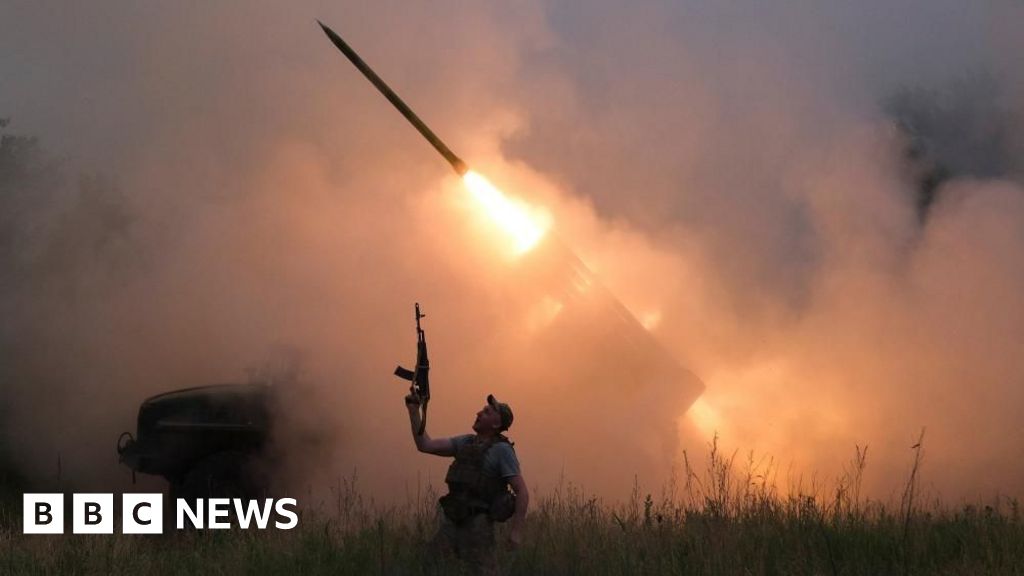
- Russia almost certainly conducted large-scale drone and missile attacks across Ukraine on 22-23 June, killing civilians in Sumy and Zaporizhzhia, as UN officials warned of a dangerous cycle of escalation. (Confidence: high · REPORTED)
- I&W: UN Security Council briefings or OCHA updates citing additional mass salvos and civilian casualties in Ukraine. (0-14 days)
- I&W: A two-week lull in reported Russian missile and drone strikes causing no civilian fatalities across Ukrainian cities. (0-14 days)
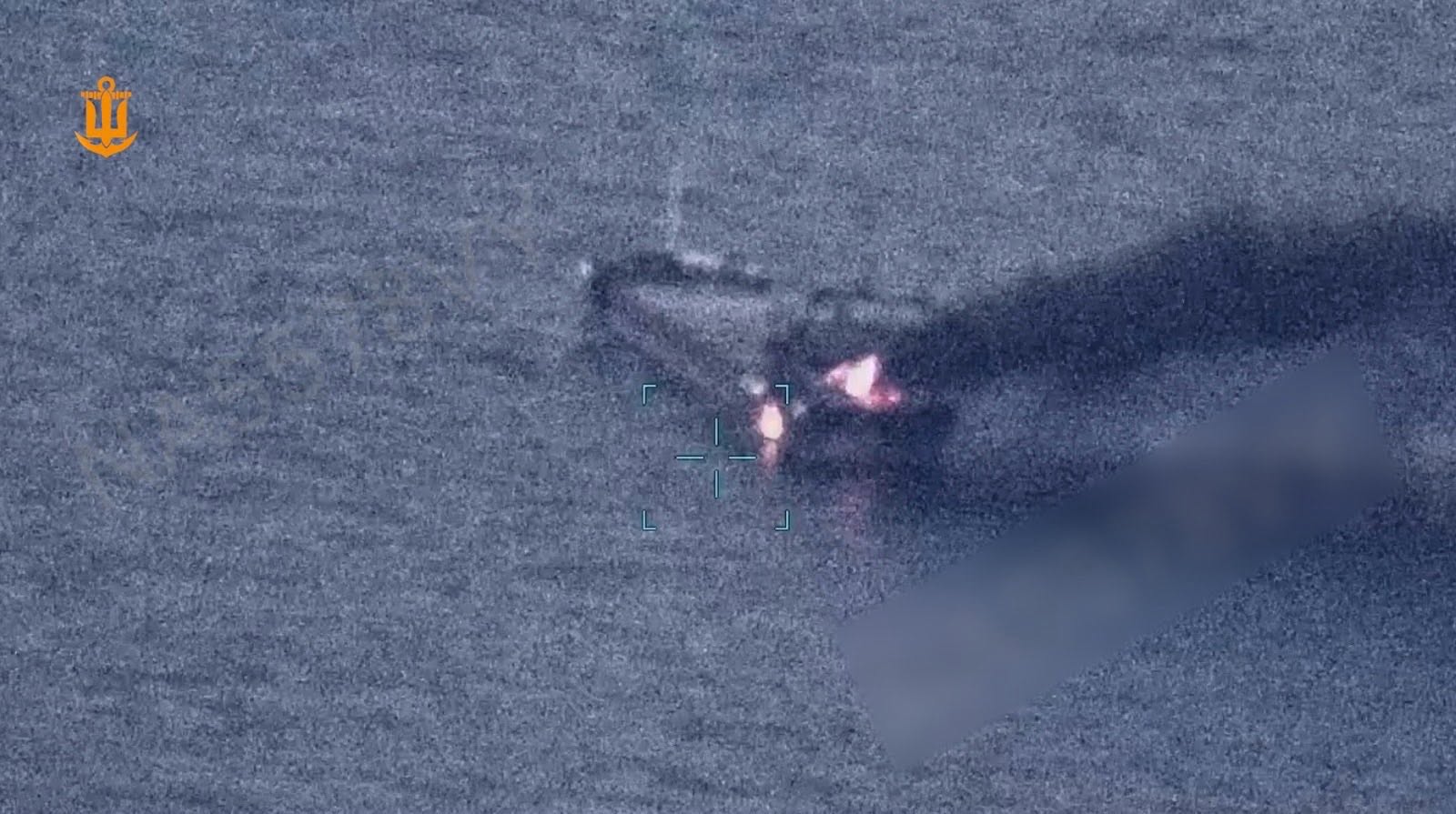
- Russian forces very likely attacked three foreign-flagged civilian cargo ships in the Black Sea on 22 June, killing a 58-year-old Egyptian crewman aboard the Victress and forcing a Ukrainian-led evacuation of eight crew, signalling heightened risk to commercial shipping linked to Ukraine. (Confidence: high · REPORTED)
- I&W: Another foreign-flagged merchant vessel transiting to or from Ukrainian ports reports damage from a Russian strike. (0-14 days)
- I&W: Observed pause in Russian strikes on foreign-flagged shipping with no incidents reported by Ukraine’s Navy. (1-3 months)
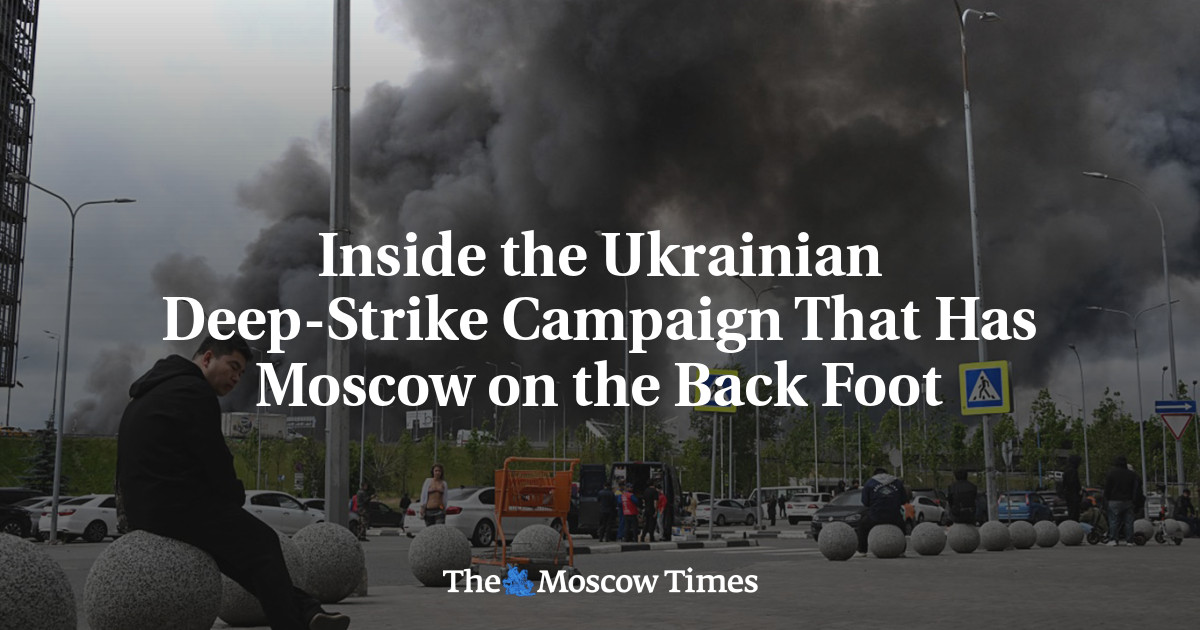
- Ukraine likely struck a missile electronics plant in Voronezh on 23 June using long-range systems, consistent with an expanding deep-rear interdiction campaign that has also targeted Ust-Luga in March, a Perm chemical site in April, and a drone-component plant in Cheboksary on 10 June. (Confidence: medium · ASSESSED)
- I&W: Geolocated imagery or satellite analysis confirming significant damage at the Voronezh electronics facility. (0-14 days)
- I&W: Documented resumption of normal production at the Voronezh plant corroborated by independent visuals. (1-3 months)
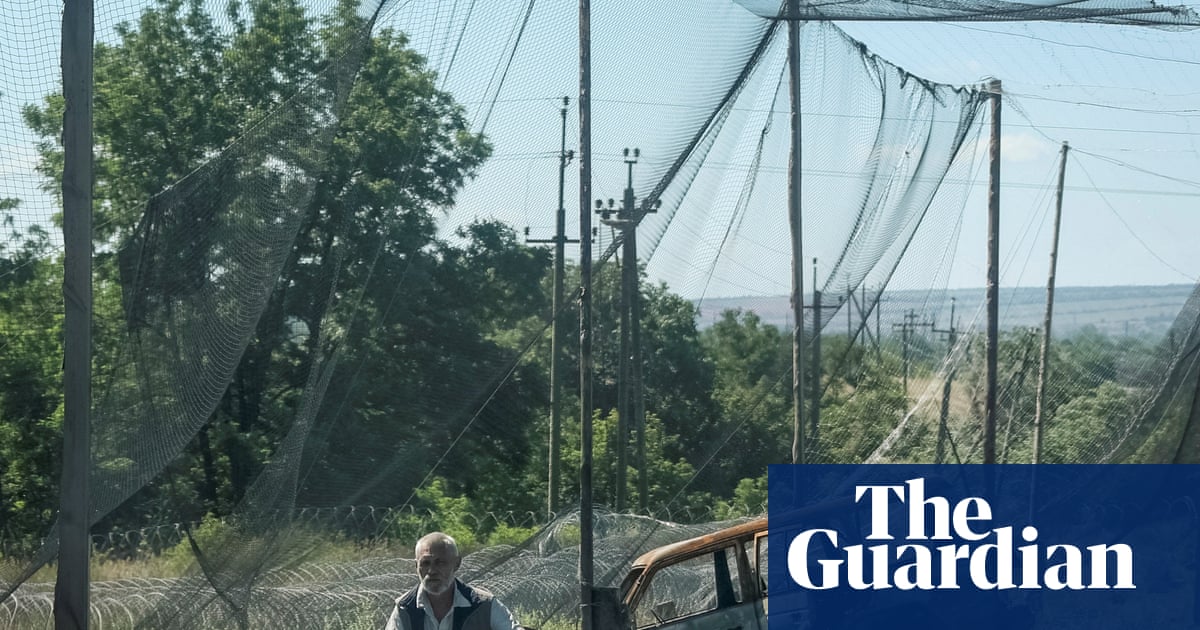
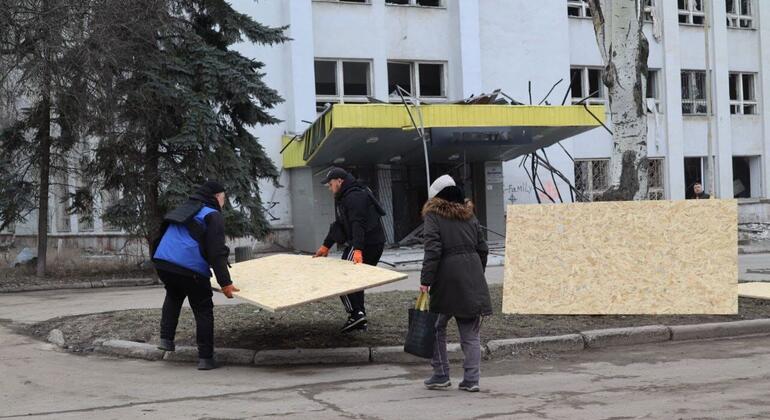
- Kostyantynivka in Donetsk Oblast is very likely contested, with Russian units infiltrated inside the city from the south and activity reported on the northern outskirts, while Ukrainian sources describe a grey zone and roughly 130 Russian troops inside. (Confidence: medium · REPORTED)
- I&W: Geolocated street-fighting footage from central Kostyantynivka without clear control indicators. (0-14 days)
- I&W: Verified administrative control announcements corroborated by on-the-ground imagery of one side’s forces at municipal sites. (0-14 days)
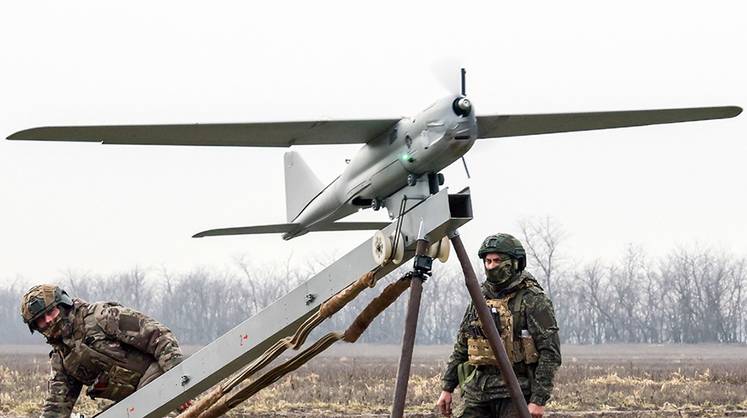
- Russian group Dnepr’s operation of Orlan‑10 drones almost certainly reflects continued Russian ISR coverage over Ukrainian territory, supporting artillery and strike targeting. (Confidence: medium · ASSESSED)
- I&W: Additional Russian-released footage of Orlan‑10 sorties credited to group Dnepr over Ukrainian battlespace. (0-14 days)
- I&W: A measurable drop in Russian artillery accuracy linked to disrupted Orlan‑10 operations. (1-3 months)
- Satellite data detected 44 thermal anomalies across Ukraine on 22-23 June, consistent with ongoing shelling and fires, but thermal detections are not diagnostic of strike tempo or cause without corroboration. (Confidence: medium · REPORTED)
- I&W: Temporal clustering of thermal detections aligning with independently reported strike windows in oblast reporting. (0-14 days)
- I&W: Sustained low thermal detections nationwide despite multiple reported engagements. (0-14 days)
Outlook & scenarios
Incremental Russian gains around Kostyantynivka while the city remains contested (45%)
Russian units sustain pressure from the south and along the northern outskirts of Kostyantynivka, exploiting infiltration to seize blocks and logistics nodes while control remains fragmented. This outcome aligns with reporting of a grey zone and Russian presence inside the city and with indications that Russia is strengthening operations in Donetsk.
Maritime escalation: repeated Russian strikes on foreign-flagged shipping near Ukraine (35%)
Following the 22 June attacks that killed a crewman on the Turkish-owned Victress and damaged Belize- and Palau-flagged ships, Russian forces strike additional merchant vessels transiting to or from Ukrainian ports, prompting higher insurance premiums, diversions, and pressure for convoying. Ankara’s engagement with Moscow on Black Sea safety becomes more urgent after the Hakan Fidan, Sergey Lavrov talks preceded the incident.
Ukrainian deep‑rear interdiction intensifies against Russia’s defence industry (40%)
Ukraine follows up the reported Voronezh strike with further long-range attacks on Russian defence‑industrial sites and energy logistics, building on prior hits at Ust‑Luga, a Perm chemical facility, and Cheboksary. Russian air defence dispersal and industrial resilience become key variables in the campaign’s effect.
Tactical de‑escalation at sea after back‑channel assurances (20%)
After diplomatic outreach that included discussions on Black Sea shipping safety in Moscow, Russia pauses strikes on foreign‑flagged vessels transiting near Ukraine. Merchant traffic gradually normalises, though risk perceptions remain elevated.
Recommendations
- Task commercial EO/SAR and open-source geolocators to assess damage at the Voronezh missile‑electronics plant and archive baselines for follow‑on battle‑damage assessment.
- Set up continuous AIS and incident monitoring for Black Sea merchant traffic to and from Ukrainian ports, focusing on Turkish‑owned, Belize‑ and Palau‑flagged vessels, and prepare rapid incident logs with vessel identity, track and claimed weapon type.
- Prioritise ground-truth collection from Kostyantynivka: map control indicators such as checkpoints, unit markings and municipal building presence from geolocated imagery to track shifts in street‑level control.
- Catalogue Russian Orlan‑10 deployments linked to group Dnepr by scraping official and embedded media outputs; pair with Ukrainian shoot‑down reports to evaluate ISR coverage and artillery effects.
- Use NASA thermal anomaly feeds as a cueing tool only; require corroboration from local administration reports, imagery or reliable field video before integrating detections into strike tallies.
- Maintain a rolling ledger of civilian harm incidents from Sumy and Zaporizhzhia health and emergency authorities to quantify the impact of Russia’s strike tempo on the home front.
- Prepare maritime risk briefs for partners outlining ship types and routes most exposed, recommended stand‑off distances from contested littorals, and contact protocols with Ukrainian rescue services.
Confidence & uncertainty
Several central points rely on single‑source or partly corroborated reporting. The Voronezh defence‑industrial strike and elements of the Kostyantynivka battle picture come from mixed‑reliability media and include contested battlefield claims, lowering confidence. Maritime attack reporting is stronger and mutually reinforcing, but the overall brief blends higher‑confidence strike data with assessed linkages across Ukraine’s deep‑rear campaign and inferred ISR activity from a single Dnepr Orlan‑10 source. Satellite thermal detections are non‑diagnostic without additional evidence. On balance, the breadth of topics and uneven corroboration warrant a low overall confidence rating.
Alternative analysis (red cell)
While discrete lethal incidents and reported attacks on vessels are supported by the reporting, the record does not provide multi-source forensic, SIGINT, or ISR corroboration required to sustain high-confidence, wide-area, or campaign-level conclusions. Several judgments depend on single-source clusters (kj_single_origin) or low/medium-admiralty reporting and therefore permit alternative interpretations: localized strikes rather than a coordinated, large-scale cross-Ukraine offensive; maritime damage pending forensic attribution; and the Voronezh and ISR-integration claims remaining unverified without additional technical corroboration.
Intelligence gaps
- [EEI 1.1 · UNCOVERED] Geotagged UAV/satellite imagery showing abandoned defensive positions or newly occupied settlements. Recommended collection: overhead imagery
- [EEI 1.2 · UNCOVERED] Confirmed movement of frontline ambulance evacuation routes beyond previous coordinates. Recommended collection: SIGINT/medical logistics
- [EEI 2.1 · PARTIAL] Concentration of assault battalions (≥3 mechanized companies) within 15km of contact line. Recommended collection: SIGINT/UAV
- [EEI 2.2 · UNCOVERED] Unusual artillery stockpile buildup at forward depots exceeding 30-day consumption rates. Recommended collection: overhead imagery/logistics
- [EEI 3.1 · UNCOVERED] Bridge structural damage assessments at 5 key Dnieper River crossings via multispectral imaging. Recommended collection: overhead imagery
- [EEI 3.2 · UNCOVERED] Rail traffic volume changes at Kryvyi Rih and Pokrovsk rail hubs compared to 7-day baseline. Recommended collection: commercial freight data
Cited sources
[1] United Nations · Security Council LIVE: Warnings of ‘dangerous cycle of escalation’ in Ukraine (A) · sha256:5799058fbe59 [2] theguardian.com · Ukraine war briefing: ‘Our patience is not endless’ – Kyiv signals peace offer may expire (A) · sha256:c8d91a7aa96a [3] kyivindependent.com · Russia attacks foreign cargo ships in Black Sea, killing Egyptian sailor (B) · sha256:7b16a5ef528c [4] kyivindependent.com · Ukraine war latest: Russian missile parts factory in flames as tensions over Belarus escalate (B) · sha256:593e7e90b34e [5] mezha.net · Ukrainian Air Force struck Voronezh plant, crippling missile component production (B) · sha256:96ee3b4cff27 [6] The Moscow Times · Inside the Ukrainian Deep-Strike Campaign That Has Moscow on the Back Foot - The Moscow Times (B) · sha256:47a35c2bc05f [7] BBC · Russia Ukraine war: Troop build-up threatens Kostyantynivka, key to seizing Donbas (A) · sha256:9c7328d41eab [8] Монокль · Как дроны меняют украинский фронт (B) · sha256:64e3e371f82f [9] firms.modaps.eosdis.nasa.gov · NASA FIRMS thermal detections — Ukraine (2d) (F) · sha256:2fb79188f0b5
Source content hashes were computed at collection time; the cited text is preserved unmodified for the life of this product.
Red cell review: PARTIAL DISSENT
TLP:CLEAR