TLP:CLEAR · Disclosure is not limited.
Ukraine: High-Tempo Russian Air Campaign Broadens Beyond Kyiv
Time window: Last 1 day · Audience: General analyst · Type: Situation report · DTG: 2026-09-12 21:06Z · Overall confidence: HIGH
BLUF
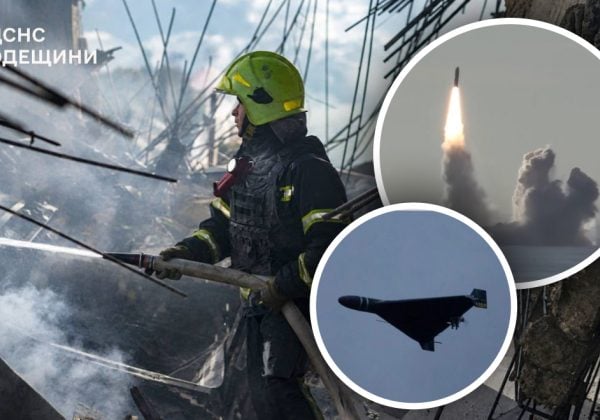
Russia almost certainly maintained a high-tempo air campaign against Ukraine on 12 September 2026, using missiles and 129 attack drones, with Odesa Oblast the main direction and continued pressure on Kyiv. Civilian harm and economic damage are very likely to rise, while conflicting positions from Volodymyr Zelensky and the Kremlin make a durable ceasefire within 30 days unlikely.
Executive summary
Russian forces conducted a large overnight attack on 12 September, with Ukrainian air defence reporting that it destroyed or suppressed 110 targets. Odesa Oblast, Chornomorsk, Kyiv Oblast, Zaporizhzhia, Kryvyi Rih and Zvyahel recorded civilian casualties or infrastructure damage in current reporting, although aggregate death figures remain inconsistent. Ukraine's government also reported roughly $10 billion in infrastructure damage from Russian airstrikes this year, approximately $40 billion in export revenue at risk, and a growing defence-financing gap. Diplomatic activity continues, but Zelensky's willingness to meet Vladimir Putin in Miami is opposed by Moscow, which insists on Moscow as the only venue.
Change from previous assessment
Since the 11 September 2026 brief, the assessment has shifted from a primarily Kyiv-focused strike picture to a broader campaign centred on Odesa Oblast and extending to Kyiv Oblast, Zaporizhzhia, Kryvyi Rih and Zvyahel. New reporting adds a 129-drone and missile attack, further civilian casualties, a clearer account of Ukraine's defence-financing gap and a direct clash between Zelensky's Miami meeting proposal and Peskov's Moscow-only position. Confidence remains high in the overall strike trend, while confidence remains medium on casualty totals, reciprocal Ukrainian strike detail and the prospects for diplomatic movement.
Key judgments
- Russia almost certainly maintained and intensified a high-tempo air campaign against Ukraine on the night of 12 September 2026. Russian forces used missiles and 129 attack drones, with Odesa Oblast the main direction of attack, while Russian drone attacks on Kyiv had continued near constantly for more than two weeks. Ukrainian air defence reported destroying or suppressing 110 targets, including 101 drones, six Kalibr missiles, one S8000 Banderol and two X-59/69 missiles. The launch and interception totals are not fully reconciled because another report listed eight Kalibr missiles and six X-59/69 missiles used in the attack. (Confidence: high · REPORTED)
- I&W: Confirm: Within 0-14 days, Ukrainian military reporting records another Russian attack combining at least 100 drones with ballistic or cruise missiles, or another jet-powered drone attack on Kyiv. (0-14 days)
- I&W: Break: Ukrainian and Russian reporting records a 14-day halt in Russian missile and drone attacks on Ukraine. (0-30 days)
- Russian airstrikes are very likely producing a widening civilian and infrastructure burden across Odesa Oblast, Kyiv Oblast, Zaporizhzhia, Kryvyi Rih and Zvyahel. Current reports include at least 17 injured in Odesa Oblast, five injured in Chornomorsk including four children, one death and three injuries in Kyiv Oblast, and deaths and injuries at industrial sites in Kryvyi Rih. The aggregate death toll is unsettled: reports give six and nine deaths across Ukrainian regions, while Kryvyi Rih reporting gives one death and three injuries in one account and two deaths at the ArcelorMittal plant in another. This judgment relies partly on same-day official and media reporting, so casualty figures require continued reconciliation. (Confidence: medium · ASSESSED)
- I&W: Confirm: Within 0-14 days, regional authorities report new civilian deaths or injuries and damage to homes, energy, rail or industrial sites in Odesa, Kyiv Oblast, Zaporizhzhia, Kryvyi Rih or Zvyahel. (0-14 days)
- I&W: Break: Within 30 days, independent casualty reconciliation reduces the current reported death tolls to isolated incidents with no new residential or industrial damage in those locations. (0-30 days)
- Ukraine's economic and defence-financing strain is very likely intensifying as Russian air attacks and the effective Black Sea port blockade continue. Economy Minister Oleksandr Kravchenko reported close to $10 billion in infrastructure and fixed-asset damage from Russian airstrikes in 2026, approximately $40 billion in export revenue at risk, and an estimated 1.5 percentage-point GDP cost. Roksolana Pidlasa reported that Ukraine spent about $42 billion on defence in the first eight months of 2026 against $39 billion from domestic revenue and local borrowing, while domestic revenue underperformed by $1.35 billion. The daily cost of the war was reported at about $190 million, compared with $140 million in 2024. The two 1.5 percentage-point GDP estimates have different stated causal scopes, which lowers confidence in the precise economic attribution. (Confidence: medium · ASSESSED)
- I&W: Confirm: Within 0-30 days, Ukrainian officials report infrastructure damage above $10 billion, export revenue at risk above $40 billion, or a further defence-financing gap. (0-30 days)
- I&W: Break: Ukraine reports that domestic revenue and local borrowing fully cover defence spending, or verified regular commercial sailings resume through the Black Sea ports. (0-3 months)
- Russia and Ukraine are very likely to sustain reciprocal long-range attacks on energy, industrial and other economic targets over the next 1-3 months. Reporting describes intensified Russian attacks on Ukrainian power plants and key facilities, alongside Ukrainian strikes on Russian energy facilities and warehouses. Both sides are increasingly targeting economic assets while the front line remains stagnant. The Russian campaign is supported by more detailed current incident reporting than the Ukrainian campaign, so confidence in the balance and scale of reciprocal attacks is medium. (Confidence: medium · ASSESSED)
- I&W: Confirm: Within 1-3 months, reporting identifies new Russian strikes on Ukrainian energy or industrial sites and new Ukrainian strikes on Russian energy facilities, warehouses or shipping. (1-3 months)
- I&W: Break: Russia and Ukraine announce and observe a reciprocal halt to deep strikes on economic and energy assets for 30 consecutive days. (0-3 months)
- A durable Russia-Ukraine ceasefire within the next 30 days is unlikely, although diplomatic contacts are likely to continue. Volodymyr Zelensky said he was willing to meet Vladimir Putin at the Miami G20 summit, while Kremlin spokesman Dmitry Peskov ruled out that meeting and insisted that any meeting take place in Moscow. Steve Witkoff and Jared Kushner reportedly visited Moscow and Kyiv, and Kushner said he hoped to announce next steps within a couple of weeks. The Kushner engagement is partly contested because one report describes a Kyiv videolink rather than an in-person appearance. A partial air truce remains an unlikely option raised by a single analyst rather than an agreed negotiating position. (Confidence: medium · ASSESSED)
- I&W: Confirm: Within 0-30 days, Moscow reiterates that talks can occur only in Moscow, Kyiv rejects that condition, and Russian and Ukrainian long-range strikes continue. (0-30 days)
- I&W: Break: Moscow and Kyiv announce an agreed venue and signed terms for an air truce, followed by seven consecutive days without reported deep strikes. (0-30 days)
Outlook & scenarios
Continued high-tempo reciprocal air campaign (70%)
Likely. Russia continues missile and drone attacks against Odesa Oblast, Kyiv Oblast and industrial centres including Kryvyi Rih, while Ukraine continues strikes against Russian energy and economic assets. Civilian casualties, infrastructure damage and pressure on Ukrainian defence financing increase over the next 1-3 months.
Limited diplomatic opening or partial air truce (20%)
Unlikely. Zelensky's stated willingness to meet Putin and continuing US-mediated contacts produce a limited arrangement restricting deep strikes, while front-line fighting continues. The scenario requires Moscow to relax its insistence on Moscow as the only meeting venue or Kyiv to accept that condition.
Wider disruption to maritime logistics (10%)
Very unlikely but high impact. Further attacks on shipping beyond Ukraine's Black Sea ports disrupt Russian-linked maritime logistics in the Mediterranean, following the reported drone attack on the Russia-flagged Lady Mariia and the movement of Russian sealift vessels towards Tartus.
Recommendations
- Maintain a 24-hour strike ledger that records launch totals, weapon types, claimed interceptions, affected locations, civilian casualties and infrastructure damage. Reconcile the six-versus-nine death reports and the conflicting Kryvyi Rih and Zvyahel target accounts before issuing aggregate casualty estimates.
- Separate confirmed damage from Russian and Ukrainian characterisations of targets. Prioritise independent imagery, local authority reporting and infrastructure operator statements for Odesa, Chornomorsk, Kyiv Oblast, Zaporizhzhia, Kryvyi Rih and Zvyahel.
- Track Ukrainian air-defence resilience through reported interceptor requirements, Patriot missile availability, interception rates and the geographic distribution of impacts. Treat any change in these measures as an early warning of altered strike effectiveness.
- Monitor Ukraine's defence-financing position weekly against the reported $42 billion in defence spending and $39 billion in domestic revenue and local borrowing. Record any new estimates for infrastructure damage, export losses and Black Sea port access separately to avoid merging different economic methodologies.
- Assess diplomatic progress against concrete outputs rather than visits or public statements: an agreed venue, a joint communiqué, signed air-truce terms and verified reductions in deep strikes. Keep Zelensky's Miami proposal and Moscow's Moscow-only position as competing negotiating tracks.
- Review maritime reporting for attacks on Russia-linked vessels, changes in Black Sea port access and movement of Russian sealift vessels towards Tartus. Escalation beyond Ukraine's immediate theatre would raise the economic and wider security implications of the air campaign.
Confidence & uncertainty
Overall confidence is high because the core strike activity and humanitarian impact are supported by Reuters wire reporting, major-media accounts and official statements from Ukrainian military and regional authorities. The main uncertainties concern the precise death toll, the characterisation of individual targets, differences between missiles launched and intercepted, and the status of diplomatic contacts. These uncertainties lower confidence in specific figures and near-term diplomatic outcomes, but not in the broader assessment of an intensified air campaign and rising civilian and economic pressure.
Intelligence gaps
- [EEI 1.1 · PARTIAL] Number of airstrikes and aircraft/UCAV sorties per 24-hour period, broken down by administrative region and timestamped geolocation of each strike/strike cluster. Recommended collection: air defense radar/ADS-B
- [EEI 1.3 · UNCOVERED] Airspace access and sortie origin information: airbases, staging areas, tanker/ISR support flights, and routing corridors used in the last 7 days. Recommended collection: airspace/ADS-B; satellite/imagery
- [EEI 1.4 · PARTIAL] Changes in temporal or target-patterns compared to the prior baseline (new target types, time-of-day shifts, concentration on specific infrastructure or front sectors). Recommended collection: open-source media; satellite/imagery
- [EEI 2.2 · UNCOVERED] Functional status reports and capacity of hospitals and emergency services in strike-affected areas (beds available, emergency department functionality, evacuation of patients). Recommended collection: humanitarian organizations/civilian authorities
- [EEI 2.3 · PARTIAL] Operational outages and damage reports for critical infrastructure (power plants/substations, water treatment, telecommunications, rail junctions, bridges) with geolocated pre/post imagery where feasible. Recommended collection: utility operators; satellite/imagery
- [EEI 2.4 · UNCOVERED] Population displacement metrics: numbers and routes of internally displaced persons, shelter occupancy rates, and evidence of mass evacuations or blocked humanitarian access corridors. Recommended collection: humanitarian organizations; social media
- [EEI 3.1 · PARTIAL] Statements, orders, or internal communications (official or leaked) indicating stated campaign objectives, target prioritization, or changes in rules of engagement. Recommended collection: signals/COMINT; open-source media
- [EEI 3.2 · UNCOVERED] Evidence of munitions and parts resupply rates: documented deliveries to forward depots/airbases, rail/road convoys with munitions manifest, or satellite imagery showing stockpile levels over time. Recommended collection: logistics tracking; satellite/imagery
- [EEI 3.3 · PARTIAL] Indicators of escalatory posture or force employment changes: deployment or activation of long-range strike assets, increased sorties of strategic platforms, or movement/deployment of additional surface-to-air systems. Recommended collection: satellite/imagery; air defense radar
- [EEI 3.4 · UNCOVERED] Foreign involvement or external support evidence: observed deliveries of strike munitions, presence of foreign contractor personnel at bases, or procurement transactions tied to the campaign. Recommended collection: customs/open-source intelligence; satellite/imagery
Red cell review: CONCUR WITH COMMENT
TLP:CLEAR