TLP:CLEAR · Disclosure is not limited.
Ukraine: High-Volume Airstrikes and Expanding Infrastructure Pressure
Time window: Last 1 day · Audience: General analyst · Type: Situation report · DTG: 2026-09-17 23:07Z · Overall confidence: HIGH
BLUF
Russia very likely conducted a large, multi-platform air attack across Ukraine on 17 September, with 157 reported strike and simulator drones, ballistic and cruise missiles, and damage in Kyiv, Odesa, Zaporizhzhia and Berestyn. Ukraine is likely to sustain reciprocal long-range strikes against Russian energy and military assets, while attacks near the Polish border are likely to keep Polish forces on heightened readiness without an immediate reported airspace violation.
Executive summary
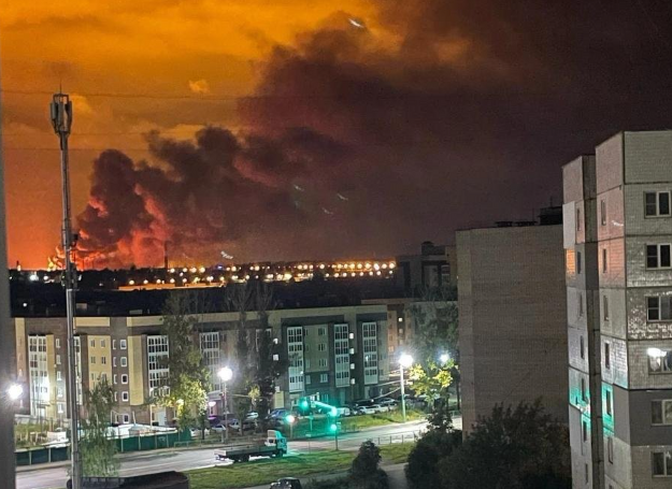
Russia's 17 September attack combined Shahed and Parody drones with Oniks, Iskander-M, S-400, KN-23, Kalibr and Banderol/Dan-T missiles. Ukrainian air defences reported destroying or suppressing 131 targets by 08:00. Later reporting put Kyiv casualties at 20 injured, although earlier reports gave lower figures, while Odesa and Zaporizhzhia also reported civilian injuries and infrastructure damage. Russian strikes continue to focus on rail and logistics infrastructure, including Berestyn station and Ukrainian locomotives. Ukraine reported damaging the Yaroslavl refinery and striking aircraft at Rostov-Central. Poland scrambled aircraft during a Russian attack near the border, but the Polish army reported no airspace violation. The US House of Representatives passed legislation authorising sanctions and tariffs of up to 100 per cent on major buyers of Russian oil and gas, but the bill still awaited presidential signature.
Change from previous assessment
Since the 16 September prior brief, the assessment of Russian air-campaign intensification is unchanged but is now supported by a larger documented attack package on 17 September, including 157 reported drones, multiple missile types and damage across Kyiv, Odesa, Zaporizhzhia and Berestyn. The rail and logistics campaign is now assessed as a distinct pressure line because new reporting records more than 1,600 attacks on Ukrzaliznytsia infrastructure and more than 500 damaged or destroyed locomotives. The assessment of Ukrainian reciprocal strikes is strengthened by reported damage at the Yaroslavl refinery and the Rostov-Central airfield, although confidence in the broader operational effect remains medium. A new border-spillover judgment has been added after the attack near Poland and the Polish air-policing response. Exact Kyiv and Odesa casualty figures remain provisional because later and earlier reports differ.
Key judgments
- Russia very likely conducted a high-volume, multi-platform air attack across Ukraine on 17 September, with Kyiv as the principal reported urban target and additional strikes on Odesa, Zaporizhzhia and Berestyn. Reporting described 157 Shahed and Parody drones, Oniks, Iskander-M, S-400, KN-23 and Kalibr missiles, and 10 Banderol/Dan-T missiles. Ukrainian air defences reported destroying or suppressing 131 targets by 08:00. (Confidence: high · ASSESSED)
- I&W: Confirm: within 0-14 days, Ukrainian and independent reporting records another Russian launch package of at least 100 drones combined with ballistic or cruise missiles against Kyiv or another named Ukrainian city. (0-14 days)
- I&W: Break: within 0-14 days, independent imagery and official post-strike assessments show that the 17 September package was materially smaller than reported or that the reported impacts in Kyiv, Odesa, Zaporizhzhia and Berestyn did not occur. (0-14 days)
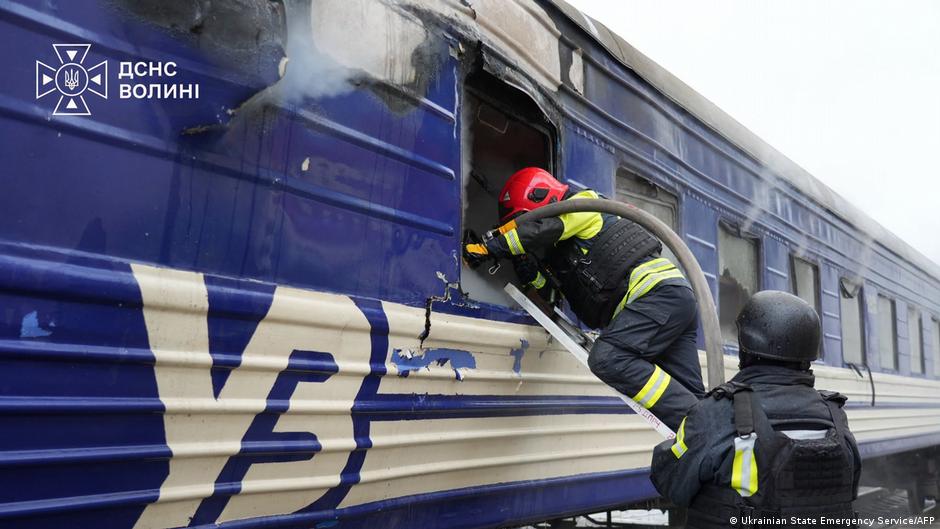
- Russian forces are very likely sustaining a deliberate campaign against Ukrainian rail and logistics infrastructure, with passenger and border-linked rail nodes among the targets. Reporting recorded more than 1,600 attacks on Ukrzaliznytsia rolling stock and infrastructure during the first eight months of 2026, damage or destruction to more than 500 locomotives, and attacks on Berestyn station, the Kyiv-Mykolaiv train, locomotives near Volyn, Kovel and Bashtanka. The aggregate attack and locomotive figures come chiefly from Ukrainian officials and are not independently corroborated in the provided reporting, which lowers confidence in their precise scale. (Confidence: medium · ASSESSED)
- I&W: Confirm: within 0-14 days, Russian strikes damage another locomotive, station or rail facility at Berestyn, Yahodyn, Volyn, Kovel, Bashtanka or another Ukrainian logistics node. (0-14 days)
- I&W: Break: within 1-3 months, Ukrzaliznytsia reports no additional attacks on rolling stock or infrastructure and no new locomotive losses in the affected areas. (1-3 months)
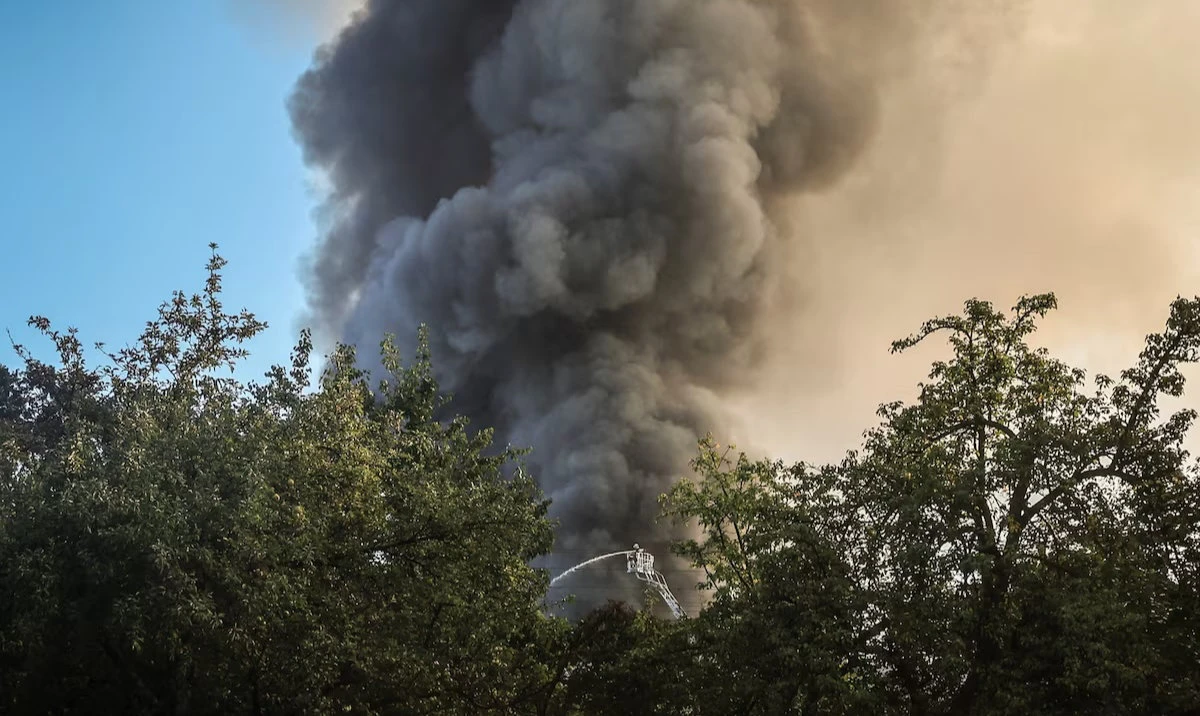
- Ukraine is likely to continue long-range strikes against Russian energy and military assets over the next 1-3 months. On 17 September, reporting stated that a Ukrainian drone attack damaged the AVT-3 crude-processing unit at the Slavneft-YANOS refinery in Yaroslavl, while the SBU Alpha special operations centre claimed strikes on an An-12, two An-26 aircraft and three helicopters at Rostov-Central. The reported refinery damage and strike effects are supported by major-media reporting, but the broader operational effect on Russian fuel supply remains only partly established. (Confidence: medium · ASSESSED)
- I&W: Confirm: within 0-14 days, Ukrainian forces are reported to damage another Russian refinery unit, military airfield or aircraft in a long-range strike. (0-14 days)
- I&W: Break: within 1-3 months, Russian reporting confirms full processing resumes at Yaroslavl and no additional Ukrainian long-range strike causes a comparable disruption. (1-3 months)
- Russian strikes near the Ukraine-Poland border are likely to generate repeated Polish air-policing responses over the next 0-14 days, while a recorded violation of Polish airspace remains unlikely. Polish and Ukrainian authorities reported explosions near the border, Donald Tusk said Polish aircraft were scrambled, and the Polish army reported no airspace violation. (Confidence: medium · ASSESSED)
- I&W: Confirm: within 0-14 days, Polish authorities again report aircraft scrambles or air-defence measures during a Russian attack near Volyn or Yahodyn. (0-14 days)
- I&W: Break: within 0-14 days, the Polish army reports no further border-adjacent Russian attack and no additional air-policing response. (0-14 days)
- The US House of Representatives' sanctions bill is likely to increase pressure on Russian energy trade, but it is very unlikely by itself to reduce Russian airstrike tempo in the next 1-3 months. The bill authorises tariffs of up to 100 per cent on countries buying Russian oil and gas, normally provides 180 days to cut those imports or negotiate with Washington, and still awaited Donald Trump's signature. India's dependence on Russian crude and its stated commitment to energy security create uncertainty over implementation. (Confidence: medium · ASSESSED)
- I&W: Confirm: within 0-14 days, Donald Trump signs the bill and the US administration begins applying its energy-import provisions. (0-14 days)
- I&W: Break: within 0-14 days, the bill is not signed or India publicly maintains its existing Russian energy-import arrangements without an implementation response from Washington. (0-14 days)
Outlook & scenarios
Continued high-volume reciprocal air campaign (70%)
Over the next 0-14 days, Russia repeats large drone and missile packages against Kyiv, rail infrastructure and industrial targets, while Ukraine continues long-range strikes against Russian refineries and military facilities. Civilian casualties and infrastructure damage remain high, but Polish responses remain limited to air-policing and readiness measures.
Sustained strikes with partial Ukrainian adaptation (35%)
Over the next 1-3 months, Russia maintains strike output but Ukrainian electronic warfare, mobile fire groups, air-defence lines and reserve logistics routes reduce the effect on selected rail and urban targets. Ukraine continues reciprocal strikes, with disruption concentrated on Russian energy and military-enabling infrastructure.
Limited diplomatic or humanitarian deconfliction (15%)
Over the next 1-3 months, body exchanges, Turkish efforts to end attacks on civilian shipping and pressure from new sanctions support a narrow reduction in attacks against selected civilian or maritime targets. The broader Russian-Ukrainian air campaign continues at a lower but still sustained tempo.
Low-probability, high-impact Polish border incident (8%)
Within 0-14 days, a Russian strike breaches Polish airspace or causes casualties on Polish territory. Poland would increase military responses and political consultations, sharply raising the risk of a direct Russia-NATO crisis even if the main fighting remains in Ukraine.
Recommendations
- Maintain a daily launch-to-impact tracker for Russian attacks, separating Shahed, simulator, ballistic and cruise-missile activity and recording launch regions, impact sites and Ukrainian interception claims.
- Reconcile Kyiv and Odesa casualty figures with later official updates before using them in briefings, and distinguish Kyiv city figures from Kyiv Oblast reporting.
- Prioritise collection on Ukrainian rail resilience at Berestyn, Yahodyn, Volyn, Kovel and Bashtanka, including locomotive losses, route closures, repair activity and the arrival schedule for Alstom locomotives.
- Track damage assessments and operating status at the Yaroslavl refinery and Rostov-Central airfield, then compare reported disruption with Russian fuel-import data and aircraft availability.
- Monitor Polish airspace notices, aircraft scrambles and activity around the Yahodyn border crossing for signs of repeated spillover, and separately track progress towards the proposed US Army base in Poland.
- Follow the US sanctions bill through presidential signature and implementation, with particular attention to India's Russian crude purchases, fuel trade and any changes to the 180-day import-adjustment process.
Confidence & uncertainty
Overall confidence is high because the central event, Russia's 17 September multi-platform attack, is supported by multiple major-media reports, a Reuters witness, Ukrainian official casualty and air-defence reporting, and geographically specific damage reports. The main uncertainties concern evolving casualty counts in Kyiv and Odesa, the precise scale of Ukrainian rail losses, the operational effects of the Yaroslavl and Rostov strikes, and the eventual implementation of the US sanctions bill.
Intelligence gaps
- [EEI 1.1 · PARTIAL] Number of airstrikes and aircraft/UCAV sorties per 24-hour period, broken down by administrative region and timestamped geolocation of each strike/strike cluster. Recommended collection: air defense radar/ADS-B
- [EEI 1.3 · PARTIAL] Airspace access and sortie origin information: airbases, staging areas, tanker/ISR support flights, and routing corridors used in the last 7 days. Recommended collection: airspace/ADS-B; satellite/imagery
- [EEI 1.4 · PARTIAL] Changes in temporal or target-patterns compared to the prior baseline (new target types, time-of-day shifts, concentration on specific infrastructure or front sectors). Recommended collection: open-source media; satellite/imagery
- [EEI 2.2 · PARTIAL] Functional status reports and capacity of hospitals and emergency services in strike-affected areas (beds available, emergency department functionality, evacuation of patients). Recommended collection: humanitarian organizations/civilian authorities
- [EEI 2.4 · PARTIAL] Population displacement metrics: numbers and routes of internally displaced persons, shelter occupancy rates, and evidence of mass evacuations or blocked humanitarian access corridors. Recommended collection: humanitarian organizations; social media
- [EEI 3.1 · PARTIAL] Statements, orders, or internal communications (official or leaked) indicating stated campaign objectives, target prioritization, or changes in rules of engagement. Recommended collection: signals/COMINT; open-source media
- [EEI 3.2 · UNCOVERED] Evidence of munitions and parts resupply rates: documented deliveries to forward depots/airbases, rail/road convoys with munitions manifest, or satellite imagery showing stockpile levels over time. Recommended collection: logistics tracking; satellite/imagery
- [EEI 3.3 · PARTIAL] Indicators of escalatory posture or force employment changes: deployment or activation of long-range strike assets, increased sorties of strategic platforms, or movement/deployment of additional surface-to-air systems. Recommended collection: satellite/imagery; air defense radar
- [EEI 3.4 · PARTIAL] Foreign involvement or external support evidence: observed deliveries of strike munitions, presence of foreign contractor personnel at bases, or procurement transactions tied to the campaign. Recommended collection: customs/open-source intelligence; satellite/imagery
Cited sources
[1] ТСН (tsn.ua) · Раненые дети, "прилеты" прямо по домам: РФ ракетами устроила по Киеву и ряду городов, атаковали целым арсеналом (B) · Thu Sep 17 2026 05:54:02 GMT+0000 (Coordinated Universal Time) · sha256:50a54b65d030 [2] Arab News · Russia strikes Ukraine’s Kyiv, injures three in Odesa, officials say (A) · Thu Sep 17 2026 00:37:35 GMT+0000 (Coordinated Universal Time) · sha256:63809646fb41 [3] Deutsche Welle (DW) · Удары РФ по железной дороге: как Украина пытается защититься (A) · Thu Sep 17 2026 16:15:20 GMT+0000 (Coordinated Universal Time) · sha256:bc7d03a398ef [4] listaj.ru · "Что вообще происходит!": Странности в сводке Минобороны РФ. Такого не было ни вчера, ни позавчера: Новости СВО, военные сводки - интерактивная карта боевых действий на Украине, Карта СВО, военные новости, удары по Украине, Юрий Подоляка сегодня, фронт на Украине, последние новости Украины сегодня, война с Европой, к утру 17.09.26 г. (E) · Thu Sep 17 2026 02:00:56 GMT+0000 (Coordinated Universal Time) · sha256:cdcdcef03c16 [5] ERR (Eesti Rahvusringhääling / Estonian Public Broadcasting) · 1667-й день войны: в результате атаки украинских дронов загорелся Ярославский НПЗ (A) · Thu Sep 17 2026 06:11:00 GMT+0000 (Coordinated Universal Time) · sha256:9c139e372985 [6] The Independent · Ukraine-Russia war live: Explosions near Polish border after two airports forced to shut during daytime attacks (A) · Thu Sep 17 2026 22:00:08 GMT+0000 (Coordinated Universal Time) · sha256:47e6555e93e2 [7] BBC · India faces 100% tariff threat over Russian oil after US House vote (A) · Thu Sep 17 2026 05:33:29 GMT+0000 (Coordinated Universal Time) · sha256:429f89b53de9
Source content hashes were computed at collection time; the cited text is preserved unmodified for the life of this product.
Red cell review: CONCUR WITH COMMENT
TLP:CLEAR