TLP:CLEAR · Disclosure is not limited.
Ukraine: Reciprocal Long-Range Strikes Raise Civilian and Energy Risks
Time window: Last 1 day · Audience: General analyst · Type: Situation report · DTG: 2026-08-30 17:39Z · Overall confidence: MEDIUM
BLUF
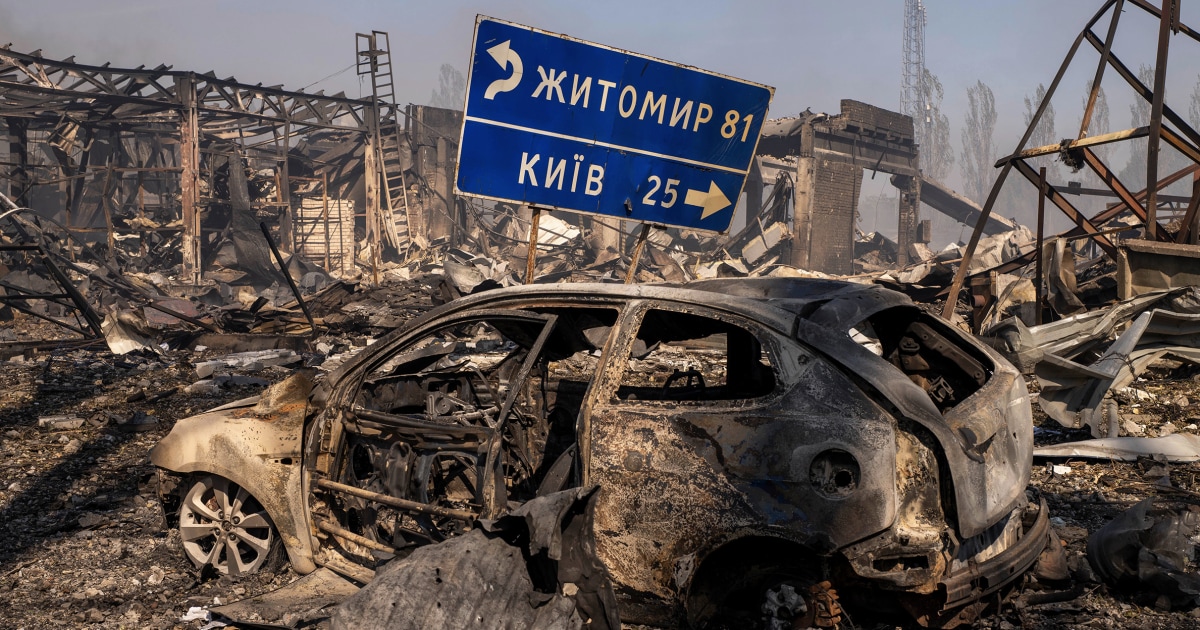
Russia and Ukraine are very likely intensifying reciprocal long-range strikes against military, industrial and energy-related targets. The latest reported toll from the 28 August strike on Myla is 38 killed, 20 injured and four missing, while Russia has announced preparations for further strikes on Ukrainian energy infrastructure.
Executive summary
Reporting from 28 to 30 August records sustained Russian air activity around Kyiv, including the Myla warehouse strike and a fire in a residential building in Kyiv's Obolon district. Ukrainian authorities report strikes on the Kirishi refinery, Yeysk airfield and a drone facility at Millerovo, while Russian officials report almost 500 Ukrainian drones launched overnight. The reciprocal strike pattern is becoming more geographically dispersed, but the cause of the Kirishi fire, the exact contents of the Myla facility and some casualty figures remain contested.
Change from previous assessment
Since the 29 August brief, the assessment has shifted from repeated Russian drone pressure around Kyiv and a likely Ukrainian long-range strike campaign to a clearer reciprocal strike cycle. New reporting gives a later Myla toll of 38 killed, 20 injured and four missing, records a fire in Kyiv's Obolon district, and reports Ukrainian strikes or alleged strikes at Kirishi, Yeysk and Millerovo. Russia has also announced preparations for massive strikes on Ukrainian energy infrastructure. The assessment now places greater weight on near-term civilian and energy risks, while retaining low confidence in the exact target identity and causal attribution of the Myla and Kirishi incidents.
Key judgments
- Russian forces are very likely conducting a sustained air campaign against Kyiv and Kyiv region. Reporting describes attacks on logistics centres, seaports, a thermal power plant, the Fim Service transport and logistics centre near Chaiky, an asbestos-cement plant used by Smart Munitions, and the Myla facility near Kyiv. Russian reporting also describes a group strike on Ukrainian military-industrial enterprises. Confidence is medium because several target descriptions and strike details rely on Russian Ministry of Defence reporting, although major-media reporting records the Myla and Obolon incidents. (Confidence: medium · ASSESSED)
- I&W: Confirm: Ukrainian or Russian authorities report another Russian strike on a named Kyiv-region logistics, port, energy or defence-industrial site, or published imagery shows damage at one of those sites. (0-14 days)
- I&W: Break: Ukrainian and Russian authorities report no further Russian air activity in Kyiv region for 14 consecutive days. (0-14 days)
- Ukraine is very likely sustaining a large long-range drone campaign against Russian military and energy infrastructure. Ukrainian authorities report strikes on the Kirishi refinery, Yeysk airfield and the Millerovo facility for storing, preparing and launching attack drones on 30 August. Russian officials report almost 500 Ukrainian drones launched overnight, including 62 over Leningrad region, about 15 in Rostov region and 10 heading towards Moscow. Confidence is medium because the drone totals and damage attribution are official claims, and the cause of the Kirishi fire is disputed. (Confidence: medium · ASSESSED)
- I&W: Confirm: Russian regional authorities report additional Ukrainian drone interceptions or damage in Leningrad, Krasnodar, Rostov or Moscow regions, alongside a Ukrainian claim of another strike on a named Russian military or energy site. (0-14 days)
- I&W: Break: no additional Ukrainian long-range strike is reported by either side and no new fire or damage is reported at a named Russian military or energy site. (0-14 days)
- Russian retaliation against Ukrainian energy infrastructure is likely within the next 14 days. The Russian Defence Ministry has announced preparations for massive strikes on Ukraine's energy infrastructure, while Dmitry Peskov has promised an appropriate response to Ukrainian attacks. The judgement rests on declared intent rather than evidence that the announced operation has begun, so confidence is medium. (Confidence: medium · ASSESSED)
- I&W: Confirm: the Russian Defence Ministry announces the launch of the prepared energy campaign and Ukrainian authorities report damage or outages at a named power plant, substation or other energy facility. (0-14 days)
- I&W: Break: the Russian Defence Ministry withdraws or abandons the announced operation, or 14 days pass without a reported strike on Ukrainian energy infrastructure. (0-14 days)
- Civilian harm in Kyiv and Kyiv region is likely to remain elevated over the next 14 days. The latest reported toll from the Myla strike is 38 killed, 20 injured, including two children, and four missing. The strike also caused explosions and fires across nearby homes and buildings. A separate Russian drone attack caused a fire in a 12-storey residential building in Kyiv's Obolon district, while another report records the death of a 2-year-old girl and 12 injuries in Kyiv. Confidence is medium because reporting gives different casualty totals and different counts for deaths at the adjacent care facility. (Confidence: medium · ASSESSED)
- I&W: Confirm: Ukrainian emergency services or Kyiv authorities report a new civilian death, injury, residential fire or evacuation after a Russian strike in Kyiv or Kyiv region. (0-14 days)
- I&W: Break: 14 consecutive days pass without a reported civilian casualty, residential fire or evacuation linked to a Russian strike in Kyiv or Kyiv region. (0-14 days)
- The exact operational interpretation of the Myla and Kirishi incidents remains contested. Ukrainian accounts describe the Myla site as an ammunition warehouse or a Fire Point LLC facility holding FP-1/FP-2 drone accelerators, while the Russian Defence Ministry describes a warehouse for drone components and launch boosters. Ukrainian reporting attributes the Kirishi fire to a strike, whereas the Leningrad governor attributes it to a downed drone. The Myla death toll also differs between 37 and 38, and reported deaths at the adjacent care facility differ from the broader State Emergency Service account. Confidence is low on which competing account is correct. (Confidence: low · REPORTED)
- I&W: Confirm: a Ukrainian or Russian investigation publishes imagery or technical findings that identify the Myla facility's contents and establish whether the Kirishi fire followed a direct strike or falling air-defence debris. (0-14 days)
- I&W: Break: Ukrainian and Russian authorities issue convergent descriptions of the Myla facility, the Kirishi cause and the final casualty totals. (0-14 days)
Outlook & scenarios
Reciprocal strike cycle continues (60%)
Russian and Ukrainian forces continue long-range air attacks against military, energy and industrial sites. Kyiv region remains exposed, while Russian regions including Leningrad, Krasnodar, Rostov and Moscow face further drone activity. Civilian casualties and local disruption rise without a confirmed change in the front line.
Russian energy campaign intensifies (30%)
Russia follows its announced preparations with a concentrated series of strikes on Ukrainian energy infrastructure. Damage to substations, thermal power facilities or other energy sites produces wider civilian disruption and increases pressure on Ukraine before winter.
Limited containment around military targets (25%)
Both sides continue strikes, but attacks remain concentrated on facilities described by the two governments as military, industrial or energy-related. The strike tempo remains high without another mass-casualty incident comparable to Myla.
Black Sea incident widens the crisis (10%)
A further fire, sinking or strike affecting merchant shipping or a port facility in the Black Sea creates a new regional security incident. The existing uncertainty over the cause of the ship sinking off Romania complicates attribution and response.
Recommendations
- Use 38 killed, 20 injured and four missing as the provisional Myla casualty baseline. Keep the earlier 37 figure, the 34 care-facility deaths figure and the broader 38-death account as separate entries until Ukrainian authorities reconcile them.
- Prioritise daily collection on Kyiv, Myla, Obolon, Chaiky and the Smart Munitions site, and separately track Kirishi, Yeysk, Millerovo, Moscow and Rostov. Distinguish official claims from independently verified damage.
- Track Russian Defence Ministry statements against reported impacts on named Ukrainian power plants, substations and other energy facilities during the next 14 days. Report announced intent separately from completed strikes.
- Maintain competing attribution lines for the Kirishi fire and the contents of the Myla facility. Do not report a direct Ukrainian hit at Kirishi or a definitive description of the Myla site without corroborating evidence.
- Monitor Black Sea merchant shipping and port facilities near Romania for additional fires, sinkings or reported strikes. Record the location, cause and responsible actor as separate analytic fields.
- Keep the dated 2025 battlefield reporting separate from the 2026 airstrike picture. Do not use the older front-line claims to estimate the current strike tempo or territorial-control changes.
Confidence & uncertainty
Overall confidence is medium because multiple major-media reports and statements from Ukrainian and Russian authorities corroborate the Myla casualties, Kyiv residential damage and the occurrence of reciprocal drone activity. Confidence is lower for the operational meaning of the strikes because the Myla facility, the Kirishi fire and some casualty subcounts are contested. Several battlefield claims in the reporting are dated 2025 and provide limited support for the current 2026 situation.
Intelligence gaps
- [EEI 1.1 · PARTIAL] Number of airstrikes and aircraft/UCAV sorties per 24-hour period, broken down by administrative region and timestamped geolocation of each strike/strike cluster. Recommended collection: air defense radar/ADS-B
- [EEI 1.2 · PARTIAL] Types of delivery platforms and munitions observed (fixed-wing aircraft model, helicopters, cruise missiles, ballistic missiles, guided bombs, loitering munitions) with visual/forensic confirmation of munition remnants where possible. Recommended collection: satellite/imagery; munition forensics
- [EEI 1.3 · UNCOVERED] Airspace access and sortie origin information: airbases, staging areas, tanker/ISR support flights, and routing corridors used in the last 7 days. Recommended collection: airspace/ADS-B; satellite/imagery
- [EEI 1.4 · PARTIAL] Changes in temporal or target-patterns compared to the prior baseline (new target types, time-of-day shifts, concentration on specific infrastructure or front sectors). Recommended collection: open-source media; satellite/imagery
- [EEI 2.2 · UNCOVERED] Functional status reports and capacity of hospitals and emergency services in strike-affected areas (beds available, emergency department functionality, evacuation of patients). Recommended collection: humanitarian organizations/civilian authorities
- [EEI 2.4 · PARTIAL] Population displacement metrics: numbers and routes of internally displaced persons, shelter occupancy rates, and evidence of mass evacuations or blocked humanitarian access corridors. Recommended collection: humanitarian organizations; social media
- [EEI 3.2 · UNCOVERED] Evidence of munitions and parts resupply rates: documented deliveries to forward depots/airbases, rail/road convoys with munitions manifest, or satellite imagery showing stockpile levels over time. Recommended collection: logistics tracking; satellite/imagery
- [EEI 3.3 · PARTIAL] Indicators of escalatory posture or force employment changes: deployment or activation of long-range strike assets, increased sorties of strategic platforms, or movement/deployment of additional surface-to-air systems. Recommended collection: satellite/imagery; air defense radar
- [EEI 3.4 · UNCOVERED] Foreign involvement or external support evidence: observed deliveries of strike munitions, presence of foreign contractor personnel at bases, or procurement transactions tied to the campaign. Recommended collection: customs/open-source intelligence; satellite/imagery
Cited sources
[1] Lenta.ru · Российская армия нанесла массированный удар по целям на Украине. Киев под огнем, уничтожено место подготовки «Фламинго» (B) · sha256:3fc7ff2bf6a1 [2] Komsomolskaya Pravda (kp.ru) · ВС РФ нанесли групповой удар по ВПК Украины (B) · sha256:625e0e85dd7d [3] Los Angeles Times · Death toll rises to 38 from Russia's deadliest attack on Ukraine this year - Los Angeles Times (A) · sha256:ef85f09d38dc [4] ERR (Eesti Rahvusringhääling) · 1649-й день войны | Генштаб: Силы обороны нанесли удар по Киришскому НПЗ и аэродрому "Ейск" (A) · sha256:0b09695c8213 [5] NBC News · Death toll rises to 38 from Russia’s deadliest attack on Ukraine this year (A) · sha256:587f72037983 [6] EADaily · Пять регионов России находятся под угрозой атак БПЛА и Ракет ВСУ: EADaily (B) · sha256:3b14c223eeb0 [7] Los Angeles Times · A look at the deadliest Russian attacks on Ukraine this year - Los Angeles Times (A) · sha256:cafa8a7d40dc
Source content hashes were computed at collection time; the cited text is preserved unmodified for the life of this product.
TLP:CLEAR