TLP:CLEAR, Disclosure is not limited.
Ukraine’s 10-11 June Deep Strikes Hit Cheboksary, Vladimir, Samara; Russia Presses Donetsk, Kharkiv Axes
Time window: Last 7 days · Audience: General analyst · Type: Situation report · DTG: 2026-06-11 07:11Z · Overall confidence: MEDIUM
BLUF
Ukraine very likely executed a large wave of long-range strikes on 10-11 June against Russian military and energy targets in Cheboksary, Vladimir, and Samara, while also striking the occupied port of Mariupol and a Black Sea ‘shadow fleet’ tanker. Russia likely continued multi‑axis pressure around Kostiantynivka, Kupiansk, Kharkiv, but those battlefield claims remain thinly sourced.
Executive summary
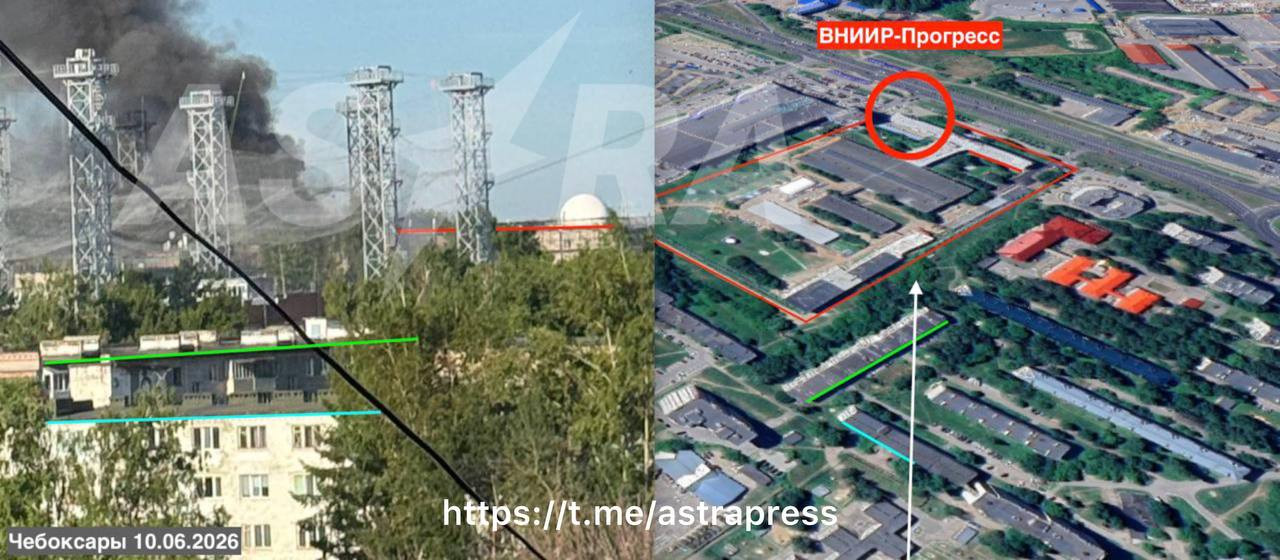
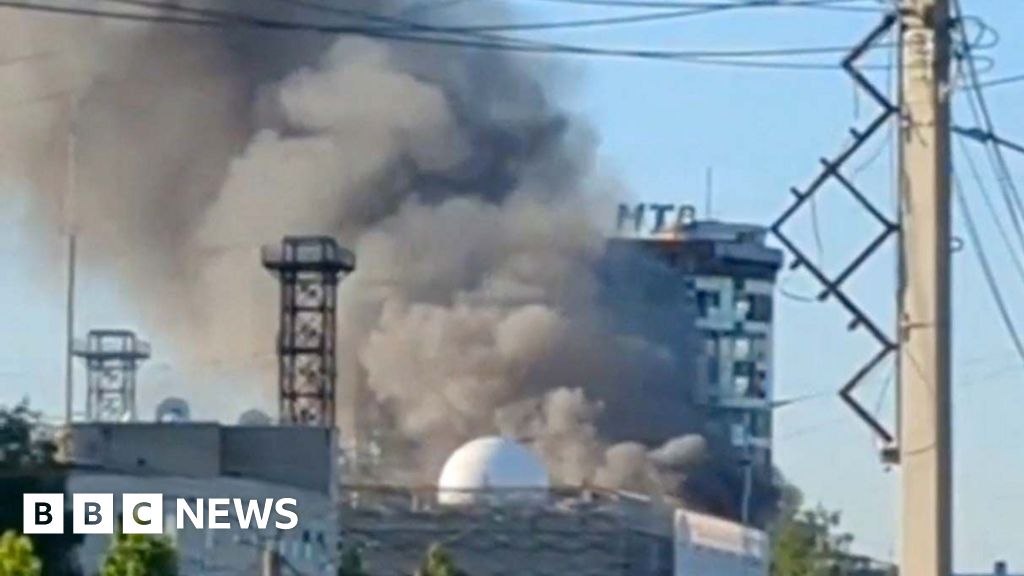
President Volodymyr Zelensky and multiple outlets reported the use of FP‑5 Flamingo missiles to hit a military plant in Cheboksary, with Ukraine’s SBU “Alpha” unit confirming strikes on the Vtorovo and Lobkovo oil pumping stations in Russia’s Vladimir region, and additional reporting of a strike on the Kuibyshev refinery in Samara. Kyiv also reported strikes on the Russian‑occupied port of Mariupol and the ‘West Horizon’ tanker in the Black Sea. Concurrent Russian regional reporting described emergency measures and injuries after drone activity in Krasnodar Krai, Belgorod, and Sevastopol. Russia’s Defense Ministry claimed it downed 326-330 Ukrainian drones overnight even as several strikes penetrated air defenses. Inside Ukraine, local officials reported at least two killed and 26 injured across four regions in the past 24 hours, and NASA detected 16 thermal anomalies over 10-11 June consistent with multiple active fire zones. Battlefield claims of Russian advances in the Kostiantynivka, Kupiansk, and Kharkiv areas and a reported Ukrainian withdrawal near Kazachya Lopan lack independent corroboration.
Change from previous assessment
New this run: corroborated reporting of FP‑5 Flamingo strikes on a military plant in Cheboksary and oil infrastructure in Vladimir and Samara; added strikes on the occupied port of Mariupol and the Black Sea tanker West Horizon; Russian regional emergency measures and injuries after drone activity in Krasnodar Krai, Belgorod, and Sevastopol; Russia’s Defense Ministry claims of 326-330 Ukrainian drones downed overnight 10-11 June; FIRMS detected 16 thermal anomalies over 10-11 June; and fresh but thinly sourced claims of Russian advances around Kostiantynivka, Kupiansk, Kharkiv and a Ukrainian withdrawal near Kazachya Lopan. Initial assessment of ZNPP external power loss added with low confidence.
Key judgments
- Ukraine very likely conducted large‑scale long‑range strikes on 10-11 June that achieved effects at a military plant in Cheboksary and energy infrastructure in Russia’s Vladimir and Samara regions, while also striking the Russian‑occupied port of Mariupol and the Black Sea tanker West Horizon. (Confidence: high · REPORTED)
- I&W: High‑resolution satellite imagery shows damage at VNIIR‑Progress (Cheboksary), Kuibyshev refinery (Samara), and the Vtorovo/Lobkovo pumping stations (Vladimir). (0-14 days)
- I&W: Official statements or public filings from targeted facilities acknowledging outages or repair activities. (0-14 days)
- Russian logistics and local civil environments were likely disrupted by these strikes, as suggested by a declared state of emergency in the Afipsky settlement after a reported drone attack and injuries/fires in Krasnodar, Belgorod, and Sevastopol; Ukrainian reporting also claims a 71% fall in Russian military cargo traffic along Crimea’s R‑280 highway over two weeks. (Confidence: medium · ASSESSED)
- I&W: Open‑source traffic monitoring shows sustained lower military cargo volumes along the R‑280 highway. (1-3 months)
- I&W: Additional local emergency declarations or repeated public reporting of post‑strike repairs in Krasnodar Krai and Belgorod. (0-14 days)
- Russia likely maintained offensive pressure in early June along the Kostiantynivka, Kupiansk, Kharkiv axes, including a reported Ukrainian withdrawal near Kazachya Lopan; however, these battlefield claims are single‑source and lack independent corroboration. (Confidence: low · ASSESSED)
- I&W: Geolocated combat footage or official daily reports acknowledge changes in control near Kostiantynivka, Kupiansk, or Kazachya Lopan. (0-14 days)
- I&W: Credible geolocated evidence of Ukrainian counterattacks reversing reported gains on these sectors. (0-14 days)
- The air campaign intensity almost certainly remained high overnight 10-11 June: Russia reported downing at least 326-330 Ukrainian drones even as multiple Ukrainian strikes penetrated air defenses to hit deep targets inside Russia. (Confidence: medium · ASSESSED)
- I&W: Subsequent nights feature similarly high reported launch volumes and additional confirmed penetrations to targets >500 km inside Russia. (0-14 days)
- I&W: A sharp decline in reported launch volumes coupled with an absence of new confirmed deep‑strike effects. (0-14 days)
- Civilian harm in Ukraine remained ongoing: local officials reported at least two killed and 26 injured across four regions in the past 24 hours, and NASA detected 16 thermal anomalies over 10-11 June that are consistent with multiple active fire zones but do not attribute cause. (Confidence: high · REPORTED)
- I&W: Oblast authorities continue publishing daily casualty tallies at or above recent levels, and FIRMS anomaly counts remain elevated. (0-14 days)
- I&W: A sustained reduction in daily casualty reports and a marked drop in thermal detections. (0-14 days)
- Zaporizhzhia Nuclear Power Plant reportedly lost external power on 11 June and switched to backup diesel generators, indicating ongoing grid‑stability risks near the front; this is single‑source reporting and should be treated with caution. (Confidence: low · REPORTED)
- I&W: Public updates note restoration or repeated loss of external power at the plant. (0-14 days)
- I&W: Independent reporting refutes the 11 June power‑loss claim or shows uninterrupted grid connection. (0-14 days)
Outlook & scenarios
Sustained Ukrainian deep‑strike tempo against Russian military‑industrial and energy nodes, 60%
Ukraine continues launching long‑range packages similar to 10-11 June, prioritizing plants like Cheboksary’s VNIIR‑Progress and energy infrastructure in regions such as Vladimir and Samara, while periodically hitting occupied ports (e.g., Mariupol) and maritime targets (e.g., ‘shadow fleet’ tankers). Effects accumulate in localized outages, emergency measures, and episodic logistics friction.
Incremental Russian gains along Kostiantynivka, Kupiansk, Kharkiv, 40%
Russian forces convert multi‑axis pressure into limited territorial advances near Kostiantynivka and approaches to Kupiansk and Kharkiv, exploiting Ukrainian force rotations or localized withdrawals (e.g., near Kazachya Lopan). Gains remain tactical absent broader operational breakthroughs.
Maritime and port‑strike expansion, 50%
Ukrainian attacks against occupied ports and Black Sea shipping persist following the strikes on Mariupol port and the West Horizon tanker, increasing risk to logistics nodes, insurance exposure, and Russia’s ‘shadow fleet’ operations.
Acute power‑reliability stress around ZNPP, 20%
If external power instability persists, the Zaporizhzhia plant faces elevated operational risk windows that could trigger additional backup power transitions and emergency messaging, raising regional and international concern despite no immediate radiological release.
Recommendations
- Prioritize commercial SAR/optical tasking for battle damage assessment at VNIIR‑Progress (Cheboksary), Kuibyshev refinery (Samara), and the Vtorovo/Lobkovo pumping stations (Vladimir) to confirm strike effects and repair timelines (next 7-14 days).
- Fuse FIRMS thermal detections with geolocated user‑generated content to rapidly map active fire zones and distinguish likely strike impacts from non‑combat sources (daily rhythm).
- Stand up an OSINT logistics watch on Crimea’s R‑280 highway using satellite revisit and open traffic telemetry to validate or falsify the reported 71% decline in Russian military cargo flows (next 1-3 months).
- Establish a structured ledger comparing nightly Russian air‑defense shoot‑down claims with independently verified penetrations (Cheboksary, Vladimir, Samara), to refine assessments of Russian interception effectiveness (rolling 14‑day window).
- Monitor occupied Mariupol port and Black Sea AIS patterns for additional disruptions following the port and West Horizon strikes; flag anomalous loitering, AIS gaps, and rerouting among ‘shadow fleet’ tonnage (continuous).
- Task geolocation teams to validate any new claims of advances or withdrawals around Kostiantynivka, Kupiansk, and Kazachya Lopan, using terrain‑matched imagery and control‑line change detection (next 7-14 days).
- Maintain a nuclear‑safety watch on public updates related to ZNPP power status; capture any repeated external power losses, diesel generator activations, or official refutations for trend analysis (daily).
Confidence & uncertainty
Overall confidence is medium. The deep‑strike campaign is supported by multiple mutually reinforcing reports, including statements from President Zelensky and confirmations of effects at Cheboksary, Vladimir, Samara, Mariupol, and at sea. Reporting on local Russian emergencies and logistics disruptions is credible but often single‑source, lowering confidence in the broader impact assessment. Battlefield advance/withdrawal claims around Kostiantynivka, Kupiansk, Kharkiv rely on limited, sometimes state‑aligned or social media sources and remain low confidence. FIRMS thermal detections corroborate active fires but do not attribute cause. The ZNPP power‑loss report is single‑source and therefore low confidence.
Alternative analysis (red cell)
While multiple reports indicate heightened strike and drone activity on 10-11 June, the claim set relies heavily on single‑source A4/B6 reports and contains internal inconsistencies flagged by the run's linting. Independent geolocated imagery, radar/ISR track data, neutral third‑party damage assessments, and logistics throughput metrics are required to confirm large‑scale long‑range strike success, systemic logistic disruption, or precise shootdown tallies. Until such corroboration is available, an estimative characterization that activity and isolated effects occurred but strategic outcomes remain unverified is more defensible.
Cited sources
[1] kyivpost.com, Zelensky Confirms Flamingo Strikes on Russian Military Plant and Oil Refinery (A) · sha256:9197b33a04fb [2] theguardian.com, Ukraine war briefing: Flamingo missiles hit more far-flung Russian targets (A) · sha256:cab1ea035786 [3] russian.rt.com, Новости и события Украины - РТ на русском (B) · sha256:cb6e58efbf88 [4] kyivindependent.com, Ukraine war latest: Ukrainian forces target key Crimea crossing amid broader strikes on Russian military logistics (B) · sha256:e5ee433f03fc [5] الحرب الثالثة, روسيا تتقدم في كوستيانتينيفكا وكوبيانسك وخاركيف | آخر تطورات حرب أوكرانيا (B) · sha256:aa8557b68b0b [6] Politik Real, Ukraine 10.06.26 Frontbericht #shortsvideo #ukraine #shorts #geopolitics #shots #news #shortsfeed (E) · sha256:228ea078a8da [7] Los Angeles Times, Ukraine launches long-range strikes on military and energy sites in Russia - Los Angeles Times (A) · sha256:22425d2be91f [8] BBC, Ukraine says missiles hit military plant deep inside Russia (A) · sha256:87eaab0155a5 [9] NASA, NASA FIRMS thermal detections, Ukraine (2d) (A) · sha256:250455f1a2d5
Source content hashes were computed at collection time; the cited text is preserved unmodified for the life of this product.
Red cell review: PARTIAL DISSENT
TLP:CLEAR