TLP:CLEAR · Disclosure is not limited.
Ukraine: Strike Intensity and Air-Defence Pressure
Time window: Last 1 day · Audience: General analyst · Type: Situation report · DTG: 2026-08-24 14:37Z · Overall confidence: HIGH
BLUF
Russian forces very likely intensified airstrikes ahead of Ukraine's Independence Day, and Russia and Ukraine are likely to sustain reciprocal long-range attacks over the next 0-14 days. EU approval of €6.1 billion for Ukrainian defence addresses part of the reported air-defence requirement, but the chronology of detailed strike reporting remains unresolved because several records are dated 23 August 2023 rather than 2026.
Executive summary
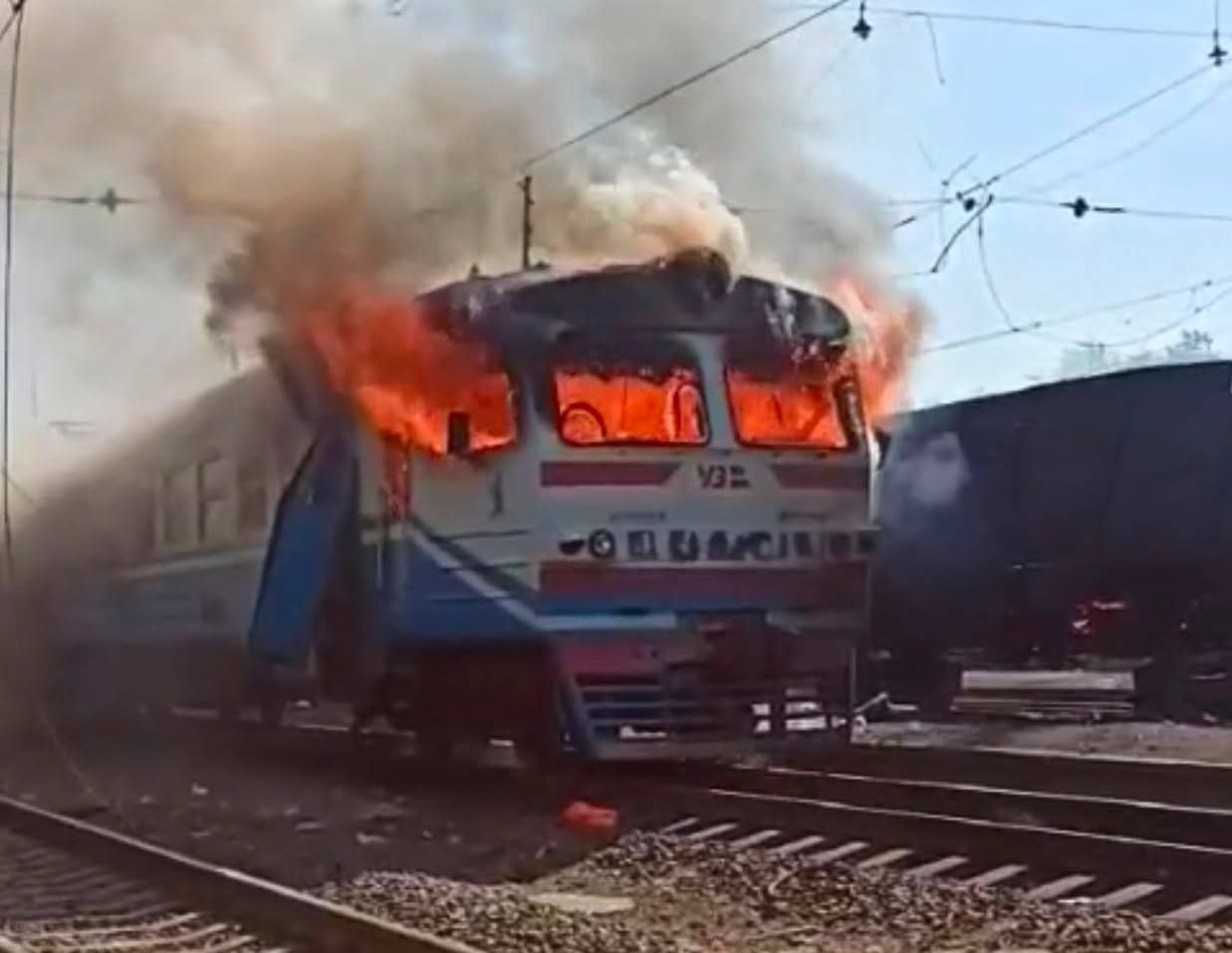
The reporting record indicates a sustained Russian air campaign against Ukraine, with the clearest detailed account describing one missile and 88 kamikaze drones used against Kharkiv region on 23 August 2023. That reporting attributed at least five deaths and 17 injuries across the region, including a strike on Lymanivka railway station that killed two women and injured five people, including an 11-year-old girl. Current reporting adds a Ukrainian attack on four Ozon logistics hubs in Russia on 24 August 2026, a Russian decree allowing state control of inadequately protected critical infrastructure, and a €6.1 billion EU defence package intended in part for air-defence systems, missiles, ammunition and radars. The record contains material date inconsistencies, so exact attribution and timing for some incidents require verification.
Change from previous assessment
Since the 23 August brief, the assessment retains the expectation of continued reciprocal long-range attacks but adds a current report of Ukrainian strikes on four Ozon logistics hubs and Putin's decree permitting state control of inadequately protected critical infrastructure. The air-defence judgment now gives greater weight to the reported €6.1 billion EU package and its stated use for air and missile defence, missiles, ammunition and radars. Confidence in the broad situation is raised to high, while confidence in the chronology of detailed strike reporting remains medium because the record still mixes 2023 and 2026 dates.
Key judgments
- Russian forces very likely intensified airstrikes ahead of Ukraine's Independence Day, but the record does not establish a clean 2026 chronology for the detailed attack pattern. The strongest account describes one missile and 88 kamikaze drones used against Kharkiv region on 23 August 2023, with strikes on Kharkiv and 14 settlements, Lymanivka railway station and Orlivka railway station. A separate 2026-dated report records 376 missile strikes against Ukraine in June. (Confidence: medium · ASSESSED)
- I&W: Confirm: Between 24 August and 7 September, Ukrainian authorities and independent reporting identify new Russian missile or kamikaze-drone strikes in Kharkiv region or other named Ukrainian settlements, with matching platform details. (0-14 days)
- I&W: Break: By 7 September, authorities and independent reporting clearly separate the detailed 23 August strike accounts from 2026 and record no comparable new Russian air campaign. (0-14 days)
- Russian airstrikes very likely caused substantial civilian harm in Kharkiv region, although the reported totals refer to different geographic and incident scopes. Local reporting recorded five people killed and 17 injured across the region on 23 August 2023. At Lymanivka railway station, two women were reported killed and five people, including an 11-year-old girl, injured. A separate attack on Orlivka railway station injured a 44-year-old man. (Confidence: medium · REPORTED)
- I&W: Confirm: Within 14 days, Ukrainian authorities and an independent outlet publish matching casualty totals for Lymanivka, Orlivka or the wider Kharkiv region. (0-14 days)
- I&W: Break: Ukrainian authorities revise or withdraw the reported five deaths and 17 injuries, or establish that the figures came from unrelated dates and locations. (0-14 days)
- Russia and Ukraine are likely to continue reciprocal long-range attacks over the next 0-14 days. Ukraine reportedly targeted four Ozon logistics hubs in Russia on 24 August 2026, while the Russian Armed Forces state that they are identifying missile production sites in Ukraine for destruction. Vladimir Putin's decree permitting state control of inadequately protected critical infrastructure indicates that Moscow is preparing for continued attack pressure. UK authorisation for MBDA to transfer technical data on SCALP components and Ukraine's ability to plan missile production over the next 2-3 years support the expectation of a sustained strike cycle, but several capability and attribution claims remain partly single-source. (Confidence: medium · ASSESSED)
- I&W: Confirm: Within 14 days, Russia reports action against a named Ukrainian missile production site and Ukraine or Ozon reports another strike on a named Russian logistics hub. (0-14 days)
- I&W: Break: Russia and Ukraine announce and implement an accepted cessation of long-range strikes, with no new attacks on named production or logistics sites for 14 consecutive days. (0-14 days)
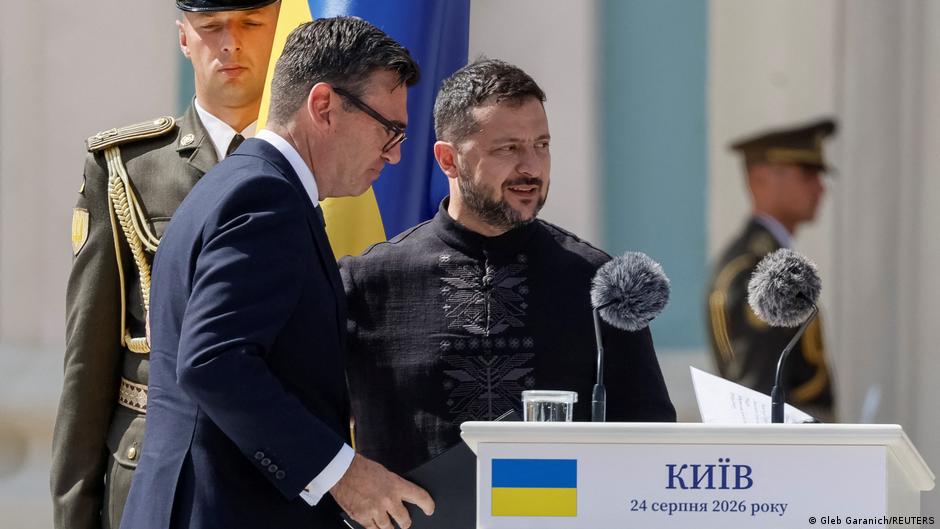
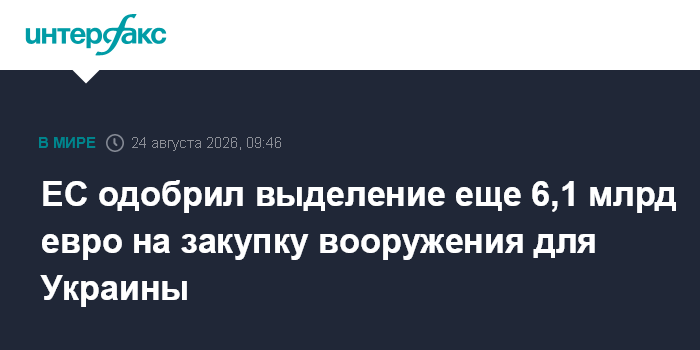
- Ukraine's air and missile defence requirement is likely to remain acute over the next 0-14 days despite the EU's reported €6.1 billion defence package. Ursula von der Leyen said the funds are intended for air and missile defence systems, missiles, ammunition and radars, while allied officials in Kyiv are discussing additional air-defence and energy supplies. The package is reported as a 24 August 2026 approval in current reporting, but another record dates the same amount to 24 August 2023. That unresolved contradiction lowers confidence in the precise timing, although the broad support decision is corroborated. (Confidence: medium · ASSESSED)
- I&W: Confirm: EU or coalition reporting identifies signed contracts, payments or deliveries for air-defence systems, missiles, ammunition or radars under the €6.1 billion package. (0-14 days)
- I&W: Break: No contracts, payments or deliveries are reported within three months, while Kyiv continues publicly requesting additional air-defence supplies. (1-3 months)
Outlook & scenarios
Continued reciprocal long-range strikes (65%)
Russia and Ukraine sustain attacks against military-industrial, logistics and critical infrastructure targets through the next 0-14 days. Russian efforts against Ukrainian missile production sites and Ukrainian attacks on Ozon logistics hubs continue, while civilian casualties remain possible in populated areas.
Defence replenishment begins to reduce exposure (35%)
EU funding moves into contracts and deliveries for air-defence systems, missiles, ammunition and radars over the next 1-3 months. Ukraine also advances missile-production planning and supporting repair and training infrastructure. This improves resilience without ending the strike cycle.
Limited pause without a settlement (20%)
A short pause in long-range strikes follows further prisoner exchanges or renewed diplomatic engagement, but the dispute over territory remains unresolved. Ukraine continues to state that it wants peace without surrendering territory, while Russia continues to accuse the UK of obstructing peace.
Critical-infrastructure escalation (10%)
Low-probability, high-impact scenario: Russia uses the new decree to assume control of inadequately protected critical infrastructure while attacks on Ukrainian missile production and Russian logistics hubs expand. The move increases state control over wartime economic activity and raises the risk of broader infrastructure disruption.
Recommendations
- Maintain separate 23 August 2023 and 24 August 2026 timelines for strikes, casualties, weapons and aid. Do not merge records until the conflicting dates are resolved.
- Prioritise verification of new Russian strikes in Kharkiv region and other named Ukrainian settlements by comparing Ukrainian official reporting with independent reporting. Track platform type, launch or impact location, casualties and infrastructure damage separately.
- Monitor implementation of the €6.1 billion EU package through contract announcements, payment requests and deliveries of air-defence systems, missiles, ammunition and radars.
- Track whether Russia applies Putin's infrastructure decree to named facilities, especially missile-production sites and logistics hubs, and record any associated changes in ownership, protection or operating status.
- Update the 0-14 day warning picture daily for attacks on Ukrainian missile-production sites, Ozon logistics hubs or other named critical infrastructure. Treat an accepted bilateral pause in long-range strikes as the principal indicator of a changed trajectory.
Confidence & uncertainty
Overall confidence is high for the broad assessment that Ukraine is experiencing sustained Russian airstrike pressure, reciprocal long-range attacks and increased external defence support. The assessment draws on multiple official-government and major-media reports, including corroboration of the EU funding decision, the reported Kharkiv-region strike pattern and current Russian and Ukrainian actions. Confidence is lower for the precise chronology of individual strikes, because several detailed attack records are dated 23 August 2023, while other relevant records are dated 24 August 2026 or lack dates. The exact timing of the €6.1 billion package also remains contested within the reporting record.
Intelligence gaps
- [EEI 1.1 · PARTIAL] Number of airstrikes and aircraft/UCAV sorties per 24-hour period, broken down by administrative region and timestamped geolocation of each strike/strike cluster. Recommended collection: air defense radar/ADS-B
- [EEI 1.2 · PARTIAL] Types of delivery platforms and munitions observed (fixed-wing aircraft model, helicopters, cruise missiles, ballistic missiles, guided bombs, loitering munitions) with visual/forensic confirmation of munition remnants where possible. Recommended collection: satellite/imagery; munition forensics
- [EEI 1.3 · UNCOVERED] Airspace access and sortie origin information: airbases, staging areas, tanker/ISR support flights, and routing corridors used in the last 7 days. Recommended collection: airspace/ADS-B; satellite/imagery
- [EEI 1.4 · PARTIAL] Changes in temporal or target-patterns compared to the prior baseline (new target types, time-of-day shifts, concentration on specific infrastructure or front sectors). Recommended collection: open-source media; satellite/imagery
- [EEI 2.1 · PARTIAL] Confirmed civilian fatalities and injuries attributed to airstrikes by location and date, including hospital admission logs and mortuary reports. Recommended collection: civilian authorities/human intelligence
- [EEI 2.2 · PARTIAL] Functional status reports and capacity of hospitals and emergency services in strike-affected areas (beds available, emergency department functionality, evacuation of patients). Recommended collection: humanitarian organizations/civilian authorities
- [EEI 2.3 · PARTIAL] Operational outages and damage reports for critical infrastructure (power plants/substations, water treatment, telecommunications, rail junctions, bridges) with geolocated pre/post imagery where feasible. Recommended collection: utility operators; satellite/imagery
- [EEI 2.4 · UNCOVERED] Population displacement metrics: numbers and routes of internally displaced persons, shelter occupancy rates, and evidence of mass evacuations or blocked humanitarian access corridors. Recommended collection: humanitarian organizations; social media
- [EEI 3.2 · PARTIAL] Evidence of munitions and parts resupply rates: documented deliveries to forward depots/airbases, rail/road convoys with munitions manifest, or satellite imagery showing stockpile levels over time. Recommended collection: logistics tracking; satellite/imagery
- [EEI 3.3 · PARTIAL] Indicators of escalatory posture or force employment changes: deployment or activation of long-range strike assets, increased sorties of strategic platforms, or movement/deployment of additional surface-to-air systems. Recommended collection: satellite/imagery; air defense radar
Cited sources
[1] gwaramedia.com · Russian forces attack railway station, killing 2, injuring 5 (D) · sha256:3df3d8dca80b [2] Euronews · "Мы наращиваем помощь": ЕС одобрил выделение 6 млрд евро на оборону Украины (A) · sha256:4ac4680f53f5 [3] dw.com · Burnham likens Ukraine fight to British stand against Nazis (A) · sha256:80b12655885c [4] news.mail.ru · Брифинг пресс-секретаря президента России Дмитрия Пескова 24 августа: главное (A) · sha256:81d11ac5f4e3 [5] tehnowar.ru · Британия передаст Украине секретные данные для производства ракет SCALP (B) · sha256:763a7b431217 [6] interfax.ru · ЕС одобрил выделение еще 6,1 млрд евро на закупку вооружения для Украины (B) · sha256:c48474f9fa28
Source content hashes were computed at collection time; the cited text is preserved unmodified for the life of this product.
TLP:CLEAR