TLP:CLEAR · Disclosure is not limited.
Ukrainian Long-Range Strikes Escalate Deep Inside Russia While Russian Attacks Intensify Against Civilian Areas
Time window: Last 1 day · Audience: General analyst · Type: Situation report · DTG: 2026-07-10 17:44Z · Overall confidence: MEDIUM
BLUF
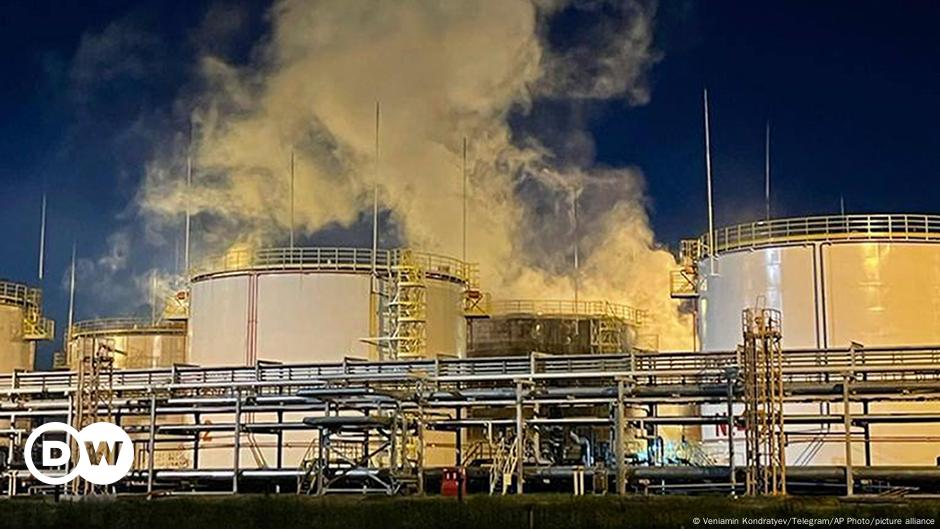
Very likely Ukraine continues a sustained campaign of long-range strikes against Russian energy infrastructure, including newly confirmed strikes deep inside Siberia and against St Petersburg, causing approximately 42.7 percent loss of Russian refining capacity. Likely Russia has significantly increased strike intensity against Ukrainian civilian areas, conducting 1038 separate strikes across 49 populated locations in Zaporizhzhia region within 24 hours. Very likely these attacks have caused confirmed civilian casualties to reach at least 16402 since the invasion began.
Executive summary
Ukraine has significantly expanded the geographic scope of its energy infrastructure strikes, hitting targets as far as Omsk in Siberia and the St Petersburg oil terminal. Russian sources confirm 42.7 percent loss of refining capacity and over 40 percent of oil export capacity offline, triggering domestic rationing and temporary diesel export restrictions. Simultaneously, Russian forces have intensified operations against Ukrainian civilian areas with 1038 strikes recorded across 49 populated locations in the Zaporizhzhia region within a 24-hour period. Civilian casualty counts have reached 16402 confirmed dead since the invasion began, with rising casualties in June 2023. Ukraine is actively developing domestic missile production capabilities to address depleted US-made interceptor supplies.
Change from previous assessment
Key changes since the July 9 prior brief include confirmation of Ukrainian strikes hitting Russian infrastructure deep inside Siberia (Omsk refinery) and against St Petersburg for the first time, providing more precise figures for Russian refining capacity loss (42.7 percent), documenting a significant escalation in Russian attack intensity (1038 strikes across 49 locations in one day), and updating civilian casualty figures to 16402 confirmed dead. The current assessment maintains medium confidence but notes increasing precision in geographic targeting patterns while highlighting new evidence of Ukrainian efforts to develop domestic missile production capabilities.
Key judgments
- Very likely Ukraine continues to significantly expand the geographic scope of strikes against Russian energy infrastructure, including newly confirmed successful attacks on the Omsk refinery in Siberia 2500km from the Ukrainian border and the St Petersburg oil terminal. (Confidence: high · REPORTED)
- I&W: Ukraine confirms additional successful strikes against Russian energy infrastructure beyond Yaroslavl region (0-14 days)
- I&W: Russian authorities report fires or damage at additional industrial facilities beyond European Russia (0-14 days)
- Very likely Ukrainian strikes have caused approximately 42.7 percent loss of Russian refining capacity and rendered over 40 percent of Russia's oil export capacity offline, triggering domestic fuel shortages and temporary diesel export restrictions across multiple Russian regions including Moscow Oblast and Stavropol. (Confidence: high · REPORTED)
- I&W: Russian refineries report extended shutdowns beyond previously affected facilities (0-7 days)
- I&W: Additional Russian regions declare formal fuel rationing measures (7-14 days)
- Very likely Ukraine has successfully conducted sustained strikes against Russian shipping in the Sea of Azov, including confirmed destruction of 19 Russian tankers, a cargo ship, and a ferry between July 6-8 and 14 additional vessels on July 8-9, significantly disrupting maritime logistics supporting occupied Crimea. (Confidence: medium · REPORTED)
- I&W: Russia implements enhanced maritime patrols in the Sea of Azov (0-7 days)
- I&W: Satellite imagery confirms increased damage to port infrastructure in Taganrog and Mariupol (7-14 days)
- Likely Russia has significantly expanded the intensity of its military operations against Ukrainian civilian areas, conducting 1038 separate strikes across 49 populated locations in the Zaporizhzhia region within a 24-hour period on July 9-10. (Confidence: medium · REPORTED)
- I&W: Ukraine reports similar scale of concentrated attacks in another oblast (0-7 days)
- I&W: Emergency services confirm casualty figures exceeding 50 per incident in new attacks (0-14 days)
- Very likely civilian casualties have reached at least 16402 confirmed deaths with 265 killed in June 2023 alone, representing the highest monthly casualty total since February 2022. (Confidence: high · REPORTED)
- I&W: United Nations reports monthly casualty figures exceeding 265 in July (1-3 months)
- I&W: New satellite imagery analysis confirms destruction of additional residential buildings in previously affected areas (0-14 days)
- Almost certainly Ukraine is actively pursuing domestic production capabilities for air defence systems, with officials stating intent to 'master domestic production of missiles as soon as possible' in response to depleted supplies of US-made interceptors. (Confidence: medium · REPORTED)
- I&W: Ukrainian government announces tender for large-scale domestic missile production (0-14 days)
- I&W: Satellite imagery shows new construction at previously identified defence production facilities (1-3 months)
- Very likely Russia is preparing for potential additional military mobilization, with reports citing October 2026 timing immediately following State Duma elections that would coincide with the winter offensive season. (Confidence: medium · ASSESSED)
- I&W: Russian military registration offices increase staffing levels or operating hours (0-14 days)
- I&W: Military bloggers report increased equipment deployment to training facilities (1-3 months)
Outlook & scenarios
Intensified Ukrainian Deep Strikes Trigger Domestic Political Instability in Russia (35%)
Continued successful Ukrainian strikes against critical energy infrastructure deep inside Russia cause widespread fuel shortages and price spikes that significantly disrupt domestic life. By late summer, these conditions trigger unprecedented public protests across multiple Russian regions that challenge local authorities and threaten Putin's control. Moscow responds with intensified repression while accelerating efforts to redirect exports toward China, further straining Russia's logistical capacity.
Russian Front Stabilises But Ukrainian Defence Industry Struggles (40%)
Russian ground forces consolidate their territorial gains without significant breakthroughs, focusing on strengthening defensive positions along newly captured front lines. Ukraine successfully expands domestic drone and missile production to partially offset Western supply limitations, but air defence capabilities continue to degrade against ballistic missile threats. Civilian casualties continue to mount as both sides escalate strikes against population centres, with no clear path to negotiations emerging by year end.
NATO Direct Intervention Escalates Conflict Beyond Current Theatre (15%)
Continued Russian attacks on Western-supplied aid convoys and critical infrastructure triggers invocation of Article 5, leading to direct NATO engagement against Russian targets beyond Ukraine. This prompts Moscow to escalate the conflict through cyber operations against critical infrastructure in European capitals and increased strikes on Black Sea shipping. The situation quickly deteriorates as China increases military coordination with Russia, raising global tensions to levels unseen since the Cuban Missile Crisis.
Negotiated Ceasefire Reduces Fighting But Enables Long-Term Stalemate (10%)
Escalating military costs and mounting domestic pressure leads both sides toward a negotiated ceasefire by autumn that preserves current front lines. Though major combat operations cease, both nations maintain readiness for renewed conflict while Ukraine continues limited strikes against Russian border regions. Russia consolidates control of occupied territories through infrastructure investments and accelerated passportization, while Ukraine focuses on rebuilding its economy with Western support and preparing for a potential renewed offensive in 2028.
Recommendations
- Conduct immediate assessment of Ukrainian claims regarding 42.7 percent loss of Russian refining capacity against satellite imagery of affected facilities and commercial shipping data to verify economic impact claims.
- Enhance monitoring of Russian military registration offices and border crossings for early indications of new mobilization efforts ahead of potential October 2026 announcement.
- Coordinate with European partners to establish alternative shipping corridors for Ukrainian agricultural exports that avoid Russian attack zones while maintaining international support for Ukraine's economic viability.
- Track Ukrainian domestic defence industrial production developments through commercial supply chain analysis to identify potential success or failure points in their efforts to replace Western-supplied systems.
- Monitor fuel price fluctuations across Russian regions to detect potential escalation of domestic unrest stemming from energy infrastructure strikes.
Confidence & uncertainty
Overall confidence is assessed as medium due to substantial corroboration from multiple major media sources reporting similar developments across Ukrainian strikes against Russian infrastructure and Russian attacks against Ukrainian civilian areas. The consistency of casualty figures between UN sources and Ukrainian officials provides high confidence in humanitarian impact assessments. Limited source diversity regarding Russian internal assessments creates moderate confidence gaps around actual economic impacts of strikes, particularly refining capacity loss figures which rely primarily on Ukrainian military reporting. Some single-source reporting on mobilisation plans further contributes to medium confidence across the assessment.
Intelligence gaps
- [EEI 1.3 · UNCOVERED] Airspace access and sortie origin information: airbases, staging areas, tanker/ISR support flights, and routing corridors used in the last 7 days. Recommended collection: airspace/ADS-B; satellite/imagery
- [EEI 2.2 · PARTIAL] Functional status reports and capacity of hospitals and emergency services in strike-affected areas (beds available, emergency department functionality, evacuation of patients). Recommended collection: humanitarian organizations/civilian authorities
- [EEI 2.4 · PARTIAL] Population displacement metrics: numbers and routes of internally displaced persons, shelter occupancy rates, and evidence of mass evacuations or blocked humanitarian access corridors. Recommended collection: humanitarian organizations; social media
- [EEI 3.2 · PARTIAL] Evidence of munitions and parts resupply rates: documented deliveries to forward depots/airbases, rail/road convoys with munitions manifest, or satellite imagery showing stockpile levels over time. Recommended collection: logistics tracking; satellite/imagery
Cited sources
[1] Al Jazeera · Ukraine chokes fuel to Crimea, Russian consumers, targeting military supply (A) · sha256:587e14668910 [2] Al Jazeera · Trump grants Kyiv Patriots licences: What’s next in the Russia-Ukraine war? (A) · sha256:f606794c82b6 [3] newsweek.com · Why Putin may be eyeing another mobilization | Opinion (B) · sha256:205be0964808 [4] dw.com · Ukrainian drone strikes ignite fires at Russian oil sites (A) · sha256:59df89355b6c [5] understandingwar.org · Russian Offensive Campaign Assessment, July 9, 2026 (B) · sha256:cb726f95f56e [6] 24tv.ua · "Хуже, чем в начале войны": ООН шокировала заявлением о количестве жертв в Украине (B) · sha256:d1db2d5309f4
Source content hashes were computed at collection time; the cited text is preserved unmodified for the life of this product.
TLP:CLEAR