TLP:CLEAR · Disclosure is not limited.
US, Iran: Blockade enforcement, reciprocal strikes and energy disruption, 10-17 July 2026
Time window: Last 7 days · Audience: General analyst · Type: Situation report · DTG: 2026-07-17 06:14Z · Overall confidence: HIGH
BLUF
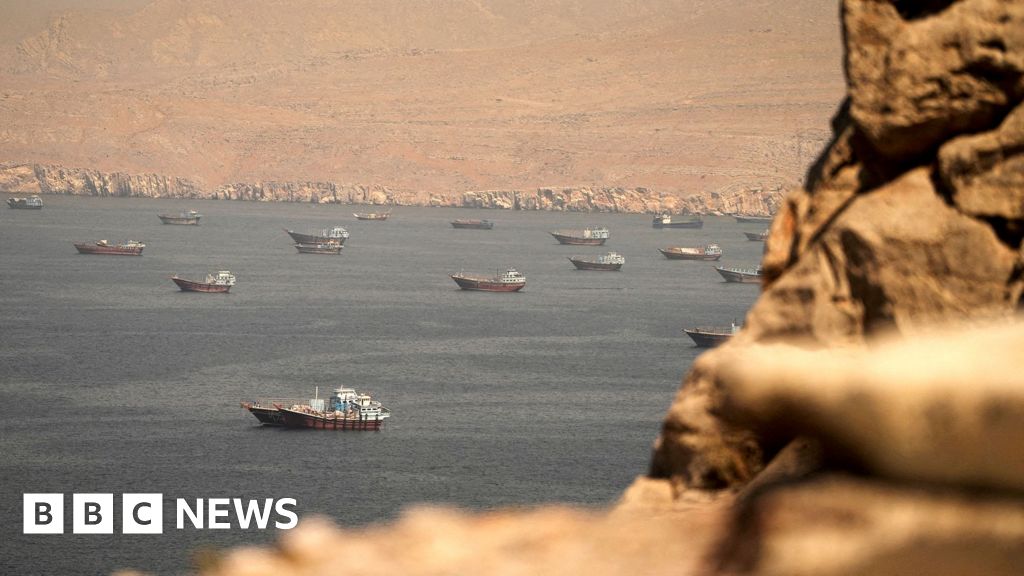
The United States is actively enforcing a naval blockade on Iran while Iran has expanded missile and drone attacks on US bases and Gulf partners; both sides kept striking through 16 July. Hormuz oil flows have slumped to roughly 4 million barrels per day with Saudi Arabia rerouting exports to the Red Sea, and spillover to Bab el-Mandeb remains a near-term risk.
Executive summary
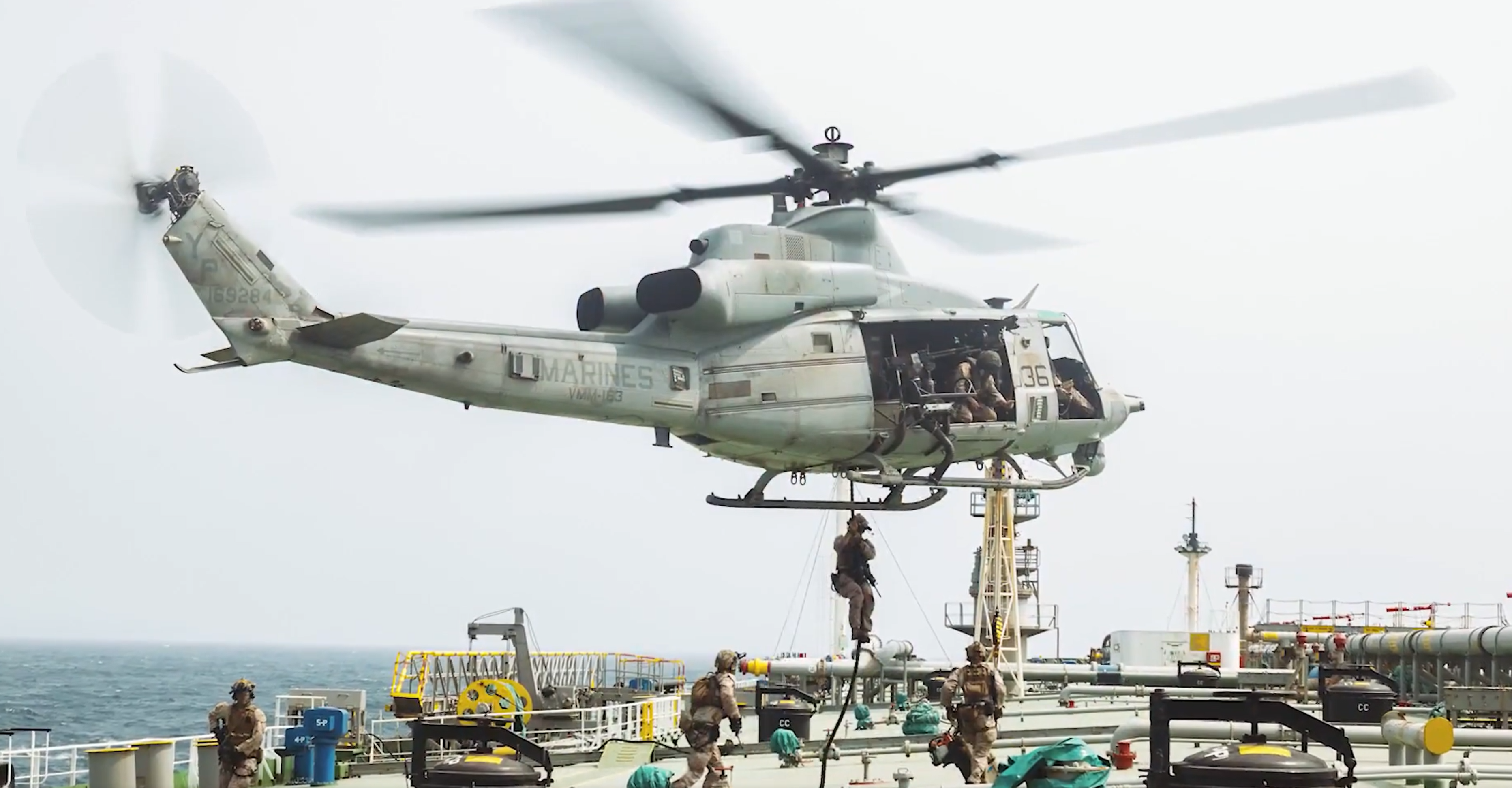
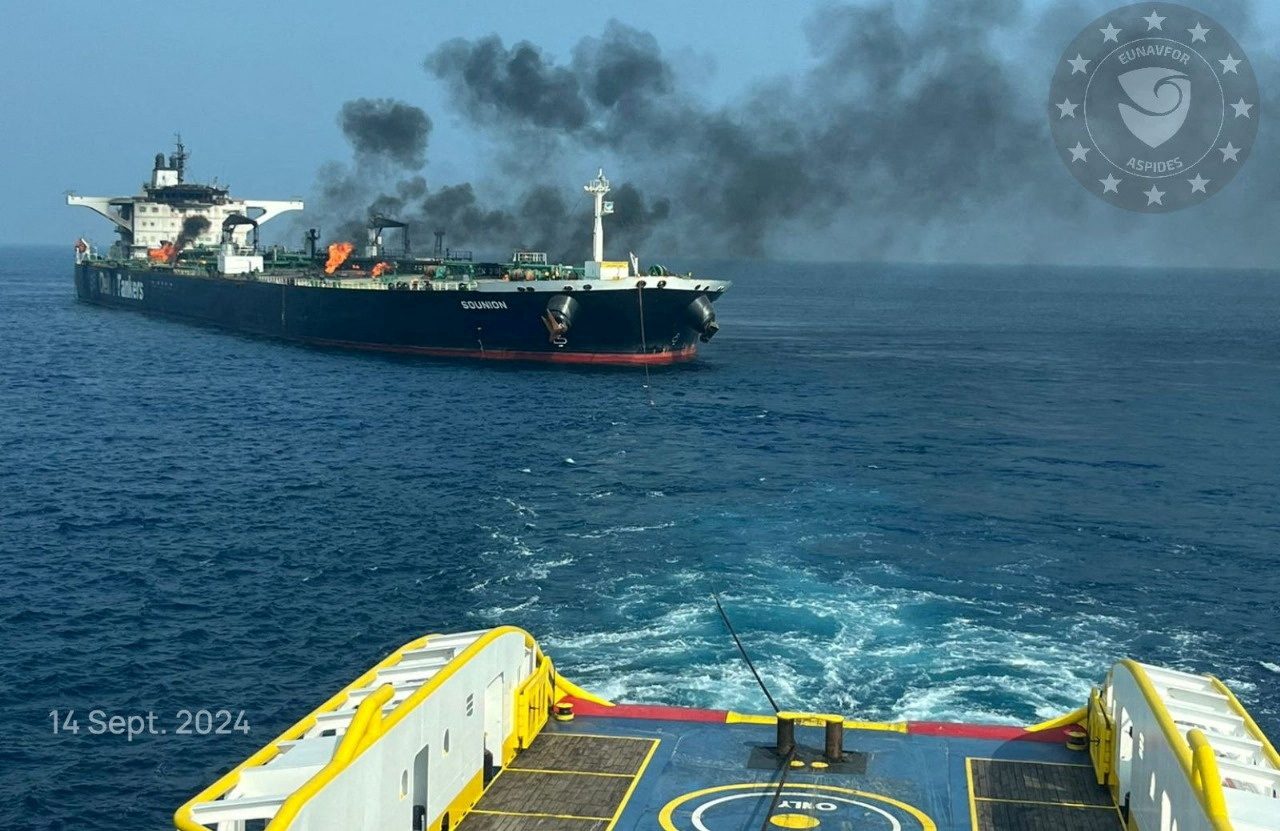
President Trump announced a renewed blockade on Iranian ports with enforcement commencing on 14 July, followed by interdictions, boardings and assistance to merchant traffic in and around the Strait of Hormuz. US strikes on Iranian targets continued for at least five consecutive days through 16 July, including attacks on a supertanker near Kharg Island, a road bridge in Hormozgan and a naval maintenance site at Bandar Abbas, alongside the first combat use of American sea drones. Iran’s Islamic Revolutionary Guard Corps claimed or conducted missile and drone attacks on US facilities in Bahrain, Kuwait and Jordan, with missile alerts and reported injuries in Bahrain, Kuwait and Qatar. Hormuz crude flows have fallen to about 3.9-4.0 million barrels per day, oil prices have risen, and Saudi Arabia has diverted over 70 percent of crude exports to Yanbu on the Red Sea. Reporting differs on the exact timing of the blockade’s reimposition versus its start of enforcement, and Iranian state media accounts of multiple bridge strikes require continued verification. Tehran-linked signalling and Houthi preparations point to a credible risk of Red Sea escalation if US attacks hit Iranian power infrastructure, though the Houthis have been comparatively quiet so far.
Key judgments
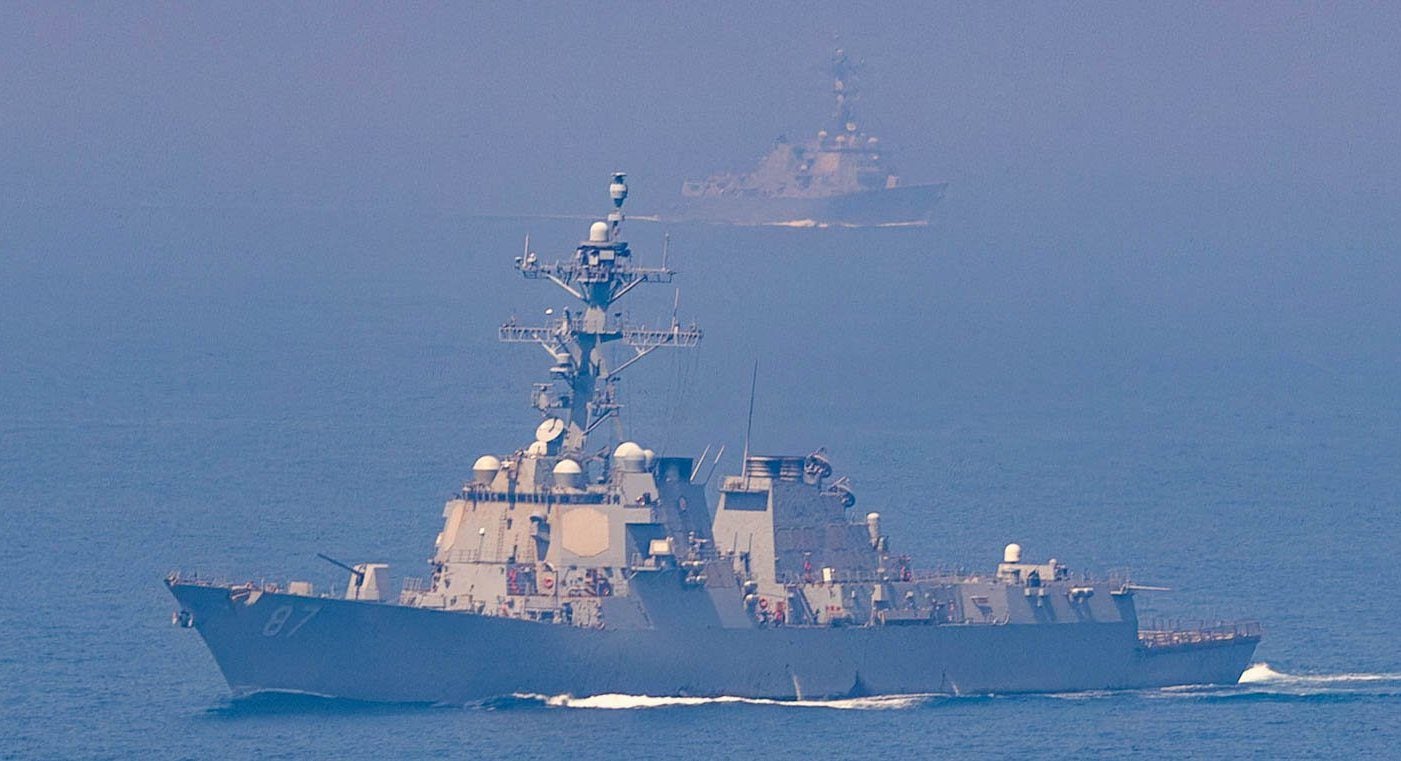
- Very likely the United States is actively enforcing a naval blockade on Iranian ports, evidenced by public redirections, a disablement and boardings of tankers in the Gulf of Oman, assistance to more than ten ships transiting Hormuz, and stated interception rules of engagement. (Confidence: high · REPORTED)
- I&W: Additional US Navy or Marine boardings or disablements of tankers publicly reported in the Gulf of Oman or Strait of Hormuz. (0-14 days)
- I&W: Official suspension or material revision of the Joint Maritime Information Center’s interception guidance. (0-14 days)
- Very likely Iran has expanded missile and drone strikes on US facilities and Gulf partners since 13 July, including Bahrain, Kuwait and Jordan, with alerts and injuries reported in Bahrain, Kuwait and Qatar. (Confidence: high · REPORTED)
- I&W: Official announcements or imagery confirming additional Iranian missile or drone launches against specific US facilities in Bahrain, Kuwait or Jordan. (0-14 days)
- I&W: Cessation of missile alerts or absence of new government-reported impacts in Bahrain, Kuwait and Qatar. (0-14 days)
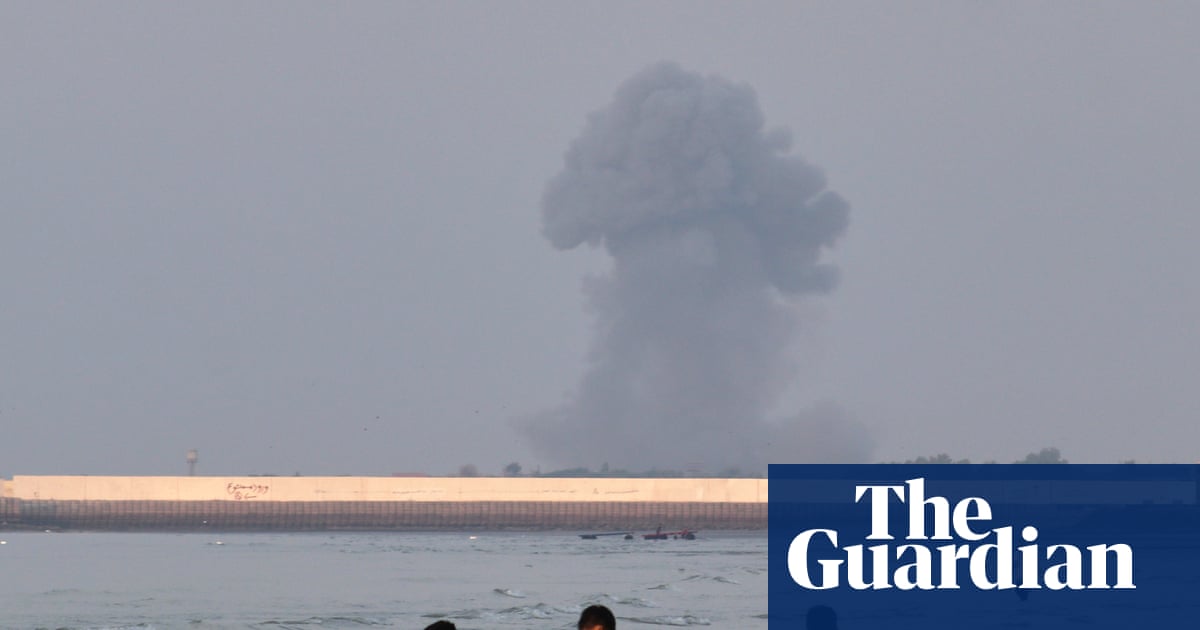
- Likely US strikes are concentrating on Iranian logistics and maritime infrastructure around Bandar Abbas and inland links, including a road bridge and a naval submarine and ship maintenance facility, and have continued through 16 July. (Confidence: medium · REPORTED)
- I&W: Commercial satellite imagery shows destroyed bridge spans west of Bandar Abbas and visible damage at the naval maintenance complex. (0-14 days)
- I&W: US Central Command statements confirm a pause or shift away from logistics and maritime targets inside Hormozgan. (0-14 days)
- Very likely the blockade and fighting are materially constraining energy flows through Hormuz to roughly 4 million barrels per day and lifting prices, with Saudi Arabia diverting more than two-thirds of crude exports to Yanbu on the Red Sea. (Confidence: high · REPORTED)
- I&W: Independent tanker-tracking shows Hormuz throughput persisting near 4 million barrels per day. (0-14 days)
- I&W: Saudi crude liftings via Yanbu remain at or above roughly 70 percent of normal exports. (0-14 days)
- There is a roughly even chance the conflict widens to the Red Sea in the near term through Houthi action coordinated with IRGC representatives in Yemen, especially if US attacks target Iranian power infrastructure. (Confidence: medium · ASSESSED)
- I&W: Houthi public declaration or observed missile or drone launches to interdict shipping near Bab el-Mandeb. (0-14 days)
- I&W: Sustained Houthi quiet and public denials from IRGC-linked channels regarding closure plans. (0-14 days)
- Very likely adversaries are exploiting mobile-network roaming and commercial ad-tech data to geolocate US personnel, creating urgent force-protection risks that persist due to unresolved device policy gaps. (Confidence: high · REPORTED)
- I&W: New Defence Department advisories restricting device roaming and ad identifier access for deployed personnel. (0-14 days)
- I&W: Carrier-side mitigations against known tracking vectors appear in operator notices across the Gulf. (1-3 months)
- Likely Washington will sustain military pressure and posture in the Gulf despite mixed signalling on tolls, as shown by the reinstated blockade, threats to take control of Hormuz, the revocation of an Iranian crude licence and stated intent to hold posture. (Confidence: medium · ASSESSED)
- I&W: Additional US strikes on Iranian targets or new enforcement actions against shipping linked to Iran. (0-14 days)
- I&W: A formal US announcement suspending blockade enforcement or easing oil sanctions waivers. (0-14 days)
Outlook & scenarios
Blockade grind with contained tit-for-tat strikes (60%)
US interdictions and selective strikes persist around Hormuz and the Gulf of Oman, including occasional attacks on vessels and logistics nodes, while Iran maintains missile and drone harassment of US bases and partners. Oil flows hover near 4 million barrels per day, with Saudi exports staying shifted to Yanbu. Prices remain elevated but short of panic levels.
Red Sea front opens via Houthi action (35%)
Following further US strikes on Iranian infrastructure, IRGC-linked decision-makers greenlight Houthi interdiction near Bab el-Mandeb. Missiles and drones target shipping, prompting renewed US-led strikes on Houthi assets. Energy markets price in dual chokepoint risk as some traffic diverts around the Cape.
Short operational pause under informal understandings (25%)
After several high-tempo days, both sides step back without a formal ceasefire. Limited humanitarian signals, like detainee releases, and third-party facilitation temper the exchange. Enforcement of the blockade continues at reduced intensity while talks probe for ground rules, but mistrust persists and re-escalation risk remains.
High-casualty miscalculation triggers rapid escalation (20%)
A successful strike causes substantial US or partner losses at a Gulf base or on a transiting tanker. Washington expands target sets inside Iran, and Tehran responds with larger salvos across multiple theatres. Maritime traffic drops further and oil prices jump sharply as insurers pull back.
Recommendations
- Maintain daily maritime domain awareness updates on Hormuz and the Gulf of Oman, capturing interdictions, boardings and any disablements, and brief on observed compliance with interception guidance.
- Task imagery and open-source geolocation to verify damage at the Bandar Abbas naval maintenance complex and the reported bridge strikes in Hormozgan to assess the impact on Iranian mobility and repair capacity.
- Produce a standing oil-market watch note tracking Hormuz throughput near the 4 million barrels per day mark and Saudi liftings via Yanbu; flag any changes that would tighten supply further.
- Issue immediate force-protection guidance for deployed personnel to restrict device roaming and ad identifier exposure, and liaise with carriers on mitigations for known mobile-tracking vectors.
- Prepare a Red Sea contingency brief identifying Houthi deployment patterns, likely launch areas near Bab el-Mandeb and indicators of an impending closure attempt; align with prior coalition strike patterns on Houthi targets.
- Coordinate with Indian maritime authorities and industry on the seafarer restriction through Hormuz and stranded crews west of the strait; prepare options for safe routing or staging pending changes in risk.
- Track and report on continued US enforcement actions, sanctions adjustments and leadership statements on Hormuz control to anticipate policy inflection points that would alter operational tempo.
Confidence & uncertainty
Overall confidence is high because multiple independent and reliable sources corroborate core developments: public US announcements and timelines for the blockade and its enforcement actions, repeated reporting of US strikes through 16 July, Iranian claims and regional government reports of missile and drone impacts, and convergent tanker-tracking and market data on depressed Hormuz flows and price rises. Some uncertainties remain, including inconsistent dates for when the blockade was reimposed versus when enforcement began, and Iranian state media attributions regarding bridge strikes that require continued verification. The likelihood and timing of Houthi entry are also contested, with evidence of preparations but reports that they have been comparatively quiet.
Alternative analysis (red cell)
An alternative, defensible analytic framing is that current U.S. maritime activity reflects episodic, targeted interdictions, convoying and strikes rather than a sustained, legally declared blockade of Iranian ports. Reported strikes around Bandar Abbas and interdictions in the Gulf of Oman are plausible but many specific operational attributions rely on lower-graded or state-media sources and lack independent BDA. Houthi intentions remain ambiguous: preparatory rhetoric and Iranian requests coexist with evidence of Houthi restraint, making immediate coordinated Red Sea escalation uncertain.
Cited sources
[1] npr.org · The U.S. strikes Iran after Trump announces a renewed blockade and tolls in Hormuz (A) · sha256:45cace627244 [2] maritime-executive.com · Video: U.S. Marines Board Falsely-Flagged Tanker in Gulf of Oman (B) · sha256:e281c23f780e [3] gcaptain.com · Iran-US Skirmishes Worsen as Hormuz Shipping Traffic Dwindles (A) · sha256:f35726c8ac2b [4] theguardian.com · Trump renews Iran blockade and again threatens to take control of strait of Hormuz (A) · sha256:b4e677668ca6 [5] dw.com · Gulf Nations caught between Iran and the US as war escalates (B) · sha256:bb8927157c31 [6] Al Jazeera · March to July: What’s different as US-Iran fighting escalates again? (A) · sha256:73a5ef117f0b [7] gcaptain.com · Saronic Picks Brownsville for $3 Billion 'Port Alpha' Autonomous Shipyard (C) · sha256:0b98994e74d6 [8] gcaptain.com · After Hormuz, Here's Why the Red Sea Is Now the World's Most Vulnerable Shipping Route (A) · sha256:3583c29ad458 [9] gcaptain.com · Iran Tells Houthis to Close Red Sea Gateway if U.S. Hits Power Network (A) · sha256:fcb274e48775 [10] harrigan.house.gov · Financial Times: US military smartphones targeted through roaming and ad tech (A) · sha256:e442365bde9b [11] BBC · Trump retreat over Hormuz tolls suggests struggle to end Iran war (A) · sha256:d748d585a3d2 [12] JINSA · Keep U.S. Forces in the Middle East but Move Them to Israel - JINSA (C) · sha256:61a24d6b262b
Source content hashes were computed at collection time; the cited text is preserved unmodified for the life of this product.
Red cell review: PARTIAL DISSENT
TLP:CLEAR