TLP:CLEAR · Disclosure is not limited.
US, Iran clashes intensify around Hormuz as Israel holds high alert; risk of direct Iran, Israel exchange is rising
Time window: Last 1 day · Audience: General analyst · Type: Situation report · DTG: 2026-07-13 15:40Z · Overall confidence: MEDIUM
BLUF
Iran and the United States have exchanged strikes across 8-13 July, with the IRGC targeting US-linked facilities in Jordan, Bahrain and Kuwait and CENTCOM hitting dozens of sites inside Iran. Strait of Hormuz traffic has dropped to clandestine levels amid contested closure claims, and Israel is on high alert alongside the US, raising the risk of a direct Iran, Israel confrontation.
Executive summary
Since 8 July, Iran has launched missiles and drones at US facilities and host nations in Jordan, Bahrain and Kuwait, while Jordan reports intercepts on 9 and 13 July. The United States has conducted repeated strikes inside Iran, including hitting a submarine and ship maintenance facility at Bandar Abbas with one-way sea drones and degrading air defence, radar, missile and drone capabilities at dozens of locations. The status of the Strait of Hormuz is contested: Iran’s Persian Gulf Strait Authority has declared passage unfeasible and Tehran has variously framed the strait as closed, while Washington says commercial traffic continues and a handful of AIS-dark transits have occurred as the southern corridor has effectively halted. Israel is coordinating with US forces and remains on high alert as Iranian messaging warns neighbours hosting US assets, and multilateral maritime bodies have reaffirmed freedom of navigation and condemned attacks. Civilian harm has already been reported in Mahshahr, Iran, and Bahrain.
Change from previous assessment
Since 12 July, Iran has publicly claimed and host nations have reported fresh activity on 13 July: the IRGC targeted US-linked sites in Juffair, Bahrain and at Jordan’s Prince Hassan Air Base, and said it struck a US base in Kuwait, while Jordan reported intercepts on 9 and 13 July. The US hit dozens of targets inside Iran and employed one-way sea drones against a facility at Bandar Abbas. Iran’s Persian Gulf Strait Authority said passage is unfeasible and suspended permit processing as observable southern-corridor traffic largely halted, although AIS-dark transits continued and Washington stated that commerce persists. The IMO Council reaffirmed freedom of navigation and condemned attacks. Israel’s high alert and US coordination were reiterated, and Israeli officials voiced concern about the US, Iran escalation.
Key judgments
- Iran very likely expanded its campaign of missile and drone attacks between 8 and 13 July, striking or attempting to strike US-linked facilities in Jordan, Bahrain and Kuwait, while Jordan intercepted multiple inbound missiles. (Confidence: high · REPORTED)
- I&W: Official communiqués from Jordan, Bahrain or Kuwait confirming additional intercepts or impacts on US-linked sites (0-14 days)
- I&W: A sustained halt in Iranian launch claims and host-nation intercept reports (0-14 days)
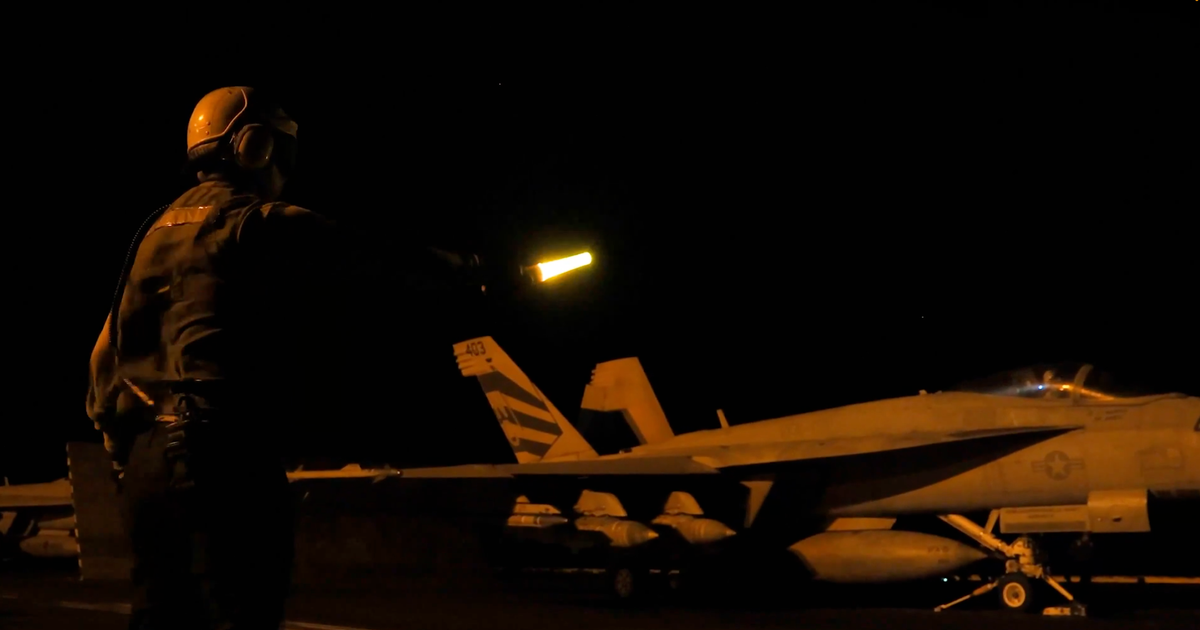
- US Central Command very likely executed repeated waves of strikes inside Iran, including the first US combat use of one-way sea drones against a submarine and ship maintenance facility at Bandar Abbas, and hit dozens of additional targets to degrade Iran’s ability to attack shipping. (Confidence: high · REPORTED)
- I&W: CENTCOM releases or credible BDA showing degraded Iranian air defence, radar or missile infrastructure (0-14 days)
- I&W: Noticeable pause in US strike announcements and absence of reports of explosions in Iran (0-14 days)
- There is likely a de facto restriction, not a total closure, of the Strait of Hormuz: observable traffic has sharply reduced, the southern corridor has largely halted, some ships are transiting AIS-dark, and the IRGC has interfered with vessels, while Tehran and Washington issue conflicting status claims. (Confidence: medium · ASSESSED)
- I&W: Persistent AIS-dark transits and continued absence of AIS-on traffic along the Omani southern corridor (0-14 days)
- I&W: Public resumption of AIS-on convoys via the southern track and PGSA rescinding its permit suspension (0-14 days)
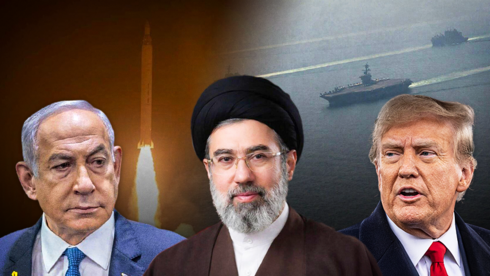
- Israel is likely to remain on high alert and avoid immediate direct strikes on Iran, but the risk of a direct Iran, Israel exchange is rising as the IDF coordinates closely with the US and Iran preserves capabilities for a future confrontation. (Confidence: medium · ASSESSED)
- I&W: Visible IDF elevation of air and missile defence readiness and public signalling on Iranian ‘red lines’ (0-14 days)
- I&W: Joint US, Israel statements committing to restraint paired with a discernible IDF posture drawdown (1-3 months)
- Threats to US-linked facilities and nearby civilian areas in Bahrain, Jordan and Kuwait are very likely elevated, given Tehran’s explicit warnings to neighbours and recent cross-border strikes, although some claimed effects remain disputed. (Confidence: medium · ASSESSED)
- I&W: Public alerting such as sirens, shelter guidance, or impact reporting near Juffair and other US-linked sites (0-14 days)
- I&W: Iranian diplomatic outreach assuring Gulf capitals that host-nation facilities will not be targeted (1-3 months)
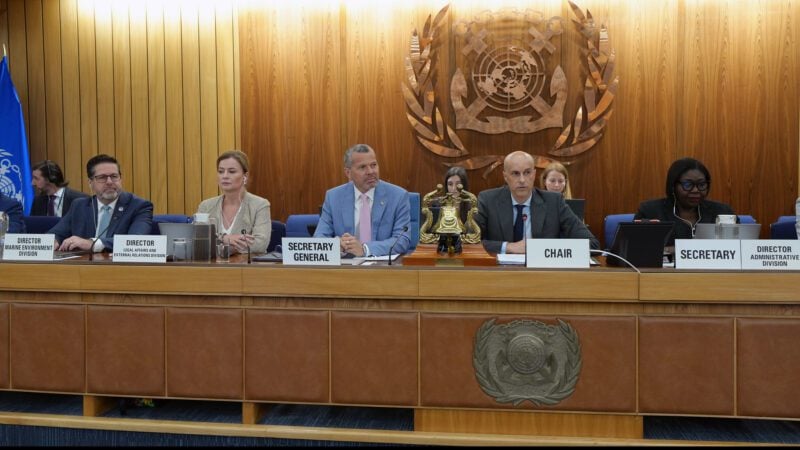
- International maritime bodies have consolidated a position favouring unhindered transit and condemning attacks in and around Hormuz, but these steps are unlikely to reduce navigational risk in the near term. (Confidence: medium · ASSESSED)
- I&W: IMO follow-on guidance resulting in coordinated maritime safety measures and a JMIC downgrade from SEVERE (1-3 months)
- I&W: Continuation of SEVERE threat advisories with no change in shipping patterns (0-14 days)
- Civilian harm has already occurred in the cross-border violence, including a fatality and injuries in Mahshahr, Iran, and a drone strike impact in Bahrain, signalling spillover beyond strictly military targets. (Confidence: high · REPORTED)
- I&W: Additional verified reports of civilian casualties linked to cross-border missile or drone activity (0-14 days)
- I&W: Two-week absence of civilian casualty reporting despite ongoing military activity (0-14 days)
Outlook & scenarios
Contained US, Iran confrontation with suppressed Hormuz traffic; Israel holds fire (60%)
Iran continues sporadic salvos against US-linked sites in Jordan, Bahrain and Kuwait, and the US maintains periodic strikes inside Iran focused on degrading launch and sensor networks. Hormuz remains restricted in practice: fewer observable transits, AIS-dark passages, and elevated maritime threat levels. Israel maintains high alert and coordination with the US but avoids direct strikes on Iran while monitoring Iranian capabilities.
Regional escalation that pressures Israel to act (35%)
Iran increases the tempo and variety of attacks on host-nation bases, including attempts to overwhelm defences. US strikes expand in scope and frequency. Damage to US-linked infrastructure or civilian areas in Bahrain, Jordan or Kuwait raises political pressure on Jerusalem to take overt action against Iranian assets, increasing the chance of a direct Iran, Israel exchange.
Managed de-escalation focused on shipping lanes (25%)
International pressure led by the IMO and UN produces practical navigation arrangements and back-channel steps that lower the immediate risk to shipping. Tehran and Washington leverage existing commitments to further talks to stabilise the maritime environment, easing PGSA restrictions and enabling a JMIC downgrade, even as broader disputes persist.
Wildcard: Israeli pre-emptive strike triggers direct Iran, Israel confrontation (15%)
A perceived imminent Iranian threat prompts an Israeli strike on Iranian assets, provoking a direct exchange beyond the Gulf theatre. Missile and drone activity expands geographically, intensifying regional instability and overshadowing maritime risk-management efforts.
Recommendations
- Maintain a daily log of Jordanian and Bahraini air-defence intercept reports and impact assessments around US-linked sites, with geolocation to track strike patterns and effectiveness.
- Task commercial satellite imagery collection over Bandar Abbas and other named Iranian air-defence, radar and missile sites to validate US strike effects and Iranian recovery activity.
- Systematically scrape and analyse AIS data for Hormuz, highlighting AIS-dark passages, route choices, and any resumption of the southern corridor; correlate with JMIC advisories.
- Monitor Iran’s Persian Gulf Strait Authority announcements for any change to the suspension of transit permit processing and map those changes to observed traffic flow.
- Track IDF public posture, coordination messaging with the US, and senior Israeli commentary on Iran to refine tripwires for direct Israel, Iran escalation risk.
- Catalogue and verify Iranian warnings to neighbours and follow-on target claims, distinguishing confirmed impacts from disputed assertions to calibrate threat to host nations.
- Engage multilateral reporting streams from the IMO for any operational guidance on navigation safety measures and assess likely near-term impact on insurer and shipowner behaviour.
Confidence & uncertainty
Multiple independent and generally reliable sources corroborate the US, Iran strike exchange, specific Iranian targeting in Jordan, Bahrain and Kuwait, and US strikes inside Iran including the first combat use of sea drones. Maritime status in Hormuz is less clear: official Iranian closure claims, a US assertion that traffic continues, and evidence of AIS-dark transits and halted southern routing point to de facto restriction, not full closure. Israeli posture is well sourced as high alert and coordination, but prospects for direct Israel, Iran engagement are inferential. These mixed elements and some disputed Iranian damage and casualty claims support a headline assessment of medium confidence.
Alternative analysis (red cell)
Alternative analysis: The reporting corpus contains internal contradictions and several pivotal claims depend on limited or low-admiralty sources (notably A4-coded items). A prudent alternate estimate is that multiple contested incidents and political declarations occurred between 8–13 July, but the evidence does not yet reliably establish a clear, sustained expansion of effective Iranian strike operations, a decisive U.S. campaign degradation of Iranian strike capacity, or a uniform de facto closure of Hormuz. Resolving these differences requires independent ISR, port/port-state traffic data, and on-the-ground battle-damage/forensic confirmation.
Intelligence gaps
- [EEI 1.2 · UNCOVERED] Movements and posture changes of Iran-backed proxy forces (Hezbollah units in Lebanon, militias in Syria/Iraq): concentrations of personnel, transport of rocket/artillery launchers, visible logistics build-up within operational range of Israel. Recommended collection: human/intel
- [EEI 1.3 · PARTIAL] Israeli defensive and offensive posture changes: reservist call-ups, mobilization orders, sorties/airstrikes attributed to Israel, and domestic activation of missile-defense systems (locations and activation times). Recommended collection: open-source/media
- [EEI 1.4 · PARTIAL] Evidence of pre-positioning or arming of naval mines, fast attack craft, or anti-ship missile systems in the Gulf of Oman, northern Arabian Sea, or off the Lebanese/Syrian coasts that could be used to interdict Israeli or allied shipping. Recommended collection: maritime/AIS
- [EEI 2.1 · UNCOVERED] Movements and tasking changes of external military assets: carrier strike groups, amphibious ready groups, expeditionary air wings, or ballistic-missile defense units into the Eastern Mediterranean, Persian Gulf, or Red Sea (vessel/aircraft IDs, routing, on-station times). Recommended collection: maritime/AIS
- [EEI 2.3 · PARTIAL] Changes to force protection or alert levels at foreign bases in the region (e.g., US bases in Kuwait, Qatar, UAE; Russian bases in Syria): activation of additional air defenses, curfews, or reinforcement shipments (personnel/equipment manifests). Recommended collection: signals/intel
- [EEI 3.2 · PARTIAL] Changes in crude oil and refined product flows from key terminals (reported tanker loading delays, terminal closures, throughput volumes at Kharg, Mina al-Ahmadi, Ras Tanura, and major Gulf ports compared to baseline). Recommended collection: commercial/ports
- [EEI 3.3 · PARTIAL] Market and insurance indicators: sudden spikes in war-risk or hull insurance premiums for Middle East routes, large moves in regional FX/stock indices, and notable changes in commodity futures (oil, freight rates) tied to regional risk perceptions. Recommended collection: financial/transactional
Cited sources
[1] jpost.com · Jordan, Bahrain drawn deeper into Iran's regional storm as ceasefire collapse puts pressure on Gulf (B) · sha256:305dd529493d [2] Al Jazeera · New Iran strikes on Gulf as US attacks escalate: What we know (A) · sha256:f9719fb4407c [3] haaretz.com · U.S. launches fresh strikes on Iran, citing threats to commercial shipping in Hormuz (A) · sha256:2f94f99fc075 [4] ynetnews.com · US strikes Iran again Tehran targets Gulf bases and Jordan as Israel braces for wider escalation (B) · sha256:68966aace578 [5] gcaptain.com · Trump Reinstates Iran Blockade, Declares U.S. 'Guardian of Hormuz,' And Proposes 20% Cargo Fee (B) · sha256:4576768d5d64 [6] gcaptain.com · U.S. Launches Fourth Wave of Strikes Against Iran as Hormuz Shipping Crisis Deepens (A) · sha256:2400d1e5b8e5 [7] CBS News · U.S.-Iran Latest: Trump says U.S. "to keep" Strait of Hormuz, will charge shippers 20% for security (A) · sha256:287d7df0e2e6 [8] AhlulBayt News Agency · Iran Rejects Western Narrative, Says Operations Are Legitimate Self-Defense Against US-Israeli Violations (A) · sha256:9d8b9e0c1065 [9] gcaptain.com · Ships Transit Hormuz in Secret as US and Iran Trade Strikes (B) · sha256:fd2602fdd5fa [10] jpost.com · IDF coordinates with US military, prepares for possible strikes as US, Iran fighting escalates (A) · sha256:4869a5a33484 [11] haaretz.com · U.S. neglecting Iran nuclear issue to focus on Hormuz, Israeli officials say (B) · sha256:56d527266a24 [12] ynetnews.com · Israel 'closely' following developments in Iran amid expected escalation (A) · sha256:322279bec563 [13] cryptobriefing.com · Iran warns neighbors: US strike facilitators risk retaliation (B) · sha256:92bbda482f54 [14] gcaptain.com · IMO Council Reaffirms Freedom of Navigation, Condemns Attacks on Commercial Shipping (A) · sha256:db719dbf2041
Source content hashes were computed at collection time; the cited text is preserved unmodified for the life of this product.
Red cell review: PARTIAL DISSENT
TLP:CLEAR