TLP:CLEAR · Disclosure is not limited.
US-Iran escalation: fourth US strike wave, Iran strikes Gulf hosts, Hormuz traffic goes dark
Time window: Last 1 day · Audience: General analyst · Type: Situation report · DTG: 2026-07-13 15:41Z · Overall confidence: MEDIUM
BLUF
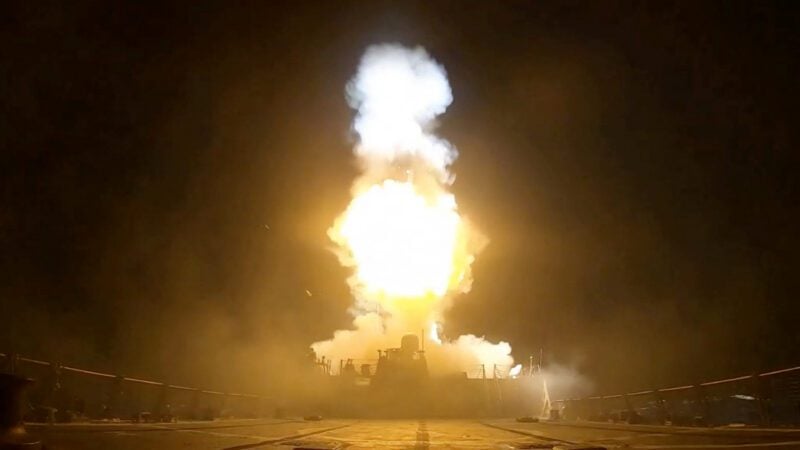
US forces executed a fourth wave of strikes inside Iran, including first use of one-way attack sea drones, while Iran continued missile and drone attacks on US-linked sites in Bahrain, Jordan and Kuwait. Hormuz transits are constrained and high-risk, with AIS-dark sailings and Iran suspending transit permits, even as limited diplomatic engagement via Muscat persists.
Executive summary
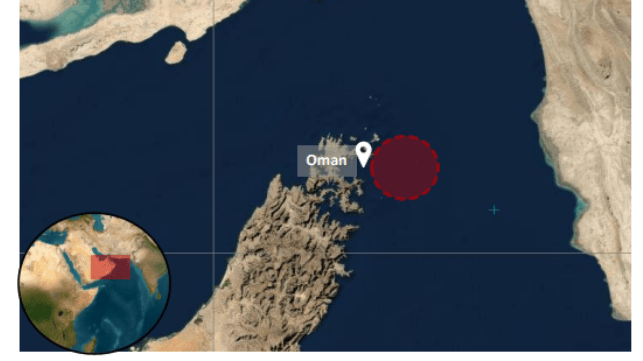
The conflict has intensified across the Gulf theatre. CENTCOM expanded its campaign with a fourth round of strikes on 13 July, hitting roughly 140 targets, including air defence and coastal radar sites, and debuting one-way attack sea drones. Iran has targeted US-linked facilities in Bahrain, Jordan and Kuwait and struck shipping off Oman, drawing host states like Jordan and Bahrain deeper into the fighting. The Strait of Hormuz remains hazardous: AIS-dark transits have increased, observable southern-corridor crossings have halted, and Iran’s Persian Gulf Strait Authority has suspended permit processing and restricted unauthorised US military movements, though some commercial traffic still moves. Diplomacy remains in play through Muscat, with both Washington and Tehran not ruling out talks, even as public rhetoric hardens. Israeli officials judge Iran is not seeking direct confrontation with Israel at this stage, but the regional risk picture remains elevated, including for energy infrastructure.
Change from previous assessment
Since the 12 July brief, the United States carried out a fourth wave of strikes on 13 July and employed one-way attack sea drones for the first time. Iran’s cross-Gulf targeting included reported activity against US-linked facilities in Bahrain, Jordan and Kuwait, and Muscat issued a diplomatic protest to Tehran, while Oman-based engagement with Iran continued. Iran’s Persian Gulf Strait Authority suspended transit permit processing and described passage as unfeasible, coinciding with more AIS-dark transits and a halted southern corridor, even as the US noted some commercial flow. Israeli officials assessed Iran is not interested in attacking Israel at this stage, and the IDF coordinated with US forces while preparing for possible participation. Initial assessment of possible impact at the Bushehr complex emerged alongside Iran’s denial. Overall confidence remains medium given corroboration on the main operational picture but continued uncertainty on maritime traffic volumes and site-specific damage.
Key judgments
- US forces very likely expanded their campaign with a fourth wave of strikes on 13 July hitting around 140 Iranian targets, including air defence and coastal radar sites, and debuting one-way attack sea drones. (Confidence: high · REPORTED)
- I&W: CENTCOM issues a further strike release referencing a fifth round and continued use of one-way sea drones against Iranian targets. (0-14 days)
- I&W: Publicly announced pause of US strike operations against Iran lasting at least seven consecutive days. (0-14 days)
- Iran very likely conducted missile and drone attacks on US-linked facilities in Bahrain, Jordan and Kuwait between 28 June and 9 July, and struck commercial shipping off Oman, expanding the battlespace across multiple Gulf states. (Confidence: high · REPORTED)
- I&W: New host-state reports of interceptions or impacts targeting US facilities in Bahrain, Jordan or Kuwait. (0-14 days)
- I&W: Additional merchant vessels struck or interdicted off Oman’s coast with attribution to IRGC units. (0-14 days)
- It is likely that movements through the Strait of Hormuz are constrained and high-risk: AIS-dark transits have risen, the southern corridor along Oman has halted, and Iran’s maritime authority has suspended permit processing and restricted unauthorised US military movements, while some commercial traffic continues. (Confidence: medium · ASSESSED)
- I&W: Commercial tracking shows continued AIS-dark transits and no visible southern-corridor traffic for at least one week. (0-14 days)
- I&W: Iran’s PGSA announces resumption of permit processing and visible convoys reappear along the Omani coast. (0-14 days)
- The risk of a broader regional conflict is likely elevated, with Jordan and Bahrain drawn in and energy infrastructure targeted, but Iran is likely to avoid direct attacks on Israel in the near term. (Confidence: medium · ASSESSED)
- I&W: Additional successful strikes or attempted strikes on GCC energy infrastructure or US installations, accompanied by Iranian or IRGC claims. (0-14 days)
- I&W: Launches by Iran or aligned actors into Israeli territory, or formal announcement that Israel has joined US strike packages. (0-14 days)
- Diplomatic off-ramps remain available but are narrowing: Tehran and Washington are not ruling out talks and Muscat remains engaged, yet public rhetoric on both sides has hardened. (Confidence: medium · ASSESSED)
- I&W: Announcement of an Iran, Oman joint traffic management mechanism or a technical working group on maritime safety. (0-14 days)
- I&W: Public abandonment of talks by either party or formal declarations of escalatory economic or military measures that foreclose negotiations. (0-14 days)
- It is unclear whether Iran’s Bushehr nuclear complex sustained strike damage, with residents reporting air-defence activity and satellite images suggesting impact while Tehran claims the plant is fully operational. (Confidence: low · ASSESSED)
- I&W: Independent satellite imagery shows clear, dated damage or intact structures at the Bushehr complex. (0-14 days)
- I&W: Iranian grid data or official statements indicate an unplanned reduction in Bushehr output. (0-14 days)
- Maritime humanitarian risk is increasing, with the Cyprus-flagged GFS Galaxy struck and one crewmember missing amid a SEVERE Hormuz threat designation and international condemnation of attacks on civilian shipping. (Confidence: high · REPORTED)
- I&W: Further merchant vessels are hit or abandoned in or near the strait with crew casualties reported. (0-14 days)
- I&W: Notices from maritime authorities indicating reduced threat levels and a fall in attack or harassment incidents. (1-3 months)
Outlook & scenarios
Managed escalation: sustained US-Iran exchanges, constrained but functioning Hormuz (60%)
US strike cycles and Iranian fires continue at a measured tempo centred on Iran and US-linked facilities in Gulf states. AIS-dark and rerouted sailings keep commerce moving at reduced volumes. Muscat sustains a narrow deconfliction channel without producing a ceasefire.
Regional spillover: attacks on GCC energy assets, Israel joins limited strikes (35%)
Iran or aligned elements expand targeting to additional GCC energy infrastructure and bases, prompting calls for deeper US involvement. Israel joins select strike packages in coordination with Washington. Hormuz traffic falls toward a near-standstill, with insurance costs rising and more ships going dark.
Tactical de-escalation via Muscat (25%)
Back-channel facilitation in Oman yields a limited understanding focused on maritime safety and restraint on striking host-nation bases. Iran’s maritime authority resumes permit processing, and visible convoys re-emerge along the Omani coast. Attacks on shipping and bases drop sharply but do not cease entirely.
Wildcard: nuclear-site incident triggers airspace closures (10%)
A verified strike impact or safety incident at Bushehr or another sensitive site drives rapid international calls for inspections and precautionary airspace closures. Markets price a sharper energy risk premium and carriers avoid Iranian FIRs.
Recommendations
- Prioritise collection on CENTCOM’s strike tempo and target sets, including open-source imagery of destroyed Iranian air-defence and coastal radar sites, to refine battle-damage assessments.
- Stand up a live Hormuz movement dashboard combining AIS data, dark-ship analytics and satellite tasking focused on the Omani coastal corridor, Bandar Abbas approaches and Musandam.
- Track Iran’s PGSA announcements and port-agent advisories daily to detect any shift in permit processing or routing guidance that would alter commercial risk calculus.
- Task reporting on IRGC missile and UAV launch activity and host-nation air-defence engagements at Prince Hassan Air Base in Jordan and US facilities in Bahrain and Kuwait to map escalation ladders.
- Engage diplomatic channels monitoring Muscat to capture indicators of an Iran, Oman traffic management mechanism or other technical working groups that could stabilise maritime flows.
- Coordinate with energy analysts to model outage risk from further attacks on GCC offshore platforms and pipelines, using the Kuwait incident as a template for likely tactics and timelines to repair.
- Maintain an Israel front watch: monitor IDF coordination with US forces and tripwires for Israeli entry, while tracking Israeli assessments of Iranian intentions toward Israel.
- Disseminate a mariner safety note highlighting JMIC’s SEVERE threat rating, recent attack patterns near Oman, and recommended transit behaviours, and maintain a casualty log for crew impact.
Confidence & uncertainty
Multiple, independent major-media and official statements corroborate the fourth US strike wave, Iranian cross-Gulf attacks, and elevated maritime threat levels. Shipping activity indicators and Iranian permitting actions are reported by several sources, but the exact status of traffic through Hormuz is contested, and some elements, like the Kuwait platform strike attribution and the condition of the Bushehr complex, are uncertain or contradictory. These gaps and inconsistencies warrant an overall medium confidence rating.
Alternative analysis (red cell)
Available reporting supports a range of plausible interpretations: incidents appear episodic and geographically dispersed rather than uniformly indicative of an inexorable escalation. Conflicting accounts about vessel movements, strike attribution, and divergent official statements (including Israeli assessments) mean the evidence better supports cautious, conditional judgments than definitive high-confidence escalation narratives.
Intelligence gaps
- [EEI 1.1 · UNCOVERED] Movement, dispersal, or emplacement of Iranian conventional or IRGC heavy assets (ballistic missile launchers, Khoramshahr/Toofan-class missile transporters, ground-to-ground TELs, air defense batteries, amphibious units) from garrison areas toward forward bases or coastal launch sites. Recommended collection: satellite/IMINT
- [EEI 1.2 · UNCOVERED] Authenticated Iranian military orders, NSC/IRGC operations directives, or senior leadership statements explicitly directing strikes against Israel or U.S. forces or authorizing cross-border operations. Recommended collection: human/diplomatic
- [EEI 1.3 · UNCOVERED] Changes in Israeli and U.S. force posture indicating anticipation of direct large-scale conflict—elevated readiness levels, mobilization notices, pre-positioning of munitions, or public/private orders to prepare offensive strikes. Recommended collection: open-source/diplomatic
- [EEI 2.1 · UNCOVERED] Observable pre-launch preparations for missile/rocket/cruise missile strikes (fueling, warhead mating, launcher orientation, support vehicle congregation) and abnormal munitions handling at known launch sites. Recommended collection: satellite/IMINT
- [EEI 2.2 · UNCOVERED] Indications of proxy arms shipments and weapons transfers (truck convoys, small boat transfers, container movements from Iran to proxies, new stockpiles in Lebanon, Iraq, Yemen, Syria). Recommended collection: maritime/AIS
- [EEI 2.3 · UNCOVERED] Evidence of cyber attack planning or active exploitation campaigns targeting Israeli or U.S. military/critical infrastructure (emergence of new command-and-control servers, spear-phishing campaigns against defense personnel, successful intrusions). Recommended collection: cyber
- [EEI 3.1 · UNCOVERED] Movements and posture changes of U.S. regional platforms (carrier strike groups, amphibious ready groups, B-52/B-1/B-2 or fighter deployments, missile defense assets repositioning) and associated armament loadouts. Recommended collection: satellite/IMINT
- [EEI 3.2 · UNCOVERED] Official or leaked U.S. government/diplomatic communications indicating thresholds for strikes, authorization for offensive operations, or limits on action (NSC/DoD statements, congressional notifications, diplomatic notes). Recommended collection: diplomatic/human
- [EEI 3.3 · UNCOVERED] Changes in U.S. base force-protection measures and rules of engagement at regional facilities (base lockdowns, evacuation notices, flight restrictions, activation of Local Defense Forces or missile intercept systems). Recommended collection: open-source/local reporting
- [EEI 4.1 · UNCOVERED] Hezbollah-specific indicators: convoys and logistics movements toward Lebanon–Israel border, artillery/rocket emplacement in southern Lebanon, documented strikes-preparation activity, public mobilization orders or recruitment drives. Recommended collection: satellite/IMINT
- [EEI 4.2 · UNCOVERED] Houthi-attributed maritime attack indicators: AIS anomalies/loss of contact for commercial vessels, reports of missile/drone strikes or near-miss incidents in Bab al-Mandeb/Red Sea, Houthi claims paired with imagery of weapons launches. Recommended collection: maritime/AIS
- [EEI 4.3 · UNCOVERED] Militia cross-border attack evidence from Iraq/Syria: recorded rocket/mortar launch events into Israel or strikes against U.S. facilities, movement of armed convoys toward border areas, and intercepted communications coordinating cross-border operations. Recommended collection: signals/ELINT
- [EEI 4.4 · UNCOVERED] Attacks or credible threats against energy infrastructure and shipping (damage to terminals, pipeline sabotage, oil tanker seizures, war-risk insurance premium spikes for regional routes). Recommended collection: financial/open-source
Cited sources
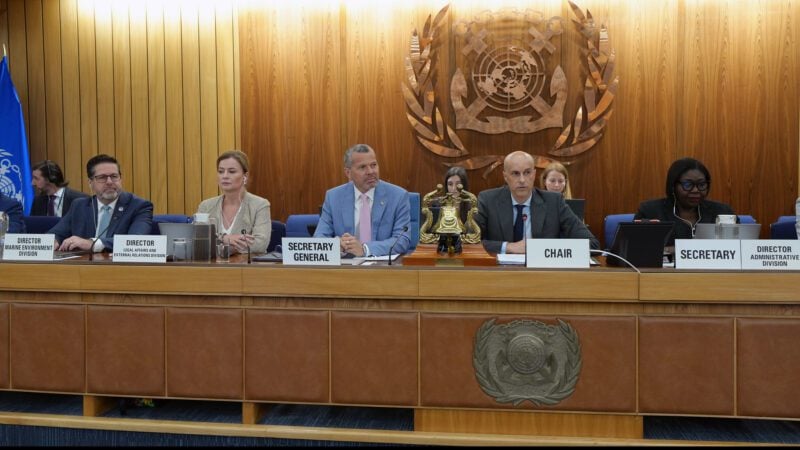
[1] gcaptain.com · U.S. Launches Fourth Wave of Strikes Against Iran as Hormuz Shipping Crisis Deepens (B) · sha256:2400d1e5b8e5 [2] gcaptain.com · Iran Widens Attacks on US Bases in Gulf, Hormuz Tensions Lift Oil Prices (A) · sha256:c1323c3bca46 [3] ynetnews.com · US strikes Iran again Tehran targets Gulf bases and Jordan as Israel braces for wider escalation (B) · sha256:68966aace578 [4] The Jerusalem Post · Live Updates: Latest from Israel, Iran, and Middle East | The Jerusalem Post (A) · sha256:95102108cb29 [5] cryptobriefing.com · Iran launches missiles at US bases in Jordan, Bahrain amid Gulf tensions (B) · sha256:cd48718aba68 [6] The Media Line · Jordan, Bahrain drawn deeper into Iran's regional storm as ceasefire collapse puts pressure on Gulf (B) · sha256:305dd529493d [7] Al Jazeera · March to July: What’s different as US-Iran fighting escalates again? (A) · sha256:73a5ef117f0b [8] gcaptain.com · Ships Transit Hormuz in Secret as US and Iran Trade Strikes (B) · sha256:fd2602fdd5fa [9] gcaptain.com · Trump Reinstates Iran Blockade, Declares U.S. 'Guardian of Hormuz,' And Proposes 20% Cargo Fee (B) · sha256:4576768d5d64 [10] AhlulBayt News Agency · Iran Rejects Western Narrative, Says Operations Are Legitimate Self-Defense Against US-Israeli Violations (A) · sha256:9d8b9e0c1065 [11] maritime-executive.com · Kuwait Reports Attack on Offshore Oil Platform as US and Iran Trade Fire (B) · sha256:ae62716f6e6f [12] ynetnews.com · Israel 'closely' following developments in Iran amid expected escalation (A) · sha256:322279bec563 [13] haaretz.com · U.S. neglecting Iran nuclear issue to focus on Hormuz, Israeli officials say (B) · sha256:56d527266a24 [14] maritime-executive.com · After Ceasefire Talks Collapse, Iran Attacks Boxship and Shuts Down Hormuz (B) · sha256:458569dc3828 [15] nationalheraldindia.com · Iran defends US base strikes as ‘self-defence’ amid Gulf tensions (B) · sha256:3d11d8b8a953 [16] cryptobriefing.com · UN chief urges end to US-Iran conflict amid escalating tensions (B) · sha256:baae4323e49e [17] gcaptain.com · IMO Council Reaffirms Freedom of Navigation, Condemns Attacks on Commercial Shipping (A) · sha256:db719dbf2041
Source content hashes were computed at collection time; the cited text is preserved unmodified for the life of this product.
Red cell review: PARTIAL DISSENT
TLP:CLEAR