TLP:CLEAR · Disclosure is not limited.
US-Iran Exchanges and Houthi Gains Tighten Maritime Pressure
Time window: Last 1 day · Audience: General analyst · Type: Situation report · DTG: 2026-09-11 20:38Z · Overall confidence: HIGH
BLUF
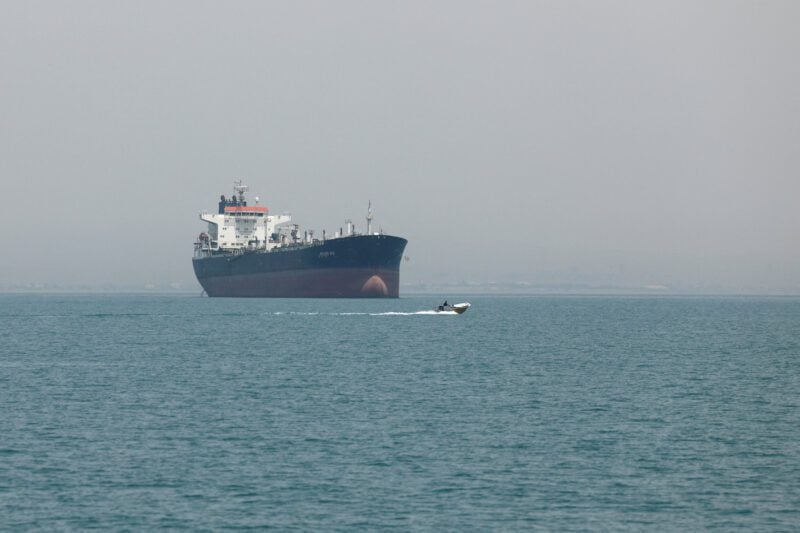
Further US-Iran military exchanges are very likely over the next 14 days as Iran and the United States trade attacks around the Strait of Hormuz and Jordan. Houthi gains at Mocha, Dhubab and Perim have increased the risk to Bab el-Mandeb shipping, while Hormuz traffic remains restricted but operational.
Executive summary
The conflict is widening geographically and placing greater pressure on maritime routes. Iran has reported attacks on US ships and oil tankers after the United States sank five Iranian tankers, while Iran also launched ballistic missiles at the Muwaffaq Salti Airbase in Jordan. In Yemen, Iran-aligned Houthis captured Mocha and Dhubab and reached Perim after Saudi-backed Yemeni government forces withdrew. Saudi Arabia is seeking US military assistance, but Washington has so far offered intelligence and targeting support rather than direct action against the Houthis. Hormuz traffic remains far below pre-conflict levels, although vessels continue to transit and Gulf crude exports remain above 10 million barrels per day.
Change from previous assessment
Since the 10 September brief, the assessment has shifted towards a higher Red Sea escalation risk. New reporting places the Houthis on Perim and in Dhubab after the withdrawal of Saudi-backed Yemeni government forces, adding a more direct threat to the Bab el-Mandeb approaches. Saudi Arabia has sought direct US military assistance, CENTCOM Commander Brad Cooper has travelled to Saudi Arabia for urgent coordination, and Pakistan has deployed forces near the Saudi-Yemen border while pursuing contacts with Iran. The assessment that Hormuz traffic will remain restricted but operational is unchanged, with updated reporting confirming seven tracked transits on 10 September alongside continued facilitated movement. The assessment of direct US strikes against the Houthis remains unlikely in the near term, but the risk warrants closer monitoring because Saudi requests and Houthi territorial gains have intensified.
Key judgments
- Further direct US-Iran military exchanges are very likely within 0-14 days. Iran reported attacks on US ships and oil tankers near the Strait of Hormuz after the United States sank five Iranian oil tankers, while the US military said it was responding to an Iranian attack on a US warship. Iran also launched ballistic missiles at the Muwaffaq Salti Airbase in Jordan on 9 September, prompting Jordan to report 18 interceptions and two missiles landing in uninhabited areas. The reported number of affected vessels and the precise sequence of attacks remain disputed. (Confidence: high · ASSESSED)
- I&W: CONFIRM: Iran, the United States or Jordan reports another missile, drone or maritime attack involving US forces or vessels. (0-14 days)
- I&W: BREAK: Washington and Tehran announce and maintain an operational pause with no new attacks involving US or Iranian forces for 14 days. (0-14 days)
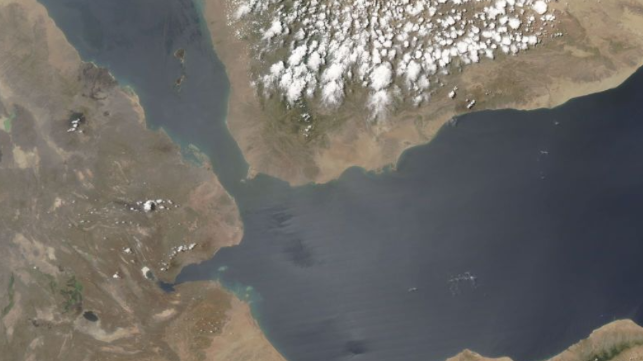
- The Iran-aligned Houthis are likely to consolidate control around the southern entrance to the Red Sea within 0-14 days. The Houthis have captured Mocha, taken Dhubab opposite Perim and reached Perim after Saudi-backed Yemeni government forces withdrew. Reporting also places Houthi forces on Zugar and the Hanish Islands, although the claims of active seizure versus uncontested withdrawal remain unresolved. (Confidence: medium · ASSESSED)
- I&W: CONFIRM: Houthi forces retain positions on Perim, Zugar, Hanish, Dhubab or Mocha and impose new movement or shipping controls from those locations. (0-14 days)
- I&W: BREAK: Saudi-backed Yemeni government forces return to Perim or Dhubab and reporting shows sustained Houthi withdrawal from the Bab el-Mandeb approaches. (0-14 days)
- Restricted but functioning traffic through the Strait of Hormuz is very likely to persist within 0-14 days. Preliminary tracking recorded seven transits on 10 September, compared with 11 the previous day, while UKMTO recorded 108 outbound and 102 inbound transits over the latest seven-day period. UKMTO also reported traffic at roughly 20 percent of the pre-conflict norm, with US-facilitated southern-route movements averaging about 20 vessels per day and AIS-derived movements averaging six. UAE-facilitated AIS-off transits remain unverified. (Confidence: high · REPORTED)
- I&W: CONFIRM: UKMTO continues to record single-digit daily AIS transits while US- or UAE-facilitated vessels continue using the southern route or transiting with AIS switched off. (0-14 days)
- I&W: BREAK: No vessels transit the strait for seven consecutive days, or traffic returns towards the pre-conflict baseline of about 125 large commercial vessels per day. (0-14 days)
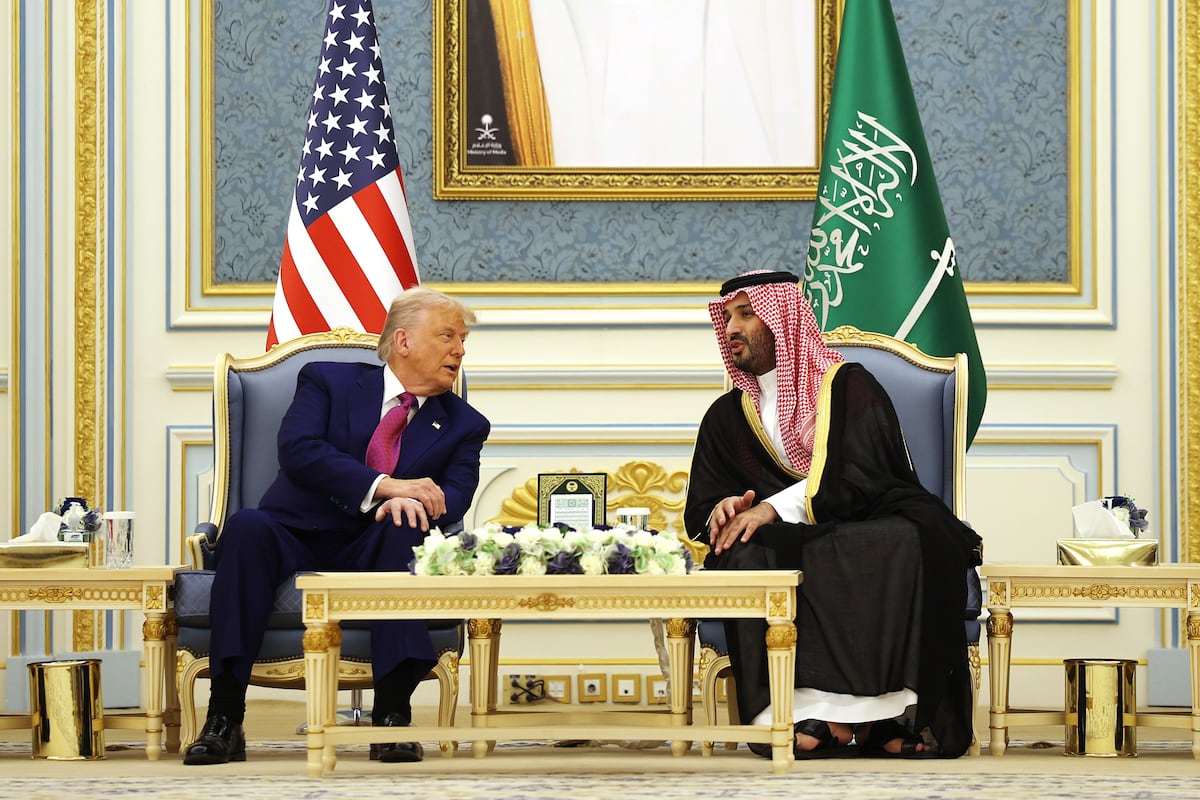
- The United States is likely to support Saudi Arabia indirectly while avoiding direct strikes against the Houthis within 0-14 days. Mohammed bin Salman has sought US military assistance, and Washington has declined direct action while offering intelligence and targeting support. The urgent Saudi meetings by CENTCOM Commander Brad Cooper and the presence of about 200 US service members in Saudi Arabia indicate increased coordination, but they do not establish a decision to conduct combat operations against the Houthis. (Confidence: medium · ASSESSED)
- I&W: CONFIRM: The US administration publicly authorises direct strikes against Houthi targets or sends additional US combat units to Saudi Arabia for operations in Yemen. (0-14 days)
- I&W: BREAK: Washington reiterates that it will not intervene directly and limits support to intelligence, targeting and coordination with Saudi Arabia. (0-14 days)
- Energy and tanker-market stress is likely to persist for 1-3 months. Brent crude is reported above $100 per barrel, Gulf of Oman VLCC freight reached about 450 Worldscale, or roughly $11.50 per barrel, and rates on the West Africa to Asia route also reached record highs. Gulf crude exports remain above 10 million barrels per day, but Saudi crude supply fell to 6 million barrels per day in August. Reports conflict over the direction of Brent on 11 September, lowering confidence in the near-term price trajectory. (Confidence: medium · ASSESSED)
- I&W: CONFIRM: Gulf of Oman VLCC rates remain near or above 450 Worldscale and Brent crude settles above $100 per barrel for successive trading sessions. (1-3 months)
- I&W: BREAK: VLCC rates return materially below current record levels and Brent crude settles below $100 per barrel while Gulf shipping volumes recover. (1-3 months)
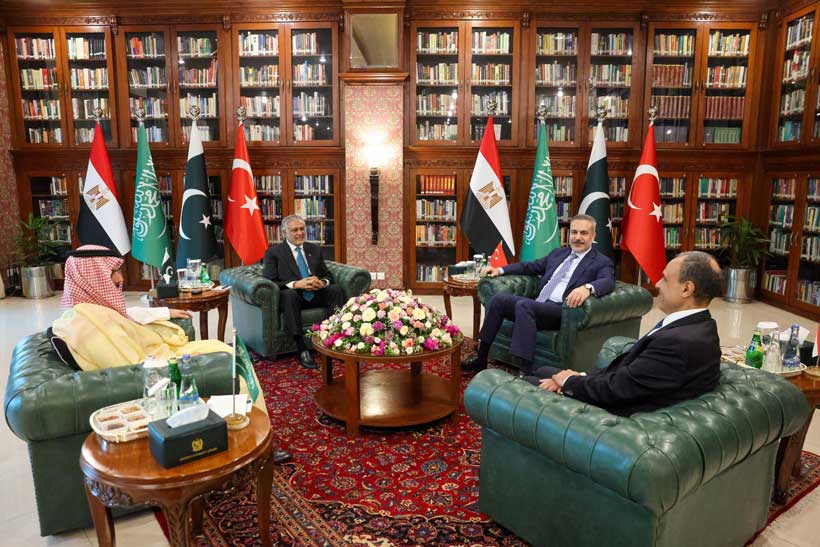
- A limited maritime deconfliction effort is likely to proceed in Oman on 14 September, but a durable US-Iran de-escalation is unlikely within 0-14 days. Iran has confirmed a meeting with Iraq and Gulf Arab states on safe commercial shipping routes, while Pakistan is maintaining contacts with Iranian officials and calling for restraint. These diplomatic channels coexist with continuing attacks, Iranian and Houthi escalation rhetoric, and the absence of a reported US-Iran negotiating process. (Confidence: medium · ASSESSED)
- I&W: CONFIRM: Iran, Iraq and Gulf Arab representatives attend the 14 September Oman meeting and announce a verified shipping arrangement that produces additional Hormuz transits. (0-14 days)
- I&W: BREAK: The meeting is cancelled or produces no maritime arrangement while new US-Iran attacks or Houthi attacks on Saudi Arabia continue. (0-14 days)
Outlook & scenarios
Bounded US-Iran escalation with constrained shipping (55%)
US-Iran attacks continue around the Strait of Hormuz and Jordan, while the United States maintains limited support for Saudi Arabia rather than striking the Houthis directly. Hormuz traffic remains well below the pre-conflict level but does not stop completely. Houthi forces retain their positions around Mocha, Dhubab and Perim.
Red Sea spillover and wider Saudi-Houthi confrontation (25%)
Houthi control of the Bab el-Mandeb approaches becomes more durable, and attacks or threatened restrictions affect Saudi vessels and facilities. Saudi Arabia expands air operations from its current strikes on the Mokha airfield, while Pakistani forces near the Saudi-Yemen border face greater exposure to the conflict. Direct US involvement remains an open policy question.
Maritime deconfliction without political settlement (30%)
The 14 September Oman meeting establishes limited arrangements for commercial shipping. Some Hormuz traffic increases, but the underlying US-Iran conflict continues and Houthi control around the Bab el-Mandeb remains in place. Energy and tanker-market stress eases only gradually.
Wildcard: direct US intervention against the Houthis (8%)
A new Houthi attack on Saudi facilities, Saudi shipping or US personnel prompts Washington to reverse its current refusal of direct action. US strikes on Houthi positions would widen the conflict beyond the existing US-Iran exchange and place the maritime routes under greater pressure.
Recommendations
- Maintain a daily watch on Perim, Zugar, the Hanish Islands, Dhubab and Mocha. Separate confirmed Houthi presence from claims of active capture and record whether Saudi-backed Yemeni forces attempt to return.
- Reconcile Strait of Hormuz traffic using separate counts for AIS-derived movements, US-facilitated transits, UAE-facilitated AIS-off vessels and Kpler-recorded vessel movements. Do not treat these measures as interchangeable.
- Prioritise verification of the East-West Pipeline reporting. Compare satellite imagery, Saudi energy ministry statements and US attribution before treating Houthi responsibility or operational damage as established.
- Track Brad Cooper's Saudi meetings, the activities of the approximately 200 US service members in Saudi Arabia and any change from intelligence support to direct US combat operations.
- Prepare an update immediately after the 14 September Oman meeting. Record attendance, any agreed shipping procedures and whether vessel movements through Hormuz change within the following 72 hours.
- Monitor Brent settlements, Gulf of Oman VLCC rates, Saudi crude supply and combined Gulf exports together. Distinguish price-level reporting from daily price direction when assessing market stress.
- Flag the competing reports on US aircraft damage at Muwaffaq Salti Airbase and on the number of vessels attacked near Hormuz as unresolved until corroborated by additional reporting.
Confidence & uncertainty
Overall confidence is high because the central developments are supported by multiple high-reliability wire-service, major-media and trade-publication reports. The continuation of US-Iran military exchanges, reduced but functioning Hormuz traffic, Houthi gains along Yemen's Red Sea coast and elevated tanker rates are corroborated across separate reporting streams. The main uncertainties concern the character of the Houthi takeover of the islands, attribution and damage at Saudi pipeline facilities, the reported damage to US aircraft in Jordan, the number of vessels attacked by Iran and the direction of Brent prices.
Intelligence gaps
- [EEI 1.2 · UNCOVERED] Changes in US or Iranian force posture indicating preparation for further attacks, including aircraft dispersal, missile-unit movement, naval sortie activity, or air-defense activation. Recommended collection: satellite imagery/aviation and maritime tracking
- [EEI 1.3 · PARTIAL] Public or private warnings, ultimata, declared red lines, or force-protection directives issued by US or Iranian leadership. Recommended collection: official statements/diplomatic reporting
- [EEI 2.1 · UNCOVERED] Deployment or repositioning of Iranian ballistic missiles, cruise missiles, drones, fast-attack craft, or other strike assets within operational range of US or partner targets. Recommended collection: satellite imagery/signals intelligence
- [EEI 2.4 · UNCOVERED] Changes in Iranian military alert levels, command activity, weapons dispersal, or continuity-of-government measures. Recommended collection: signals intelligence/satellite imagery
- [EEI 3.1 · UNCOVERED] Arrival or departure of US carrier strike groups, bombers, air-defense units, special operations forces, or additional personnel in the region. Recommended collection: maritime and aviation tracking
- [EEI 3.2 · UNCOVERED] Changes to US force-protection conditions, base access, evacuation plans, embassy staffing, or noncombatant evacuation preparations. Recommended collection: official notices/diplomatic reporting
- [EEI 3.3 · PARTIAL] Presidential, Pentagon, or theater-command statements describing authorized response options, expanded objectives, or revised rules of engagement. Recommended collection: official statements
- [EEI 4.3 · PARTIAL] Regional government decisions to close airspace or waterways, raise military readiness, expel personnel, or request additional US or allied forces. Recommended collection: official statements/aviation and maritime notices
Red cell review: CONCUR WITH COMMENT
TLP:CLEAR