TLP:CLEAR · Disclosure is not limited.
US-Iran Exchanges and Persian Gulf Disruption
Time window: Last 1 day · Audience: General analyst · Type: Situation report · DTG: 2026-09-22 03:44Z · Overall confidence: HIGH
BLUF
US-Iran military exchanges are very likely to continue through 6 October, and a further US strike followed by Iranian retaliation is likely. The Strait of Hormuz is very likely to remain severely restricted without an established full closure, while Houthi attacks on Saudi Arabia and pressure at Bab al-Mandab are likely to sustain regional shipping, energy and humanitarian disruption.
Executive summary
Tensions intensified on 21 September as Iran warned of a forthcoming US strike, the IRGC threatened new weapons and a wider war geography, and the US reportedly repositioned B-1B Lancers and naval assets. Iran also claimed to have destroyed a US MQ-1 drone over the Strait of Hormuz, without immediate US confirmation. Commercial tracking shows residual Hormuz traffic, but at sharply reduced levels, while US official reporting presents a more permissive picture. Houthi attacks on Riyadh and Yanbu, their reported capture of Perim Island and advances towards Bab al-Mandab are adding pressure to Saudi security and Red Sea shipping. Diplomatic contact around the UN General Assembly remains active, but the reported conditions and continued military threats make an immediate ceasefire unlikely.
Change from previous assessment
Since the 21 September brief, the assessment adds stronger force-protection and pre-strike indicators, including reported B-1B Lancer movements, US naval repositioning, Saudi high alert, Israeli air-defence reinforcement and a reported Iranian Code 100 alert. The Hormuz judgement is unchanged in direction but is now framed more precisely as severe partial restriction, with residual traffic quantified by several tracking systems and a continuing contradiction from US official reporting. Current reporting adds sharper evidence of southern maritime and humanitarian spillover through the reported capture of Perim Island, attacks on Riyadh and Yanbu, more than 120,000 displaced Yemenis and more than 3,000 recent arrivals in Djibouti. No prior judgement is retired.
Key judgments
- Direct US-Iran military exchanges are very likely to continue through 6 October, and a further US strike followed by Iranian retaliation is likely. Donald Trump said on 20 September that he was deciding whether to escalate; Iran's military warned on 21 September of a planned large-scale US strike and painful retaliation; IRGC spokesperson Hossein Mohebbi threatened new weapons and a wider war geography; and US Air Force B-1B Lancers reportedly moved from UK bases towards the USCENTCOM area while US naval assets repositioned for missile defence. The strike-order element rests on indirect indicators and reporting that lacks independent confirmation of a US authorisation. (Confidence: medium · ASSESSED)
- I&W: Confirmation of a new US strike order, forward movement of B-1B Lancers or US naval assets, followed by an Iranian military or IRGC strike on a US base or interest. (0 to 14 days)
- I&W: No new US strike by 6 October, a return of B-1B Lancers to UK bases, and the withdrawal of Iranian military or IRGC retaliation warnings. (0 to 14 days)
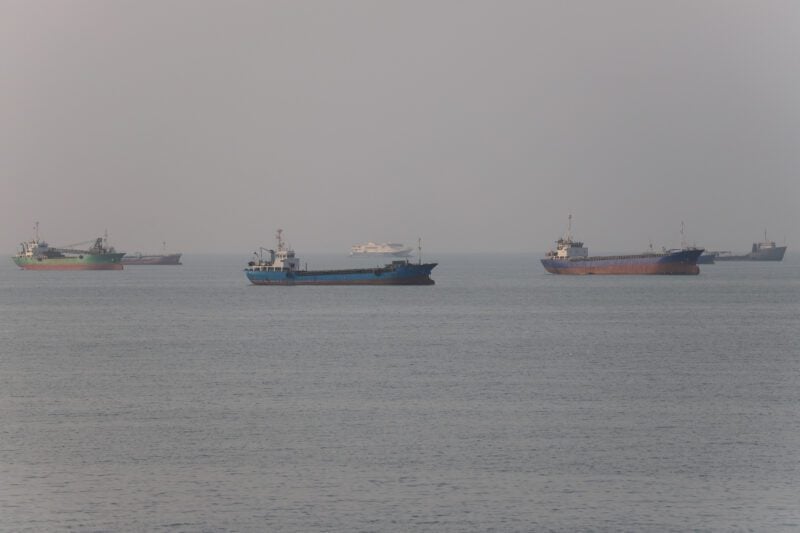
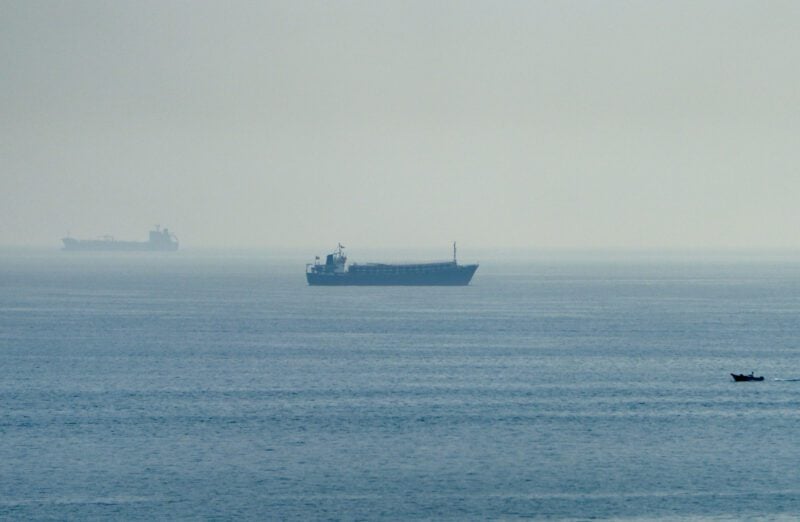
- The Strait of Hormuz is very likely to remain severely restricted through 6 October, but a complete closure has a roughly even chance. Windward recorded 14 crossings in the 20 September 24-hour window, Kpler counted 17 commodity vessels over the weekend compared with 37 a week earlier and roughly 125 per day before the war, and UK Maritime Trade Operations recorded at least five tanker incidents since 16 September. Countervailing reporting said more than 30 vessels per day were moving in the preceding 72 hours, exports reached around 6.5 million barrels per day in September, and Adm Brad Cooper said the lanes were clear. Confidence is medium because commercial tracking and US official reporting conflict on vessel scope, volumes and operating status. (Confidence: medium · ASSESSED)
- I&W: Windward or Kpler records fewer than 20 tanker or commodity-vessel crossings per day for two consecutive 24-hour periods, or UK Maritime Trade Operations reports another tanker strike. (0 to 14 days)
- I&W: Kpler records a sustained return towards 100 or more commodity vessels per day, with Hormuz exports remaining at or above 6.5 million barrels per day and no new tanker incidents. (1 to 3 months)
- Houthi forces are very likely to continue attacks on Saudi Arabia and retain a coercive position at Bab al-Mandab through 6 October, while a blockade of non-Saudi shipping is unlikely. Houthi forces claimed or were reported to have attacked Riyadh and Aramco facilities in Yanbu, captured Perim Island and gained positions on the Bab al-Mandab Strait. Saudi Arabia reported Patriot interceptions and has conducted hundreds of air strikes along Yemen's Red Sea coast. The reported dates for the Riyadh and Yanbu operation differ between 9 and 19 September, and Houthi capability to blockade the strait conflicts with their stated exemption for non-Saudi vessels. (Confidence: medium · ASSESSED)
- I&W: A new Houthi missile or drone attack on Riyadh, Yanbu or south-western Saudi Arabia, or another Saudi Patriot interception. (0 to 14 days)
- I&W: Houthi forces strike, board or formally embargo a non-Saudi commercial vessel, or lose their reported positions on Perim Island and the Bab al-Mandab coast. (0 to 14 days)
- Yemen's humanitarian crisis and cross-Red Sea displacement are very likely to worsen through 6 October. The World Health Organization reported more than 160 people killed and 500 injured across Yemen between 12 and 18 September, bringing casualties since fighting resumed on 6 August to 674 killed and nearly 3,000 injured. The UN estimates more than 120,000 people displaced along Yemen's Red Sea coast, while more than 3,000 refugees recently reached Markazi camp in Obock, Djibouti. The breakdown of the UN-brokered 2022 truce and continuing Saudi air strikes support the assessment. (Confidence: high · ASSESSED)
- I&W: WHO or UN reporting records additional deaths, injuries or displacement in Yemen, or Markazi camp receives another substantial arrival of Yemeni refugees. (0 to 14 days)
- I&W: Saudi air strikes and Houthi missile and drone exchanges stop for 14 consecutive days, with no new Red Sea displacement reported. (0 to 14 days)
- Regional energy and transport disruption is very likely to persist through 6 October, and US fuel price pressure is likely to remain elevated. AAA reported a national average diesel price of US$6.505 per gallon and regular petrol above US$4.47. Brent crude had exceeded US$108 per barrel, Gulf-to-China VLCC freight rates had risen above US$30 per barrel, and Kpler expected around 2.5 million barrels per day to move through ship-to-ship transfers in the Gulf of Oman during September, compared with 1.4 million barrels per day in August. Saudi Aramco is increasingly relying on ship-to-ship transfers as Red Sea routes deteriorate. Confidence is medium because the duration and precise attribution of the market effects remain uncertain. (Confidence: medium · ASSESSED)
- I&W: AAA reports diesel above US$6.50 per gallon while VLCC freight remains above US$30 per barrel and Saudi Aramco continues expanded ship-to-ship loading. (0 to 14 days)
- I&W: Hormuz and Bab al-Mandab traffic returns towards pre-crisis levels, ship-to-ship volumes in the Gulf of Oman fall towards August levels, and US diesel prices decline below US$6.50 per gallon. (1 to 3 months)
- Qatar-mediated US-Iran diplomatic contact is likely to continue through 6 October, but an immediate ceasefire is unlikely. Donald Trump and Iranian President Masoud Pezeshkian are expected at the UN General Assembly, Trump has expressed openness to meeting Pezeshkian and is scheduled to meet Gulf Cooperation Council leaders, while Oman, Pakistan and Qatar have facilitated contacts. Iran's reported conditions include a halt to the Saudi-Houthi conflict, release of Iranian assets and an end to the US naval blockade. The negotiating terms rest partly on single-source reporting, and continued Iranian retaliation threats and stalled negotiations lower confidence in a rapid settlement. (Confidence: medium · ASSESSED)
- I&W: Trump and Pezeshkian hold a confirmed meeting, or Qatar announces a written sequence linking a pause in attacks to Iranian and US concessions. (0 to 14 days)
- I&W: The UN General Assembly contact is cancelled or followed by fresh US-Iran strikes, Saudi-Houthi attacks and no public movement on Iran's reported conditions. (0 to 14 days)
Outlook & scenarios
Continued confrontation with constrained but open Hormuz (45%)
US and Iranian forces continue threats and limited military exchanges, while US-protected tanker movements and ship-to-ship transfers keep a reduced flow of energy moving through Hormuz. Houthi pressure on Saudi Arabia and Bab al-Mandab continues. UN General Assembly contacts produce no immediate ceasefire.
New US strike and Iranian regional retaliation (30%)
The US authorises another strike, Iran retaliates against US bases or interests, and regional allies are treated as participants in the conflict. Houthi attacks on Saudi Arabia intensify, tanker incidents increase and Gulf energy disruption worsens.
Temporary diplomatic pause (15%)
Trump and Pezeshkian meet in New York, Qatar and other facilitators convert reported conditions into a limited arrangement, and military exchanges pause temporarily. Shipping remains below normal while the arrangement is tested.
Wider maritime closure and regional spillover (10%)
A low-probability, high-impact sequence of tanker attacks, a sharp fall in Hormuz traffic and broader Houthi interdiction at Bab al-Mandab produces an effective closure of both maritime corridors. Oil and freight disruption intensifies, and displacement from Yemen rises sharply.
Recommendations
- Maintain a daily 0 to 14 day watch on any US strike authorisation, B-1B Lancer movement from UK bases, US naval repositioning and Iranian military or IRGC retaliation statements.
- Report Hormuz as severely restricted rather than fully closed unless independent tracking records no material traffic. Present Windward, Kpler and US Naval Cooperation and Guidance for Shipping counts separately, with their different vessel categories and baselines.
- Prioritise UK Maritime Trade Operations and Joint Maritime Information Center reporting for tanker incidents. Record vessel name, flag, location, crew injuries, projectile description and attribution status for each event.
- Track Houthi activity around Perim Island, the Bab al-Mandab coast, Riyadh and Yanbu. Treat any Houthi attack on a non-Saudi vessel as a material change from the stated exemption for non-Saudi shipping.
- Monitor WHO and UN updates on deaths, injuries, displacement and arrivals at Markazi camp. Use new casualty and refugee figures to assess whether Red Sea fighting is widening faster than diplomatic activity is containing it.
- Separate reported diplomatic contact from substantive de-escalation. Confirm whether a Trump-Pezeshkian meeting occurs, whether Qatar produces a written sequence of commitments and whether US-Iran and Saudi-Houthi attacks actually stop.
- Track AAA diesel and petrol prices, Brent crude, Gulf-to-China VLCC freight rates, Saudi Aramco ship-to-ship loading and Gulf of Oman transfer volumes as near-term indicators of economic spillover.
Confidence & uncertainty
Overall confidence is high for the core event picture because the main developments are corroborated across major media, wire reporting, maritime trade reporting, Kpler and Windward tracking, AAA market data, and UN and WHO estimates. Confidence is lower for individual claims involving Iranian drone shoot-downs, the reported Code 100 alert, the exact status of Hormuz, Houthi operational control and the conditions conveyed through Qatar. The principal uncertainties are conflicting vessel counts and baselines, disputed attribution of tanker attacks, inconsistent dates for some Houthi operations and the absence of independent confirmation of a US strike order.
Intelligence gaps
- [EEI 1.1 · UNCOVERED] Concentrations or unusual movements of IRGC-Navy fast attack craft, small boat swarms, or escort vessels within 200 km of US/allied ships, including approach distances and formation changes. Recommended collection: maritime/AIS
- [EEI 1.2 · UNCOVERED] Detected pre-launch activity at coastal missile or rocket batteries (vehicle dispersal, fuel/warhead handling, radars powering up, transport erector launchers moving to firing positions). Recommended collection: imagery/signals
- [EEI 1.3 · UNCOVERED] Increased launch/arming/positioning of armed UAVs (MALE/loitering munitions) or tactical aircraft at Iranian coastal bases with sortie generation rates and munitions loadouts. Recommended collection: air/ADS-B/imagery
- [EEI 2.2 · PARTIAL] Issuance of formal orders, mobilization directives, travel restrictions, or official internal communications within IRGC/Armed Forces indicating escalation posture or stand-down. Recommended collection: human/diplomatic
- [EEI 2.3 · PARTIAL] Directives, logistics movements, or communications from Iranian commanders to regional proxy militias (Houthis, Iraqi Shia militias, Lebanese groups) that change their threat posture or task them with specific operations. Recommended collection: signals/human
- [EEI 3.2 · PARTIAL] Discovery or reporting of naval mines, unexploded ordnance, or damage to fixed maritime infrastructure (oil platforms, terminals, pipelines) with geolocated imagery or on-scene assessments. Recommended collection: imagery/open-source
- [EEI 3.4 · PARTIAL] Movements or posture changes of regional state navies/air forces (Saudi, UAE, Kuwait, Bahrain, UK) such as task group departures, airbase dispersals, or announced maritime patrols near choke points. Recommended collection: open-source/imagery
Cited sources
[1] USA TODAY · Trump 'deciding' whether to 'blow the entire nation up' in Iran threat (B) · Sun Sep 20 2026 19:38:40 GMT+0000 (Coordinated Universal Time) · sha256:1fc9b235220c [2] Political.org · Iran War: Strait of Hormuz Live Tracker — Political.org (D) · Wed Aug 12 2026 22:26:19 GMT+0000 (Coordinated Universal Time) · sha256:431f6841faee [3] TIME · Can This Week's U.N. Gathering Cool Rising Tensions Between the U.S. and Iran? (A) · Mon Sep 21 2026 23:01:58 GMT+0000 (Coordinated Universal Time) · sha256:099efd925fff [4] Firstpost · Has Iran activated ‘Code 100’ as tensions reach a tipping point? What could this mean? (B) · Mon Sep 21 2026 11:10:36 GMT+0000 (Coordinated Universal Time) · sha256:8e6a22627e64 [5] gCaptain · Two More Tankers Hit in Strait of Hormuz as Attacks Mount (C) · Mon Sep 21 2026 16:06:53 GMT+0000 (Coordinated Universal Time) · sha256:41290b91667f [6] Reuters (republished by gCaptain) · Hormuz Shuttles Keep Oil Flowing, But At a High Cost (A) · Mon Sep 21 2026 16:38:06 GMT+0000 (Coordinated Universal Time) · sha256:09ea1e20149d [7] Drop Site News · Trump and Iran exchange threats as UNGA begins; Pakistan arrests Imran Khan’s sisters; ICE shoots DoorDash driver (B) · Mon Sep 21 2026 15:27:41 GMT+0000 (Coordinated Universal Time) · sha256:fcd98bfc06a7 [8] TV7 Israel News · Economic Warfare: Sanctions, the Oil Blockade, and Iran’s Crisis (B) · sha256:ed017713bd54 [9] IndyArabia (Independent Arabia) via X · اندبندنت عربية (@IndyArabia) on X (E) · Mon Sep 21 2026 06:48:46 GMT+0000 (Coordinated Universal Time) · sha256:40b6475756ce [10] BBC · Yemenis flee across Red Sea as Houthis and Saudi-backed forces escalate war (A) · Mon Sep 21 2026 14:14:16 GMT+0000 (Coordinated Universal Time) · sha256:4fa0dca36bb0 [11] TheStreet · Oil Prices Fall but Diesel Shortage Won’t Ease Anytime Soon: 8 Key Items Shaping the Stock Market Monday (B) · Mon Sep 21 2026 12:39:38 GMT+0000 (Coordinated Universal Time) · sha256:ca05e821b698 [12] Observer Research Foundation (ORF) · Xi Signals China's Readiness to Mediate in the US-Iran War (C) · Mon Sep 21 2026 14:06:25 GMT+0000 (Coordinated Universal Time) · sha256:9f02ebcb6655
Source content hashes were computed at collection time; the cited text is preserved unmodified for the life of this product.
TLP:CLEAR