TLP:CLEAR · Disclosure is not limited.
US-Iran Exchanges Deepen Regional and Maritime Risks
Time window: Last 1 day · Audience: General analyst · Type: Situation report · DTG: 2026-09-21 00:41Z · Overall confidence: HIGH
BLUF
The US-Iran military confrontation is very likely to persist over the next 0-14 days, with Iran reporting heightened readiness and both sides reporting renewed strikes. The Strait of Hormuz is likely to remain severely restricted, while Houthi attacks on Riyadh and Yanbu have widened pressure on Saudi Arabia, although the extent of damage and the strait's exact operating status remain contested.
Executive summary
US Central Command reported a new wave of strikes on southern Iran, followed by Iranian shelling of US bases in Kuwait and Qatar and reported Iranian missile and drone attacks against the United Arab Emirates. Iran's armed forces reportedly raised readiness to its highest level on 20 September, while Tehran transmitted conditions for ending the conflict through Qatar and warned against further attacks. Houthi forces claimed attacks on Riyadh and Yanbu on 19 September, while Saudi officials and the Saudi-led coalition reported interceptions and disputed the extent of damage. Hormuz traffic remains severely disrupted, with tracked container-ship movements reportedly down by approximately 94 percent, but claims of complete closure conflict with evidence that some transit remains.
Change from previous assessment
Since the prior brief, new reporting raises confidence that the US-Iran confrontation remains active: Iran reportedly raised readiness to its highest level, US Central Command reported strikes on southern Iran, and Iranian and Emirati authorities reported follow-on attacks. The assessment now adds a likely continuation of indirect diplomacy after Iran transmitted conditions through Qatar and Donald Trump was reported ready to meet Masoud Pezeshkian. The Saudi threat picture has worsened with reported Houthi attacks on Riyadh and Yanbu. The Hormuz assessment has shifted from dangerous but not demonstrably closed to severely restricted, while confidence in a complete closure remains low because the reported 94 percent traffic decline implies that some transit continues.
Key judgments
- The US-Iran military confrontation is very likely to persist through the next 0-14 days, while a durable ceasefire in that period is unlikely. US Central Command reported a new wave of strikes on southern Iran, Iran responded with shelling of US bases in Kuwait and Qatar, and the UAE Defence Ministry reported repelling Iranian missile and drone attacks. Iran's armed forces reportedly raised combat readiness to its highest level on 20 September, and Iranian officials warned of stronger retaliation against US bases. The exchange reporting is corroborated across US, Iranian and UAE accounts, but the chronology after the reported July suspension of US strikes remains unresolved. (Confidence: medium · ASSESSED)
- I&W: Confirm: within 0-14 days, US Central Command reports another strike on southern Iran or Iranian forces report attacks on US bases in Kuwait, Qatar or the United Arab Emirates. (0-14 days)
- I&W: Break: the United States and Iran announce a cessation covering all fronts and no further strikes are reported for seven consecutive days. (0-14 days)
- The Strait of Hormuz is likely to remain severely restricted, but a complete closure is not established. The IRGC Navy announced full closure, Bagher Ghalibaf said the strait would remain closed until Tehran's conditions were met, and Iran rejected US claims of escorted shipping. Against this, tracked container-ship traffic reportedly fell by approximately 94 percent rather than to zero, while other reporting describes the strait as largely blocked. The conflicting state statements and traffic data support high confidence in severe disruption but only medium confidence in the precise operating status. (Confidence: medium · ASSESSED)
- I&W: Confirm: independent ship-tracking records no commercial transits through the Strait of Hormuz for seven consecutive days. (0-14 days)
- I&W: Break: independent tracking records sustained commercial movement through the strait for seven days, contradicting a complete closure. (0-14 days)
- Houthi forces are likely to continue attacks against Saudi Arabia and retain the ability to threaten Red Sea and Bab el-Mandeb shipping over the next 0-14 days, but full Houthi control of Bab el-Mandeb remains unconfirmed. Houthi forces claimed ballistic-missile, cruise-missile and drone attacks on Riyadh and an Aramco facility in Yanbu, while Saudi officials and the Saudi-led coalition reported interceptions. Houthi advances around Mokha, Perim Island and the Hanish islands support a continued maritime threat, but reporting conflicts over whether the movement has established full control and whether Yanbu infrastructure was hit. (Confidence: medium · ASSESSED)
- I&W: Confirm: Houthi forces claim another ballistic-missile, cruise-missile or drone launch against Riyadh, Yanbu or Red Sea shipping, with a Saudi coalition interception report or observable impact. (0-14 days)
- I&W: Break: no further Houthi attack is reported against Saudi territory or shipping for 14 days, and reporting shows loss of Houthi positions around Mokha or Perim Island. (0-14 days)
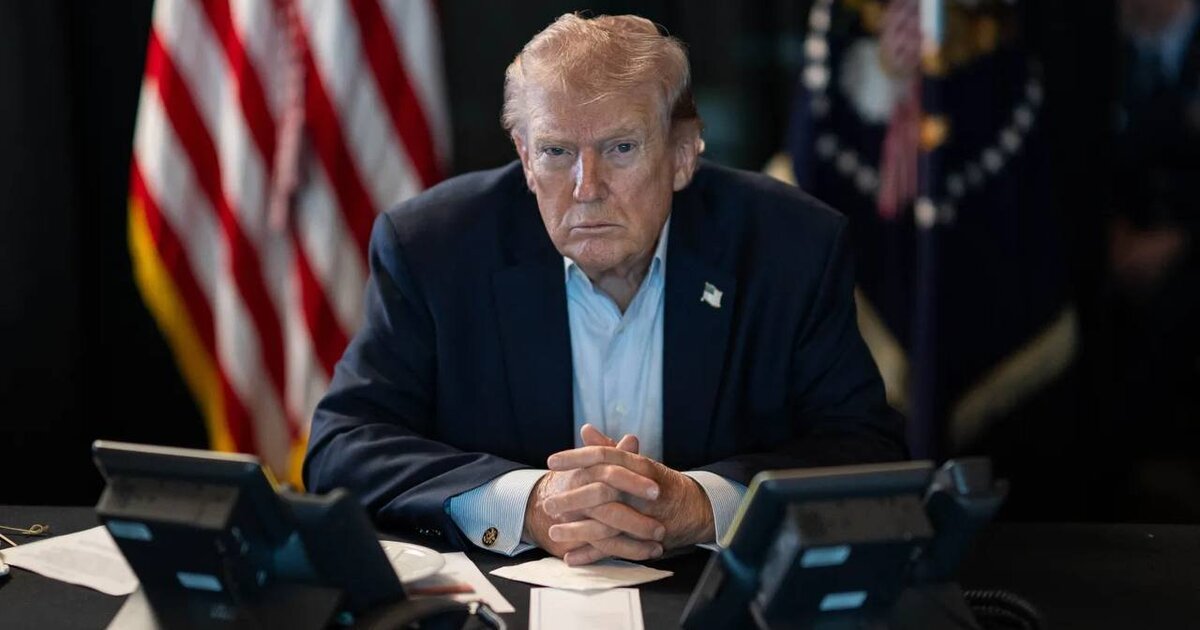
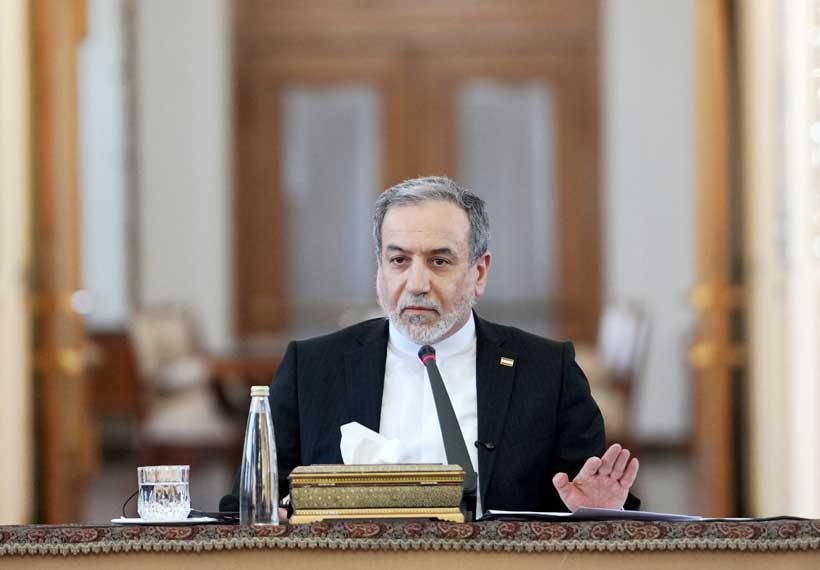
- Indirect US-Iran diplomacy is likely to continue alongside military exchanges, but a durable ceasefire remains unlikely over the next 0-14 days. Iran transmitted conditions through Qatar that included a cessation of hostilities, the unfreezing of assets and the lifting of the naval blockade, while Mohsen Rezaei described seven demands and said negotiations required their acceptance. Donald Trump was reported ready to meet Masoud Pezeshkian during UN General Assembly high-level week. The diplomatic opening is supported by several reports, but the number of Iranian demands, the transmission date and the exact mediation channel are inconsistent. (Confidence: medium · ASSESSED)
- I&W: Confirm: Qatar conveys a further Iranian proposal to Washington or the United States and Iran announce a direct or mediated meeting. (0-14 days)
- I&W: Break: a signed ceasefire produces a sustained military stand-down, or renewed US and Iranian strikes occur without any reported diplomatic contact for 14 days. (0-14 days)
- Energy and freight disruption is very likely to persist for 1-3 months. Tracked container-ship traffic through Hormuz reportedly fell by approximately 94 percent, the China-US East Coast container rate reached $10,948 per 40-foot container, the Shanghai-New York rate reached $10,394 on 17 September, and very-low-sulphur fuel oil remained at $901.50 per tonne. Saudi Arabia's East-West pipeline, with reported capacity of up to 7 million barrels per day, was also reported damaged, although claims that three pumping stations were destroyed conflict with reporting that 5.0 million barrels per day had been diverted through the route. The market and shipping signals are broadly consistent, while pipeline availability remains unresolved. (Confidence: medium · ASSESSED)
- I&W: Confirm: container rates remain above $10,000 per 40-foot container, very-low-sulphur fuel oil remains above $900 per tonne, and Hormuz traffic stays near the reported 94 percent reduction. (1-3 months)
- I&W: Break: ship-tracking data show sustained recovery in Hormuz traffic and freight rates fall below the reported pre-disruption levels, while Saudi Arabia confirms restored East-West pipeline operations. (1-3 months)
Outlook & scenarios
Continued, geographically bounded exchanges (55%)
US strikes on Iran and Iranian retaliation continue over 0-14 days without a confirmed expansion into a wider interstate war. Houthi attacks on Saudi Arabia continue, Hormuz remains severely restricted, and freight disruption persists. Qatar-mediated diplomacy remains open but does not produce a durable ceasefire.
Mediated pause without a settlement (30%)
Qatar passes further Iranian terms to Washington and senior US and Iranian officials hold direct or indirect talks during UN General Assembly high-level week. Fighting pauses briefly or falls in intensity, but unresolved demands over the naval blockade, frozen assets and Hormuz prevent a durable political settlement.
Wider regional escalation (15%)
A renewed US strike or an Iranian attack on US bases in Kuwait, Qatar or the United Arab Emirates triggers broader involvement by regional actors. Saudi Arabia requests further support, Houthi attacks intensify, and commercial traffic through Hormuz falls towards zero. This is an unlikely but high-impact wildcard.
Recommendations
- Prioritise a 0-14-day watch on US Central Command strike announcements, Iranian readiness statements, and reported attacks on US facilities in Kuwait, Qatar and the United Arab Emirates.
- Treat the Strait of Hormuz as severely restricted rather than definitively closed until independent ship-tracking data establish whether any commercial transit continues. Separate Iranian and US official claims from observed vessel movements.
- Maintain a dedicated watch on Houthi statements and Saudi coalition reporting concerning Riyadh, Yanbu, Aramco infrastructure, Mokha and Perim Island. Do not treat the Yanbu damage claim or the Riyadh Aramco tank fire as confirmed Houthi impact without independent corroboration.
- Track Qatar-mediated exchanges, the reported seven Iranian demands and any indication of a Trump-Pezeshkian meeting. Assess separately whether diplomatic contact produces a temporary pause or changes the military posture.
- Update energy and logistics risk estimates weekly using container rates, very-low-sulphur fuel oil prices, Hormuz traffic and verified Saudi East-West pipeline operating status.
- Monitor Balochistan, the 900-kilometre Pakistan-Iran border and Kohat for spillover indicators, including new cross-border incidents, further border restrictions or attacks that raise pressure on Pakistan's internal security.
Confidence & uncertainty
Overall confidence is high in the broad pattern because 25 usable sources include multiple major-media, wire-service and official statements covering renewed US-Iran exchanges, Iranian readiness, Houthi attacks on Saudi Arabia, severe Hormuz disruption and market effects. Confidence is lower on precise details, including whether Hormuz is completely closed, whether Houthi weapons damaged Yanbu infrastructure, the operational status of the East-West pipeline and the chronology of earlier US strike suspensions. These unresolved contradictions do not materially alter the headline assessment that military exchanges and associated disruption are continuing.
Intelligence gaps
- [EEI 1.1 · PARTIAL] Confirmed strikes, attacks, interceptions, or casualties involving US or Iranian forces, including location, timing, and weapon systems used. Recommended collection: military reporting/open-source imagery
- [EEI 1.2 · PARTIAL] Changes in US or Iranian force posture indicating preparation for further attacks, including aircraft dispersal, missile-unit movement, naval sortie activity, or air-defense activation. Recommended collection: satellite imagery/aviation and maritime tracking
- [EEI 2.1 · UNCOVERED] Deployment or repositioning of Iranian ballistic missiles, cruise missiles, drones, fast-attack craft, or other strike assets within operational range of US or partner targets. Recommended collection: satellite imagery/signals intelligence
- [EEI 2.4 · PARTIAL] Changes in Iranian military alert levels, command activity, weapons dispersal, or continuity-of-government measures. Recommended collection: signals intelligence/satellite imagery
- [EEI 3.1 · UNCOVERED] Arrival or departure of US carrier strike groups, bombers, air-defense units, special operations forces, or additional personnel in the region. Recommended collection: maritime and aviation tracking
- [EEI 3.2 · PARTIAL] Changes to US force-protection conditions, base access, evacuation plans, embassy staffing, or noncombatant evacuation preparations. Recommended collection: official notices/diplomatic reporting
- [EEI 4.3 · PARTIAL] Regional government decisions to close airspace or waterways, raise military readiness, expel personnel, or request additional US or allied forces. Recommended collection: official statements/aviation and maritime notices
Cited sources
[1] REN TV · Вооруженные силы Ирана перешли в повышенную готовность (B) · Sun Sep 20 2026 01:51:52 GMT+0000 (Coordinated Universal Time) · sha256:807d7617ccbc [2] Modern Diplomacy · Iran Warns US and Allies Against New Escalation as Regional Tensions Rise (B) · Sun Sep 20 2026 13:35:00 GMT+0000 (Coordinated Universal Time) · sha256:8a0e41c6991c [3] nournews.ir · Генерал Резаи предупредил США о жестком ответе (F) · Sun Sep 20 2026 08:50:54 GMT+0000 (Coordinated Universal Time) · sha256:04f71ef849d2 [4] VietNamNet (vietnam.vn) · Мировые новости, 21 сентября: Иран направляет США условия для переговоров, Россия осуждает Украину. (B) · Sun Sep 20 2026 22:30:00 GMT+0000 (Coordinated Universal Time) · sha256:f1fb0c9cf1d0 [5] Bloomberg (republished by gCaptain) · Qatar Energy Chief Says Bessent ‘Wrong’ About Hormuz Future (A) · Sun Sep 20 2026 22:39:11 GMT+0000 (Coordinated Universal Time) · sha256:9bf7ff6ca288 [6] Trade Facilitation Network (TFN) · The U.S.-Iran Conflict and the Global Freight-Cost Crisis (C) · Sun Sep 20 2026 09:17:04 GMT+0000 (Coordinated Universal Time) · sha256:62d50dd1aebe [7] EADaily · Диспозиция сил на Ближнем Востоке: перед последней битвой: EADaily (C) · Sun Sep 20 2026 07:12:00 GMT+0000 (Coordinated Universal Time) · sha256:15144a75adda [8] The Maritime Executive · IRGC Profiteer Babak Zanjani Skims Iran’s Hormuz Tolls (C) · sha256:dd24d1e706e9 [9] TVNET · Хуситы пытались ударить ракетой по столице Саудовской Аравии (B) · Sun Sep 20 2026 05:15:00 GMT+0000 (Coordinated Universal Time) · sha256:1ffab11c1f94 [10] IndraStra Global · The Saudi Squeeze: How the Houthis Threatened Riyadh, Oil Exports, and Regional Security (D) · sha256:2cf3f9abfde9 [11] m24.ru (Moscow 24) · Fox News: Трамп находится на стадии принятия решения по конфликту с Ираном (D) · Sun Sep 20 2026 00:00:00 GMT+0000 (Coordinated Universal Time) · sha256:f0ac1704caac [12] The Maritime Executive (analysis courtesy of Poten & Partners) · Running Out of Options: Conflict Restricts Saudi Oil Exports (C) · sha256:0a92040a0126
Source content hashes were computed at collection time; the cited text is preserved unmodified for the life of this product.
TLP:CLEAR




:format(webp)/nginx/o/2026/09/20/17928447t1h6d92.webp)