TLP:CLEAR · Disclosure is not limited.
US-Iran Exchanges Expand Across the Gulf
Time window: Last 1 day · Audience: General analyst · Type: Situation report · DTG: 2026-11-18 11:45Z · Overall confidence: HIGH
BLUF
Iran announced drone attacks on Ali al Salem Air Base in Kuwait and US facilities in Bahrain on 18 November; Kuwait and Bahrain reported interceptions. The US had struck an IRGC missile launch site on Qeshm Island on 17 November. Further exchanges are likely, while the scale of damage, responsibility for tanker attacks and the status of Strait of Hormuz passage remain unresolved.
Executive summary
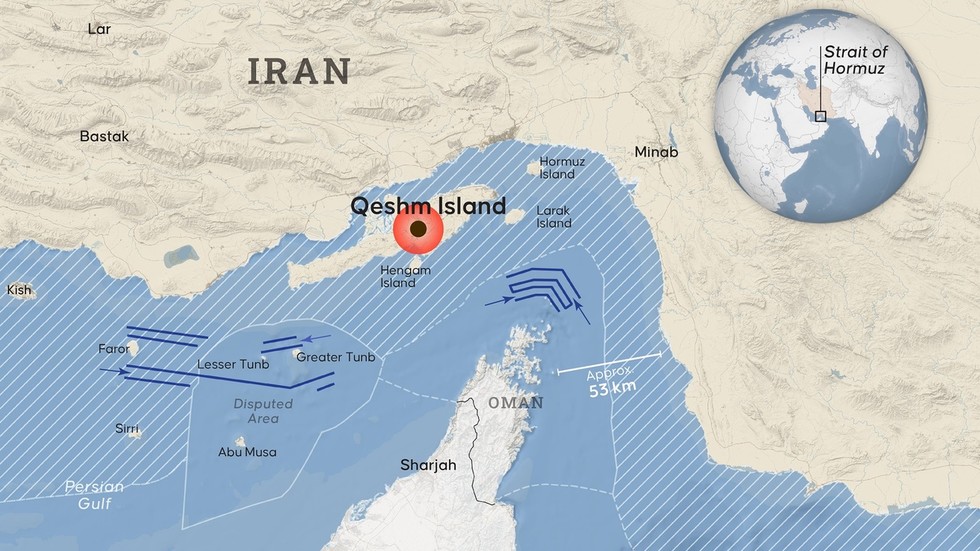
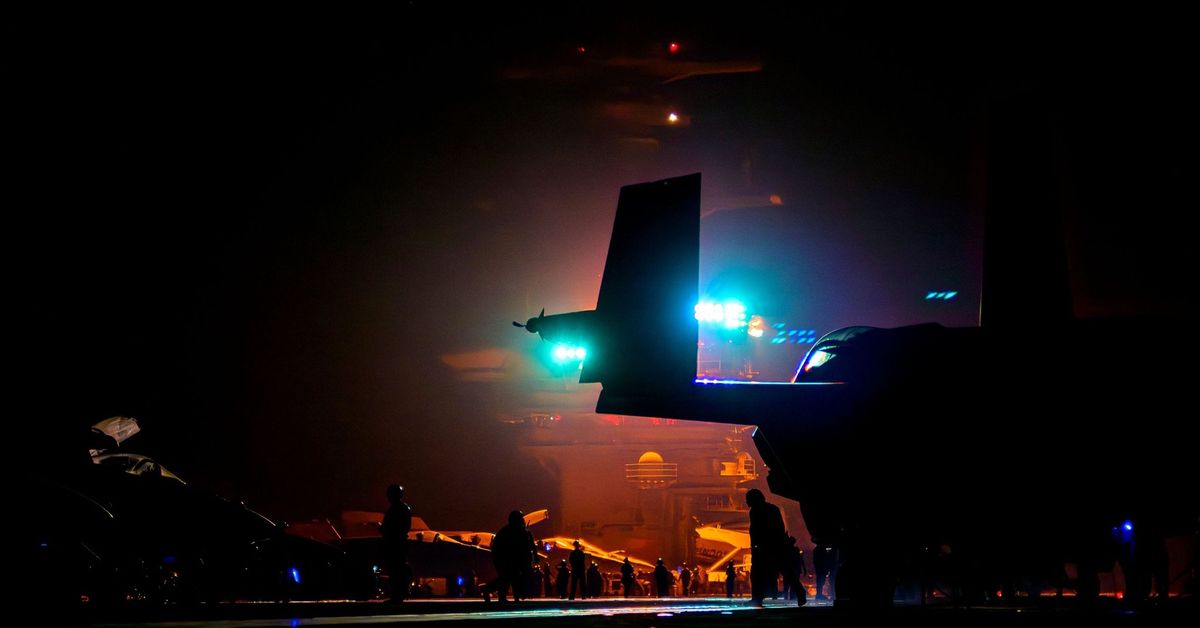
The reported exchange widened on 18 November from Bahrain to Kuwait, following a US strike on an IRGC missile launch site on Qeshm Island on 17 November. Iran announced an attack on Ali al Salem Air Base, and Kuwait and Bahrain said their air defences intercepted attacks; available reporting does not establish damage at either location. Shipping remains severely disrupted: reports describe attacks on tankers near the Strait of Hormuz, including an ADNOC vessel with one crew member missing and 11 injured. Iran’s military says the strait is closed, but reporting also describes continued shipping activity at sharply reduced levels. The USS Theodore Roosevelt has joined the USS George Washington and USS George H.W. Bush in the Middle East. A reported Iranian plot against officials in Washington remains uncorroborated and is disputed by US officials.
Change from previous assessment
Since the 17 November brief, reporting has added Iranian attacks on Ali al Salem Air Base in Kuwait and further attacks reported in Bahrain on 18 November, following the US strike on Qeshm Island on 17 November. The reporting now describes the US response as a strike on an IRGC missile launch site, while Iranian officials report no damage to civilian areas. New reports also describe an ADNOC vessel attack with one crew member missing and 11 injured, alongside further TARA GAS rescue updates. The assessment of tanker attribution and the operational effect of the Bahrain attacks remains unresolved; the reported Washington plot remains low confidence.
Key judgments
- US-Iran military exchanges are likely to continue over the next 14 days. US officials reported a 17 November strike on an IRGC missile launch site on Qeshm Island; on 18 November, Iran announced drone attacks on Ali al Salem Air Base in Kuwait, while Kuwait and Bahrain reported interceptions. Iran has warned of further retaliation, and the USS Theodore Roosevelt has joined two other US carriers in the Middle East. (Confidence: medium · ASSESSED)
- I&W: Confirms if CENTCOM, the IRGC, Kuwait or Bahrain report another strike or interception; breaks if the parties announce a halt and no further exchanges are reported during the period. (0-14 days)
- I&W: Confirms if US or Iranian officials announce additional deployments or retaliation tied to Qeshm, Ali al Salem or Bahrain; breaks if both sides publicly de-escalate those operations. (0-14 days)
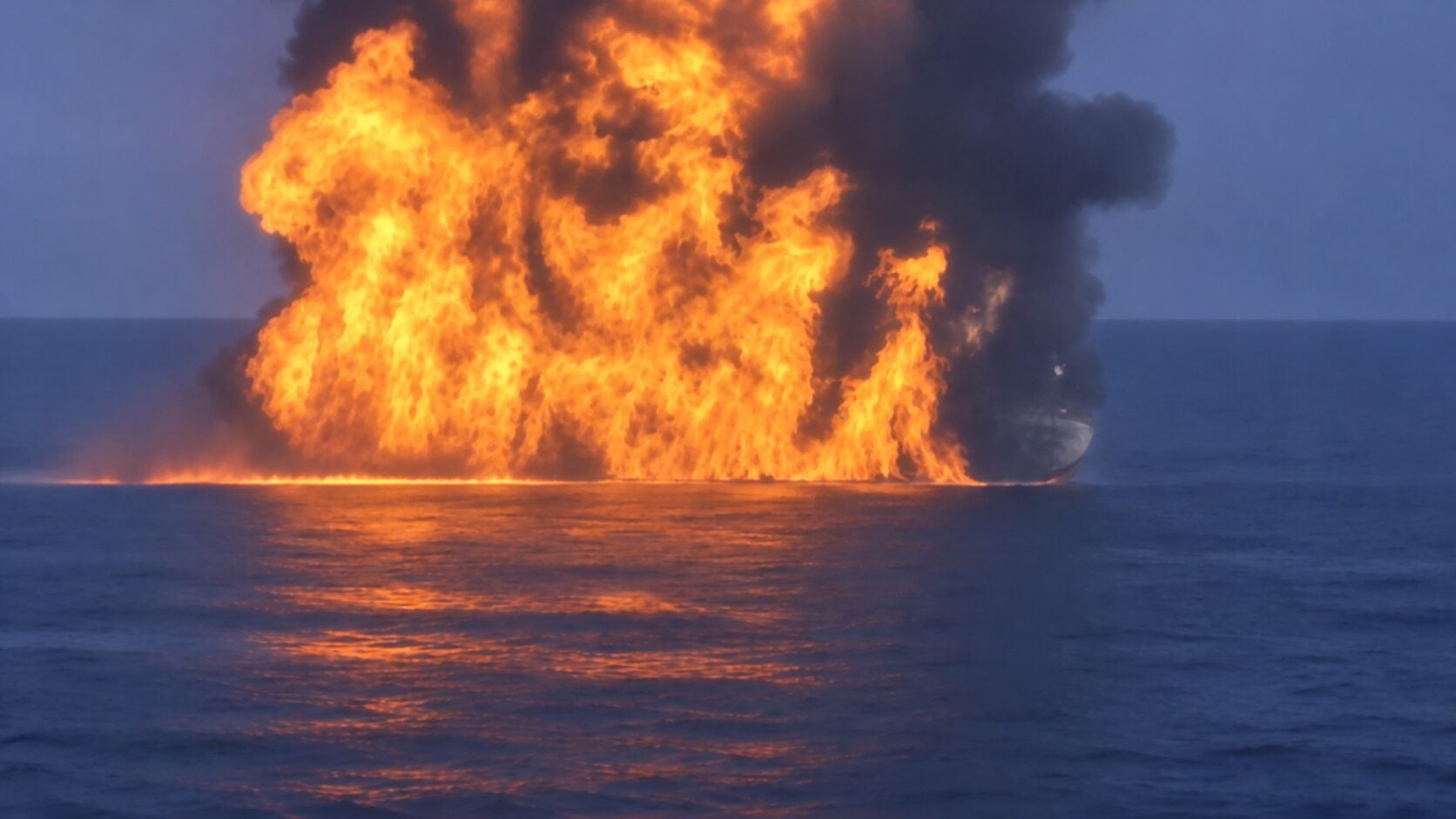
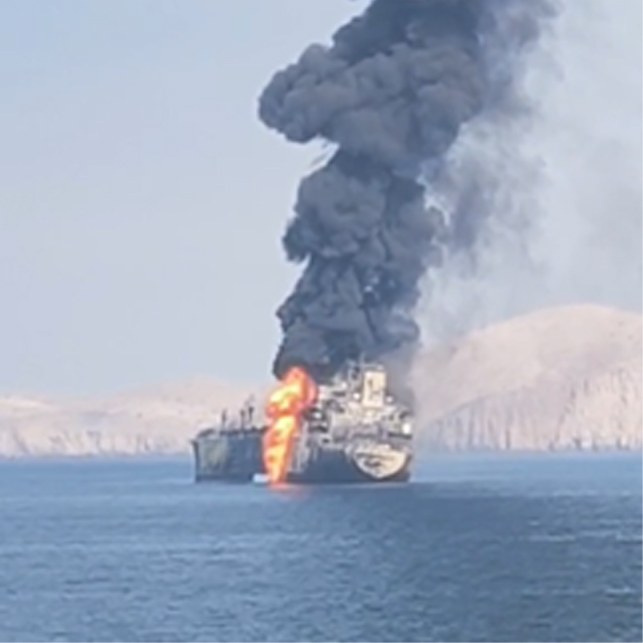
- Commercial-vessel attacks in or near the Strait of Hormuz on 16-17 November likely caused crew casualties and operational disruption, but responsibility for the attacks remains unresolved. UKMTO reported an attack on TARA GAS near Khasab, Oman, and ADNOC L&S reported one crew member missing and 11 injured aboard an attacked vessel. Some reporting attributes attacks on TARA GAS to Iran; UKMTO and other accounts leave the attacker unidentified. (Confidence: medium · ASSESSED)
- I&W: Confirms or resolves attribution if UKMTO, Omani authorities or a vessel operator publishes an incident investigation identifying the attacker and the vessel involved; breaks an Iranian attribution if investigators identify another attacker. (0-14 days)
- I&W: Confirms continued crew impact if ADNOC L&S or Omani authorities report further missing or injured crew; breaks the immediate casualty concern if the missing crew member is located and no additional injuries are reported. (0-14 days)
- Commercial traffic through the Strait of Hormuz is likely to remain severely disrupted over the next month, but the available reporting does not establish a complete closure. Lloyd’s List puts traffic below one-third of pre-conflict levels, while other reporting describes vessels avoiding the strait and transferring cargoes in the Gulf of Oman. Iran’s Navy says passage is closed and requires coordination with Iranian forces, but that statement alone does not establish that all transit has stopped. (Confidence: medium · ASSESSED)
- I&W: Confirms disruption if Lloyd’s List continues to report traffic below one-third of pre-conflict levels; breaks this assessment if reported traffic rises above that level and remains there for seven days. (0-1 month)
- I&W: Confirms continued restrictions if Iran’s Navy maintains its closure announcement or requires coordination for passage; breaks it if Iran announces unrestricted passage and shipping reports show a sustained recovery in transits. (0-1 month)
- A credible, imminent Iranian dirty-bomb attack in Washington is unlikely on the available reporting. The allegation rests on anonymous CNN sourcing, has not been independently verified, and is contradicted by White House and Homeland Security statements that there is no credible or new concrete threat. This judgment rests on contested reporting and is low confidence. (Confidence: low · ASSESSED)
- I&W: Breaks if the White House or Department of Homeland Security confirms specific, independently corroborated operational evidence of a planned attack; confirms the present assessment if officials continue to report no credible threat and no verifiable operational details emerge. (0-14 days)
Outlook & scenarios
Continued exchanges and constrained shipping (58%)
The most likely course is continued US-Iran exchanges around Qeshm, Bahrain and Kuwait, with both sides describing their actions as defensive or retaliatory. Tanker operators continue to avoid some Strait of Hormuz transits, and cargo transfers outside the strait remain in use. Neither side declares a sustained halt.
A mediated pause (32%)
Qatar’s contact with Iranian representatives and Iran’s stated willingness to discuss a Hormuz plan provide an opening for a temporary pause. A pause would require fewer attacks on US facilities and commercial vessels, alongside clearer rules for passage. The current reporting does not establish that either side has accepted those terms.
Wider attacks on infrastructure (10%)
Low-probability, high-impact wildcard: attacks extend from military facilities and shipping to civilian infrastructure near US or Israeli bases, followed by US strikes on additional Iranian infrastructure. Mohammad Bagher Ghalibaf has warned of retaliation against civilian infrastructure, while Donald Trump has threatened further attacks on Iranian infrastructure.
Recommendations
- Maintain a dated incident log for Qeshm, Ali al Salem, Sheikh Isa Air Base and Al-Riffa. Record the reporting actor, stated weapon, target, interception claim, damage assessment and whether the account is independently corroborated.
- Reconcile vessel identities and incident counts before attributing tanker attacks. Compare UKMTO warnings with statements from ADNOC L&S, Omani authorities and the Indian Ministry of External Affairs, and keep unidentified-projectile reports separate from Iranian mine claims.
- Track Strait of Hormuz transit levels against the reported pre-conflict baseline and distinguish reduced traffic from a complete closure. Record Iranian passage requirements separately from observed vessel movements.
- Treat the Washington dirty-bomb allegation as unconfirmed. Update the assessment only if the White House or Department of Homeland Security provides specific corroboration or revises its public threat assessment.
- Monitor for a public outcome from Qatar’s scheduled contact with Iranian representatives and for a formal Iranian statement clarifying whether the proposed Two-Day Plan remains available.
Confidence & uncertainty
Overall confidence is high for the broad picture of expanding military exchanges and severe shipping disruption. Multiple major-media and wire-service reports, together with statements from US, Iranian, Kuwaiti, Bahraini and shipping authorities, support the occurrence of the main reported events. Confidence is lower on attack effectiveness, tanker attribution and the alleged Washington plot; some accounts rely on claims by parties to the conflict or are contradicted by other reporting.
Intelligence gaps
- [EEI 1.1 · UNCOVERED] Concentrations or unusual movements of IRGC-Navy fast attack craft, small boat swarms, or escort vessels within 200 km of US/allied ships, including approach distances and formation changes. Recommended collection: maritime/AIS
- [EEI 1.2 · PARTIAL] Detected pre-launch activity at coastal missile or rocket batteries (vehicle dispersal, fuel/warhead handling, radars powering up, transport erector launchers moving to firing positions). Recommended collection: imagery/signals
- [EEI 1.3 · PARTIAL] Increased launch/arming/positioning of armed UAVs (MALE/loitering munitions) or tactical aircraft at Iranian coastal bases with sortie generation rates and munitions loadouts. Recommended collection: air/ADS-B/imagery
- [EEI 1.4 · PARTIAL] Command-and-control indications of attack orders or elevated rules-of-engagement from IRGC/General Staff (intercepted communications, internal order messages, force-wide alert messages). Recommended collection: signals/human
- [EEI 2.2 · PARTIAL] Issuance of formal orders, mobilization directives, travel restrictions, or official internal communications within IRGC/Armed Forces indicating escalation posture or stand-down. Recommended collection: human/diplomatic
- [EEI 2.3 · UNCOVERED] Directives, logistics movements, or communications from Iranian commanders to regional proxy militias (Houthis, Iraqi Shia militias, Lebanese groups) that change their threat posture or task them with specific operations. Recommended collection: signals/human
- [EEI 3.3 · PARTIAL] Commercial indicators of disruption: sudden increases in war-risk insurance premiums for Gulf transits, vessel re-routing decisions, port throughput reductions, or charter cancellations for Gulf shipments. Recommended collection: financial/commercial
- [EEI 3.4 · PARTIAL] Movements or posture changes of regional state navies/air forces (Saudi, UAE, Kuwait, Bahrain, UK) such as task group departures, airbase dispersals, or announced maritime patrols near choke points. Recommended collection: open-source/imagery
Red cell review: CONCUR
TLP:CLEAR