TLP:CLEAR · Disclosure is not limited.
US-Iran Exchanges Intensify as Hormuz and Saudi Arabia Face Wider Pressure
Time window: Last 1 day · Audience: General analyst · Type: Situation report · DTG: 2026-09-22 01:11Z · Overall confidence: HIGH
BLUF
The US-Iran military confrontation is very likely to persist over the next 0-14 days, while a durable ceasefire is unlikely. The Strait of Hormuz is very likely to remain severely restricted, although a complete closure is not established, and Houthi attacks on Riyadh and Saudi Red Sea energy sites are widening pressure on Saudi Arabia.
Executive summary
On 21 September 2026, Iranian military commands warned that the US was preparing renewed action and threatened sustained attacks on US bases and interests across the Middle East. Maritime reporting recorded at least five tanker-related attacks or security incidents in the Strait of Hormuz since 16 September, while vessel counts varied from 17 visible commodity transits over the weekend to an average of more than 30 vessels per day in the preceding 72 hours. Houthi forces claimed attacks on Riyadh and Aramco facilities in Yanbu, and reporting said they had seized Mokha and Perim Island. Diplomatic activity remains possible around Masoud Pezeshkian's 22 September address to the UN General Assembly, but Iranian preconditions and US threats leave a durable ceasefire unlikely. The UK is likely to begin a time-limited defensive support deployment for Saudi Arabia, although its precise form remains unclear.
Change from previous assessment
Since the 21 September prior brief, confidence has increased that Hormuz disruption includes continuing tanker attacks and materially reduced traffic, although the exact operating status remains contested because new traffic series give different counts. The assessment now gives greater weight to Houthi pressure on Riyadh, Yanbu and Bab el-Mandeb, and adds a judgment on likely UK defensive support for Saudi Arabia. The diplomatic judgment is retained but now places more emphasis on Pezeshkian's 22 September UN General Assembly appearance and the unresolved number and channel of Iranian conditions. No prior judgment has been retired.
Key judgments
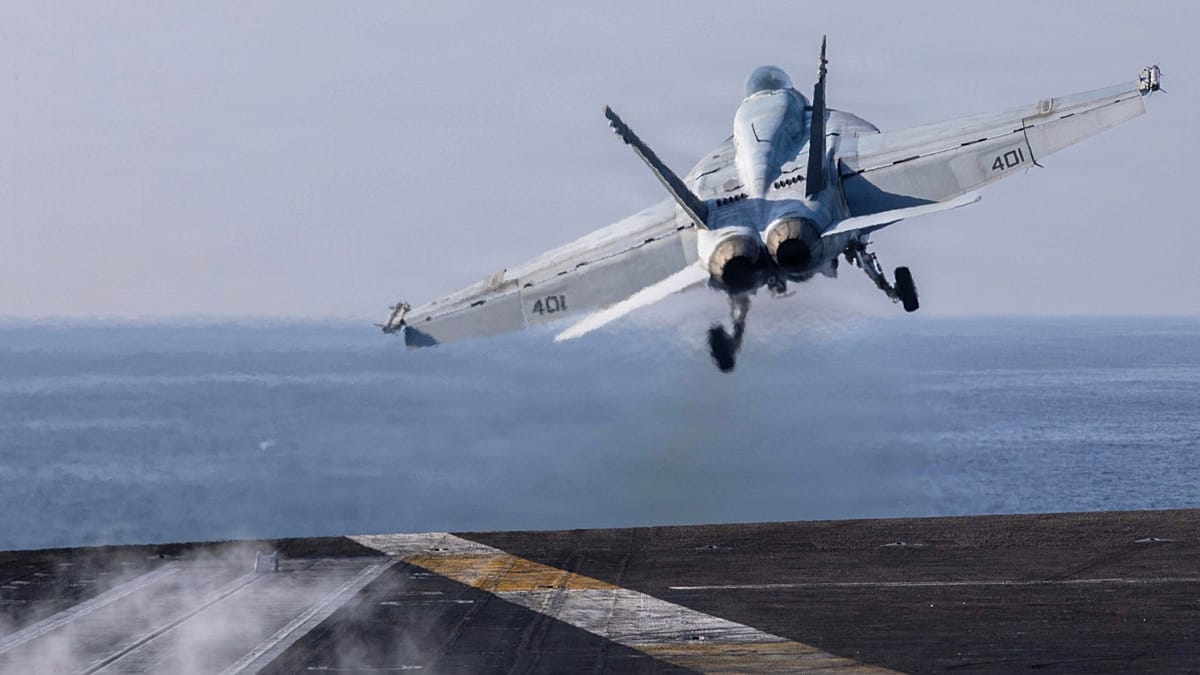
- The US-Iran military confrontation is very likely to persist over the next 0-14 days, and a durable ceasefire in that period is unlikely. Iran's Central Military Command, Khatam al-Anbia Central Headquarters and IRGC representative Hossein Mohebi reported preparations for renewed US action and threatened sustained strikes on US bases, interests and new targets in the Middle East. IRGC representatives also described the conflict as unfinished and Iran as ready for a protracted conflict. This is an assessed continuation judgment supported by several wire and major-media reports, but the reporting does not independently verify US strike preparations. (Confidence: medium · ASSESSED)
- I&W: Confirm: CENTCOM announces a new strike on Iran, or Iranian authorities report a new attack on a named US base or facility in the Middle East. (0-14 days)
- I&W: Break: Washington and Tehran announce and implement a verified ceasefire with no reported US-Iran attacks for 14 consecutive days. (0-14 days)
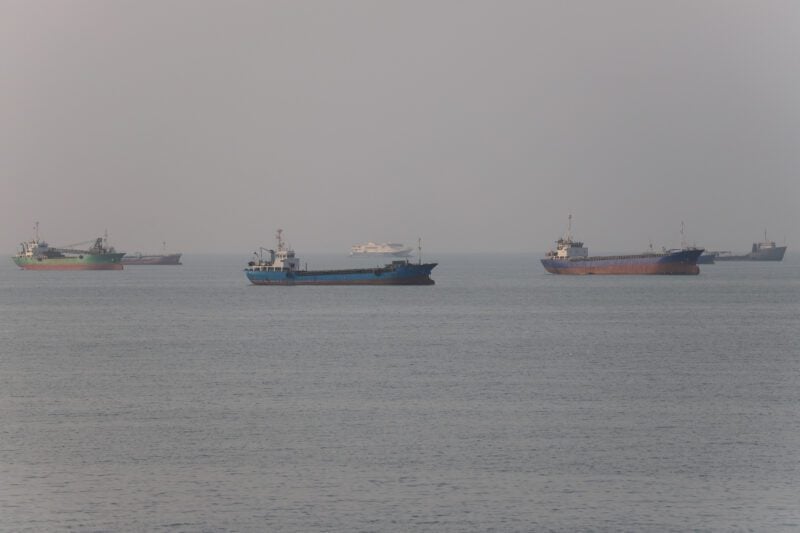
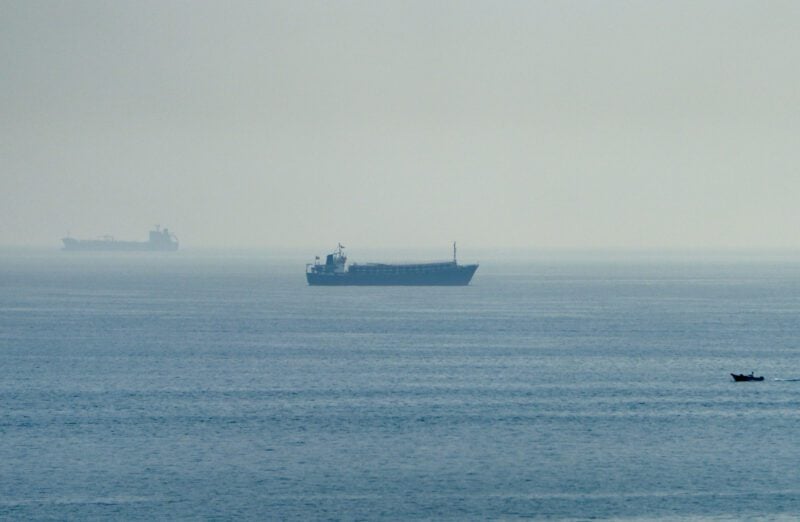
- The Strait of Hormuz is very likely to remain severely restricted over the next 0-14 days, while a complete closure is unlikely. Iranian authorities and Mohsen Rezaei stated that shipping was closed and would not reopen until Washington met Iranian conditions. Against this, Kpler data showed 17 visible commodity vessels over the weekend compared with roughly 125 per day before the war, while US Naval Cooperation and Guidance for Shipping reported an average above 30 vessels per day in the preceding 72 hours. JMIC rated the threat level as severe, and maritime authorities reported at least five tanker attacks or security incidents since 16 September. Confidence is medium because the official closure claims, traffic counts and incident totals use different sources and timeframes. (Confidence: medium · ASSESSED)
- I&W: Confirm: Kpler or UKMTO reports daily traffic remaining below 37 visible vessels, alongside another tanker incident or continued JMIC reporting of a severe threat. (0-14 days)
- I&W: Break: independently tracked traffic returns towards roughly 125 vessels per day and Iran announces the end of its closure conditions. (0-14 days)
- Houthi forces are likely to continue attacks against Saudi Arabia and retain the ability to threaten shipping through the Bab el-Mandeb over the next 0-14 days. Houthi forces claimed ballistic-missile, cruise-missile and drone attacks near Riyadh and against Aramco facilities in Yanbu. Saudi authorities reported an interception near Riyadh, while another account reported a fire at a fuel terminal near King Khalid International Airport. Reporting that Houthi forces had seized Mokha and Perim Island supports a wider maritime threat, but that seizure remains single-source and uncorroborated. Confidence is medium because the attacks are reported by multiple major-media accounts, while damage assessments and control of the two locations remain contested. (Confidence: medium · ASSESSED)
- I&W: Confirm: Houthi forces claim another missile or drone attack on Riyadh or Aramco's Yanbu facilities, accompanied by a Saudi air-raid alert, interception or confirmed damage. (0-14 days)
- I&W: Break: Saudi authorities and maritime reporting record no further Houthi attack on Riyadh, Yanbu or Bab el-Mandeb for 14 consecutive days. (0-14 days)
- Indirect US-Iran diplomacy is likely to continue around Masoud Pezeshkian's 22 September address to the UN General Assembly, but a durable ceasefire is unlikely over the next 0-14 days. Iranian authorities have conditioned negotiations on ending the war, unfreezing Iranian assets and lifting the naval blockade, while Mohsen Rezaei separately described seven mandatory conditions. Pezeshkian is scheduled to lead Iran's delegation in New York, and Donald Trump has said he is considering options on Iran. Confidence is medium because the number of Iranian conditions, the precise contact channel and the attribution of some US threats are inconsistent across reports. (Confidence: medium · ASSESSED)
- I&W: Confirm: Pezeshkian addresses the UN General Assembly in New York and Washington or Tehran publicly confirms a mediation channel or direct contact. (0-14 days)
- I&W: Break: either side rejects further contact after the UN General Assembly appearance, or new US-Iran strikes occur without a concurrent diplomatic channel. (0-14 days)
- Energy and freight disruption is very likely to persist for 1-3 months, despite continued oil movements through ship-to-ship transfers in the Gulf of Oman. Kpler reported about 2.5 million barrels per day of September crude loading through such transfers, up from 1.4 million barrels per day in August. VLCC freight rates for Gulf crude to China exceeded $30 per barrel, while Hormuz commodity-vessel traffic remained far below the roughly 125 vessels per day reported before the war. The use of Kpler, LSEG, Reuters, JMIC and maritime-operational reporting provides strong corroboration, although the timing of a return to normal flows remains uncertain. (Confidence: high · ASSESSED)
- I&W: Confirm: September STS loading remains near or above 2.5 million barrels per day, while visible Hormuz traffic stays below 37 vessels per day or VLCC freight remains above $30 per barrel. (1-3 months)
- I&W: Break: Hormuz traffic returns towards roughly 125 vessels per day and STS loading falls towards the August level of 1.4 million barrels per day. (1-3 months)
- The UK is likely to begin a time-limited defensive support deployment for Saudi Arabia in the coming days, but the exact mission is unresolved. Reporting points to a single Voyager refuelling aircraft based at RAF Akrotiri in Cyprus, while other accounts describe broader air-defence support. The deployment is reportedly intended to last weeks and follows a Saudi request for military support. Confidence is medium because the reporting is concentrated in major-media accounts and conflicts over the form and attribution of the support decision. (Confidence: medium · REPORTED)
- I&W: Confirm: the UK Ministry of Defence or UK government confirms that a Voyager aircraft has begun operating from RAF Akrotiri in support of Saudi Arabia. (0-14 days)
- I&W: Break: London formally cancels, postpones or denies the reported Saudi support deployment. (0-14 days)
Outlook & scenarios
Protracted, bounded escalation (52%)
The US-Iran exchange remains centred on threats, limited military action and pressure on US positions in the Middle East. Hormuz stays severely restricted, Houthi attacks continue against Saudi targets, and the UK begins limited defensive support without entering a wider offensive campaign.
Short diplomatic pause around the UN General Assembly (24%)
Pezeshkian's address in New York opens a mediation channel and produces a short pause in attacks. Iran retains its demands on the naval blockade, sanctions and frozen assets, so the pause does not yet become a durable settlement.
Regional widening after a new US strike (19%)
A new US strike on Iran triggers Iranian attacks on US bases and interests in the Middle East, followed by additional Houthi attacks on Riyadh, Yanbu or Bab el-Mandeb shipping. Saudi Arabia requests broader external defence support, increasing the risk of direct involvement by additional states.
Low-probability, high-impact maritime-energy shock (5%)
Additional tanker attacks drive Hormuz traffic below current levels, while ship-to-ship transfers fail to offset the disruption. Freight costs remain at record levels, Gulf oil exports fall sharply and the maritime crisis becomes the main driver of wider economic pressure.
Recommendations
- Maintain a daily 0-14-day warning watch that cross-checks statements from CENTCOM, Iran's Central Military Command, Khatam al-Anbia Central Headquarters, JMIC and UKMTO. Separate confirmed strikes from threat reporting.
- Report the Strait of Hormuz as severely restricted rather than fully closed until independent traffic data and official navigation reporting converge. Present Kpler visible-vessel counts separately from US Naval Cooperation and Guidance for Shipping flow data.
- Prioritise collection on the 22 September UN General Assembly appearance by Masoud Pezeshkian. Record any direct US-Iran contact, mediation activity or change in Iran's conditions on the naval blockade, sanctions and frozen assets.
- Track Riyadh, Yanbu, Mokha, Perim Island and Bab el-Mandeb as a linked warning set. Treat any new Houthi claim accompanied by a Saudi interception, air-raid alert, fire or shipping incident as evidence of regional widening.
- Verify the UK support package before assessing British involvement. Confirm whether the Voyager aircraft has moved from RAF Akrotiri, whether the mission is limited to refuelling, and whether London has authorised broader air-defence activity.
- Update energy-risk assessments weekly using three separate measures: Hormuz vessel counts, Gulf of Oman STS loading volumes and VLCC freight rates. Do not infer restored maritime access from oil volumes alone.
Confidence & uncertainty
Overall confidence is high because the central events are supported by multiple wire and major-media accounts, maritime reporting from JMIC and UKMTO, and market data from Kpler and LSEG. The strongest corroboration concerns continued military threats, tanker incidents, reduced Hormuz traffic and elevated freight costs. The principal uncertainties are whether the Strait is formally closed or operating at sharply reduced capacity, who conducted the tanker attacks, the exact extent of Houthi control around Mokha and Perim Island, and the form of UK support to Saudi Arabia.
Intelligence gaps
- [EEI 1.1 · PARTIAL] Confirmed strikes, attacks, interceptions, or casualties involving US or Iranian forces, including location, timing, and weapon systems used. Recommended collection: military reporting/open-source imagery
- [EEI 1.2 · PARTIAL] Changes in US or Iranian force posture indicating preparation for further attacks, including aircraft dispersal, missile-unit movement, naval sortie activity, or air-defense activation. Recommended collection: satellite imagery/aviation and maritime tracking
- [EEI 2.1 · PARTIAL] Deployment or repositioning of Iranian ballistic missiles, cruise missiles, drones, fast-attack craft, or other strike assets within operational range of US or partner targets. Recommended collection: satellite imagery/signals intelligence
- [EEI 2.4 · PARTIAL] Changes in Iranian military alert levels, command activity, weapons dispersal, or continuity-of-government measures. Recommended collection: signals intelligence/satellite imagery
- [EEI 3.1 · PARTIAL] Arrival or departure of US carrier strike groups, bombers, air-defense units, special operations forces, or additional personnel in the region. Recommended collection: maritime and aviation tracking
- [EEI 3.2 · PARTIAL] Changes to US force-protection conditions, base access, evacuation plans, embassy staffing, or noncombatant evacuation preparations. Recommended collection: official notices/diplomatic reporting
- [EEI 3.4 · PARTIAL] US or coalition kinetic actions against Iranian territory, military infrastructure, or aligned groups following new exchanges. Recommended collection: military reporting/open-source imagery
Cited sources
[1] Interfax · Военные Ирана заявили о подготовке США к возобновлению военных действий (B) · Mon Sep 21 2026 01:45:00 GMT+0000 (Coordinated Universal Time) · sha256:99c27759c60e [2] CNBC Africa · Iranian President Pezeshkian to head to New York for UN meeting as Trump warns of no-deal consequences (A) · Mon Sep 21 2026 12:43:14 GMT+0000 (Coordinated Universal Time) · sha256:bd21cb74f6ff [3] Газета ВЗГЛЯД (vz.ru) · КСИР: Иран применит новое оружие против США в случае агрессии (B) · Mon Sep 21 2026 05:45:47 GMT+0000 (Coordinated Universal Time) · sha256:995b8dd41af7 [4] Euronews · США и Иран снова обмениваются угрозами. Растут опасения о возобновлении полномасштабной войны (A) · Mon Sep 21 2026 14:47:28 GMT+0000 (Coordinated Universal Time) · sha256:1375c003ccb3 [5] gCaptain · Two More Tankers Hit in Strait of Hormuz as Attacks Mount (C) · Mon Sep 21 2026 16:06:53 GMT+0000 (Coordinated Universal Time) · sha256:41290b91667f [6] Reuters (republished by gCaptain) · Hormuz Shuttles Keep Oil Flowing, But At a High Cost (A) · Mon Sep 21 2026 16:38:06 GMT+0000 (Coordinated Universal Time) · sha256:09ea1e20149d [7] BBC News · Andy Burnham says UK to provide Saudi Arabia with 'defensive' support (A) · Mon Sep 21 2026 21:00:13 GMT+0000 (Coordinated Universal Time) · sha256:faaacee8d0fd [8] The Maritime Executive · CENTCOM's Commander Highlights Successes of U.S. Blockade (C) · sha256:41beece76d49
Source content hashes were computed at collection time; the cited text is preserved unmodified for the life of this product.
TLP:CLEAR