TLP:CLEAR · Disclosure is not limited.
US-Iran Exchanges Intensify as Hormuz Disruption and Regional Spillover Persist
Time window: Last 1 day · Audience: General analyst · Type: Situation report · DTG: 2026-09-05 18:40Z · Overall confidence: HIGH
BLUF
Very likely US-Iran military exchanges will continue over the next 0-14 days. On 5 September, IRGC ballistic missiles targeted a US aircraft carrier and guided-missile destroyer, while US forces struck three Iranian oil tankers. Likely disruption to Strait of Hormuz shipping and localised fighting in southern Lebanon will continue, while diplomatic initiatives are unlikely to produce a durable halt in the near term.
Executive summary
The conflict intensified on 5 September with an Iranian missile attack against two US Navy warships and US strikes that disabled two Iranian tankers and destroyed a third in the Gulf of Oman and near Kharg Island. Iran has threatened retaliation against US bases, while Donald Trump has threatened action against the Pickaxe Mountain site if suspicious activity is detected. Shipping through the Strait of Hormuz remains far below normal, with four visible commodity vessels reported on Thursday and operators using ship-to-ship LNG transfers as a workaround. Israel and Hezbollah continue fighting around Ali Taher hill in southern Lebanon despite a ceasefire. China, Türkiye and Egypt are promoting diplomatic alternatives, but the available reporting shows no mechanism capable of enforcing a durable halt.
Change from previous assessment
Since the 4 September brief, the assessment has shifted from likely continued exchanges to very likely continued exchanges, with higher confidence because new reporting describes a direct IRGC missile attack on two US warships and a US strike on three Iranian tankers on 5 September. The shipping disruption judgement is unchanged in direction but now rests on fresh reporting of four visible Hormuz transits and LNG workarounds. A new judgement assesses regional spillover as active but concentrated in Jordan and southern Lebanon. A new low-confidence wildcard covers a possible US strike on Pickaxe Mountain. The assessment that diplomacy is unlikely to produce a durable halt remains unchanged.
Key judgments
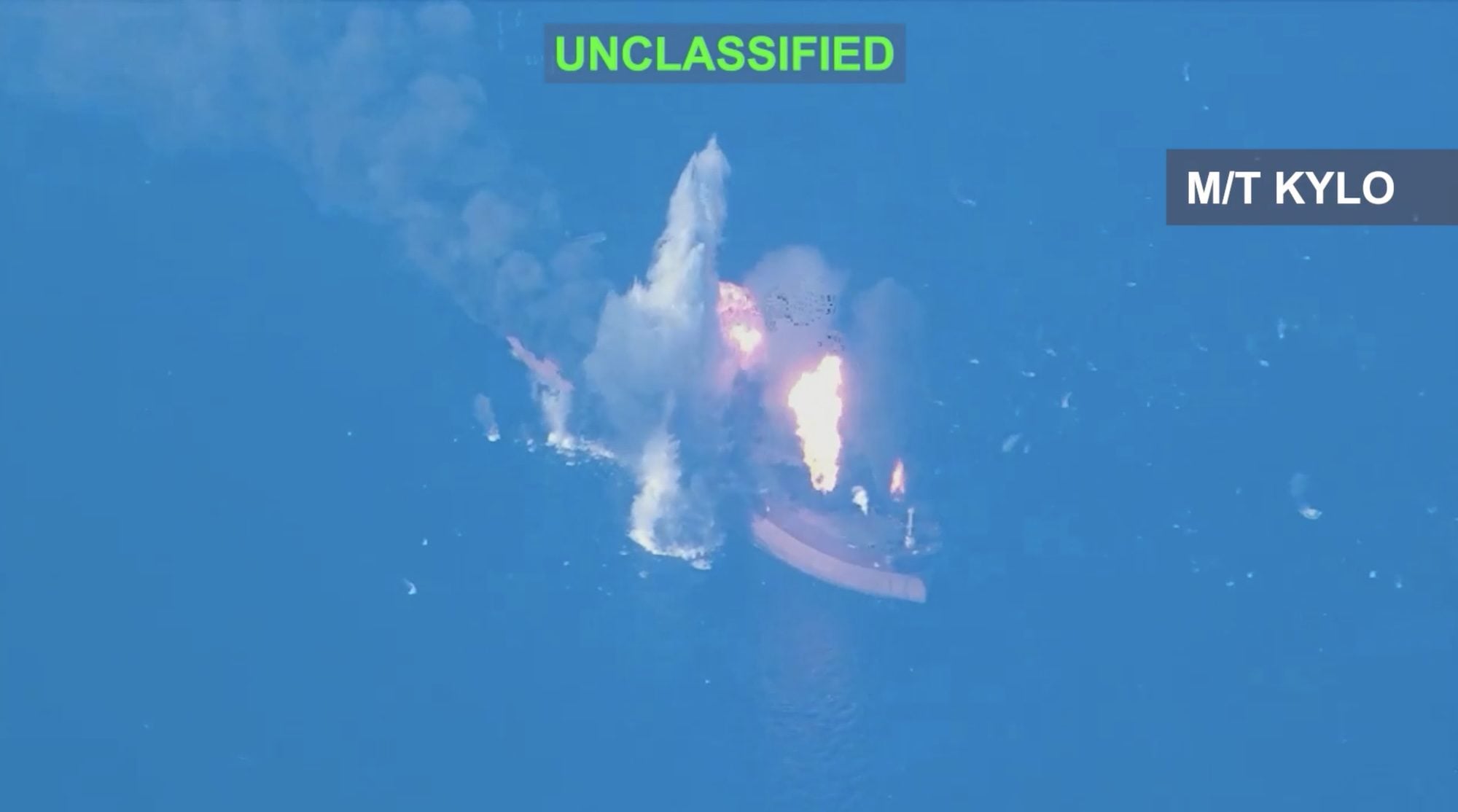
- Very likely US-Iran military exchanges will continue over the next 0-14 days. On 5 September, the IRGC reportedly fired ballistic missiles at a US aircraft carrier and a guided-missile destroyer in regional waters, while US forces struck three Iranian oil tankers, disabling the M/T Downy and M/T Stark 1 and destroying the M/T Kylo, also known as Noxen. Iran has threatened attacks on US military bases across West Asia, and Donald Trump has warned of further action. JD Vance's statement that there was no active shooting and Trump's description of the conflict as small potatoes conflict with multiple reports of direct attacks and US retaliation. (Confidence: high · ASSESSED)
- I&W: Confirmation would be another reported IRGC missile or drone attack on a named US naval vessel, or another US strike on an Iranian tanker or IRGC-linked site. (0-14 days)
- I&W: The assessment would be broken by a publicly announced US-Iran halt followed by at least seven consecutive days without reported attacks by either side. (0-14 days)
- Likely commercial traffic through the Strait of Hormuz will remain well below normal over the next 0-14 days and disruption is likely to persist for 1-3 months. Four visible commodity vessels were reported crossing on Thursday, shipping companies and regional governments are developing alternative petroleum routes, and rare LNG ship-to-ship transfers are taking place outside the strait. A complete physical closure remains unlikely on the available reporting, because some traffic and workaround activity continue. (Confidence: medium · ASSESSED)
- I&W: Confirmation would be daily visible commodity vessel traffic remaining at or near the reported level of four, alongside continued LNG transfers outside Hormuz or new attacks on commercial vessels. (0-14 days)
- I&W: The assessment would be weakened by a sustained increase in tanker and commodity vessel transits well above four per day, combined with the end of reported shipping workarounds. (0-14 days)
- Likely regional spillover will remain active but concentrated in Jordan and southern Lebanon over the next 0-14 days, rather than immediately becoming a broader multi-front exchange. Iran has reportedly struck Jordanian sites linked to the US military presence, and Jordan has remained committed to its US partnership despite roughly 300 Iranian missiles and drones reported during the war. In southern Lebanon, Israel reports operational control of Ali Taher hill and daily shelling and airstrikes continue, although a commentator says Hezbollah withdrew without a major battle. That contradiction lowers confidence in the precise level of fighting on the hill. (Confidence: medium · ASSESSED)
- I&W: Confirmation would be a fresh Iranian strike on a US-linked site in Jordan or a further Israeli or Hezbollah attack at Ali Taher hill. (0-14 days)
- I&W: The assessment would be broken by reported Israeli or Hezbollah operations spreading to additional Lebanese areas, or by Iran striking Jordanian state infrastructure not linked to the US presence. (0-14 days)
- Unlikely diplomatic initiatives will produce a durable US-Iran ceasefire over the next 0-14 days, despite expanding activity by Türkiye, China and Egypt. Türkiye is pursuing initiatives to ease the Tehran-Washington standoff, China has proposed a new West Asian security framework, and Egypt has endorsed de-escalation. Iran has welcomed China's proposal, while the Shanghai Cooperation Organisation has called for a political settlement. These efforts lack a reported implementation mechanism, and US and Iranian statements continue to threaten further military action. (Confidence: medium · ASSESSED)
- I&W: Confirmation of a durable halt would require a publicly announced US-Iran agreement with agreed sequencing, followed by at least seven days without reported strikes. (0-14 days)
- I&W: The assessment would be reinforced by another US or Iranian strike while Türkiye, China or Egypt continue diplomatic engagement without a matching reduction in military activity. (0-14 days)
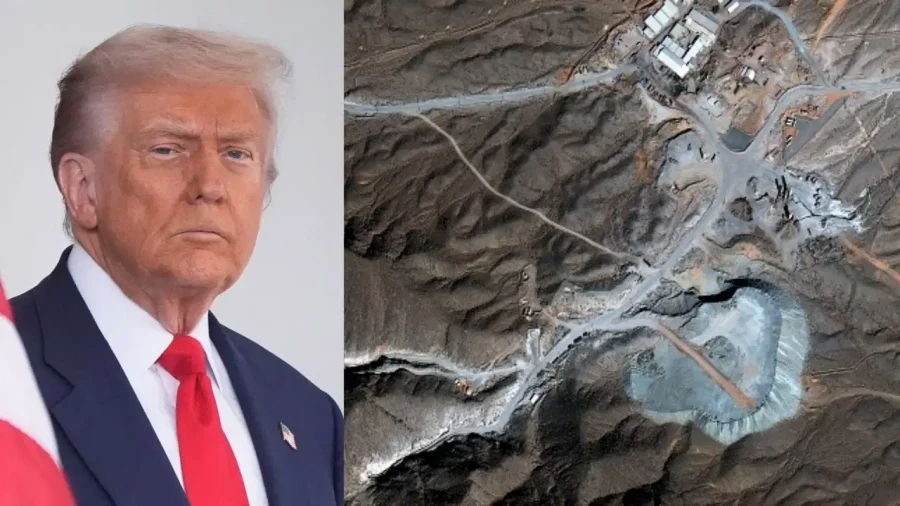
- An American strike on Pickaxe Mountain in the next 0-14 days is unlikely but remains the main low-probability, high-impact escalation path. Donald Trump said on 4 September that the United States was prepared to attack the site if suspicious activity was observed. Israeli intelligence reporting suggests Iran moved thousands of centrifuges there, while Iranian Foreign Ministry spokesperson Esmaeil Baghaei said no nuclear-related operations were taking place at the site. The IAEA has also reported a prolonged gap in verification. This judgement rests on contested and partly single-source reporting, so confidence is low. (Confidence: low · ASSESSED)
- I&W: Confirmation would be a US announcement of a strike on Pickaxe Mountain or reported US military action against the site after a new allegation of suspicious activity. (0-14 days)
- I&W: The assessment would be weakened by new IAEA verification at Pickaxe Mountain combined with a US withdrawal of the stated attack threat. (0-14 days)
Outlook & scenarios
Continued reciprocal strikes with severe maritime disruption (60%)
The current pattern persists. Iran attacks US naval or regional military targets, the United States strikes Iranian tankers or IRGC-linked facilities, and traffic through the Strait of Hormuz remains sharply reduced. Fighting around Ali Taher hill continues without a general collapse of the Lebanon ceasefire.
Wider regional escalation (25%)
Iran retaliates against additional US-linked sites in Jordan or other West Asian locations, while Israel and Hezbollah expand operations beyond Ali Taher hill. Commercial shipping faces additional attacks and more operators suspend Hormuz transits.
Negotiated pause without a settlement (20%)
Türkiye, China and Egypt secure an initial US-Iran contact that produces a short operational pause. The pause reduces strikes and permits limited maritime traffic, but unresolved demands over Iranian military activity and nuclear facilities prevent a durable agreement.
Strike on Pickaxe Mountain (10%)
The United States launches a strike on Pickaxe Mountain after declaring that Iranian activity has crossed a threshold. Iran responds against US military or maritime targets, producing a sharp escalation with immediate effects on Hormuz shipping and regional force protection.
Recommendations
- Maintain a 0-14 day watch focused on IRGC missile or drone activity against named US naval vessels, further US strikes on Iranian tankers, and Iranian statements specifying targets in Jordan or elsewhere in West Asia.
- Reconcile the reported locations of the M/T Stark 1 strike near Jask and Kharg Island using the next CENTCOM account and available vessel tracking before treating either location as definitive.
- Track daily visible commodity vessel transits through the Strait of Hormuz, LNG ship-to-ship transfers outside the strait, and new commercial vessel warnings from the US Maritime Administration.
- Separate diplomatic activity from evidence of de-escalation. Require a public US-Iran arrangement, agreed sequencing and several days without attacks before assessing that Türkiye, China or Egypt have produced a durable pause.
- Establish a dedicated Pickaxe Mountain watch covering US statements, Iranian activity reports and any new IAEA verification. Treat the site as a low-confidence warning indicator until independent reporting resolves the conflict between Israeli intelligence reporting and Iran's denial.
- Maintain separate reporting lines for Ali Taher hill, wider southern Lebanon and Jordan. This will help distinguish continued localised fighting from a broader regional expansion.
Confidence & uncertainty
Overall confidence is high because the core assessment rests on multiple high-confidence claims from major media, wire-service and trade reporting, including corroborated accounts of the 5 September missile attack on two US warships, the US strikes on three Iranian tankers and the sharp reduction in Hormuz traffic. The principal uncertainties concern the exact location of the M/T Stark 1 strike, the attribution of US warnings about Iranian tankers, the intensity of fighting at Ali Taher hill and the nuclear status of Pickaxe Mountain.
Intelligence gaps
- [EEI 1.1 · UNCOVERED] Unusual long-range missile/rocket transporter-launcher (TEL) movements, storage activation, or assembly activity at known IRGC missile sites or forward staging areas. Recommended collection: satellite/imagery
- [EEI 1.2 · PARTIAL] Orders, threat-alert messages, or changes in posture from IRGC, Quds Force, or senior Iranian military leadership indicating attack timelines or rules of engagement changes. Recommended collection: signals/ELINT and HUMINT
- [EEI 1.3 · UNCOVERED] Large-scale transfers, deliveries, or convoy movements of armed UAVs/drones, guided munitions, or spare parts from Iran into Lebanon (Hezbollah), Iraq, Syria, or Gaza. Recommended collection: air/aviation track and HUMINT
- [EEI 1.4 · UNCOVERED] Sustained changes in Israeli air-defense usage (SAM launches, radar activations), wide-area alerts, or NOTAMs indicating elevated imminent strike response. Recommended collection: air/aviation/NOTAMs and signals
- [EEI 2.1 · UNCOVERED] Concentration, repositioning, or sortie patterns of Iranian naval/IRGC patrol boats and fast-attack craft near shipping chokepoints or commercial lanes. Recommended collection: maritime/AIS and satellite/imagery
- [EEI 2.3 · UNCOVERED] Insurance market indicators: sudden spikes in war-risk or hull insurance premiums for routes through the Red Sea, Suez corridor, or Persian Gulf, and major carriers announcing route changes. Recommended collection: financial/market and commercial shipping notices
- [EEI 2.4 · UNCOVERED] Port closures, naval escorts requested by commercial operators, or formal rerouting advisories issued by major shippers (e.g., Maersk, Hapag-Lloyd) for regional transits. Recommended collection: commercial/OSINT
- [EEI 3.1 · PARTIAL] Deployment of foreign military assets to the region (carrier strike groups, amphibious ships, combat aircraft deployments, or additional bases activated) from the US, UK, France, Russia, or GCC states. Recommended collection: maritime/AIS and air/aviation and satellite/imagery
- [EEI 3.3 · UNCOVERED] Confirmed arms transfers, expedited weapons shipments, or transfer authorizations to Israel, Iran, or their proxies (aircraft parts, munitions, air defenses). Recommended collection: customs/INTEL and HUMINT
- [EEI 3.4 · UNCOVERED] Issuance of travel warnings, embassy evacuations or reductions, and closure of diplomatic missions by major capitals indicating escalation risk or shifted threat assessments. Recommended collection: OSINT/diplomatic
TLP:CLEAR