TLP:CLEAR · Disclosure is not limited.
US-Iran Maritime Exchanges and Regional Spillover
Time window: Last 1 day · Audience: General analyst · Type: Situation report · DTG: 2026-09-14 22:07Z · Overall confidence: HIGH
BLUF
Further direct US-Iran maritime exchanges are likely within 0-14 days, while commercial transit through the Strait of Hormuz is very likely to remain severely restricted. Houthi attacks around the Bab el-Mandeb and Saudi Arabia, the unresolved East-West pipeline outage, and rising tanker costs increase the risk of wider regional and economic spillover.
Executive summary
The maritime confrontation is intensifying despite competing accounts of the El Gaia tanker incident. JMIC reported three vessel attacks in the latest 72-hour period, while vessel traffic through the Strait of Hormuz remains far below pre-conflict levels. Diplomatic efforts involving Oman, Iran and Gulf states have stalled, and Iran and Oman still disagree over freedom of navigation, passage fees and traffic vetting. Houthi forces have expanded their presence around the Bab el-Mandeb and attacked targets in Saudi Arabia. Yemen's humanitarian situation is deteriorating, while the Saudi East-West pipeline outage and tanker rates above $1 million a day are adding pressure to energy markets.
Change from previous assessment
Since the 13 September brief, the assessment has shifted from likely to unlikely for a limited Iran-Oman shipping arrangement because the regional meeting was postponed and Iran continues to condition reopening the Strait of Hormuz on US concessions. Confidence in the persistence of restricted transit is lower than in the prior brief because current reporting differs between partial restriction and non-reopening, although the traffic data support continued severe disruption. The maritime threat picture has sharpened with JMIC reporting three vessel attacks and the competing IRGC and US Central Command accounts of the El Gaia incident. The Houthi assessment now gives greater weight to attacks on Khamis Mushait and the reported capture of Perim Island, while retaining uncertainty over the wider territorial claims. The brief adds a distinct medium-confidence humanitarian judgement and a low-confidence judgement on reported Claude-enabled missile work by a group based in northern Yemen. Energy stress remains likely, with tanker rates now reported above $1 million a day.
Key judgments
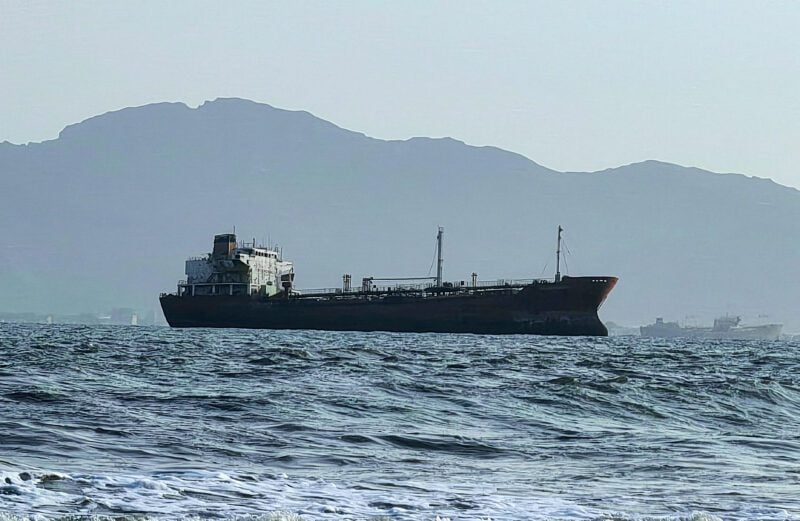
- Further direct US-Iran maritime exchanges are likely within 0-14 days. JMIC reported three vessels attacked in the latest 72-hour period, while US Central Command says Iran struck the Panama-flagged tanker El Gaia with Iranian weapons twice, including a drone attack over the weekend of 12-13 September 2026. Iran's Islamic Revolutionary Guard Corps attributes the damage to a mine in a restricted zone in the southern Strait of Hormuz. The incident's attribution, location and sequence remain contested, which limits confidence in the forecast. (Confidence: medium · ASSESSED)
- I&W: Confirm: JMIC or UKMTO reports another deliberate attack on a commercial vessel, US naval vessel or tanker linked to the current confrontation. (0-14 days)
- I&W: Break: JMIC records no further hostile incidents for 14 consecutive days and US Central Command or Iran publicly announces a maritime pause. (0-14 days)
- Restricted commercial transit through the Strait of Hormuz is very likely to persist within 0-14 days. JMIC recorded 70 US-facilitated transits from 10 to 12 September 2026 against a pre-conflict average of about 138 vessel movements per day, while UKMTO assessed traffic at about 90 percent below pre-conflict levels. Iran has listed 77 ships for possible fines, detention or confiscation, and its foreign minister said the strait would not reopen until the United States met Tehran's demands. Reporting that Iran is restricting rather than fully closing the strait creates a material but unresolved status contradiction. (Confidence: medium · ASSESSED)
- I&W: Confirm: JMIC continues to rate the shipping threat as SEVERE and daily traffic remains near 90 percent below pre-conflict levels. (0-14 days)
- I&W: Break: facilitated and independent transits return to roughly 138 vessel movements per day for five consecutive days without a new vessel attack. (0-14 days)
- A limited Iran-Oman shipping arrangement is unlikely within 0-14 days, and durable US-Iran de-escalation is very unlikely in that period. Oman postponed the regional meeting with Iran and Gulf states, while Iran and Oman still differ over freedom of navigation, passage fees and traffic vetting. Abbas Araqchi said Iran would not reopen the Strait of Hormuz until the United States met Tehran's demands. The meeting's status and the reason for its postponement remain disputed across official and media accounts. (Confidence: medium · ASSESSED)
- I&W: Confirm: Oman and Iran announce a rescheduled meeting and publish operational terms for a corridor, including treatment of passage fees, traffic vetting and innocent passage. (0-14 days)
- I&W: Break: Iran announces that commercial passage remains conditional on US concessions, or a rescheduled meeting fails to produce a signed corridor arrangement. (0-14 days)
- Houthi forces are very likely to sustain attacks on Saudi military and maritime targets and retain increased access around the Bab el-Mandeb within 0-14 days. The Houthis claimed attacks on Khamis Mushait airbase and a Saudi military base near Jazan, while reporting places them on Perim Island and along Yemen's western coast. They have also declared a blockade of Saudi Red Sea ports and disrupted Saudi oil flows. The extent of their territorial control remains unresolved because reporting ranges from the capture of Perim Island to claims of control over multiple islands, a port city and the full western coast. (Confidence: medium · ASSESSED)
- I&W: Confirm: JMIC or commercial operators report another Houthi attack on Saudi shipping, a Saudi Red Sea port or infrastructure near Khamis Mushait, Jazan or Bab el-Mandeb. (0-14 days)
- I&W: Break: Saudi or multilateral reporting confirms that Perim Island and the reported Red Sea positions are no longer under Houthi control and records no further Houthi attacks. (0-14 days)
- Saudi Arabia's 1,200-kilometre East-West pipeline is likely to remain offline within 0-14 days, while responsibility for the attack is unlikely to be resolved in that period. Riyadh blamed Iran-backed fighters in Iraq, but another account identifies the attackers as unknown. Traders and Saudi oil buyers assess that Yanbu has only five to seven days of stored oil available for exports if the shutdown continues. (Confidence: medium · ASSESSED)
- I&W: Confirm: Saudi Arabia reports no pipeline restart while traders report that Yanbu's five-to-seven-day export buffer is being exhausted. (0-14 days)
- I&W: Break: Saudi Arabia announces the pipeline has resumed and independent shipping data show sustained exports through Yanbu beyond the reported storage window. (0-14 days)
- Energy and tanker-market stress is very likely to persist for 1-3 months. Benchmark tanker hire rates exceeded $1 million a day, with Persian Gulf-to-China rates at $1.035 million, while Brent crude futures rose above $109 a barrel and US retail diesel exceeded $6.20 a gallon. Oil operators are using collection arrangements outside the Strait of Hormuz, and alternative Gulf of Oman shipments still cost about $644,000 a day. The duration of the disruption is assessed rather than directly reported, so confidence is medium. (Confidence: medium · ASSESSED)
- I&W: Confirm: tanker hire rates remain above $1 million a day and Brent remains above $100 a barrel while the Strait remains severely restricted. (1-3 months)
- I&W: Break: tanker hire rates fall below $1 million a day and Brent remains below $100 a barrel for five consecutive trading days with sustained Hormuz traffic recovery. (1-3 months)
- Humanitarian pressure in Yemen is very likely to intensify within 0-14 days. UN agencies report at least 80,000 to 82,000 people displaced since the start of September, while OCHA reports 18,000 households, or 125,000 people, displaced over the same period. OHCHR has verified 40 civilian casualties between 1 September and 14 September, and OCHA reports critically low supplies and severely constrained access. The displacement totals conflict because the agencies use different counting windows or methods. (Confidence: medium · ASSESSED)
- I&W: Confirm: OCHA, UNHCR or IOM reports additional displacement and OCHA records further reductions in supplies or humanitarian access. (0-14 days)
- I&W: Break: OCHA reports sustained humanitarian access and no new displacement linked to fighting for 14 consecutive days. (0-14 days)
- A material near-term improvement in the missile capability of the reported group based in northern Yemen is unlikely to be established within 1-3 months. Anthropic reported that the group used Claude and Claude Code for missile design, guidance, navigation and control software, including work on a claimed ballistic missile with a range exceeding 2,000 kilometres. Anthropic also reported that a guided missile test apparently failed. This judgement rests primarily on single-source company reporting and does not establish a confirmed Houthi operational capability. (Confidence: low · ASSESSED)
- I&W: Confirm: an independent government, military or commercial source identifies the same northern Yemen group operating a new guided or ballistic missile system. (1-3 months)
- I&W: Break: Anthropic retracts the report or partner investigations find no link between the group, the missile work and operational Houthi activity. (1-3 months)
Outlook & scenarios
Continued maritime confrontation and restricted Hormuz transit (75%)
This is the most likely 0-14 day path. Iran maintains restrictions and the United States continues facilitated transits, while additional vessel incidents generate competing Iranian and US accounts. Commercial traffic remains far below pre-conflict levels and tanker costs stay elevated.
Partial Oman-Iran corridor after diplomatic repair (30%)
Oman and Iran announce a revised meeting and a limited corridor arrangement after addressing disputes over passage fees, traffic vetting and innocent passage. The arrangement eases selected commercial movements but does not produce durable US-Iran de-escalation.
Regional spillover through Yemen and Saudi energy routes (45%)
Houthi attacks on Saudi military targets, Red Sea shipping and Saudi energy infrastructure continue. The East-West pipeline remains offline, Yanbu's export buffer tightens and commercial operators sustain longer routes around Africa or use collection arrangements outside the Strait of Hormuz.
High-impact misattribution and direct escalation (15%)
A disputed strike on a tanker, US regional base or Gulf infrastructure is attributed to Iran or an Iran-aligned actor and prompts direct retaliation. The result is a sharp reduction in facilitated transits, a wider attack cycle and a rapid escalation in energy and humanitarian pressure.
Recommendations
- Maintain a daily Strait of Hormuz incident ledger that separates confirmed facts from IRGC and US Central Command attribution. Record each vessel's identity, flag, location, date, reported weapon and source reliability, with immediate review of any second strike involving a US naval or commercial asset.
- Use the 70 facilitated transits recorded from 10 to 12 September and the pre-conflict average of about 138 vessel movements per day as fixed baselines. Report daily changes in traffic, the JMIC threat rating and the number of vessels subject to Iranian restrictions.
- Treat an Oman-Iran shipping corridor as uncommitted until Oman announces a rescheduled meeting, Iran and Oman publish operating terms, and the first commercial transit is confirmed. Track passage fees, traffic vetting, innocent passage and the positions of Saudi Arabia and Bahrain separately.
- Separate verified Houthi activity from broader claims of territorial control. Maintain a location-specific watch on Perim Island, Mocha, Yemen's western coast, Bab el-Mandeb, Khamis Mushait, Jazan and Saudi Red Sea ports.
- Run a 0-14 day energy stress watch centred on the East-West pipeline restart, Yanbu's reported five-to-seven-day export buffer, Brent crude, US diesel and tanker hire rates. Escalate the assessment if the pipeline remains offline after the reported storage window.
- Report Yemen displacement as an agency-attributed range rather than a single total. Pair OCHA, UNHCR and IOM figures with changes in humanitarian access, supply levels and OHCHR-verified civilian casualties.
- Keep the Anthropic reporting in a low-confidence watch item. Seek independent confirmation of the northern Yemen group's identity, missile testing and any deployed system before linking the reported Claude activity to a new operational Houthi capability.
Confidence & uncertainty
Overall confidence is high because the principal developments are corroborated by multilateral reporting, Reuters, Bloomberg, JMIC, UKMTO and market data. The strongest evidence concerns vessel attacks, severe restrictions on Hormuz traffic, Houthi activity around Bab el-Mandeb, energy-market stress and Yemen's humanitarian deterioration. The main uncertainties are the cause and sequence of the El Gaia incident, the status and cause of the postponed Oman meeting, the extent of Houthi territorial control, conflicting displacement totals and the duration of the market disruption.
Intelligence gaps
- [EEI 1.1 · PARTIAL] Confirmed strikes, attacks, interceptions, or casualties involving US or Iranian forces, including location, timing, and weapon systems used. Recommended collection: military reporting/open-source imagery
- [EEI 1.2 · UNCOVERED] Changes in US or Iranian force posture indicating preparation for further attacks, including aircraft dispersal, missile-unit movement, naval sortie activity, or air-defense activation. Recommended collection: satellite imagery/aviation and maritime tracking
- [EEI 2.1 · UNCOVERED] Deployment or repositioning of Iranian ballistic missiles, cruise missiles, drones, fast-attack craft, or other strike assets within operational range of US or partner targets. Recommended collection: satellite imagery/signals intelligence
- [EEI 2.4 · UNCOVERED] Changes in Iranian military alert levels, command activity, weapons dispersal, or continuity-of-government measures. Recommended collection: signals intelligence/satellite imagery
- [EEI 3.1 · UNCOVERED] Arrival or departure of US carrier strike groups, bombers, air-defense units, special operations forces, or additional personnel in the region. Recommended collection: maritime and aviation tracking
- [EEI 3.2 · UNCOVERED] Changes to US force-protection conditions, base access, evacuation plans, embassy staffing, or noncombatant evacuation preparations. Recommended collection: official notices/diplomatic reporting
- [EEI 3.3 · UNCOVERED] Presidential, Pentagon, or theater-command statements describing authorized response options, expanded objectives, or revised rules of engagement. Recommended collection: official statements
- [EEI 4.3 · PARTIAL] Regional government decisions to close airspace or waterways, raise military readiness, expel personnel, or request additional US or allied forces. Recommended collection: official statements/aviation and maritime notices
Cited sources
[1] gCaptain · U.S. Rejects Iran’s Mine Claim as Hormuz Shipping Threat Remains Severe (C) · Mon Sep 14 2026 20:28:38 GMT+0000 (Coordinated Universal Time) · sha256:bde27437b612 [2] The Maritime Executive · Oman's Strait of Hormuz Conference Implodes (C) · sha256:889e5e28d408 [3] Reuters (republished by gCaptain) · Gulf States Postpone Iran Talks as Houthis Strike Saudi Arabia (A) · Mon Sep 14 2026 16:25:34 GMT+0000 (Coordinated Universal Time) · sha256:d52bcd7f7927 [4] Vzglyad (vz.ru) · Трамп пообещал выставить миру счет за войну с Ираном (B) · Mon Sep 14 2026 17:12:00 GMT+0000 (Coordinated Universal Time) · sha256:1337c1cc4d8e [5] Reuters (republished by gCaptain) · New Attacks in Hormuz and Saudi Test Nerves as War's Spread Worsens Oil Disruption (A) · Mon Sep 14 2026 17:16:46 GMT+0000 (Coordinated Universal Time) · sha256:4d8e33104dc4 [6] gCaptain · Maersk, Hapag-Lloyd Accelerate Return to Suez Despite Red Sea Risks (B) · Mon Sep 14 2026 15:53:32 GMT+0000 (Coordinated Universal Time) · sha256:538a100907a6 [7] Armenpress · Иран подтвердил, что встреча со странами региона была отменена по просьбе Саудовской Аравии (B) · Mon Sep 14 2026 11:39:00 GMT+0000 (Coordinated Universal Time) · sha256:4cb8fe2da291 [8] United Nations (UN News) · Civilians bear the brunt, with deadly US strikes in Iran and thousands displaced in Yemen (A) · Mon Sep 14 2026 17:49:42 GMT+0000 (Coordinated Universal Time) · sha256:09a759600f1a [9] CNews · С помощью американского ИИ хуситы строят ракеты, которыми обстреливают США и их союзников - CNews (B) · Mon Sep 14 2026 09:47:24 GMT+0000 (Coordinated Universal Time) · sha256:0b4feb48b468 [10] Bloomberg (republished by gCaptain) · Oil Tanker Rates Top $1 Million a Day as Hormuz War Squeezes Fleet (A) · Mon Sep 14 2026 18:24:16 GMT+0000 (Coordinated Universal Time) · sha256:106ad4bd72e0
Source content hashes were computed at collection time; the cited text is preserved unmodified for the life of this product.
Red cell review: CONCUR WITH COMMENT
TLP:CLEAR