TLP:CLEAR · Disclosure is not limited.
US-Iran Maritime Exchanges Deepen Gulf Disruption
Time window: Last 1 day · Audience: General analyst · Type: Situation report · DTG: 2026-09-13 00:34Z · Overall confidence: HIGH
BLUF
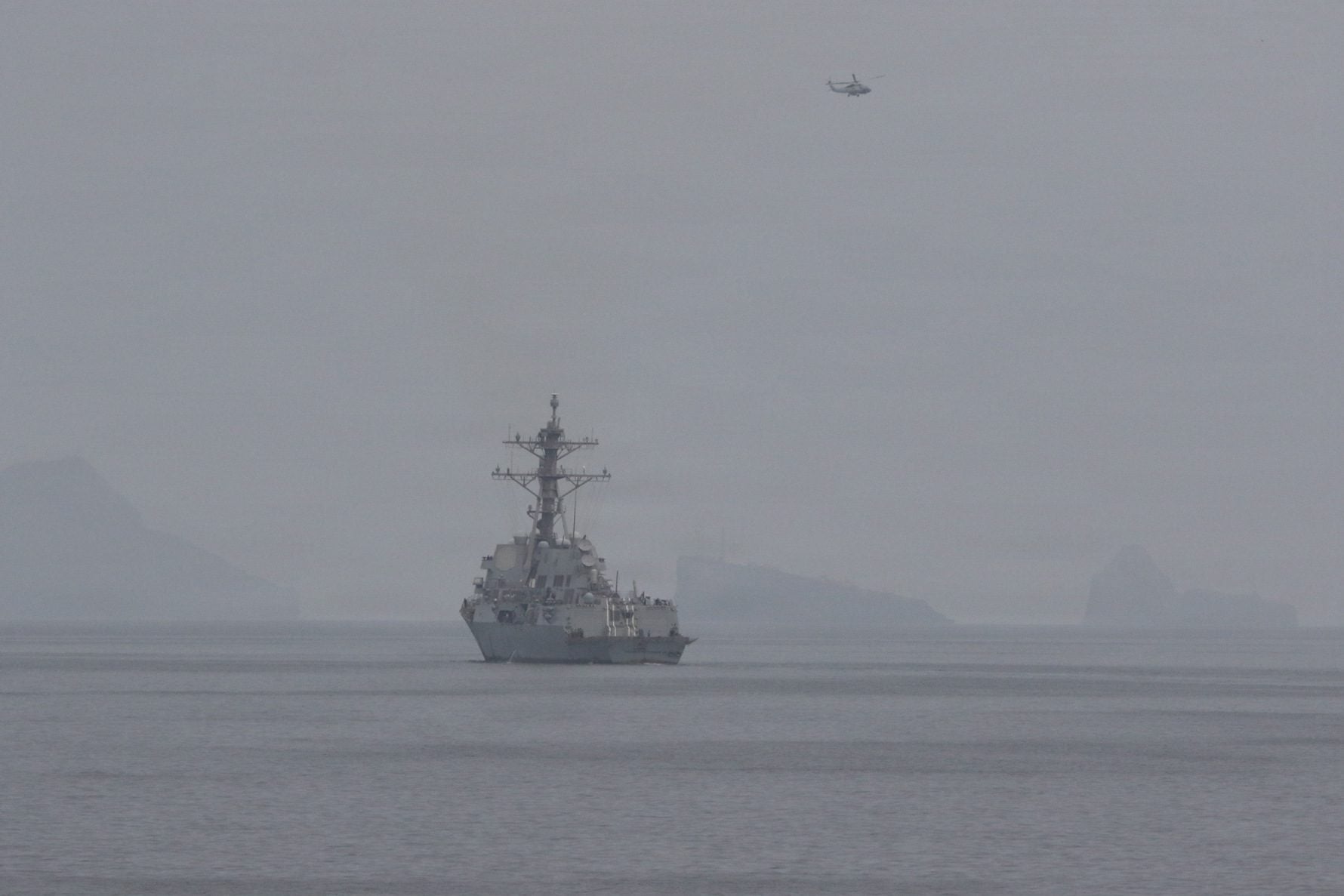
US-Iran maritime exchanges are very likely to continue through 27 September, while Hormuz traffic remains severely constrained. Kpler recorded seven commodity vessels on 10 September against a pre-war average of about 125 large commercial vessels per day. The Iraq-origin attribution for the drone strike that closed Saudi Arabia's East-West pipeline is now the leading explanation, but Houthi gains and unresolved attack attribution keep Saudi infrastructure, Yemen's west coast and commercial shipping exposed.
Executive summary
Reporting on 12 September indicates that the US claimed to have destroyed five Iranian oil tankers, while Iran claimed attacks on 20 ships near Hormuz on 9 September. An Iranian attack also reportedly left a hole in a tanker off Iraq. The Houthis seized Mokha, claimed control of the Bab al-Mandab Strait and faced strikes from Saudi-backed Yemeni government forces. Saudi Arabia closed the East-West pipeline after a drone attack that Iraq said originated in a province bordering Iran. Energy pressure is mounting, with crude above $100 per barrel and Gulf of Oman to China tanker freight near $11.50 per barrel. Iran and Oman are discussing a shipping corridor, but Iran's planned restricted zone, expanded US sanctions and a proposed US, British, French and German IAEA resolution indicate that coercive pressure continues alongside limited diplomatic contact.
Change from previous assessment
Since the 12 September brief, the Hormuz assessment is more severe in comparative terms because current reporting places 10 September traffic at seven commodity vessels against a pre-war average of about 125 large commercial vessels, while also adding a longer disruption forecast from Clarksons. Confidence in the Iraq-origin attribution for the Saudi pipeline strike has risen from unresolved to medium after Iraq acknowledged that the attack originated in a province bordering Iran, although responsibility remains unsettled. The Houthi assessment now rests on high-confidence reporting of the seizure of Mokha and a broader, less corroborated claim of Red Sea coast control; the prior Perim judgement is not carried forward because current claims do not refresh it. The Oman-mediated arrangement remains a roughly even chance, while new reporting on Iran's restricted zone, expanded US sanctions and the proposed IAEA resolution adds evidence of continuing coercive pressure. No prior judgement is otherwise retired.
Key judgments
- US and Iranian forces are very likely to continue an active maritime exchange through 27 September. The United States claimed it destroyed five Iranian oil tankers, Iran claimed attacks on 20 ships near Hormuz on 9 September, and reporting described damage to a tanker off Iraq. More than 70 commercial vessels have reportedly been attacked since 28 February. The evidence supports continued confrontation, but it does not independently establish Iran's claimed total or damage to a US vessel. (Confidence: medium · ASSESSED)
- I&W: A further Iranian or US-reported strike on a named commercial or US vessel near Hormuz, accompanied by physical damage, would confirm continued active exchange. (0-14 days)
- I&W: Fourteen days without a new reported attack, combined with cancellation of the two daily protection windows for commercial vessels, would weaken this judgement. (0-14 days)
- Commercial traffic through the Strait of Hormuz is very likely to remain severely constrained through 27 September and likely to remain disrupted beyond that date. Kpler recorded seven commodity vessels crossing on 10 September, compared with a pre-war average of about 125 large commercial vessels per day. The United States has restricted military protection to two recommended transit windows each day, while Clarksons expects disruption to last until at least the second half of 2027. The traffic count and duration forecast come from separate shipping reports, so the exact level and persistence of disruption remain less certain than the direction of travel. (Confidence: medium · ASSESSED)
- I&W: Kpler reporting of 10 or fewer commodity vessels per day for three consecutive days would confirm sustained severe disruption. (0-14 days)
- I&W: Kpler reporting of more than 100 large commercial vessels per day for seven consecutive days, alongside restoration of continuous US protection, would break this judgement. (0-14 days)
- The drone strike that closed Saudi Arabia's East-West pipeline likely originated in Iraq, but the responsible organisation and any direct Iranian role remain unresolved. Saudi Arabia reported that the pipeline was attacked by drones launched from Iraq, while Iraq said the attack originated in one of its provinces bordering Iran, dismissed a military commander and opened an investigation. Satellite imagery reportedly showed damage, and Saudi Arabia reported injuries and damage still under assessment. This judgement rests on reported attribution rather than an independently established chain of responsibility. (Confidence: medium · ASSESSED)
- I&W: Iraq's investigation identifies a launch site or responsible unit in the province bordering Iran, and Saudi Arabia confirms that finding, would strengthen the Iraq-origin assessment. (0-14 days)
- I&W: An official investigation places the launch outside Iraq or rejects the reported Iraq-origin account, which would break this judgement. (0-3 months)
- Houthi forces are likely to retain Mokha and their reported position along Yemen's Red Sea coast through 27 September, while Yemeni government strikes continue. Major-media reporting supports the seizure of Mokha, but the broader claim of full coastal control and the Houthi claim to control Bab al-Mandab rely on less independently corroborated reporting. The UN reported at least 76,000 people displaced in Yemen since July, with displacement quadrupling in the past week, indicating that the advance is already producing a worsening humanitarian burden. (Confidence: medium · ASSESSED)
- I&W: Houthi authorities repeat an exclusion of Saudi vessels from Bab al-Mandab and Yemeni government forces continue strikes without retaking Mokha. (0-14 days)
- I&W: Yemeni government forces retake Mokha or independently documented commercial traffic demonstrates unrestricted passage through Bab al-Mandab, which would weaken this judgement. (0-14 days)
- Energy and tanker-market pressure is very likely to persist through 27 September. Crude prices have risen above $100 per barrel, VLCC freight from the Gulf of Oman to China has reached about $11.50 per barrel, and Saudi Arabia has suspended the East-West pipeline, which normally allows Saudi Arabia to bypass Hormuz and carries an estimated 4% to 5% of global oil supply. The direction of pressure is corroborated by shipping, market and infrastructure reporting, although the duration of price effects and the pipeline outage remains uncertain. (Confidence: medium · ASSESSED)
- I&W: Crude remains above $100 per barrel, Gulf of Oman to China VLCC freight remains at or above $11.50 per barrel, and the East-West pipeline remains suspended. (0-14 days)
- I&W: The pipeline reopens, Hormuz traffic returns towards its pre-war average and tanker freight falls materially from the reported level, which would break this judgement. (0-14 days)
- There is a roughly even chance that Iran and Oman establish a limited shipping arrangement by 27 September, but it is unlikely to end the US-Iran maritime confrontation. Iran said a preliminary agreement with Oman was close to completion, Qatar said dialogue with Iran and the West remained possible, and Pakistan's defence minister reported indirect contacts. Against this, Iran announced a restricted maritime zone, the United States expanded sanctions on Iran's aviation sector, and the United States, Britain, France and Germany drafted an IAEA resolution seeking referral of Iran's case to the UN Security Council and General Assembly. The judgement is low confidence because the timing and substance of the Oman arrangement rely on limited reporting and conflict with continuing coercive measures. (Confidence: low · ASSESSED)
- I&W: Oman announces a signed corridor arrangement and the first commercial vessels transit under its terms without a new reported attack. (0-14 days)
- I&W: No arrangement is announced while Iran maintains the restricted zone and new attacks or sanctions are reported, which would break the limited-deal pathway. (0-14 days)
- An Iran-nexus threat actor likely used Claude to compile targeting material on US naval forces, but this remains thin, single-source reporting. Anthropic said the actor built a Python-based open-source intelligence pipeline, assembled targeting handbooks, collected US personnel and transponder data, and researched vulnerabilities in maritime VSAT terminals, Cisco equipment and industrial control products. Anthropic did not identify the actor, the targeted ships, bases or operating areas, and no independent government confirmation is provided in the available reporting. (Confidence: low · REPORTED)
- I&W: A US government authority independently confirms the actor, targeted assets or operational use of the compiled material. (0-3 months)
- I&W: Anthropic retracts or materially narrows its account, or assesses that the material was not linked to operational targeting, which would weaken this judgement. (0-3 months)
Outlook & scenarios
Sustained maritime confrontation and constrained Hormuz traffic (65%)
US and Iranian forces continue attacks around Hormuz, the United States maintains two daily protection windows for commercial vessels, and traffic remains far below the pre-war average. Saudi Arabia keeps the East-West pipeline suspended, sustaining oil and tanker-market pressure.
Limited Oman-mediated shipping arrangement (40%)
Iran and Oman announce a restricted shipping corridor supported by indirect contacts. Selected commercial vessels resume transit under defined arrangements, but Iran's restricted zone, US sanctions and maritime attacks continue, leaving the wider confrontation unresolved.
Houthi consolidation and wider Red Sea spillover (30%)
Houthi forces consolidate Mokha and their reported hold along Yemen's Red Sea coast. Yemeni government air strikes continue, Saudi vessels face exclusion from Bab al-Mandab, and displacement rises from the current level reported by the UN.
High-impact expansion of the confrontation (10%)
A confirmed attack damages a US vessel or produces further major damage to Saudi energy infrastructure, while the current restraint on Saudi retaliation ends. The result is a sharp widening of the military exchange and a deeper disruption to Hormuz and Red Sea shipping.
Recommendations
- Maintain a daily maritime picture that separates confirmed vessel damage from US and Iranian claims. Compare Kpler transit counts with the status of the two US protection windows and record changes against the pre-war average of about 125 large commercial vessels per day.
- Prioritise the Iraqi investigation into the Saudi pipeline attack. Track any named launch site, military unit or responsible organisation, and report separately on the confirmed pipeline damage, Iraq-origin attribution and any evidence of direct Iranian involvement.
- Track Houthi control indicators at Mokha and along Yemen's Red Sea coast, including Yemeni government strikes, Houthi shipping notices affecting Saudi vessels and evidence of commercial passage through Bab al-Mandab.
- Use crude prices, Gulf of Oman to China VLCC freight and East-West pipeline status as the core near-term indicators for energy impact. Keep the reported pipeline share of 4% to 5% of global oil supply separate from observed daily export volumes.
- Monitor Iran-Oman contacts, Pakistan's reported intermediary channels and any signed shipping arrangement against Iran's restricted-zone policy, new US sanctions and the proposed IAEA resolution. Treat a first commercial transit under agreed terms as the clearest evidence of practical deconfliction.
- Keep the Claude-related naval targeting account at low confidence until a US government or other independent source identifies the actor, targeted assets or operational use. Continue to monitor public ship, aircraft and personnel data for signs of expanded collection or targeting activity.
Confidence & uncertainty
Overall confidence is high because the main judgements draw on multiple corroborating streams, including major-media reporting, Kpler traffic data, Baltic Exchange freight data, satellite imagery reporting, official statements and UN displacement figures. Confidence is highest for the direction of maritime disruption and energy-market pressure. The principal uncertainties concern the scale of reported US-Iran attacks, responsibility for the Saudi pipeline strike, the extent of Houthi control beyond Mokha and whether the Oman channel produces a practical arrangement. The Claude-related assessment remains low confidence because it comes from a single company report without independent government confirmation.
Intelligence gaps
- [EEI 1.1 · UNCOVERED] Concentrations or unusual movements of IRGC-Navy fast attack craft, small boat swarms, or escort vessels within 200 km of US/allied ships, including approach distances and formation changes. Recommended collection: maritime/AIS
- [EEI 1.2 · UNCOVERED] Detected pre-launch activity at coastal missile or rocket batteries (vehicle dispersal, fuel/warhead handling, radars powering up, transport erector launchers moving to firing positions). Recommended collection: imagery/signals
- [EEI 1.3 · UNCOVERED] Increased launch/arming/positioning of armed UAVs (MALE/loitering munitions) or tactical aircraft at Iranian coastal bases with sortie generation rates and munitions loadouts. Recommended collection: air/ADS-B/imagery
- [EEI 1.4 · UNCOVERED] Command-and-control indications of attack orders or elevated rules-of-engagement from IRGC/General Staff (intercepted communications, internal order messages, force-wide alert messages). Recommended collection: signals/human
- [EEI 2.1 · PARTIAL] Public statements or state-media broadcasts from Supreme Leader, President, Minister of Defense, or IRGC commanders indicating authorization, restraint, or conditions for retaliation. Recommended collection: open-source
- [EEI 2.2 · UNCOVERED] Issuance of formal orders, mobilization directives, travel restrictions, or official internal communications within IRGC/Armed Forces indicating escalation posture or stand-down. Recommended collection: human/diplomatic
- [EEI 2.3 · UNCOVERED] Directives, logistics movements, or communications from Iranian commanders to regional proxy militias (Houthis, Iraqi Shia militias, Lebanese groups) that change their threat posture or task them with specific operations. Recommended collection: signals/human
- [EEI 3.2 · UNCOVERED] Discovery or reporting of naval mines, unexploded ordnance, or damage to fixed maritime infrastructure (oil platforms, terminals, pipelines) with geolocated imagery or on-scene assessments. Recommended collection: imagery/open-source
- [EEI 3.4 · UNCOVERED] Movements or posture changes of regional state navies/air forces (Saudi, UAE, Kuwait, Bahrain, UK) such as task group departures, airbase dispersals, or announced maritime patrols near choke points. Recommended collection: open-source/imagery
Red cell review: PARTIAL DISSENT, KJ-5 downgraded HIGH→MEDIUM (estimative_mismatch)
TLP:CLEAR