TLP:CLEAR · Disclosure is not limited.
US-Iran Maritime Exchanges Intensify as Gulf Energy Flows Remain Constrained
Time window: Last 1 day · Audience: General analyst · Type: Situation report · DTG: 2026-09-16 01:36Z · Overall confidence: HIGH
BLUF
US-Iran military pressure is very likely to continue over the next 14 days after reported confrontations involving Iranian boats, a US unmanned surface vessel and the tanker El Gaia. Shipping through the Strait of Hormuz remains severely constrained rather than verifiably halted, while Saudi Arabia's East-West Pipeline outage is very likely to sustain energy-market pressure for three to five weeks or longer.
Executive summary
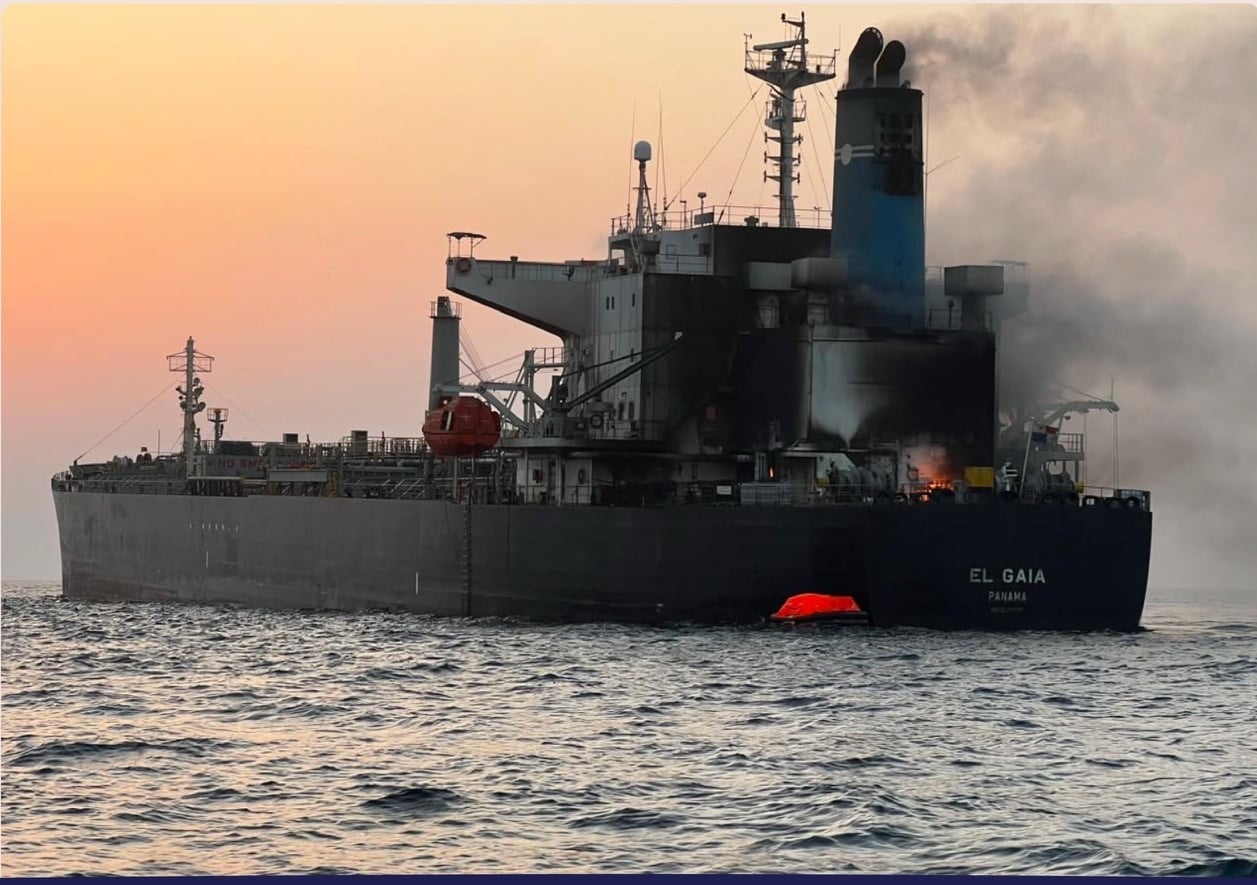
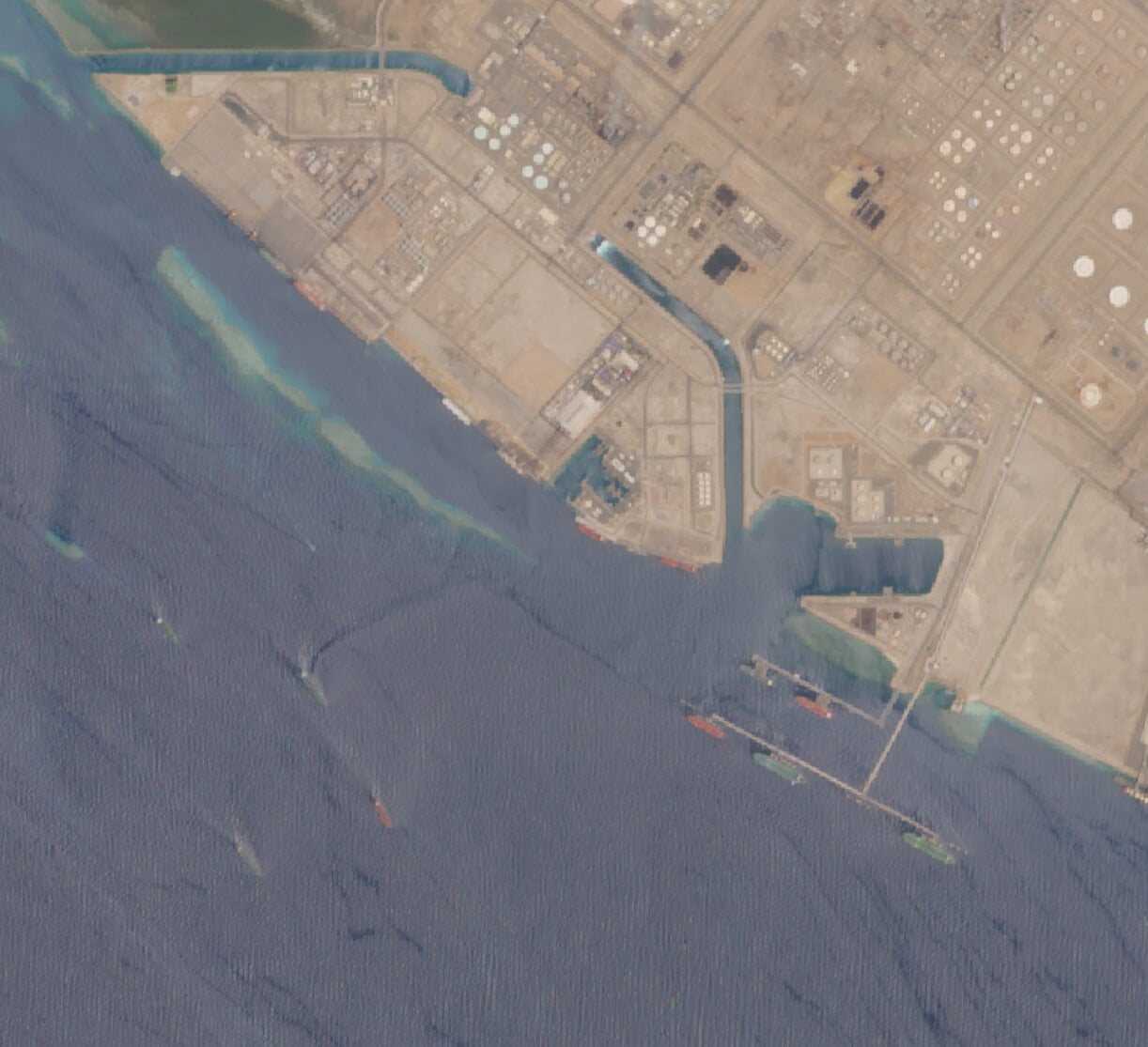
On 15 September 2026, US Central Command reported that Iran had attacked the tanker El Gaia twice, while Iran's Islamic Revolutionary Guard Corps attributed the damage to a naval mine and Oman declined to assign responsibility. US Central Command also reported that Iranian boats attempted to seize a US unmanned surface vessel, while the US military separately said it destroyed two Iranian boats, an outcome that remains disputed. The Joint Maritime Information Center continues to rate the threat to commercial shipping in the Strait of Hormuz as severe, although satellite imagery indicates bi-directional daytime VLCC traffic and increased ship-to-ship transfers near Fujairah. Saudi Arabia's damaged East-West Pipeline remains shut, Yanbu loadings are suspended, and full restoration is assessed at three to five weeks. The Houthis have reported control of Perim Island and coastal positions overlooking Bab al-Mandab and continue to ban Saudi shipping, while Washington states that it will not intervene directly as long as the 2025 ceasefire holds.
Change from previous assessment
Since the 15 September 2026 brief, the assessment adds a reported direct US-Iran confrontation involving Iranian boats and a US unmanned surface vessel, while lowering confidence in the reported destruction of two Iranian boats because the accounts differ. El Gaia is now reported to be under tow with two crew members missing, reinforcing the unresolved dispute between the Iranian mine account and the US attack account. New imagery and tanker reporting support a more precise judgement that Hormuz traffic is severely constrained but not demonstrably halted, with bi-directional daytime VLCC movement and increased ship-to-ship transfers near Fujairah. The Saudi pipeline disruption is now better defined through imagery of three damaged pumping stations, suspended Yanbu loadings and a three-to-five-week restoration estimate. The brief also adds Iran's reported missile-site resilience, the Houthi seizure of Perim Island and the contested US munitions picture as factors bearing on escalation and endurance.
Key judgments
- Direct US-Iran military pressure is very likely to continue over the next 14 days in the waters off Iran and around the Strait of Hormuz. The reported El Gaia attacks, the attempted seizure of a US unmanned surface vessel and the reported destruction of two Iranian boats indicate repeated direct interaction, but the severity of the boat incident remains unresolved. Confidence is medium because the reported boat destruction comes from low-confidence reporting and conflicts with the less specific account from a US Central Command spokesman. (Confidence: medium · ASSESSED)
- I&W: Confirming indicator: US Central Command, the Islamic Revolutionary Guard Corps or UK Maritime Trade Operations reports another armed interception, attack or attempted seizure involving US and Iranian forces in the Strait of Hormuz or waters off Iran. (0 to 14 days)
- I&W: Breaking indicator: UK Maritime Trade Operations and Oman's Maritime Security Center record no further armed maritime incident involving US or Iranian forces for 14 consecutive days. (0 to 14 days)
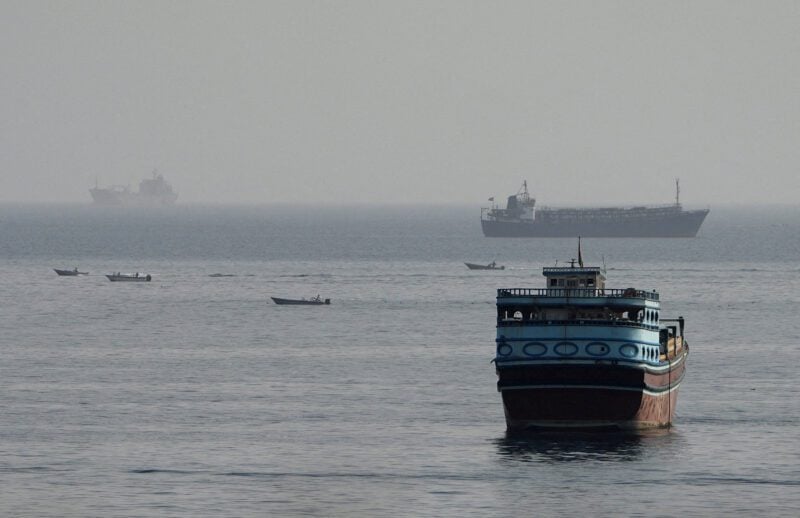
- Commercial shipping by VLCC supertankers and other tankers through the Strait of Hormuz is very likely to remain severely constrained over the next 14 days, but a complete halt is not established. The Joint Maritime Information Center rates the threat as severe, UK Maritime Trade Operations has recorded a projectile strike, and Omani authorities evacuated 23 El Gaia crew members; against this, satellite imagery shows bi-directional daytime VLCC traffic and increased ship-to-ship transfers near Fujairah. Confidence is medium because the current traffic evidence conflicts with a low-confidence report that the Strait has been closed for six months. (Confidence: medium · ASSESSED)
- I&W: Confirming indicator: The Joint Maritime Information Center retains a severe threat rating and UK Maritime Trade Operations records another projectile strike, fire or crew evacuation in the Strait of Hormuz. (0 to 14 days)
- I&W: Breaking indicator: TankerTrackers.com confirms sustained bi-directional VLCC traffic for seven consecutive days and the Joint Maritime Information Center downgrades the threat below severe. (0 to 14 days)
- Saudi Arabia's East-West Pipeline disruption is very likely to persist into October, sustaining energy-market pressure. Drone attacks damaged three pumping stations, Saudi Arabia shut the pipeline and suspended September crude loadings at Yanbu, whose pre-shutdown throughput was about four million barrels per day, roughly 4 per cent of world oil supply. Oil industry sources assess three to five weeks for full-flow restoration, while Brent crude has traded above $109 per barrel. Confidence is high because satellite imagery, trade reporting, Saudi operational decisions and market data corroborate the disruption, although attribution remains unsettled. (Confidence: high · ASSESSED)
- I&W: Confirming indicator: Saudi Arabia or Saudi Aramco reports that full flow through the East-West Pipeline remains unavailable after 2 October, or reports further cancellations at Yanbu. (1 to 3 months)
- I&W: Breaking indicator: Saudi Arabia reports restored full flow and resumed Yanbu loadings before 2 October, followed by a sustained fall in Brent crude from the current level. (0 to 14 days)
- Iran is likely to retain sufficient missile infrastructure and access to sustain military pressure around the Strait of Hormuz over the next 14 days despite reported depletion of its ballistic-missile stockpile. Reporting places up to 90 per cent of Iran's fortified missile cities and tunnel storage sites in partial or full operation and states that the Islamic Revolutionary Guard Corps has regained access to most missile sites overlooking the Strait. Confidence is medium because the operational figures come from reporting and intelligence assessments without independent confirmation in the available material, while estimates of Iran's remaining stockpile differ by date and source. (Confidence: medium · ASSESSED)
- I&W: Confirming indicator: New missile launches or attacks are reported from an Iranian site overlooking the Strait of Hormuz, or imagery shows renewed activity at one of the reported missile cities. (0 to 14 days)
- I&W: Breaking indicator: Independent imagery shows broad and sustained shutdown of the reported missile sites, with no associated Iranian missile launch for 14 days. (0 to 14 days)
- Houthi control of Perim Island and nearby Red Sea coastal positions is likely to sustain selective pressure on Saudi shipping in Bab al-Mandab over the next 14 days, while direct US intervention against the Houthis remains unlikely as long as the 2025 ceasefire holds. The Houthis continue to announce a naval ban on Saudi ships while describing navigation as safe for other vessels, and Washington has stated that it will limit its role to intelligence sharing and support for Saudi targeting operations. Confidence is medium because the reported Houthi seizure and the conditions of the ceasefire rely on medium-confidence reporting and Houthi statements. (Confidence: medium · ASSESSED)
- I&W: Confirming indicator: The Houthis issue another naval ban, intercept or attack report involving a Saudi-flagged vessel in Bab al-Mandab or the Red Sea. (0 to 14 days)
- I&W: Breaking indicator: The Houthis announce an end to the Saudi shipping ban or relinquish Perim Island, followed by a US announcement of continued non-intervention. (0 to 14 days)
- Responsibility for the El Gaia incident and the Saudi East-West Pipeline attack is very unlikely to be established conclusively within the next 14 days. The Islamic Revolutionary Guard Corps attributes El Gaia's damage to a naval mine, whereas US Central Command attributes it to two Iranian attacks; Oman has not assigned responsibility. Saudi Arabia blames Iraqi militia for the pipeline attack, while other reporting identifies unknown attackers or only a launch location in Iraq. Confidence is low because the available evidence consists of competing official accounts, unattributed reporting and no independent attribution finding. (Confidence: low · ASSESSED)
- I&W: Confirming indicator: Oman or another investigating authority declines to assign responsibility while the Islamic Revolutionary Guard Corps and US Central Command maintain their competing accounts. (0 to 14 days)
- I&W: Breaking indicator: Oman publishes forensic findings identifying a mine or Iranian attack on El Gaia, or independent technical evidence links the pipeline attack to Iraqi militia. (0 to 14 days)
- There is a roughly even chance that US munitions shortfalls and resupply bottlenecks will constrain operational tempo over the next 1 to 3 months. The Pentagon inspector general reports shortfalls, CSIS assesses that Patriot and THAAD interceptor stocks were depleted in some cases by more than half, and the Department of Defense has spent more than $22 billion on munitions; the White House and President Donald Trump reject the shortage assessment. Confidence is low because the official positions directly conflict and the available cost and inventory estimates use different scopes and reporting dates. (Confidence: low · ASSESSED)
- I&W: Confirming indicator: The Pentagon inspector general or Department of Defense reports delayed deliveries, restricted use or further depletion of Patriot, THAAD or other key interceptors. (1 to 3 months)
- I&W: Breaking indicator: The Department of Defense publishes replenishment data showing restored interceptor availability and reports no operational limits linked to munitions stocks. (1 to 3 months)
Outlook & scenarios
Contested but functioning Strait of Hormuz (55%)
Daytime VLCC traffic and ship-to-ship transfers continue at reduced levels while the Joint Maritime Information Center retains a severe threat rating. Iran sustains coercive maritime activity without producing a verified full closure, Saudi Arabia uses dark shipments to move additional oil, and the East-West Pipeline remains unavailable.
Escalation towards a near-halt in Gulf shipping (30%)
A further Iranian attack, mine incident or confrontation involving a US unmanned surface vessel prompts a forceful US response. UK Maritime Trade Operations records additional vessel casualties, VLCC traffic through the Strait of Hormuz falls sharply, and Brent crude rises further as Saudi Arabia and other Gulf producers lose more export capacity.
Limited maritime stabilisation (20%)
US and Iranian forces avoid another direct exchange, daytime tanker traffic expands beyond current levels, and Omani authorities support continued rescue and transit activity. Saudi Arabia restores East-West Pipeline flow earlier than the three-to-five-week estimate, reducing pressure on Yanbu and Brent crude.
Houthi expansion triggers wider US involvement (10%)
The Houthis extend their naval ban from Saudi ships to other commercial vessels after consolidating positions around Perim Island and Bab al-Mandab. A confirmed attack on non-Saudi shipping breaks the current US non-intervention policy and widens the conflict beyond the Persian Gulf.
Recommendations
- Maintain a 24-hour maritime incident ledger that separates confirmed events from claims by US Central Command, the Islamic Revolutionary Guard Corps, Oman, the Joint Maritime Information Center and UK Maritime Trade Operations. Record vessel name, location, platform used, crew outcome and attribution status for each incident.
- Track the Strait of Hormuz as a contested but potentially functioning corridor rather than assuming either full closure or normal traffic. Reconcile TankerTrackers.com VLCC observations, ship-to-ship transfers near Fujairah, UK Maritime Trade Operations warnings and the Joint Maritime Information Center threat rating each reporting cycle.
- Model Saudi energy exposure against the three-to-five-week East-West Pipeline repair estimate. Prioritise Yanbu loadings, Saudi dark shipments, Brent crude, European cargo cancellations and Orlen's reported loss of Saudi supply, which accounts for around 40 per cent of its oil.
- Keep attribution assessments for the El Gaia incident and the Saudi pipeline attack separate. Do not treat Saudi allegations, Iranian statements, US Central Command claims or Iraqi launch-origin reporting as independent confirmation of responsibility.
- Set an escalation alert for any new US-Iranian maritime confrontation, any Iranian missile launch from a site overlooking the Strait of Hormuz, or any attack on a non-Saudi vessel by the Houthis. A second confirmed event in any of these categories should trigger review of the near-halt and wider-US-involvement scenarios.
- Track US munitions availability through Pentagon inspector general findings, Department of Defense replenishment data, Patriot and THAAD inventory reporting and operational statements. Keep the inspector general assessment separate from White House and presidential denials until a common time period and inventory measure are established.
Confidence & uncertainty
Overall confidence is high because multiple reliable sources corroborate the core physical developments: damage and shutdown of Saudi Arabia's East-West Pipeline, suspended Yanbu loadings, severe maritime risk in the Strait of Hormuz, the El Gaia rescue operation and continuing tanker movements. Confidence is lower for attribution, the exact severity of the US-Iran boat encounter, the current extent of Houthi control and the effect of US munitions constraints. Conflicting accounts on those points are carried as explicit uncertainties rather than resolved through unsupported assumptions.
Intelligence gaps
- [EEI 1.1 · PARTIAL] Concentrations or unusual movements of IRGC-Navy fast attack craft, small boat swarms, or escort vessels within 200 km of US/allied ships, including approach distances and formation changes. Recommended collection: maritime/AIS
- [EEI 1.2 · PARTIAL] Detected pre-launch activity at coastal missile or rocket batteries (vehicle dispersal, fuel/warhead handling, radars powering up, transport erector launchers moving to firing positions). Recommended collection: imagery/signals
- [EEI 1.3 · UNCOVERED] Increased launch/arming/positioning of armed UAVs (MALE/loitering munitions) or tactical aircraft at Iranian coastal bases with sortie generation rates and munitions loadouts. Recommended collection: air/ADS-B/imagery
- [EEI 1.4 · UNCOVERED] Command-and-control indications of attack orders or elevated rules-of-engagement from IRGC/General Staff (intercepted communications, internal order messages, force-wide alert messages). Recommended collection: signals/human
- [EEI 2.1 · PARTIAL] Public statements or state-media broadcasts from Supreme Leader, President, Minister of Defense, or IRGC commanders indicating authorization, restraint, or conditions for retaliation. Recommended collection: open-source
- [EEI 2.2 · UNCOVERED] Issuance of formal orders, mobilization directives, travel restrictions, or official internal communications within IRGC/Armed Forces indicating escalation posture or stand-down. Recommended collection: human/diplomatic
- [EEI 2.3 · PARTIAL] Directives, logistics movements, or communications from Iranian commanders to regional proxy militias (Houthis, Iraqi Shia militias, Lebanese groups) that change their threat posture or task them with specific operations. Recommended collection: signals/human
- [EEI 2.4 · UNCOVERED] Changes in Iran's diplomatic exchanges with key states (offers of negotiation, warnings, or coordination with Russia/China) or requests for deconfliction with maritime/naval actors. Recommended collection: diplomatic
- [EEI 3.4 · PARTIAL] Movements or posture changes of regional state navies/air forces (Saudi, UAE, Kuwait, Bahrain, UK) such as task group departures, airbase dispersals, or announced maritime patrols near choke points. Recommended collection: open-source/imagery
Cited sources
[1] gCaptain · Oman Says 'El Gaia' Being Towed to Port; Two Crew Missing (C) · Tue Sep 15 2026 14:51:52 GMT+0000 (Coordinated Universal Time) · sha256:0a1fa8a433cc [2] South China Morning Post · US military says it destroyed 2 Iranian boats trying to steal sea drone (A) · Tue Sep 15 2026 23:26:41 GMT+0000 (Coordinated Universal Time) · sha256:d958c4d3ab51 [3] The Maritime Executive · Oil Prices Jump at News of Pause in Saudi Loadings at Red Sea Terminal (C) · sha256:78148e5ebfba [4] Reuters (republished by gCaptain) · Oil Prices Surge as Saudi Red Sea Loadings Halt, Libya Shuts Fields (A) · Tue Sep 15 2026 19:11:06 GMT+0000 (Coordinated Universal Time) · sha256:893b27c1d5a7 [5] Alhurra (قناة الحرة) · لماذا رفض ترامب طلب محمد بن سلمان؟ | الحرة (B) · Tue Sep 15 2026 14:34:44 GMT+0000 (Coordinated Universal Time) · sha256:53427a628190 [6] Gulf News · Inside Iran’s ‘missile cities’: The secret underground bases powering Tehran’s arsenal (B) · Tue Sep 15 2026 22:43:00 GMT+0000 (Coordinated Universal Time) · sha256:9f447e48e28d [7] BBC · Iran war has led to US munitions shortfalls, Pentagon inspector confirms (A) · Tue Sep 15 2026 15:31:34 GMT+0000 (Coordinated Universal Time) · sha256:e84e6f924173
Source content hashes were computed at collection time; the cited text is preserved unmodified for the life of this product.
TLP:CLEAR