TLP:CLEAR · Disclosure is not limited.
US-Iran Maritime Exchanges Intensify in the Persian Gulf
Time window: Last 1 day · Audience: General analyst · Type: Situation report · DTG: 2026-09-06 22:09Z · Overall confidence: HIGH
BLUF
US-Iran military exchanges very likely intensified between 5 and 6 September 2026, with the IRGC reporting missile attacks on a US aircraft carrier and destroyer and CENTCOM reporting strikes on three Iranian crude carriers. Commercial traffic through the Strait of Hormuz is very likely to remain severely constrained over the next 14 days, while further exchanges are likely despite conflicting official accounts of battle damage and control of the waterway.
Executive summary
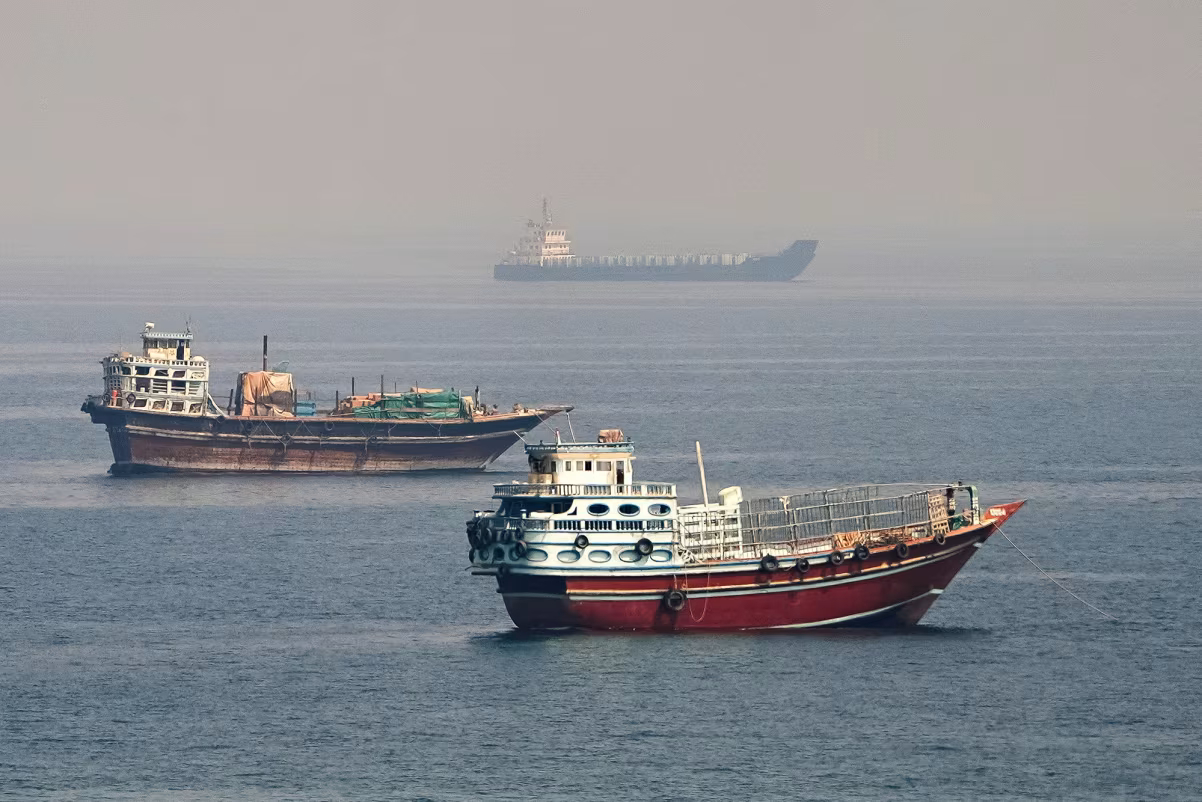
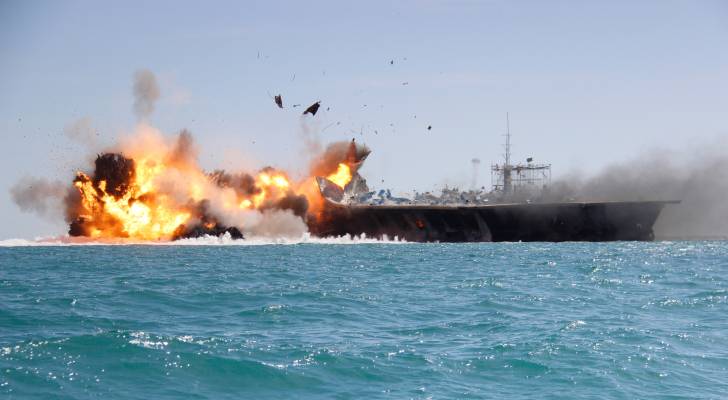
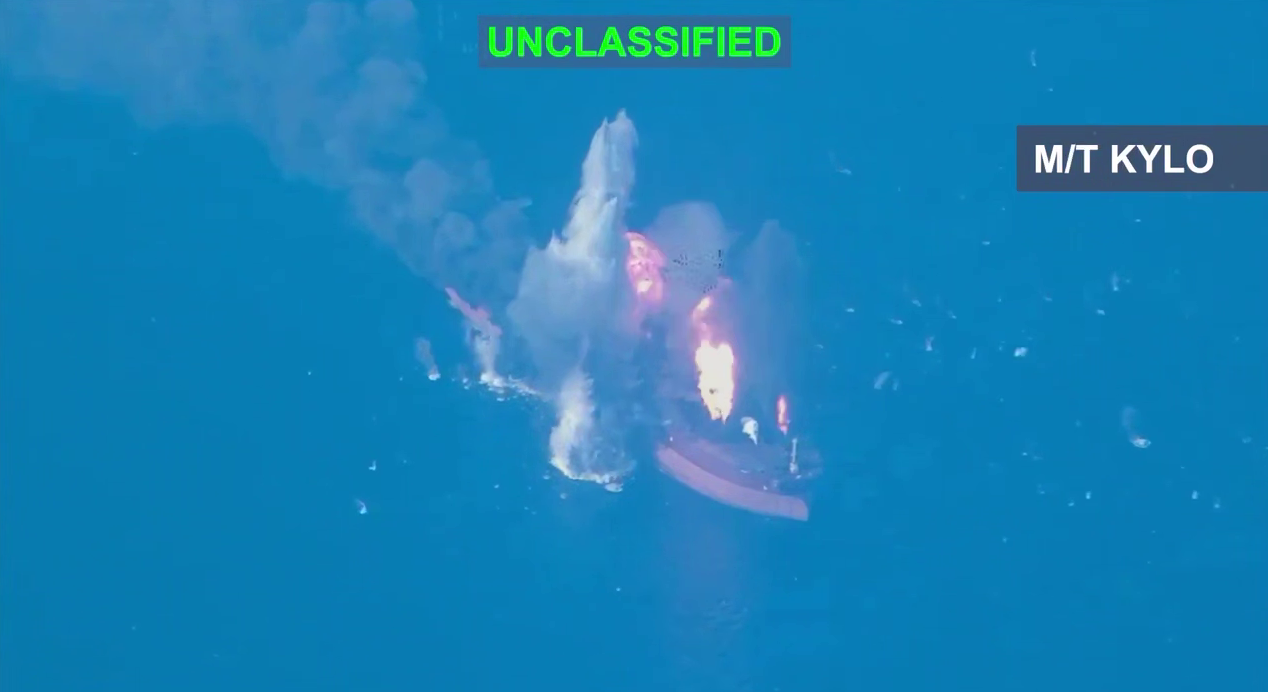
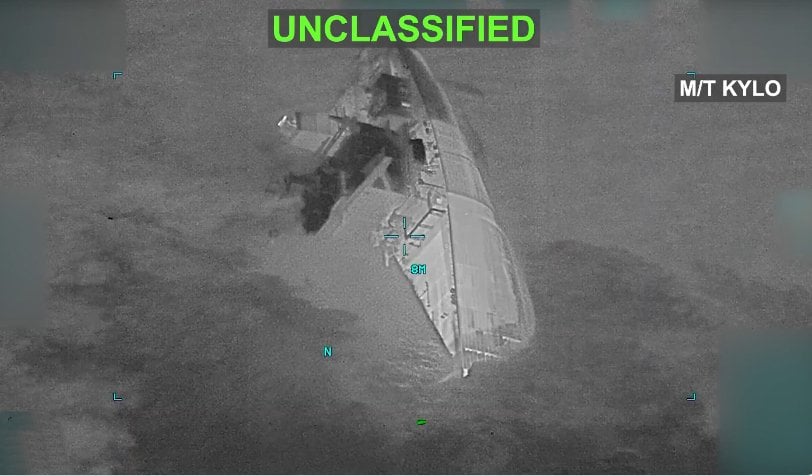
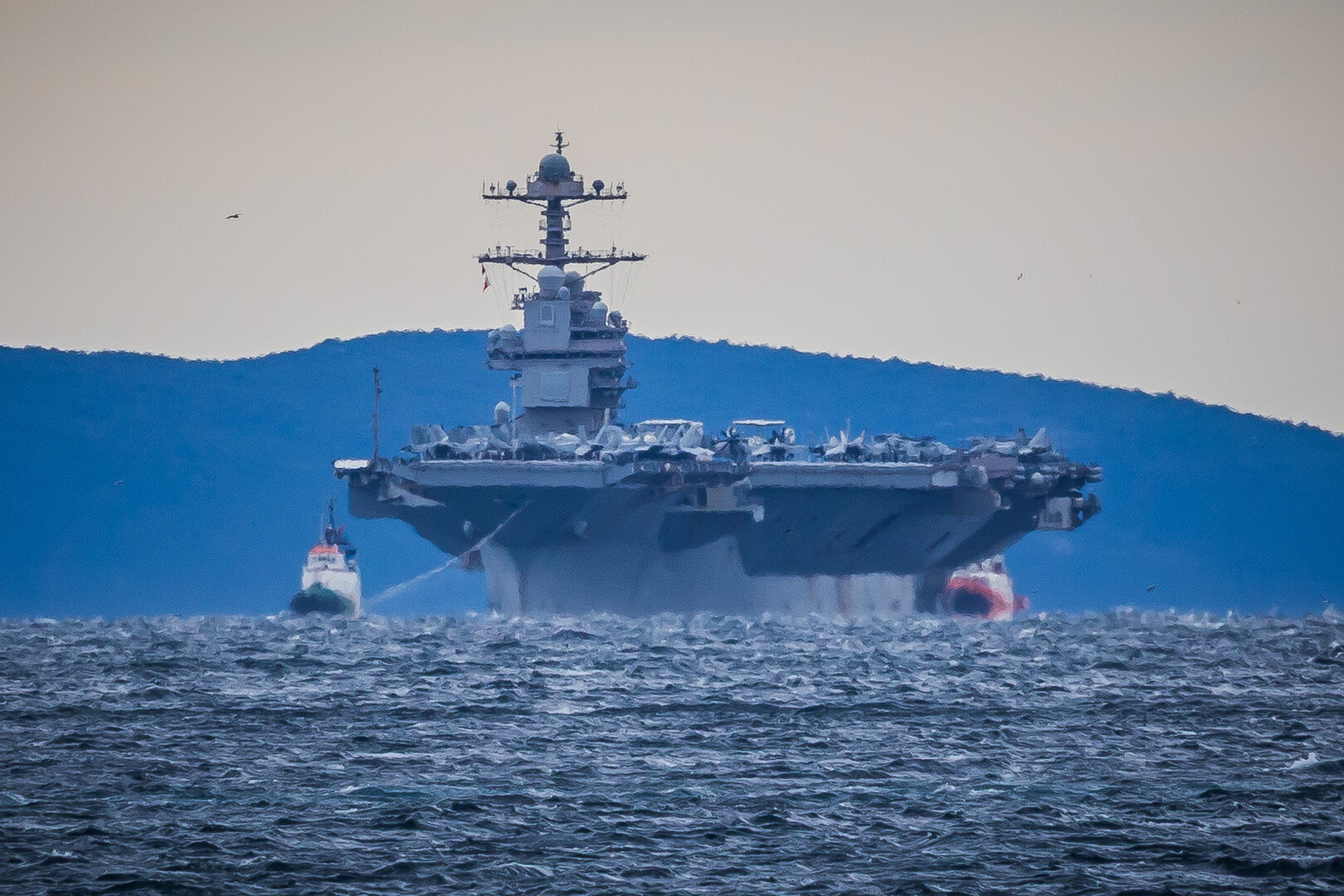
The IRGC reported ballistic-missile attacks on a US aircraft carrier and guided-missile destroyer, while CENTCOM confirmed missile fire but said the warships evaded it without casualties. CENTCOM also reported that US forces destroyed M/T Kylo in the Gulf of Oman and disabled M/T Downy near Kharg Island and M/T Stark 1 near Jask. Iran has warned vessels against unauthorised movements near the Strait of Hormuz and announced a restricted or prohibited zone, while shipping data and satellite imagery show nearly 20 Iranian tankers at anchor near Kharg Island and route tracking shows several commercial vessels turning back. The precise location, date and effects of the missile exchange remain disputed. Israeli strikes in southern Lebanon add a separate regional escalation vector.
Change from previous assessment
Since the 5 September brief, the assessment now incorporates the IRGC report of missile attacks on a US aircraft carrier and destroyer, CENTCOM's confirmation that missiles were fired, Iran's announced restricted or prohibited zone and new route-tracking evidence showing commercial vessels turning back. The assessment of intensified exchanges is unchanged in direction, while the shipping disruption judgment has stronger support but retains medium confidence because control of the waterway remains disputed. A new regional spillover judgment has been added for Israeli strikes in southern Lebanon and reported Iranian retaliation in the United Arab Emirates, Bahrain, Kuwait and Jordan. The prior low-confidence Project C430L cruise-missile judgment is not carried forward because no new approved reporting addresses it.
Key judgments
- US-Iran direct military exchanges very likely intensified between 5 and 6 September 2026. The IRGC reported ballistic-missile attacks on a US aircraft carrier and guided-missile destroyer, while CENTCOM confirmed missile fire and stated that both warships evaded it without casualties. CENTCOM also reported that US forces struck three Iranian crude carriers, with M/T Kylo destroyed in the Gulf of Oman and M/T Downy off Kharg Island and M/T Stark 1 near Jask disabled. The core exchange is corroborated by US and Iranian official reporting and multiple major-media accounts, but the IRGC claim that the warships were damaged, the location of the missile fire and the correct incident date remain contested. (Confidence: high · ASSESSED)
- I&W: Confirm: CENTCOM or the IRGC publishes further operational details, imagery or casualty information showing whether the carrier or destroyer sustained damage. (0-14 days)
- I&W: Break: US and Iranian official statements establish that the reported missile launch and tanker strikes referred to separate incidents rather than one exchange. (0-14 days)
- Commercial traffic through the Strait of Hormuz is very likely to remain severely constrained over the next 14 days, but a complete closure and control of access remain uncertain. Nearly 20 Iranian tankers are reportedly anchored near Kharg Island, while Velos, Bravo and the Qatari LNG carrier Al Sheehaniya reportedly turned back. Iran has announced a restricted or prohibited zone near the strait and warned that vessels entering it would be targeted or placed on a sanctions list. The cause of the standstill remains disputed because one account attributes it to a US naval blockade and another describes Iran as enforcing an effective closure. (Confidence: medium · ASSESSED)
- I&W: Confirm: route tracking records additional commercial vessels turning back, while satellite imagery shows the number of tankers anchored near Kharg Island increasing. (0-14 days)
- I&W: Break: named commercial vessels complete transit through the Strait of Hormuz without Iranian warnings, attacks or sanctions notices. (0-14 days)
- Further US-Iran strikes are likely during the next 14 days, while a durable ceasefire during that period is unlikely. Pete Hegseth and Admiral Brad Cooper have threatened higher economic costs for Iran and further action against its oil fleet, while the IRGC and the Iranian military have warned of strong responses and attacks on US warships. US Energy Secretary Chris Wright also raised the prospect of direct attacks on Iranian infrastructure. Donald Trump has said the renewed fighting will not last too long, while JD Vance has denied that the situation should be described as a war, leaving the US policy signal internally inconsistent. (Confidence: medium · ASSESSED)
- I&W: Confirm: CENTCOM, the IRGC or the Iranian military announces another strike on a warship, tanker or other US-linked vessel. (0-14 days)
- I&W: Break: Washington and Tehran announce a formal pause followed by 14 days without reported strikes on US or Iranian military, tanker or commercial shipping targets. (0-14 days)
- Regional spillover is likely to persist over the next 14 days. Major-media reporting describes Iranian retaliation against US targets in the United Arab Emirates, Bahrain, Kuwait and Jordan, while Israel reported strikes in southern Lebanon in response to Hezbollah drone attacks and Lebanese authorities reported at least four deaths. The Lebanese reporting and Israeli justification concern the same broad escalation environment but do not independently establish a direct US-Iran operational link. (Confidence: medium · ASSESSED)
- I&W: Confirm: another Israeli strike or Hezbollah drone attack is reported in southern Lebanon, or further Iranian attacks are reported at US-linked sites in the United Arab Emirates, Bahrain, Kuwait or Jordan. (0-14 days)
- I&W: Break: Israeli, Lebanese and Iranian reporting records no further attacks in those areas for 14 consecutive days. (0-14 days)
Outlook & scenarios
Continued but bounded maritime exchanges (50%)
US forces and Iranian forces conduct additional exchanges involving tankers, warships or vessels near the Strait of Hormuz and Gulf of Oman. The United States continues targeting Iran's exposed oil fleet, while the IRGC maintains warnings and selective attacks against vessels. Commercial traffic remains severely constrained, but no confirmed US military casualties are reported.
Expanded maritime escalation (25%)
Iran enforces the announced restricted or prohibited zone with additional missile or other attacks on vessels, while the United States responds against more Iranian tankers or maritime infrastructure. Route turnbacks increase and the Strait of Hormuz becomes functionally inaccessible to most commercial traffic.
Temporary political brake (15%)
The public threats from Washington and Tehran produce a short pause in attacks. US and Iranian officials preserve their opposing positions, but tanker strikes and attacks on warships stop long enough for commercial traffic to test limited routes through the Strait of Hormuz.
Low-probability, high-impact regional expansion (10%)
The United States attacks Iranian infrastructure, as raised by Chris Wright, while Iran expands attacks against US-linked sites and Israel continues operations against Hezbollah in southern Lebanon. The resulting geographic spread increases pressure on US forces, regional partners and commercial shipping.
Recommendations
- Maintain a separate confirmed-versus-claimed incident log for the carrier and destroyer exchange. Do not treat reported battle damage, the responsible Iranian service or the exact operational area as settled until CENTCOM, IRGC and independent maritime reporting converge.
- Produce a 12-hour maritime picture covering M/T Kylo, M/T Downy, M/T Stark 1, Velos, Bravo, Al Sheehaniya and the tankers anchored near Kharg Island. Record changes in position, crew status, vessel condition, route reversals and any new strike reports.
- Set an immediate warning threshold for an Iranian restricted-zone enforcement action, including a named commercial vessel being intercepted, struck, sanctioned or ordered to reverse course.
- Track official statements by Pete Hegseth, Admiral Brad Cooper, the IRGC, Mohsen Rezaei and the Iranian Foreign Ministry for movement from threats against tankers and warships to announced attacks on infrastructure.
- Maintain a regional spillover watch covering southern Lebanon, the United Arab Emirates, Bahrain, Kuwait and Jordan. Escalate the assessment if attacks in any of those locations occur within 48 hours of a new US-Iran maritime exchange.
Confidence & uncertainty
Overall confidence is high for the core judgment that US-Iran exchanges intensified and that maritime traffic is severely constrained. The tanker sequence is supported by CENTCOM reporting, Iranian accounts, major-media coverage, CNN-confirmed radio audio, satellite imagery and route-tracking data. Confidence is lower for the precise battle damage, the missile exchange's exact date and location, the identity of the Iranian service involved in attacks on unmanned vessels and whether the shipping standstill reflects a US blockade, Iranian enforcement or both.
Intelligence gaps
- [EEI 1.1 · UNCOVERED] Concentrations or unusual movements of IRGC-Navy fast attack craft, small boat swarms, or escort vessels within 200 km of US/allied ships, including approach distances and formation changes. Recommended collection: maritime/AIS
- [EEI 1.2 · UNCOVERED] Detected pre-launch activity at coastal missile or rocket batteries (vehicle dispersal, fuel/warhead handling, radars powering up, transport erector launchers moving to firing positions). Recommended collection: imagery/signals
- [EEI 1.3 · UNCOVERED] Increased launch/arming/positioning of armed UAVs (MALE/loitering munitions) or tactical aircraft at Iranian coastal bases with sortie generation rates and munitions loadouts. Recommended collection: air/ADS-B/imagery
- [EEI 1.4 · UNCOVERED] Command-and-control indications of attack orders or elevated rules-of-engagement from IRGC/General Staff (intercepted communications, internal order messages, force-wide alert messages). Recommended collection: signals/human
- [EEI 2.2 · PARTIAL] Issuance of formal orders, mobilization directives, travel restrictions, or official internal communications within IRGC/Armed Forces indicating escalation posture or stand-down. Recommended collection: human/diplomatic
- [EEI 2.3 · UNCOVERED] Directives, logistics movements, or communications from Iranian commanders to regional proxy militias (Houthis, Iraqi Shia militias, Lebanese groups) that change their threat posture or task them with specific operations. Recommended collection: signals/human
- [EEI 2.4 · UNCOVERED] Changes in Iran's diplomatic exchanges with key states (offers of negotiation, warnings, or coordination with Russia/China) or requests for deconfliction with maritime/naval actors. Recommended collection: diplomatic
- [EEI 3.2 · UNCOVERED] Discovery or reporting of naval mines, unexploded ordnance, or damage to fixed maritime infrastructure (oil platforms, terminals, pipelines) with geolocated imagery or on-scene assessments. Recommended collection: imagery/open-source
- [EEI 3.3 · PARTIAL] Commercial indicators of disruption: sudden increases in war-risk insurance premiums for Gulf transits, vessel re-routing decisions, port throughput reductions, or charter cancellations for Gulf shipments. Recommended collection: financial/commercial
- [EEI 3.4 · UNCOVERED] Movements or posture changes of regional state navies/air forces (Saudi, UAE, Kuwait, Bahrain, UK) such as task group departures, airbase dispersals, or announced maritime patrols near choke points. Recommended collection: open-source/imagery
TLP:CLEAR