TLP:CLEAR · Disclosure is not limited.
US-Iran Military Exchanges and Gulf Shipping Pressure
Time window: Last 1 day · Audience: General analyst · Type: Situation report · DTG: 2026-09-23 04:10Z · Overall confidence: HIGH
BLUF
The US-Iran confrontation is very likely to remain active through 6 October, but Tehran’s conditional offer to reopen the Strait of Hormuz creates a roughly even chance of limited maritime easing. Saudi Arabia’s partial East-West Pipeline restart provides an alternative export route, while Houthi pressure at Bab el-Mandab and limited EU naval capacity continue to threaten Red Sea shipping.
Executive summary
On 22 September, Donald Trump called for Iran’s complete economic isolation and threatened to annihilate the Islamic Republic if no agreement is reached, while Iranian officials said Iran would not surrender and threatened new weapons and targets after another US attack. Iran also offered to reopen the Strait of Hormuz within seven days if the US eases military pressure and lifts its blockade of Iranian ports, but Tehran approved fines equal to 20% of cargo value for unauthorised transits. Diplomatic activity continued at the UN General Assembly, although reported US-Iran contacts remain inconsistently dated and partly single-source. Saudi Arabia restarted partial East-West Pipeline operations and is increasing loading at Ras Tanura, while the EU has acknowledged that Operation Aspides has fewer ships than required to protect Red Sea shipping against Houthi threats.
Change from previous assessment
Since the 22 September prior brief, the core assessment that US-Iran exchanges, Hormuz restrictions, Houthi pressure and regional transport disruption will persist is unchanged. New reporting adds Iran’s conditional offer to reopen the Strait of Hormuz within seven days, Iran’s 20% transit fine, France’s draft UN Security Council resolution, further UN-level contacts, the EU request for more Aspides assets and Saudi Arabia’s partial East-West Pipeline restart. The assessment of severe Hormuz restriction has been lowered from very likely to likely because reporting now describes a weakening blockade and a possible controlled reopening. A separate judgement on Iranian aviation disruption has been added, while confidence in immediate diplomacy remains medium because reported meeting dates and participants remain unresolved.
Key judgments
- The US-Iran military confrontation is very likely to remain active through 6 October, and a further US strike followed by Iranian retaliation is likely if Washington launches another attack. Donald Trump has threatened to annihilate Iran, US Central Command has redirected 110 commercial vessels as part of its blockade of Iranian ports, and Iran has threatened new weapons and targets. The assessment rests on current political and military signalling rather than reporting of a confirmed US strike order. (Confidence: medium · ASSESSED)
- I&W: Confirm: Washington announces or conducts another strike on Iran, followed by an Iranian announcement of new weapons use or attacks on new targets. (0-14 days)
- I&W: Break: Donald Trump, Marco Rubio and senior Iranian officials publicly announce a verified halt to military operations and blockade enforcement. (0-14 days)
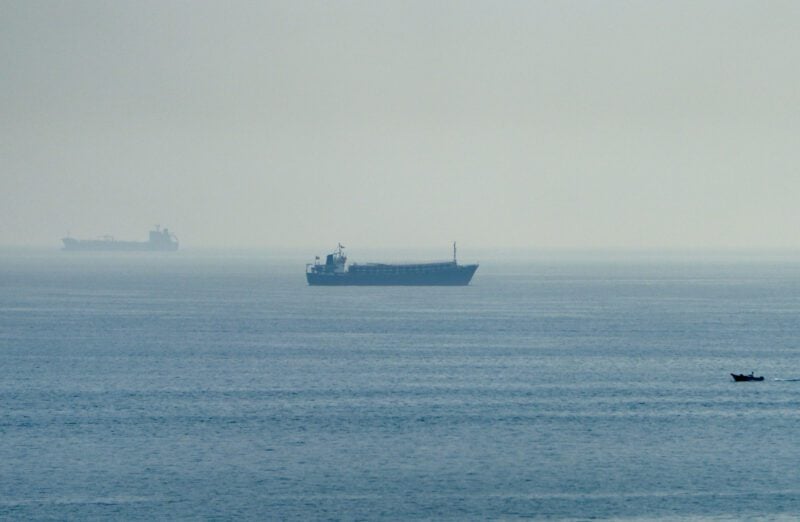
- The Strait of Hormuz is likely to remain restricted through 6 October, while a controlled reopening has a roughly even chance within seven days. Iran has offered to reopen the waterway to Gulf shipping if the US eases military pressure and lifts its blockade, and reporting describes the Iranian blockade as weakening. Countervailing measures include CENTCOM’s redirection of 110 commercial vessels and Iran’s approval of 20% cargo-value fines for unauthorised transits, leaving the operational status unresolved. (Confidence: medium · ASSESSED)
- I&W: Confirm: Iranian authorities announce authorised commercial transits and CENTCOM reports a sustained fall in vessel redirections. (0-14 days)
- I&W: Break: Iran enforces the 20% cargo-value fine against a named vessel or CENTCOM reports additional commercial-vessel redirections. (0-14 days)
- US-Iran diplomatic contact is likely to continue through 6 October, but an immediate ceasefire is unlikely. Abbas Araghchi and Masoud Pezeshkian are in New York for the UN General Assembly, Kaja Kallas met Araghchi on transit and cessation-of-hostilities issues, and Marco Rubio said the US was open to speaking with Iran. The outlook remains medium-confidence because reported Witkoff and Jared Kushner contacts are low-confidence, the reported meeting dates differ, and Trump’s economic-isolation demand conflicts with Iran’s refusal to surrender. (Confidence: medium · ASSESSED)
- I&W: Confirm: Washington and Tehran publicly acknowledge another direct or mediated session involving Marco Rubio, Steve Witkoff, Abbas Araghchi or Masoud Pezeshkian. (0-14 days)
- I&W: Break: Washington and Tehran publicly rule out further contacts while announcing additional military measures or sanctions. (0-14 days)
- Houthi pressure at Bab el-Mandab is likely to persist through 6 October, while an EU expansion of Operation Aspides beyond its three principal ships from Italy and Greece is unlikely in the next 14 days. Kaja Kallas said Aspides needs at least 10 ships and additional air assets, but EU members have shown no willingness to increase deployments or change the mission’s goals. The UK has announced an RAF Voyager tanker deployment to support Saudi Arabia, and the US recently called off planned strikes against the Houthis, indicating continued pressure without a settled reinforcement policy. (Confidence: medium · ASSESSED)
- I&W: Confirm: Saudi Arabia reports another Houthi attack or interception linked to the Bab el-Mandab threat. (0-14 days)
- I&W: Break: EU member states publicly assign named additional naval or air assets to Operation Aspides beyond the three principal ships from Italy and Greece. (0-14 days)
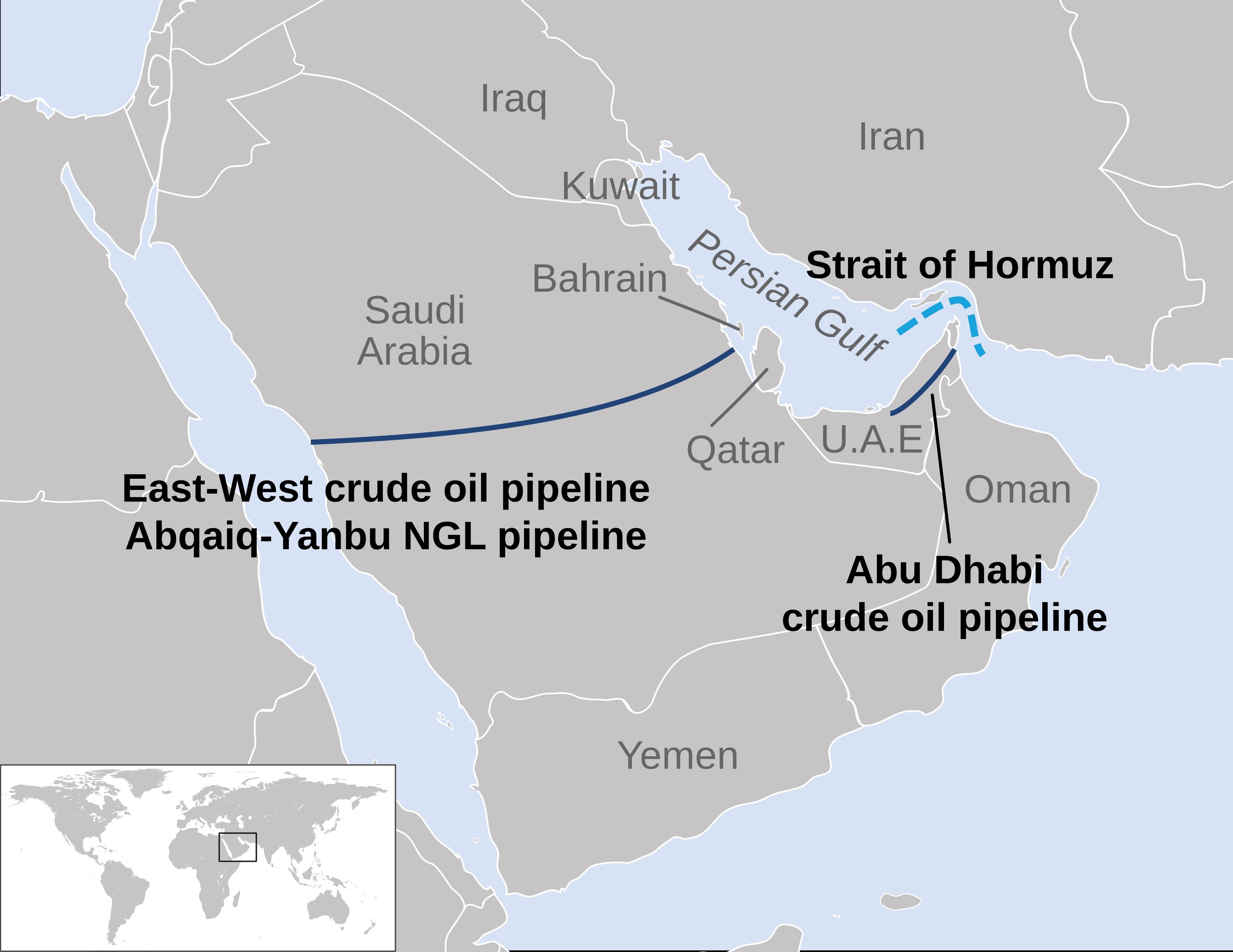
- Saudi Arabia is likely to sustain partial East-West Pipeline operations, but a return to the pipeline’s 7 million barrels per day nameplate capacity is unlikely within the next 14 days. Saudi Aramco has restarted operations, scheduled a crude loading at Yanbu, is increasing loading volumes at Ras Tanura and has set an interim transfer objective of about 4 million barrels per day. Restoring three damaged pumping stations could take up to six weeks, and the attribution of the original attacks remains unresolved. (Confidence: medium · ASSESSED)
- I&W: Confirm: Saudi Aramco reports continuing Yanbu exports and transfer rates approaching the 4 million barrels per day interim objective. (0-14 days)
- I&W: Break: Saudi Aramco reports restoration of the East-West Pipeline’s full 7 million barrels per day capacity. (0-6 weeks)
- Disruption to Iranian international aviation is very likely to deepen from 23 September, but the exact scope and timing will remain uneven across routes. The US has blacklisted Iran’s aviation sector, Scott Bessent said sanctions would shut Iranian airlines out of international operations from 23 September, Iranian authorities announced cancellations to Baghdad and Muscat, and Turkish Airlines suspended flights to Iran until at least March 2027. Conflicting reporting on whether cancellations began on 22 or 23 September lowers confidence in the precise implementation timeline. (Confidence: medium · ASSESSED)
- I&W: Confirm: Iranian airlines cancel additional international routes or foreign airports and service companies announce penalties or suspension of support. (0-14 days)
- I&W: Break: Iranian airlines continue scheduled international operations after 23 September without reported sanctions enforcement against servicing firms. (0-14 days)
Outlook & scenarios
Conditional maritime easing without a ceasefire (35%)
Iran accepts a limited reopening of the Strait of Hormuz after US military pressure eases, while Donald Trump maintains economic isolation measures and diplomatic contact continues. This outcome is likely to reduce vessel disruption without ending the US-Iran military confrontation.
Renewed US-Iran exchange and tighter Hormuz controls (35%)
The US conducts another strike, Iran retaliates with new weapons or targets, and Tehran enforces tighter transit controls while CENTCOM redirects additional commercial vessels. This outcome is likely if the current threats replace the diplomatic track rather than support it.
Red Sea pressure widens (20%)
Houthi attacks continue against Saudi Arabia and shipping near Bab el-Mandab, while EU members do not provide the additional vessels and air assets requested for Operation Aspides. Saudi Arabia relies more heavily on the East-West Pipeline and UK RAF Voyager support as Red Sea security deteriorates.
Cross-theatre escalation shock (10%)
A further US-Iran exchange coincides with attacks by Iranian-aligned actors in Iraq against Saudi energy infrastructure and renewed Houthi pressure on Bab el-Mandab. This low-probability, high-impact outcome would simultaneously restrict Hormuz, reduce Saudi export resilience and widen the military burden on US, UK and EU forces.
Recommendations
- Maintain a 0-14 day watch for a confirmed US strike order, Iranian deployment of new weapons, announcements of new targets and additional CENTCOM vessel redirections.
- Track the Strait of Hormuz through named indicators: authorised commercial transits, vessels subject to Iran’s 20% cargo-value fine, CENTCOM redirection totals and reported tanker or container-ship movements.
- Verify the diplomatic channel separately from public rhetoric. Record the date, participants and mediator for each reported US-Iran contact, and treat the competing 21 and 22 September meeting reports as separate until reconciled.
- Monitor Saudi Aramco’s East-West Pipeline recovery through Yanbu loadings, Ras Tanura volumes, reported transfer rates and progress on the three damaged pumping stations.
- Assess Red Sea shipping exposure against two concrete developments: named EU commitments to add ships or air assets to Operation Aspides, and confirmed Houthi attacks affecting Saudi Arabia or Bab el-Mandab traffic.
- Confirm the implementation date and practical scope of US aviation sanctions by checking Iranian flight cancellations, Turkish Airlines operations and foreign airport or service-provider actions from 23 September.
Confidence & uncertainty
Overall confidence is high for the reported diplomatic, shipping, sanctions and military developments because the assessment draws on 11 usable sources, including high-reliability wire services, major media and official statements, with repeated corroboration across the central events. Confidence is lower for forward-looking outcomes and for claims resting on single-source or low-reliability reporting, especially the precise status of US-Iran talks, the timing of aviation sanctions, attribution of the Saudi pipeline attacks and reports concerning a captured US underwater vehicle.
Intelligence gaps
- [EEI 1.1 · UNCOVERED] Concentrations or unusual movements of IRGC-Navy fast attack craft, small boat swarms, or escort vessels within 200 km of US/allied ships, including approach distances and formation changes. Recommended collection: maritime/AIS
- [EEI 1.2 · UNCOVERED] Detected pre-launch activity at coastal missile or rocket batteries (vehicle dispersal, fuel/warhead handling, radars powering up, transport erector launchers moving to firing positions). Recommended collection: imagery/signals
- [EEI 1.3 · UNCOVERED] Increased launch/arming/positioning of armed UAVs (MALE/loitering munitions) or tactical aircraft at Iranian coastal bases with sortie generation rates and munitions loadouts. Recommended collection: air/ADS-B/imagery
- [EEI 1.4 · UNCOVERED] Command-and-control indications of attack orders or elevated rules-of-engagement from IRGC/General Staff (intercepted communications, internal order messages, force-wide alert messages). Recommended collection: signals/human
- [EEI 2.2 · UNCOVERED] Issuance of formal orders, mobilization directives, travel restrictions, or official internal communications within IRGC/Armed Forces indicating escalation posture or stand-down. Recommended collection: human/diplomatic
- [EEI 2.3 · UNCOVERED] Directives, logistics movements, or communications from Iranian commanders to regional proxy militias (Houthis, Iraqi Shia militias, Lebanese groups) that change their threat posture or task them with specific operations. Recommended collection: signals/human
- [EEI 3.1 · PARTIAL] Incidents involving commercial vessels within the Strait of Hormuz or Persian Gulf: attacks, boarding attempts, near-misses, AIS spoofing or deliberate AIS outages, including vessel IDs and locations. Recommended collection: maritime/AIS
- [EEI 3.3 · PARTIAL] Commercial indicators of disruption: sudden increases in war-risk insurance premiums for Gulf transits, vessel re-routing decisions, port throughput reductions, or charter cancellations for Gulf shipments. Recommended collection: financial/commercial
Cited sources
[1] Reuters (republished by gCaptain) · Trump Calls for Iran’s Economic Isolation at UN as Tehran Offers Hormuz Reopening (A) · Tue Sep 22 2026 16:05:08 GMT+0000 (Coordinated Universal Time) · sha256:7b5f2f262755 [2] CBS News · Live Updates: Iranian president arrives in New York as Trump weighs cutting a deal or driving Iran "into hell" (A) · Mon Sep 21 2026 08:57:00 GMT+0000 (Coordinated Universal Time) · sha256:82fe86632e63 [3] Fox News · Trump weighs next move in Iran war as Tehran threatens new weapons | Live Updates from Fox News Digital (B) · Mon Sep 21 2026 10:55:03 GMT+0000 (Coordinated Universal Time) · sha256:a7b9b49aead8 [4] gCaptain · The Wartime Secretary of the Navy (C) · Tue Sep 22 2026 12:19:10 GMT+0000 (Coordinated Universal Time) · sha256:b8d4aaebb6ed [5] The Maritime Executive · Report: Saudi Aramco Achieves Partial Restart on Strategic Red Sea Pipeline (C) · sha256:08dee28e80d0 [6] Reuters (republished by gCaptain) · France Mulls New UN Security Council Resolution on Hormuz (A) · Tue Sep 22 2026 16:34:46 GMT+0000 (Coordinated Universal Time) · sha256:4ada0be8070e [7] Bloomberg (republished by gCaptain) · Kallas Urges EU to Bolster Red Sea Mission Against Houthi Threat (A) · Tue Sep 22 2026 08:20:33 GMT+0000 (Coordinated Universal Time) · sha256:4d17c271c930
Source content hashes were computed at collection time; the cited text is preserved unmodified for the life of this product.
Red cell review: CONCUR WITH COMMENT
TLP:CLEAR