TLP:CLEAR · Disclosure is not limited.
US, Iran: Strikes Give Way to Interim Deal as Hormuz Reopening Nears
Time window: Last 7 days · Audience: General analyst · Type: Situation report · DTG: 2026-06-18 00:14Z · Overall confidence: MEDIUM
BLUF
After exchanges of fire from 8-11 June, Washington and Tehran announced an interim agreement on 14-17 June to end hostilities and reopen the Strait of Hormuz, with signing expected on 19 June. Maritime risk is easing but remains high, and cross-border fire involving Israel and Hezbollah persists.
Executive summary
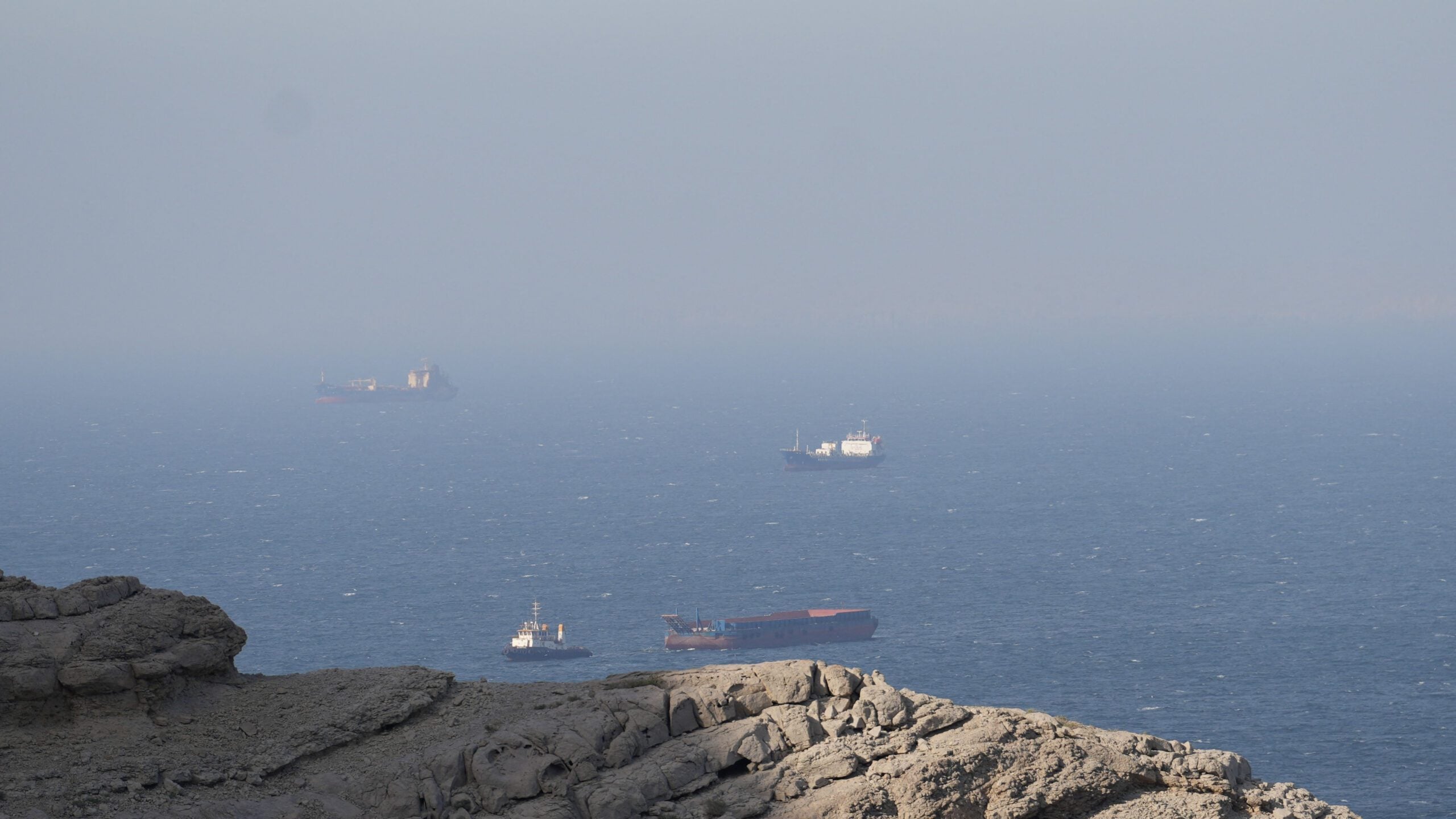
US Central Command conducted airstrikes in Iran on 8 June, with blasts reported in Tehran and Bandar Abbas, followed by a second round of strikes, and Iran replied on 11 June with drone and missile attacks on US bases in Bahrain, Kuwait and Jordan, which intercepted 20 missiles. Hezbollah fired missiles and mortars at Israel Defence Forces troops in southern Lebanon on 15 June, while ballistic strikes across Israel since 28 February killed 13 IDF soldiers and 23 civilians. On 14 June the US and Iran announced an agreement to end the war and reopen Hormuz, with an interim agreement reached on 17 June and a formal signing slated for 19 June; the plan is expected to extend a ceasefire by two months and includes immediate oil-sanctions waivers for Iran, though public lines on nuclear and navigation provisions diverge. Maritime conditions remain hazardous: nearly 600 vessels are still stuck, JMIC recorded no transits on 14 June and seven on 15 June, a tanker was hit by an unidentified projectile near the strait’s southeastern approaches, and mine risks persist, yet tankers are repositioning to Fujairah, the UAE is using pipelines and Omani waters, and the JMIC threat level has been lowered to Substantial. The humanitarian toll remains heavy across multiple theatres, including thousands of deaths mainly in Iran and Lebanon, casualties in the UAE, an 11-year-old injured in Bahrain, and three Indian mariners killed after an attack on the M/T Settebello.
Key judgments
- Very likely the United States and Iran will sign an interim memorandum by 19 June, formalising a two‑month ceasefire extension and initial steps to reopen the Strait of Hormuz within days of signature. (Confidence: high · ASSESSED)
- I&W: Public signing on 19 June by the named principals in Switzerland. (0-7 days)
- I&W: Official postponement or a renewed large-scale US, Iran exchange of strikes prior to 19 June. (0-7 days)
- Maritime risk in and around Hormuz remains high but is easing: traffic is still significantly reduced with a backlog of roughly 600 vessels, yet tanker repositioning, use of Omani waters and a limited number of transits point to preparatory steps for reopening amid mixed reporting on throughput and attack rates. (Confidence: medium · ASSESSED)
- I&W: JMIC daily transit counts rise steadily into the tens per day and sustain that level. (1-3 months)
- I&W: A successful strike causing casualties or a vessel loss in or near the traffic separation scheme. (0-14 days)
- Almost certainly both sides continued lethal exchanges between 8 and 15 June, including US airstrikes inside Iran and Iranian missile and drone attacks on US and allied targets, while Hezbollah and the IDF traded fire across the Lebanon, Israel border. (Confidence: high · REPORTED)
- I&W: Official reporting of further interceptions or launches in Jordan, Bahrain or Israel. (0-14 days)
- I&W: No cross-border rocket, missile or drone fire recorded for two continuous weeks after signature. (1-3 months)
- Very likely the humanitarian toll is severe and region‑wide, including thousands of deaths mainly in Iran and Lebanon, casualties in the UAE and Bahrain, Israeli fatalities from ballistic missiles, and civilian deaths linked to maritime and air operations. (Confidence: high · REPORTED)
- I&W: Publication of consolidated casualty updates by affected governments. (1-3 months)
- I&W: Independent investigations disputing previously reported casualty attributions. (1-3 months)
- Likely the interim deal front‑loads oil‑export relief for Tehran and defers the hardest nuclear and governance issues to a 60‑day follow‑on track, with Washington and Tehran signalling divergent interpretations of obligations. (Confidence: medium · ASSESSED)
- I&W: Public issuance of US oil‑sanctions waivers and a visible rise in Iranian tanker departures within days of signature. (0-14 days)
- I&W: Official statements that waivers are withheld pending further talks or verification. (0-14 days)
- Likely the security environment for US personnel and assets in the UAE and the wider Gulf remains at elevated risk despite the ceasefire framework. (Confidence: high · REPORTED)
- I&W: Continuation or renewal of FAA and State Department advisories for the UAE and region. (1-3 months)
- I&W: Sustained absence of attacks or intercepts targeting the UAE and nearby US facilities. (1-3 months)
- Roughly even chance domestic and allied political pushback complicates implementation and durability of the framework. (Confidence: medium · ASSESSED)
- I&W: Congress advances measures to limit operations or delay sanctions relief; Israeli leaders publicly reject core deal terms. (0-1 month)
- I&W: Bipartisan endorsements and allied statements backing the deal’s terms. (0-1 month)
Outlook & scenarios
Managed de‑escalation and phased Hormuz reopening (65%)
The memorandum is signed on 19 June, the ceasefire extension holds, and shipping resumes via the southern route and regular lanes with escorts. Sanctions waivers trigger a measurable restart of Iranian oil exports, while nuclear and governance issues are negotiated over the 60‑day window. Security incidents taper but do not cease entirely.
Signed but fragile: sporadic fire and slow maritime normalisation (50%)
The deal is signed yet punctuated by periodic rocket, drone or missile incidents on the Israel, Lebanon front and in the Gulf. JMIC keeps the threat level at Substantial, mine risks persist, and the vessel backlog clears only gradually as owners reposition tonnage to Fujairah and the Gulf of Oman.
Breakdown before or after signature (30%)
New high‑visibility strikes by either side derail or hollow out the agreement. Gulf states and Jordan report further interceptions, and shipping insurers keep restrictions in place as another successful attack near Hormuz chills traffic. The backlog grows and oil‑market relief fades.
Wildcard: major maritime incident triggers wider escalation (15%)
A mass‑casualty attack or mine strike on a laden tanker in or near the traffic separation scheme prompts rapid retaliatory fire, pauses reopening steps and forces emergency convoys only along Omani waters. Diplomatic tracks stall as hardline positions harden.
Recommendations
- Task a daily watch on the 19 June signing venue and principals; prepare immediate post‑signature assessments on ceasefire observance and sanctions‑relief implementation.
- Maintain a running reconciliation of Hormuz traffic: fuse JMIC daily transit counts, AIS tracks of tankers signalling Fujairah, and reports of the ‘Deep South Route’ usage to quantify reopening progress and residual risk.
- Establish tripwire alerts for: renewed US, Iran strikes, successful attacks on commercial vessels in or near the TSS, and cross‑border fire on the Israel, Lebanon front.
- Brief energy and supply‑chain stakeholders on the likely gradual clearance of the 600‑vessel backlog and the operational implications of mine advisories, with contingency routing via Fujairah and Omani waters.
- Update consular and duty‑of‑care guidance for US personnel and contractors in the UAE and Bahrain in line with current FAA and State advisories and recent attack patterns.
- Scope verification requirements and messaging risks around contested deal provisions: track official statements on oil‑sanctions waivers, ceasefire extension terms and any nuclear‑related commitments.
- Compile a casualty and incident ledger across Israel, Iran, the UAE and Bahrain to support leadership briefings and humanitarian-response coordination.
Confidence & uncertainty
Overall confidence is medium. Multiple high‑confidence reports from official and major‑media sources corroborate the strike chronology, the interim deal timetable and the persistent maritime backlog. Uncertainties remain around the exact contours of the memorandum, with divergent public claims about sanctions relief, nuclear provisions and control of navigation. Maritime reporting is mixed on throughput, and incident attribution at sea varies, which constrains fidelity on near‑term risk to shipping.
Alternative analysis (red cell)
Multiple public announcements and electronic exchanges about an interim US–Iran arrangement appear in the reporting, but contradictions across dates and mixed admiralty confidence mean it is premature to conclude a fully authenticated, jointly signed memorandum will be in force by 19 June. The more defensible estimate is that provisional understandings and signaling exist, but formalization and clear implementation cues remain unresolved.
Cited sources
[1] gcaptain.com · Oil Tankers U-Turn, Rush to Middle East Before Hormuz Reopening (B) · sha256:b566a498089f [2] gcaptain.com · Trump Signs Interim Iran Deal as Focus Shifts to Hormuz (B) · sha256:448e576b1f29 [3] insurancejournal.com · US and Iran Say They've Agreed Deal to Reopen Hormuz This Week (A) · sha256:0552666b3dd3 [4] Wikipedia · 2026 Iran war (B) · sha256:3ddd61dce48f [5] Atlantic Council · What the US-Iran deal means for the rest of the Middle East (and beyond) (C) · sha256:d6436f3ff8e0 [6] gcaptain.com · Iranian Tankers Reappear as Crude Exports Show Signs of Restart After Hormuz Deal (B) · sha256:e75a2d244d92 [7] gcaptain.com · U.S. Military Guidance Reveals High-Risk Reality of Hormuz's 'Southern Highway' (B) · sha256:bd15873ddf06 [8] maritime-executive.com · UAE Wants to End its Reliance on Shipping Through Strait of Hormuz (B) · sha256:e84b1561cddd [9] The Jerusalem Post · Live Updates: Latest from Israel, Iran, and Middle East | The Jerusalem Post (A) · sha256:64306a237e32 [10] wtop.com · US launches new strikes on Iran, which fires back at Gulf states and Jordan (B) · sha256:d14e1f928bce [11] Institute for the Study of War (ISW) and The Critical Threats Project (CTP) at the American Enterprise Institute · Iran Update Special Report, June 11, 2026 (B) · sha256:22f4cd0e4605 [12] military.com · Iran Responds to a Second Day of US Strikes by Firing at Gulf States and Jordan (B) · sha256:c6233dacd451 [13] globalbankingandfinance.com · US & Iran Trade Attacks Again, Threatening Shaky Middle East Ceasefire (B) · sha256:72ca174b5bc9 [14] Wikipedia · United Arab Emirates in the 2026 Iran war (B) · sha256:fbd67a18cf24 [15] liccardo.house.gov · Liccardo: Why China is winning the war America started in Iran (A) · sha256:a8779e4f3651 [16] gcaptain.com · Trump Administration to Immediately Lift Iranian Oil Sanctions Under New Agreement (B) · sha256:bec31b1f91a9 [17] gcaptain.com · U.S., Iran Prepare for Deal Signing as Financial Details Emerge (B) · sha256:a0f2cb9d784d [18] mccollum.house.gov · Congresswoman McCollum Statement on Ceasefire Extension in Iran (A) · sha256:fa6a9676006d [19] Institute for the Study of War (ISW) and The Critical Threats Project (CTP) at the American Enterprise Institute · Iran Update Special Report, June 12, 2026 (B) · sha256:1d92477fba93 [20] U.S. Department of State · United Arab Emirates Travel Advisory (A) · sha256:7a0c71f2991b
Source content hashes were computed at collection time; the cited text is preserved unmodified for the life of this product.
Red cell review: PARTIAL DISSENT
TLP:CLEAR