TLP:CLEAR · Disclosure is not limited.
US, Iran strikes intensify as Hormuz remains contested; Israel braces for spillover
Time window: Last 1 day · Audience: General analyst · Type: Situation report · DTG: 2026-07-13 14:43Z · Overall confidence: MEDIUM
BLUF
US and Iranian forces traded heavy strikes on 12 July while Iran signalled closure of the Strait of Hormuz and tankers transited covertly. The risk of a wider regional confrontation, potentially drawing in Israel and Gulf hosts, remains elevated and shipping is de facto constrained.
Executive summary
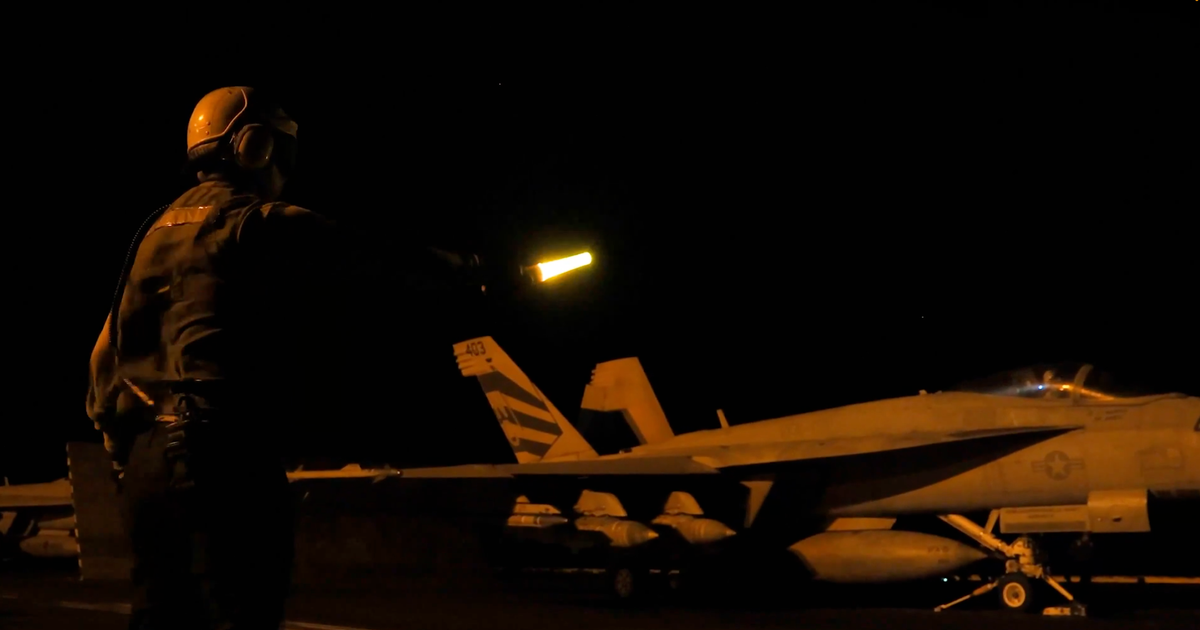
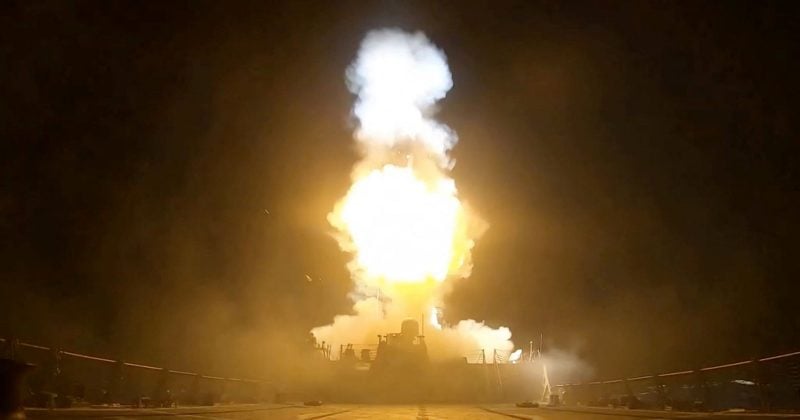
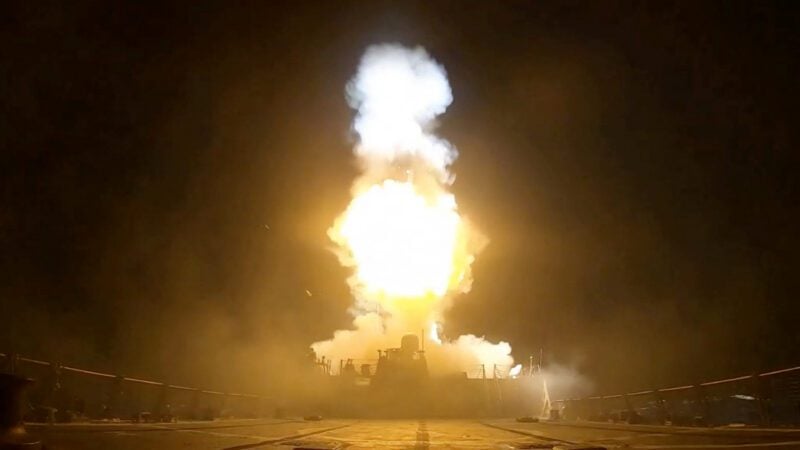
US Central Command reports another large strike wave across Iran on 12 July, including the first campaign use of one‑way attack sea drones, as US aircraft intercepted an Iranian cruise missile and an attack drone. Iran expanded missile and drone launches toward US facilities and host nations across the Gulf, with Jordan intercepting eight missiles, the UAE reporting interceptions, and Bahrain hit by an Iranian drone in late June. Tehran has declared Hormuz closed or passage unfeasible, which CENTCOM denies; observable behaviour points to constrained navigation, with AIS‑off transits, a halt along the southern corridor, and traffic below normal. Oil prices jumped on the fighting and market caution. Israeli defence officials are increasingly concerned and Iran is preserving capabilities for a future confrontation with Israel. International bodies have reaffirmed freedom of navigation and condemned attacks on commercial shipping, but positions remain polarised.
Change from previous assessment
Since the 12 July brief, US and Iran executed new strike waves on 12 July including CENTCOM’s employment of one‑way attack sea drones, oil prices spiked on the renewed fighting, and Iranian authorities reiterated closure or unfeasible passage claims for Hormuz which CENTCOM denied. Shipping behaviour now shows AIS‑off transits with the southern corridor halted and traffic below normal. Israeli defence officials’ concern is more clearly reported, and senior warnings of broader escalation have sharpened. Initial assessment of these developments is reflected in raised attention to maritime tripwires and Israel‑related spillover in this update.
Key judgments
- Very likely US and Iranian forces exchanged heavy strikes on 12 July 2026: CENTCOM reports hitting dozens of Iranian air‑defence, radar, missile and drone targets across Iran, the US employed one‑way attack sea drones for the first time in this campaign, and US aircraft intercepted an Iranian cruise missile and an attack drone, while Iranian forces reportedly fired on commercial vessels the same day. (Confidence: high · REPORTED)
- I&W: CENTCOM issues further releases within 0-14 days announcing strikes on Iranian air‑defence, radar, missile or drone targets. (0-14 days)
- I&W: No missile or drone launches claimed by either CENTCOM or the IRGC for a continuous 14‑day period. (0-14 days)
- Very likely Iran expanded attacks on US‑linked targets in Gulf host nations between 8 and 9 July, with Jordanian air defences downing eight Iranian missiles on 9 July, the UAE reporting interceptions, and Bahrain struck by an Iranian drone on 28 June; Tehran says it targeted US facilities in Jordan, Bahrain and Kuwait and the IRGC claimed strikes in Bahrain, Kuwait, Oman and Jordan. (Confidence: high · REPORTED)
- I&W: Official interception or damage reports from Jordan, Bahrain or Kuwait attributable to Iranian missiles or drones. (0-14 days)
- I&W: IRGC public statement announcing a halt to strikes on facilities in host nations. (0-14 days)
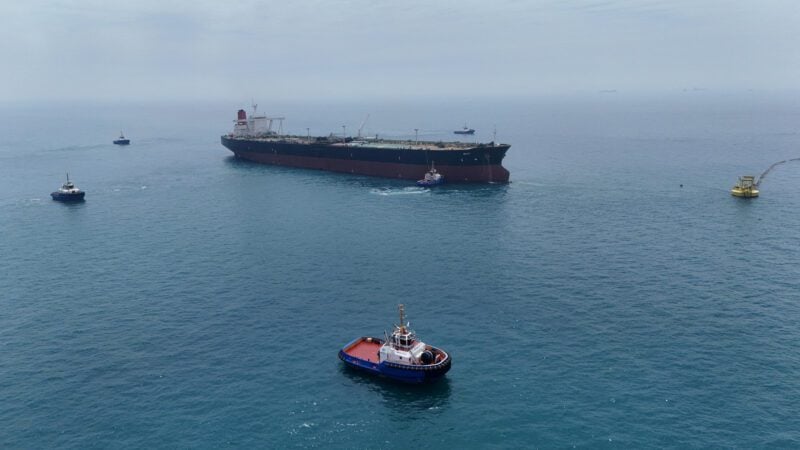
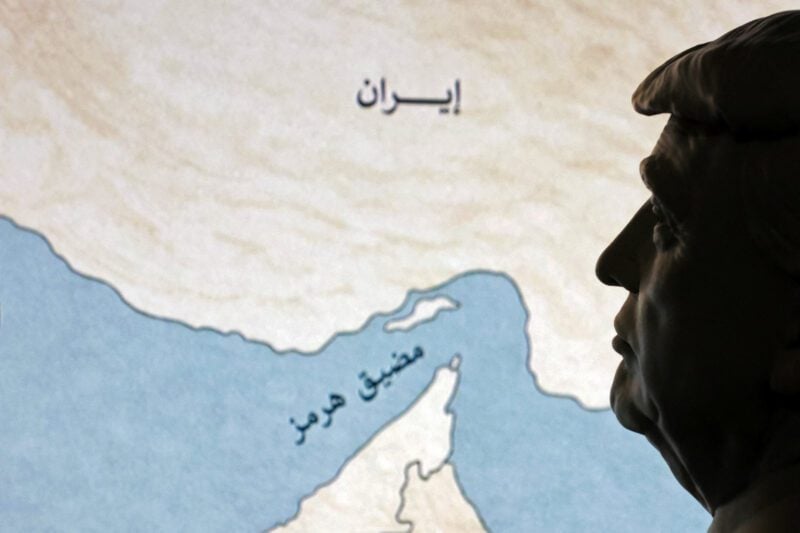
- Roughly even chance the Strait of Hormuz is under de facto restricted conditions: Iran has declared the strait closed or passage unfeasible, while US forces deny closure and assert ongoing commercial traffic; concurrent AIS‑off transits, a halt along the southern corridor and traffic below normal point to constrained navigation rather than full closure. (Confidence: medium · ASSESSED)
- I&W: Visible AIS‑on transits resume on the southern corridor along the Omani coast, recorded by public ship‑tracking services. (0-14 days)
- I&W: An Iranian interception, seizure or forced turn‑back of a merchant vessel attempting a Hormuz transit. (0-14 days)
- Likely Washington is prioritising securing navigation through Hormuz over the nuclear track and is sustaining a kinetic campaign to degrade Iran’s maritime strike complex, including repeated strikes on air‑defence, coastal radar, missile and drone targets and the introduction of one‑way attack sea drones. (Confidence: medium · ASSESSED)
- I&W: CENTCOM statements explicitly tying further strikes to threats against commercial shipping in Hormuz. (0-14 days)
- I&W: Public scheduling of renewed US, Iran nuclear discussions with senior principals. (1-3 months)
- Likely oil market volatility will persist while Hormuz navigation is constrained and host‑nation attacks continue, as evidenced by price spikes and shipowner caution. (Confidence: medium · ASSESSED)
- I&W: Further oil price jumps following reported vessel attacks or new US, Iran strike waves. (0-14 days)
- I&W: Normalised AIS‑on tanker transits across both Hormuz corridors with no reported harassment. (1-3 months)
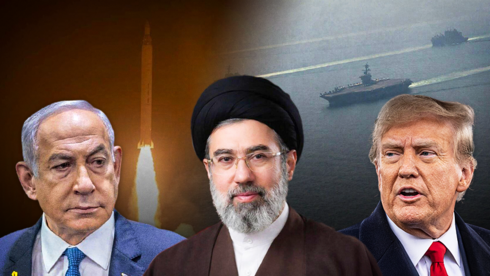
- Likely Israel is bracing for a wider escalation linked to US, Iran hostilities: Israeli defence officials voice growing concern, Jerusalem is closely monitoring developments, and Iran is preserving capabilities for a future confrontation with Israel. (Confidence: medium · ASSESSED)
- I&W: Public IDF readiness measures or senior Israeli statements explicitly referencing preparations vis‑à‑vis Iran. (0-14 days)
- I&W: Sustained absence of Israeli official commentary on the US, Iran exchange despite ongoing strikes. (0-14 days)
- Likely the risk of a broader regional confrontation remains elevated, with senior warnings of escalation and threats to the oil and gas sector, and the targeting of sites such as Jordan’s Prince Hassan Air Base and US facilities in Bahrain and Kuwait highlighting potential trigger points. (Confidence: medium · ASSESSED)
- I&W: Renewed Iranian attacks on or near the US Fifth Fleet footprint in Bahrain or Prince Hassan Air Base in Jordan. (0-14 days)
- I&W: Joint Maritime Information Centre downgrades the Hormuz threat level from SEVERE. (0-14 days)
Outlook & scenarios
Protracted tit‑for‑tat with constrained Hormuz (60%)
US and Iran continue reciprocal strike cycles targeting Iranian air‑defence, radar, missile and drone nodes and US‑linked sites in Gulf host states. Hormuz stays contested but not fully shut, with AIS‑off tanker transits, a paused southern corridor and shipowners exercising caution. Oil remains volatile.
Escalation to a regional confrontation and tighter maritime choke (35%)
Iran intensifies attacks on US facilities in Bahrain, Kuwait and Jordan while enforcing a stricter closure posture in Hormuz. A successful strike on high‑value US assets or a major maritime incident prompts broader US action. Shipping disruption deepens and prices spike.
Israel, Iran flashpoint widens the war (25%)
Israeli concern over the US, Iran exchange translates into independent action against Iranian targets, met by Iranian retaliation. The theatre broadens beyond the Gulf hosts, complicating US strike calculus and heightening spillover risks.
Managed pause with an ad hoc navigation regime (20%)
Under international pressure and maritime industry lobbying, parties tacitly de‑escalate in Hormuz. A temporary corridor arrangement emerges alongside IMO calls to protect shipping, enabling more overt transits and easing price pressure, though talks remain fragile.
Recommendations
- Maintain a daily OSINT watch on Hormuz transits: track AIS‑off patterns, route choices, and any resumed AIS‑on passages on the southern corridor; correlate with public maritime security advisories.
- Build a strike‑claim cross‑walk: systematically compare IRGC attack claims with host‑nation interception reports and CENTCOM releases to assess Iranian intent, reach and success rates.
- Task near‑term indicators for escalation: monitor for fresh attacks near the US Fifth Fleet in Bahrain and Jordan’s Prince Hassan Air Base, and watch for official notices by Iran’s Persian Gulf Strait Authority on closure or corridor arrangements.
- Coordinate with energy analysts to update price‑risk thresholds tied to specific maritime or kinetic tripwires, and prepare rapid‑turn briefs on oil market moves after strike or shipping incidents.
- Track Israeli signalling: catalogue statements by Israeli defence officials and observable readiness measures related to Iran to anticipate independent Israeli options and associated spillover.
- Preserve diplomatic context in reporting: include IMO Council actions and UN messaging in updates to policymakers to frame legal navigation arguments alongside military activity.
Confidence & uncertainty
Overall confidence is medium. Reporting on the kinetic exchange is strong and mutually reinforcing across CENTCOM statements, multiple major media accounts and host‑nation reporting. By contrast, the status of the Strait of Hormuz is contested by credible official sources and shows mixed observable signals, with simultaneous Iranian closure claims, US denials and constrained yet ongoing traffic. Several assessments on intent and outlook rely on single‑source statements or analytic inference, and timelines across some items are uneven, which also argues against a high confidence headline.
Alternative analysis (red cell)
Reporting is heavily shaped by competing government statements and tactical announcements; several key items are single‑source CENTCOM/IRGC claims without independent corroboration and explicit contradictions exist about the Strait’s status (see claims 6874ca37 versus 6171c208/de613231). A more cautious analytic posture is defensible: the Strait is likely experiencing localized, high‑risk conditions with some clandestine transits rather than a uniform, de facto closure, and US strikes and novel weapons employment may reflect tactical countermeasures and signaling rather than a durable strategic reprioritization away from the nuclear track.
Intelligence gaps
- [EEI 1.1 · UNCOVERED] Unusual long-range missile/rocket transporter-launcher (TEL) movements, storage activation, or assembly activity at known IRGC missile sites or forward staging areas. Recommended collection: satellite/imagery
- [EEI 1.3 · PARTIAL] Large-scale transfers, deliveries, or convoy movements of armed UAVs/drones, guided munitions, or spare parts from Iran into Lebanon (Hezbollah), Iraq, Syria, or Gaza. Recommended collection: air/aviation track and HUMINT
- [EEI 1.4 · UNCOVERED] Sustained changes in Israeli air-defense usage (SAM launches, radar activations), wide-area alerts, or NOTAMs indicating elevated imminent strike response. Recommended collection: air/aviation/NOTAMs and signals
- [EEI 2.3 · UNCOVERED] Insurance market indicators: sudden spikes in war-risk or hull insurance premiums for routes through the Red Sea, Suez corridor, or Persian Gulf, and major carriers announcing route changes. Recommended collection: financial/market and commercial shipping notices
- [EEI 2.4 · UNCOVERED] Port closures, naval escorts requested by commercial operators, or formal rerouting advisories issued by major shippers (e.g., Maersk, Hapag-Lloyd) for regional transits. Recommended collection: commercial/OSINT
- [EEI 3.3 · UNCOVERED] Confirmed arms transfers, expedited weapons shipments, or transfer authorizations to Israel, Iran, or their proxies (aircraft parts, munitions, air defenses). Recommended collection: customs/INTEL and HUMINT
- [EEI 3.4 · UNCOVERED] Issuance of travel warnings, embassy evacuations or reductions, and closure of diplomatic missions by major capitals indicating escalation risk or shifted threat assessments. Recommended collection: OSINT/diplomatic
Cited sources
[1] gcaptain.com · Oil Jumps As Conflict Over Hormuz Escalates With Fresh Strikes (A) · sha256:684e45dde109 [2] ynetnews.com · Israel 'closely' following developments in Iran amid expected escalation (A) · sha256:322279bec563 [3] ynetnews.com · US strikes Iran again Tehran targets Gulf bases and Jordan as Israel braces for wider escalation (B) · sha256:68966aace578 [4] gcaptain.com · U.S. Launches Fourth Wave of Strikes Against Iran as Hormuz Shipping Crisis Deepens (A) · sha256:fc08818d2cb9 [5] jpost.com · Jordan, Bahrain drawn deeper into Iran's regional storm as ceasefire collapse puts pressure on Gulf (B) · sha256:305dd529493d [6] meduza.io · США и Иран снова обменялись ударами. Американские военные впервые применили морские беспилотники. Шесть стран Ближнего Востока сообщили об иранских атаках (B) · sha256:80c6737155bd [7] CBS News · U.S.-Iran Latest: Trump says U.S. "going to keep" Strait of Hormuz and "probably run it" as attacks continue (A) · sha256:4e7415de7a4d [8] gcaptain.com · Ships Transit Hormuz in Secret as US and Iran Trade Strikes (A) · sha256:fd2602fdd5fa [9] AhlulBayt News Agency · Iran Rejects Western Narrative, Says Operations Are Legitimate Self-Defense Against US-Israeli Violations (A) · sha256:9d8b9e0c1065 [10] haaretz.com · U.S. neglecting Iran nuclear issue to focus on Hormuz, Israeli officials say (B) · sha256:56d527266a24 [11] gcaptain.com · Trump Says the US Should Control the Strait of Hormuz and Get Paid For It (B) · sha256:3d7ea488a4ec [12] aljazeera.com · Kimmit: Renewed US-Iran fighting could reignite wider regional conflict (B) · sha256:a126b2e0adaf [13] cryptobriefing.com · UN chief urges end to US-Iran conflict amid escalating tensions (B) · sha256:baae4323e49e [14] gcaptain.com · Iran Widens Attacks on US Bases in Gulf, Hormuz Tensions Lift Oil Prices (A) · sha256:c1323c3bca46 [15] cryptobriefing.com · Iran launches missiles at US bases in Jordan, Bahrain amid Gulf tensions (B) · sha256:cd48718aba68
Source content hashes were computed at collection time; the cited text is preserved unmodified for the life of this product.
Red cell review: PARTIAL DISSENT
TLP:CLEAR