TLP:CLEAR · Disclosure is not limited.
US-Iran Tensions and Persian Gulf Shipping
Time window: Last 1 day · Audience: General analyst · Type: Situation report · DTG: 2026-10-05 09:11Z · Overall confidence: HIGH
BLUF
A major new US-Iran air campaign before 19 October is unlikely, but further attacks on commercial vessels are likely. Washington has rejected Tehran’s seven-day proposal to reopen the Strait of Hormuz, and recent export recovery does not establish that passage through the Strait has returned to normal.
Executive summary
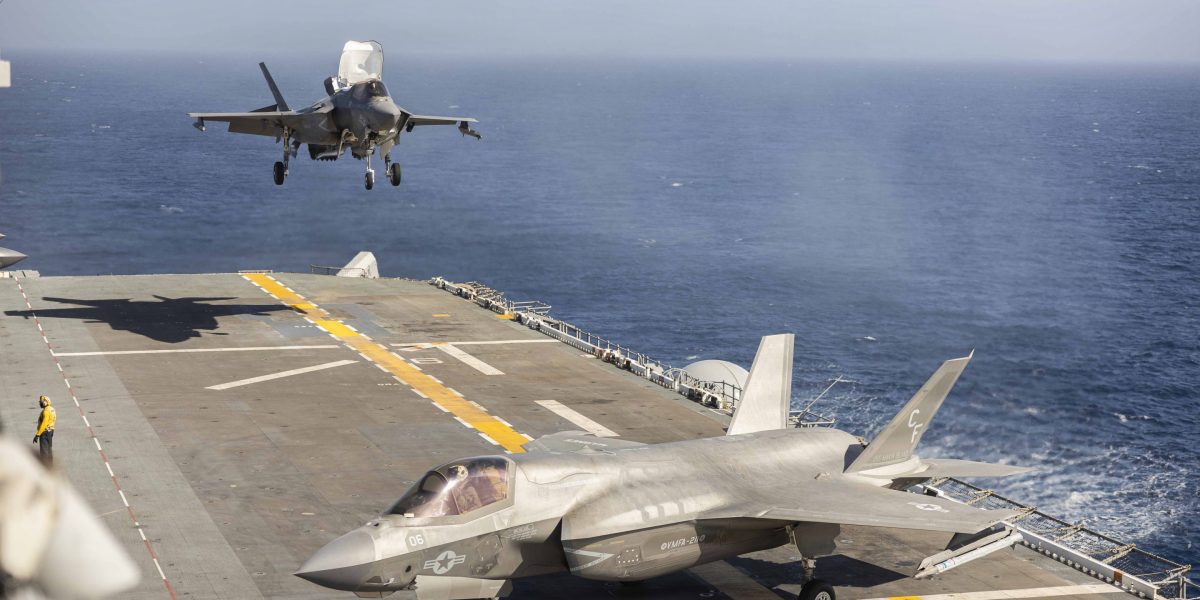
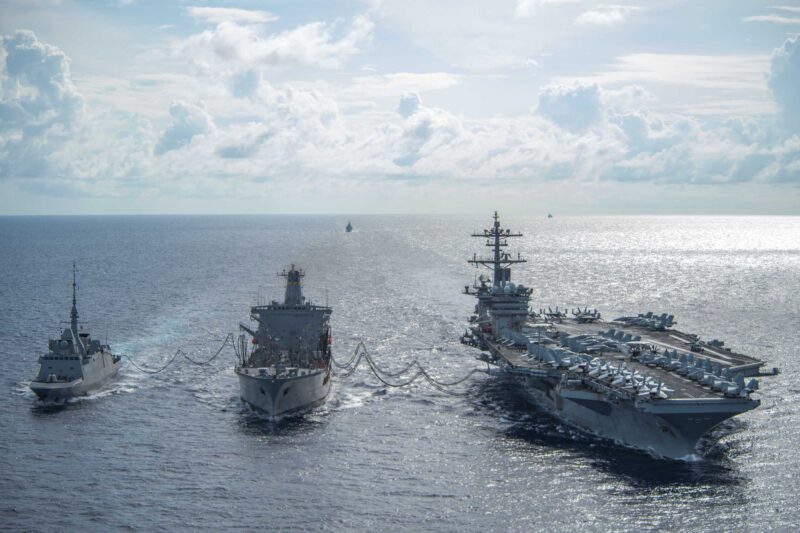
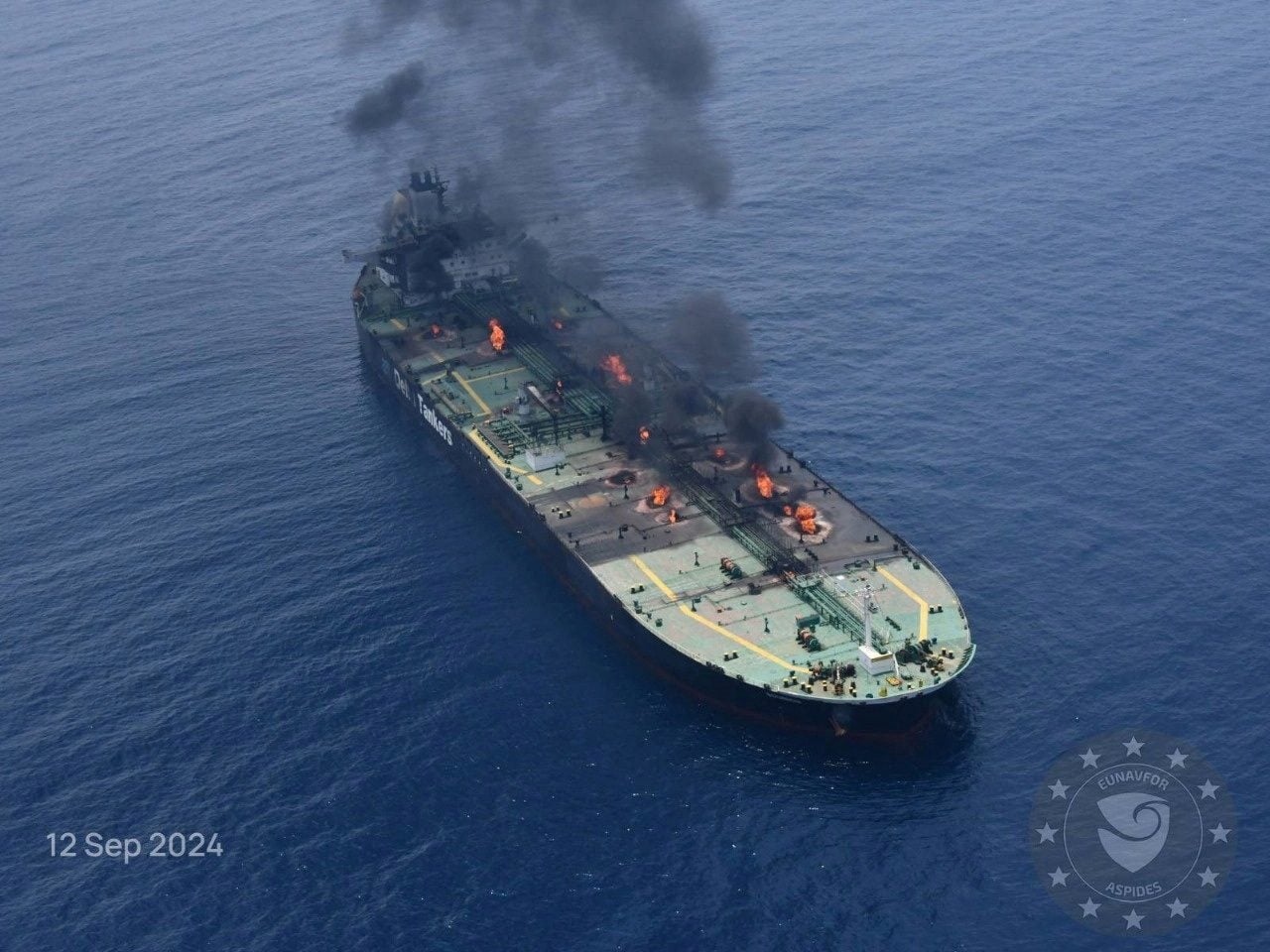
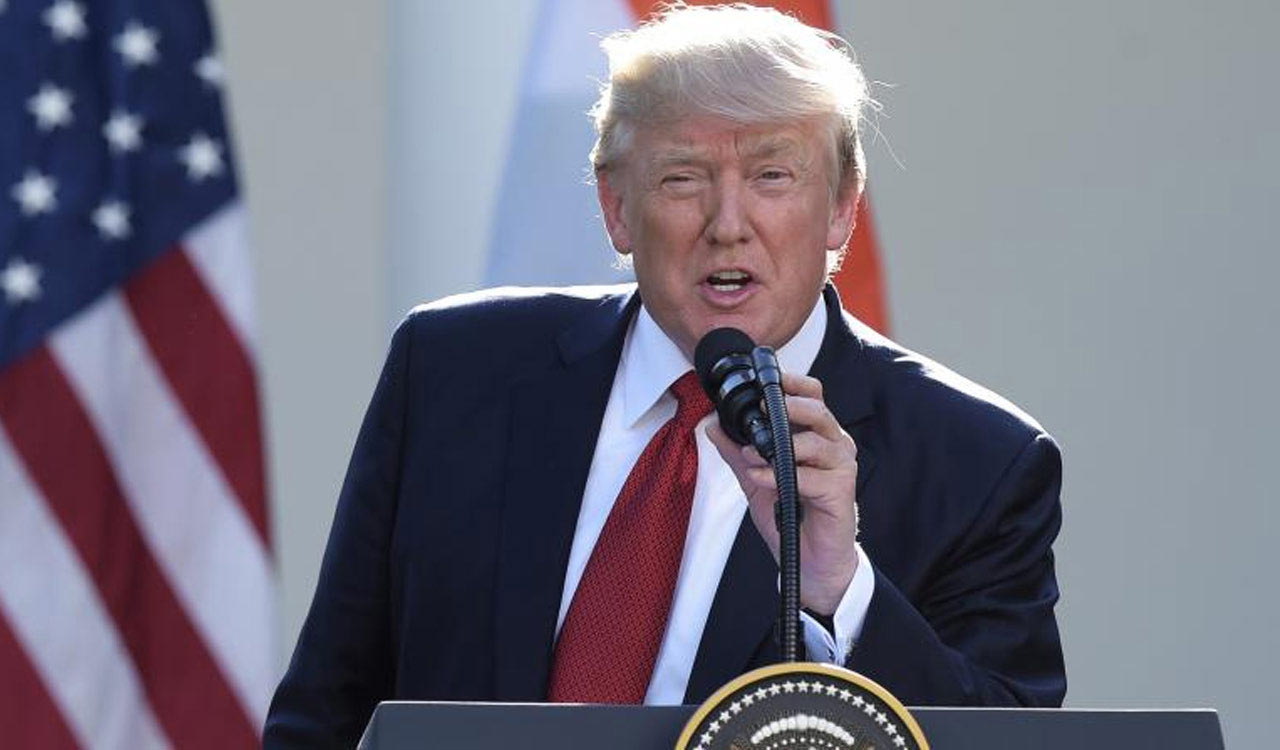
Reporting describes a larger US military presence being directed towards the Middle East, including the USS Theodore Roosevelt and the USS Makin Island Amphibious Ready Group with the 13th Marine Expeditionary Unit. The Roosevelt’s current position is disputed. Shipping attacks continue: the UK Maritime Trade Operations agency reported at least one attack a day in the Strait of Hormuz or Gulf of Aden since 2 October, and Marisks counted at least seven tanker attacks in and around Hormuz. Responsibility for the 1 October attack on the Kuwaiti tanker Kazimah III remains contested. President Donald Trump rejected Iran’s seven-day ceasefire and reopening proposal; Mohammad Bagher Ghalibaf said the Strait would remain closed until Washington accepted the plan. Meanwhile, industry data show some Middle East crude export volumes near or above pre-war levels, but the figures cover different routes and periods. Saudi Arabia’s East-West Pipeline and other routes bypassing Hormuz help explain the recovery.
Change from previous assessment
Since the 23 September brief, the assessment has shifted from a roughly even chance of limited maritime easing to an unlikely full reopening by 19 October: Trump has rejected Tehran’s seven-day proposal, and Ghalibaf has repeated the condition that Washington accept it first. Reporting now records daily attacks in the Strait of Hormuz or Gulf of Aden since 2 October and at least seven tanker attacks in and around Hormuz. New reports also describe additional US carrier and amphibious deployments, although the USS Theodore Roosevelt’s position is disputed. The export picture has changed from a focus on restricted flows to evidence that aggregate regional crude exports approached or exceeded pre-war levels on some days; this does not resolve the status of Hormuz traffic itself.
Key judgments
- A major renewed US-Iran air campaign before 19 October is unlikely. Reporting describes a lull in major strikes, while Donald Trump has placed the prospect of increased strikes after the November midterm elections; US deployments expand military options but do not establish a decision to attack. The assessment rests on public reporting and statements, not on evidence of a confirmed strike order. (Confidence: medium · ASSESSED)
- I&W: Confirm: US or Iranian authorities announce renewed air or missile strikes before 19 October. (0-14 days)
- I&W: Confirm: no renewed US-Iran air or missile strikes are reported by 19 October, and no public strike order is announced. (0-14 days)
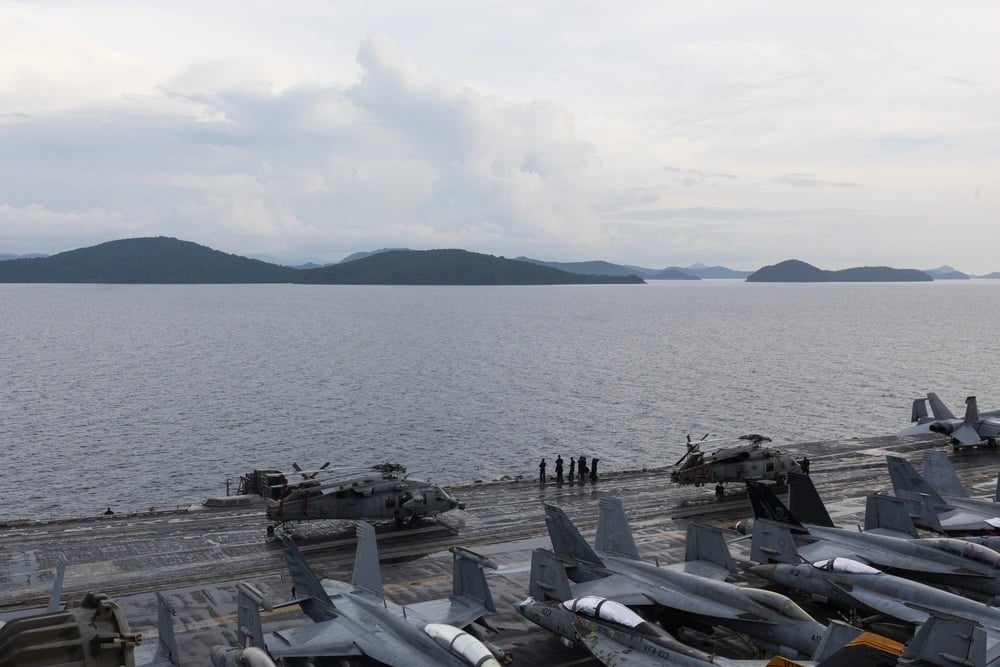
- The US is very likely reinforcing its military posture in the Middle East, but the timing and location of the USS Theodore Roosevelt’s arrival remain unresolved. Reporting identifies the carrier and the USS Makin Island Amphibious Ready Group, including the 13th Marine Expeditionary Unit; one account places the Roosevelt strike group in the Pacific, while another describes it as sent to the Gulf. Reports also differ on the number of US carriers currently within reach of Iran. Wire-service and major-media reporting supports the deployments, while the conflicting location accounts lower confidence in the force’s current disposition. (Confidence: medium · ASSESSED)
- I&W: Confirm: US Navy or CENTCOM reporting places the USS Theodore Roosevelt in the Middle East or Gulf, or confirms the USS Makin Island group’s arrival. (0-14 days)
- I&W: Break: reliable position reporting continues to place the Roosevelt strike group in the Pacific through 19 October, with no confirmation of an onward deployment. (0-14 days)
- Further attacks on commercial vessels in or near the Strait of Hormuz are likely in the next 14 days, but Iranian responsibility for the attack on Kazimah III is not established. UKMTO reported daily attacks in the Strait or Gulf of Aden from 2 October, and Marisks separately reported at least seven tanker attacks in and around Hormuz. The Kazimah III was reported struck by an unknown projectile, while a separate trade report attributed the attack to Iranian forces. The recurring incidents are supported by separate reporting; attribution remains thin and contested. (Confidence: medium · ASSESSED)
- I&W: Confirm: UKMTO or another named maritime reporting body records a new attack on a commercial vessel in Hormuz. (0-14 days)
- I&W: Break: UKMTO records no attacks in the Strait of Hormuz or Gulf of Aden for 14 consecutive days. (0-14 days)
- A full reopening of the Strait of Hormuz under Tehran’s seven-day proposal is unlikely by 19 October. Trump rejected the offer, which linked a ceasefire and reopening to the US lifting its blockade and unfreezing Iranian assets; Ghalibaf said the Strait would remain closed until Washington accepted the plan. A report that Abbas Araghchi privately discussed restoring nuclear inspectors’ access in exchange for sanctions relief is a limited, single-source indication of bargaining, not evidence of an agreed ceasefire. The rejection and Ghalibaf’s stated condition are reported directly, while the private-talk account lowers confidence in the wider diplomatic outlook. (Confidence: medium · ASSESSED)
- I&W: Break: Washington accepts the seven-day proposal and both sides announce a ceasefire and reopening terms. (0-14 days)
- I&W: Confirm: by 19 October, no acceptance or joint reopening terms are announced and Ghalibaf’s stated condition remains in force. (0-14 days)
- Middle East crude exports have reached near pre-war aggregate levels on some recent days, but this does not show that Hormuz traffic has normalised. Kpler recorded exports above pre-war levels on four of seven days in the final week of September and an 18.5 million barrels per day seven-day average on 1 October. Other estimates differ: Kpler put end-of-month Hormuz oil transits at 13 million barrels per day, while JPMorgan estimated regional crude exports at about 17.5 million barrels per day and Goldman Sachs estimated Persian Gulf exports at 19 million barrels per day. These figures cover different routes and measures; Saudi Arabia’s pipeline restart and the increased share of Gulf crude bypassing Hormuz are relevant to the gap. Multiple industry and media reports support a recovery in aggregate exports, but the route-level discrepancy limits confidence. (Confidence: medium · ASSESSED)
- I&W: Confirm: a subsequent Kpler update puts Hormuz crude transits below the pre-war average of 20 million barrels per day while regional exports remain near pre-war levels. (1-3 weeks)
- I&W: Break: a subsequent Kpler update shows Hormuz crude transits at or above the pre-war average of 20 million barrels per day for a sustained reporting period. (1-3 weeks)
- Iranian state direction of the reported RAF Fairford plot is not established. UK authorities arrested five London men aged 23 to 25 and a separate 25-year-old UK-Iranian national was also reported arrested; the Prime Minister said there were strong indications of Iranian involvement, Tehran denied involvement, and US commanders were reported to have received threats concerning the base. The incident and arrests are reported, but state attribution rests on contested and partly anonymous reporting, so confidence in any conclusion about Iranian direction is low. (Confidence: low · ASSESSED)
- I&W: Confirm: UK police or prosecutors publish evidence linking the RAF Fairford suspects to direction or support from Iranian state bodies. (0-3 months)
- I&W: Break: official charging documents or court reporting attribute the plot solely to domestic suspects and provide no evidence of Iranian state direction. (0-3 months)
Outlook & scenarios
Continued maritime pressure, no major new air campaign (55%)
The most likely path through 19 October is continued US-Iran military tension, further reported incidents involving commercial vessels, and no major renewed US air campaign. US force movements continue as a contingency posture, while the seven-day reopening proposal remains unaccepted.
Incident-driven exchange (20%)
A new attack on a commercial vessel or US unit prompts a direct US response, followed by Iranian retaliation. This would break the current pattern of a lull in major strikes and increase pressure on Gulf shipping and energy infrastructure.
Conditional maritime easing (20%)
Washington and Tehran agree to limited terms for a temporary ceasefire and Strait of Hormuz reopening. This requires a change in the US position after Trump’s rejection and would be more consistent with the reported private discussion of nuclear-inspector access if sanctions relief also enters negotiations.
Wildcard: wider regional escalation (5%)
A high-impact, lower-probability path is a major attack on US forces or Gulf energy infrastructure followed by direct US strikes on Iran. The reported attacks on shipping and the disputed attribution of recent incidents make miscalculation a concern, but the available reporting does not establish that either side has decided on this course.
Recommendations
- Track UKMTO incident notices and Marisks reporting separately. Record vessel, location, date, damage, and stated attribution so that incident counts are not conflated with claims of responsibility.
- Maintain a daily order of battle and location log for the USS Theodore Roosevelt, USS Makin Island Amphibious Ready Group, USS Boxer Amphibious Ready Group, and USS George Washington. Mark the Roosevelt’s reported Pacific and Gulf locations as unresolved until confirmed.
- Reconcile Hormuz-only transits with regional crude exports, pipeline flows, and ship-to-ship transfers before using aggregate export figures as evidence that the Strait has reopened.
- Treat Iranian responsibility for the Kazimah III attack and Iranian state direction of the RAF Fairford plot as unconfirmed. Update those assessments only when official investigative findings or independently corroborated evidence becomes available.
- Monitor whether Washington accepts any part of Tehran’s seven-day proposal and whether either side announces concrete ceasefire or reopening terms. Distinguish public statements from implemented maritime arrangements.
Confidence & uncertainty
Overall confidence is high for the broad situation picture because repeated maritime reporting, wire-service accounts, and industry-tracker data support the main developments: recurring vessel attacks, additional US deployments, and a late-September recovery in regional crude exports. Confidence is lower for specific inferences, particularly Iranian responsibility for individual attacks, the USS Theodore Roosevelt’s current position, and the extent of Hormuz-only flow recovery. The export estimates use different geographic and measurement scopes, and the RAF Fairford attribution remains contested.
Intelligence gaps
- [EEI 1.1 · UNCOVERED] Concentrations or unusual movements of IRGC-Navy fast attack craft, small boat swarms, or escort vessels within 200 km of US/allied ships, including approach distances and formation changes. Recommended collection: maritime/AIS
- [EEI 1.2 · UNCOVERED] Detected pre-launch activity at coastal missile or rocket batteries (vehicle dispersal, fuel/warhead handling, radars powering up, transport erector launchers moving to firing positions). Recommended collection: imagery/signals
- [EEI 1.3 · UNCOVERED] Increased launch/arming/positioning of armed UAVs (MALE/loitering munitions) or tactical aircraft at Iranian coastal bases with sortie generation rates and munitions loadouts. Recommended collection: air/ADS-B/imagery
- [EEI 1.4 · UNCOVERED] Command-and-control indications of attack orders or elevated rules-of-engagement from IRGC/General Staff (intercepted communications, internal order messages, force-wide alert messages). Recommended collection: signals/human
- [EEI 2.2 · UNCOVERED] Issuance of formal orders, mobilization directives, travel restrictions, or official internal communications within IRGC/Armed Forces indicating escalation posture or stand-down. Recommended collection: human/diplomatic
- [EEI 2.3 · UNCOVERED] Directives, logistics movements, or communications from Iranian commanders to regional proxy militias (Houthis, Iraqi Shia militias, Lebanese groups) that change their threat posture or task them with specific operations. Recommended collection: signals/human
- [EEI 3.2 · UNCOVERED] Discovery or reporting of naval mines, unexploded ordnance, or damage to fixed maritime infrastructure (oil platforms, terminals, pipelines) with geolocated imagery or on-scene assessments. Recommended collection: imagery/open-source
- [EEI 3.4 · UNCOVERED] Movements or posture changes of regional state navies/air forces (Saudi, UAE, Kuwait, Bahrain, UK) such as task group departures, airbase dispersals, or announced maritime patrols near choke points. Recommended collection: open-source/imagery
Cited sources
[1] gCaptain (republishing Bloomberg News) · US Adds Carrier And 10,000 Troops To Mideast (A) · Sat Oct 03 2026 17:49:24 GMT+0000 (Coordinated Universal Time) · sha256:c8f797b2f59c [2] Fortune · Persian Gulf oil flows return to prewar levels, but Iran could resort to a 'scorched earth campaign' as U.S. deploys more ships and Marines to Mideast | Fortune (A) · Sun Oct 04 2026 20:03:10 GMT+0000 (Coordinated Universal Time) · sha256:9374cdbff5de [3] Responsible Statecraft (Quincy Institute) · Increase in Hormuz oil traffic is papering over a darker reality (C) · Mon Oct 05 2026 04:05:02 GMT+0000 (Coordinated Universal Time) · sha256:d94fa4c9bebf [4] The Maritime Executive · USS George H.W. Bush Pulls Into Phuket for Long-Awaited Shore Leave (C) · sha256:c186889d5d12 [5] Telangana Today · Iran war may outlast Trump as US weighs options (D) · Mon Oct 05 2026 02:43:37 GMT+0000 (Coordinated Universal Time) · sha256:0e06ab004d94 [6] Al Jazeera · Middle East oil exports surpass pre-war levels despite tensions, data shows (B) · Mon Oct 05 2026 05:20:57 GMT+0000 (Coordinated Universal Time) · sha256:b9b6447f69e1 [7] Reuters (republished by gCaptain) · Middle East Crude Oil Exports Exceed Pre-War Levels But Attacks Increase (A) · Mon Oct 05 2026 01:26:11 GMT+0000 (Coordinated Universal Time) · sha256:50308fa04adc [8] The Maritime Executive · Iran Keeps Up Pace of Strikes With Attack on Brand New LR2 Tanker (C) · sha256:61b8259b2f43 [9] BBC · US removes all bombers from RAF Fairford back to home stations (A) · Sun Oct 04 2026 21:23:41 GMT+0000 (Coordinated Universal Time) · sha256:9844136b4cde
Source content hashes were computed at collection time; the cited text is preserved unmodified for the life of this product.
Red cell review: CONCUR
TLP:CLEAR