TLP:CLEAR · Disclosure is not limited.
US-Iran Tensions and Strait of Hormuz Risk, 5 November 2026
Time window: Last 1 day · Audience: General analyst · Type: Situation report · DTG: 2026-11-05 04:12Z · Overall confidence: HIGH
BLUF
Democrats’ reported control of both chambers and the newly reported split within the Trump administration have sharpened uncertainty over US policy, but do not establish that Washington has decided to widen military operations. Shipping through the Strait of Hormuz is likely to remain operational but hazardous, while the reported US strike and IRGC claim of a US drone shootdown remain unresolved in important details.
Executive summary
Reporting says US officials described limited strikes on Qeshm Island on 2 November, while another account places a US attack near the Strait of Hormuz on 3 November. The IRGC separately reported shooting down a US MQ-9 on 4 November; the available claims do not independently confirm the loss. UKMTO reporting records repeated vessel attacks, but oil shipment estimates differ sharply: one account puts flows near 80 per cent of pre-war levels and another at 45 per cent for the week ending 1 November. Democrats are reported to have won both chambers in the midterms. New reporting describes US officials divided between further strikes and scaling back, alongside Trump’s statement that he had no immediate strike plans and his warning that the US was prepared for escalation. Iran and the US remain divided over the blockade, sanctions relief and nuclear concessions, with little reported progress in talks.
Change from previous assessment
Since the 4 November prior brief, Democrats are now reported to control both chambers, and Trump and Vance have linked the Republican loss to the Iran war. New reporting describes an explicit split within the US administration over further strikes or scaling back; the prior roughly even chance of a broader campaign is retained, with low confidence. The incident picture now includes the IRGC’s claim that four tankers hit mines and its report of a US MQ-9 shootdown, neither independently confirmed in the available reporting. Confidence in the shipping-flow assessment is lower because the reported 45 per cent estimate for the week ending 1 November conflicts with the near-80 per cent estimate. The reported Qeshm strike remains limited in scope, with its date unresolved. The prior assessment of a near-term agreement remains unchanged.
Key judgments
- Commercial traffic through the Strait of Hormuz is likely to remain operational but hazardous through 19 November. UKMTO reported 35 vessel attacks in October and at least five since early November, while separate reporting describes a tanker struck near Limah on 3 November and the IRGC’s claim that four tankers hit mines on 4 November. US Navy escorts continue, but shipment estimates conflict: one report puts flows near 80 per cent of pre-war levels, while Kpler’s figure for the week ending 1 November is 45 per cent. (Confidence: medium · ASSESSED)
- I&W: UKMTO reports at least one additional attack on a merchant vessel in the Strait of Hormuz. (0-14 days)
- I&W: UKMTO records no vessel attacks for 14 consecutive days and Kpler reports shipments above 80 per cent of pre-war levels for two consecutive weekly periods. (0-1 month)
- There is a roughly even chance that US operations against Iran expand beyond the reported limited strikes by 19 November. Reporting describes administration officials divided between further strikes and scaling back; Trump also said he had no immediate strike plans while stating that the US was prepared for escalation. The Democratic victories add domestic political pressure, but do not resolve the administration’s military choice. The reported internal split relies on one wire report citing Wall Street Journal sources, and the carrier deployment account is attributed to US media reporting; neither establishes a decision to launch a broader campaign. (Confidence: low · ASSESSED)
- I&W: US officials confirm strikes against Iranian targets beyond the reported Qeshm operation, or announce a broader campaign. (0-14 days)
- I&W: Trump publicly reaffirms that there are no immediate strike plans and no further US strikes are reported for 14 consecutive days. (0-14 days)
- The reporting supports a limited US strike on Qeshm Island, but does not resolve whether the operation occurred on 2 or 3 November or whether accounts describe one operation or two. US officials were reported as saying the military struck Qeshm on 2 November after the IRGC fired on a US aircraft; a separate account places a US attack near the Strait of Hormuz on 3 November. The date and scope remain contested. (Confidence: medium · REPORTED)
- I&W: CENTCOM or another US official publicly confirms the date, location and target of the reported strike. (0-14 days)
- I&W: US officials explicitly distinguish the reported Qeshm strike from the reported 3 November attack near the Strait. (0-14 days)
- The IRGC’s report that it shot down a US MQ-9 over the Strait of Hormuz on 4 November remains unverified. The claim is attributed to the IRGC, while a separate low-reliability social media report places drone losses over Qeshm Island; the available reporting does not independently confirm a US aircraft loss or settle the location. (Confidence: low · REPORTED)
- I&W: US officials or imagery independently confirm the loss and identify the location of the MQ-9. (0-14 days)
- I&W: US officials deny an MQ-9 loss and provide a different account of the aircraft’s status. (0-14 days)
- A binding US-Iran agreement by 19 November is unlikely. Iranian President Masoud Pezeshkian said Mojtaba Khamenei gave his government greater authority to pursue talks, but reporting describes little recent progress and a continuing divide over the US blockade, sanctions relief and concessions on Iran’s nuclear activities. Vance has said Washington will not return to negotiations until Iran stops attacking commercial shipping. Qatar is reported as a mediator; another account also names Pakistan, leaving the mediator roster uncertain. (Confidence: medium · ASSESSED)
- I&W: Qatar or Pakistan confirms a scheduled US-Iran negotiating round with an agenda addressing the blockade and nuclear concessions. (0-14 days)
- I&W: Washington or Tehran publicly suspends mediation or announces a renewed military operation. (0-14 days)
Outlook & scenarios
Continued armed standoff (40%)
Through 19 November, the US Navy is likely to continue escorting tankers while the US blockade and reported Iranian attacks keep Strait of Hormuz traffic hazardous. Talks mediated by Qatar, and possibly Pakistan, are likely to make little progress while the parties maintain their opposing conditions.
Limited diplomatic opening (15%)
An unlikely but plausible opening follows if Mojtaba Khamenei’s reported flexibility allows Masoud Pezeshkian’s government to pursue a negotiating round. A limited agenda on shipping, the blockade and sanctions is more likely than a comprehensive settlement, given the unresolved dispute over nuclear concessions.
Wider US-Iran military exchange (45%)
A renewed US strike campaign is roughly an even chance over the next 14 days. If Washington widens operations, Iran is likely to retaliate, with the Strait of Hormuz and US Navy escort activity exposed to further incidents.
High-impact shipping incident (5%)
A mass-casualty attack on a tanker or a US Navy escort near the Strait of Hormuz is unlikely. If responsibility is disputed and US personnel or multiple crew members are killed, direct US-Iran exchanges are likely to widen quickly.
Recommendations
- Maintain a daily incident ledger that separates UKMTO reports, IRGC claims and independently corroborated events. Record the exact date, location, vessel or platform, casualties and attribution to resolve the reported 2-3 November strike timeline and the competing drone locations.
- Track weekly Strait of Hormuz shipment estimates by source and reference period. Keep the reported 45 per cent figure for the week ending 1 November distinct from the near-80 per cent estimate and the earlier October recovery report.
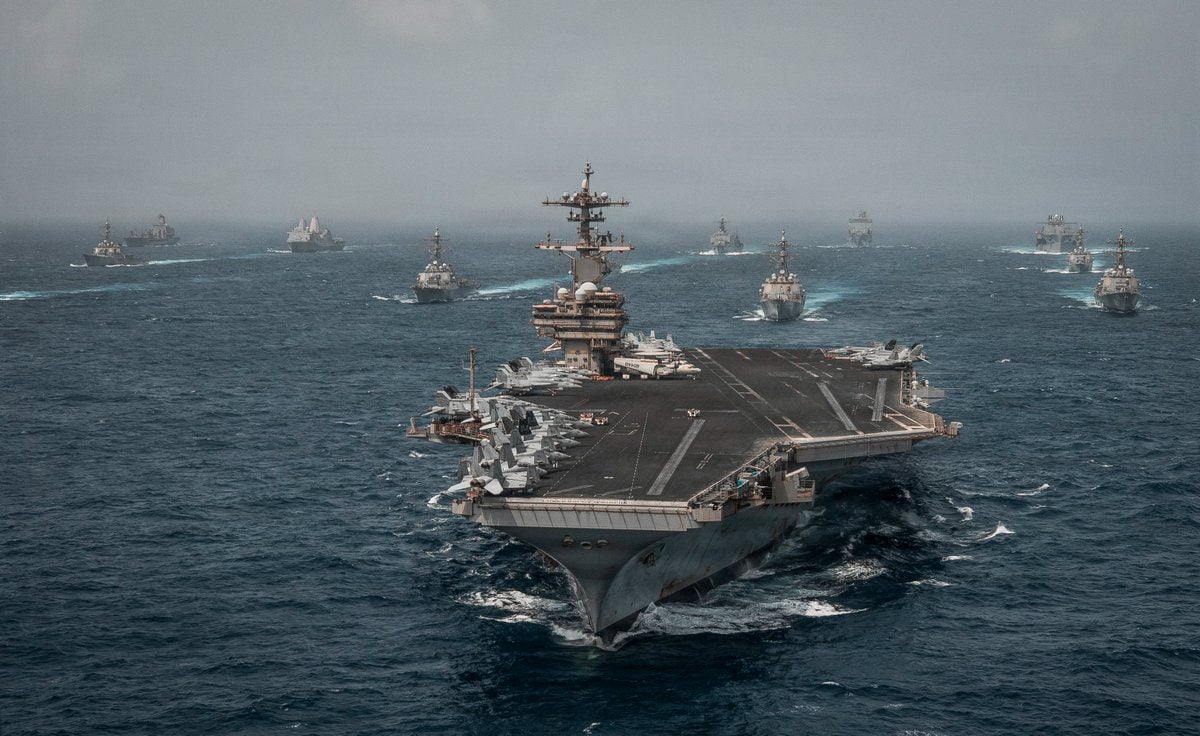
- Treat the reported US carrier deployments and the administration’s internal debate as indicators, not proof of a decision to strike. Update the campaign assessment only when official statements or independently verifiable military activity show a change in posture.
- For negotiation updates, record whether Qatar or Pakistan confirms a meeting and whether its agenda addresses the blockade, sanctions relief, commercial shipping and nuclear concessions. Do not treat statements about greater Iranian negotiating authority as evidence of an agreement.
Confidence & uncertainty
Overall confidence is high for the broad situation picture because multiple major-media, wire-service and trade reports describe the midterm outcome, US and Iranian policy statements, and continuing maritime disruption. Reporting also includes official UKMTO incident counts and US government oil-price data. Confidence is lower for specific attack attribution, the exact dates and locations of recent military incidents, and the scale of shipping recovery. Some claims rely on a single report, an IRGC statement or low-reliability social media, and the shipment estimates use conflicting periods and measures.
Intelligence gaps
- [EEI 1.1 · UNCOVERED] Concentrations or unusual movements of IRGC-Navy fast attack craft, small boat swarms, or escort vessels within 200 km of US/allied ships, including approach distances and formation changes. Recommended collection: maritime/AIS
- [EEI 1.2 · UNCOVERED] Detected pre-launch activity at coastal missile or rocket batteries (vehicle dispersal, fuel/warhead handling, radars powering up, transport erector launchers moving to firing positions). Recommended collection: imagery/signals
- [EEI 1.3 · UNCOVERED] Increased launch/arming/positioning of armed UAVs (MALE/loitering munitions) or tactical aircraft at Iranian coastal bases with sortie generation rates and munitions loadouts. Recommended collection: air/ADS-B/imagery
- [EEI 1.4 · PARTIAL] Command-and-control indications of attack orders or elevated rules-of-engagement from IRGC/General Staff (intercepted communications, internal order messages, force-wide alert messages). Recommended collection: signals/human
- [EEI 2.2 · PARTIAL] Issuance of formal orders, mobilization directives, travel restrictions, or official internal communications within IRGC/Armed Forces indicating escalation posture or stand-down. Recommended collection: human/diplomatic
- [EEI 2.3 · UNCOVERED] Directives, logistics movements, or communications from Iranian commanders to regional proxy militias (Houthis, Iraqi Shia militias, Lebanese groups) that change their threat posture or task them with specific operations. Recommended collection: signals/human
- [EEI 3.2 · PARTIAL] Discovery or reporting of naval mines, unexploded ordnance, or damage to fixed maritime infrastructure (oil platforms, terminals, pipelines) with geolocated imagery or on-scene assessments. Recommended collection: imagery/open-source
- [EEI 3.3 · PARTIAL] Commercial indicators of disruption: sudden increases in war-risk insurance premiums for Gulf transits, vessel re-routing decisions, port throughput reductions, or charter cancellations for Gulf shipments. Recommended collection: financial/commercial
- [EEI 3.4 · UNCOVERED] Movements or posture changes of regional state navies/air forces (Saudi, UAE, Kuwait, Bahrain, UK) such as task group departures, airbase dispersals, or announced maritime patrols near choke points. Recommended collection: open-source/imagery
Red cell review: CONCUR
TLP:CLEAR