TLP:CLEAR · Disclosure is not limited.
US-Iran Tensions: Sanctions Pressure and Hormuz Risk
Time window: Last 7 days · Audience: General analyst · Type: Situation report · DTG: 2026-08-25 18:11Z · Overall confidence: HIGH
BLUF
The US has launched a broad sanctions campaign against Iran, while Tehran is signalling retaliation and continuing to assert control over shipping through the Strait of Hormuz. A limited maritime deconfliction arrangement involving Iran, Oman and Pakistan has a roughly even chance of gaining traction, but shipping disruption and escalation risks are likely to persist.
Executive summary
The US Treasury has initiated Operation Economic Outcast, targeting more than 60 entities, individuals and vessels across digital assets, technology, gold, aviation and shipping. Washington is also pressing other countries to end economic links with Iran. Tehran has warned of a harsh response, prepared countermeasures and published a list of 46 vessels accused of violating its transit arrangements. Iran and Oman have proposed a temporary navigation corridor and joint mine clearance, while Pakistan has pursued talks focused on reopening Hormuz. The operating picture remains contested because US statements describe the waterway as cleared of mines, whereas maritime advisories continue to warn of drifting or uncharted mines.
Key judgments
- The US Treasury has almost certainly launched a sustained campaign to constrict Iran's financial, energy and maritime networks. Operation Economic Outcast covers more than 60 entities, individuals and vessels, targets five sectors including shipping and technology, and is accompanied by pressure on countries to cut economic ties with Tehran. (Confidence: high · ASSESSED)
- I&W: Confirmation: OFAC or the US Treasury designates additional foreign companies, vessels or financial institutions linked to Iran, or issues deadlines for countries to end identified activities. (0-14 days)
- I&W: Break: The US Treasury suspends Operation Economic Outcast, withdraws the new sectoral measures or grants broad relief to the targeted sectors. (0-14 days)
- Iran is likely to answer the sanctions with a combination of economic workarounds, maritime pressure and threats spanning land, sea, air and cyber operations. The assessment rests mainly on Iranian statements and reported preparations, not on corroborated evidence of a specific imminent operation. (Confidence: medium · ASSESSED)
- I&W: Confirmation: Iran adds vessels to its non-compliant list, imposes penalties, detains a merchant ship or publicly announces a maritime, cyber, land or air response to the sanctions. (0-14 days)
- I&W: Break: Iran withdraws its vessel restrictions and publicly limits its response to diplomatic measures while allowing existing transit arrangements to operate without new enforcement actions. (0-14 days)
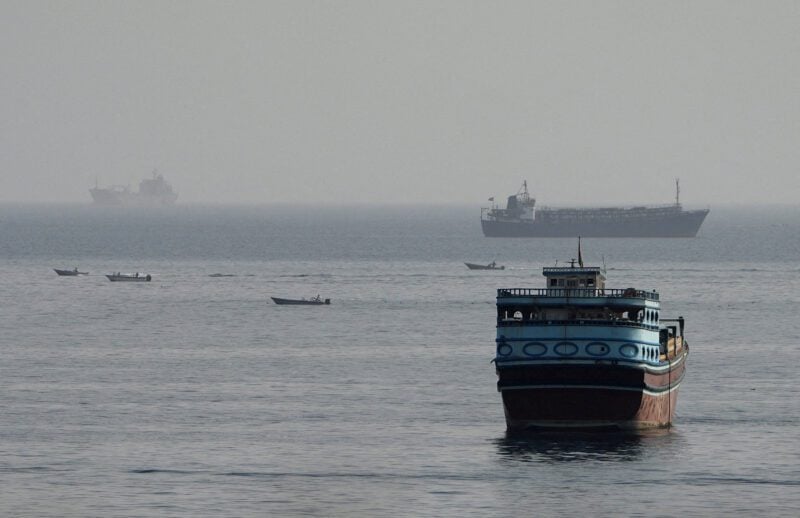
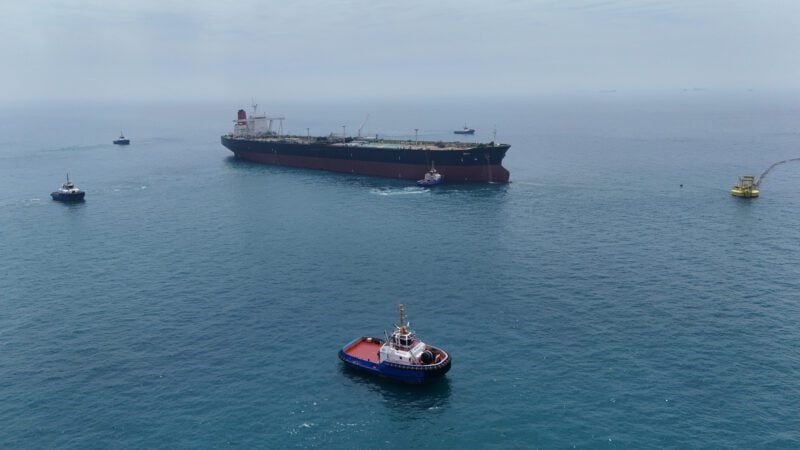
- Commercial traffic through the Strait of Hormuz is very likely to remain below pre-war levels over the next 1-3 months, despite the proposed Iran-Oman navigation corridor and mine-clearance framework. Confidence is reduced by conflicting reporting that the US Navy has cleared mines while the Joint Maritime Information Center continues to report mine risks and ongoing clearance operations. (Confidence: medium · ASSESSED)
- I&W: Confirmation: Vessel-tracking data continue to show traffic through Hormuz at a fraction of pre-war levels, while JMIC maintains active mine-danger warnings. (0-14 days)
- I&W: Break: Iran and Oman begin the temporary corridor and joint mine-clearance project, followed by a sustained rise in merchant transits towards pre-war levels. (1-3 months)
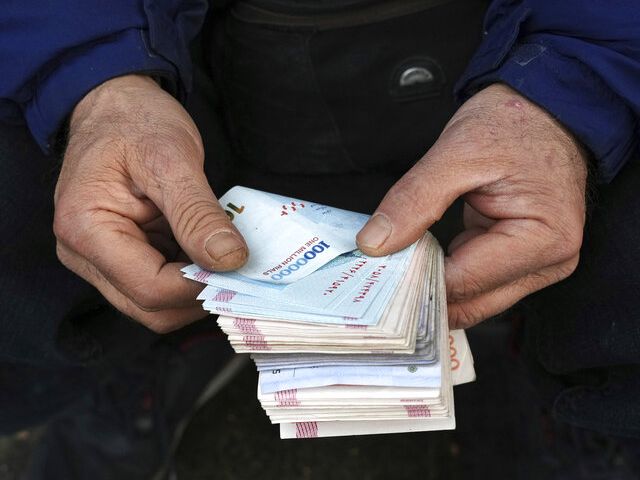
- Iran's domestic economic pressure is almost certainly severe and is likely to intensify if the new US measures constrain trade and financial access. The rial has reached 2.02 million to the US dollar, economists expect inflation to approach 70 per cent, rice prices have risen by about 60 per cent, and the International Monetary Fund forecasts GDP contraction of more than 5 per cent. The effect on oil revenue is less certain because the supplied reporting gives different figures for Iranian exports and Chinese imports. (Confidence: high · ASSESSED)
- I&W: Confirmation: Iranian market reporting records another rial low, further food-price increases or inflation approaching the 70 per cent estimate. (0-3 months)
- I&W: Break: The rial stabilises, reported food-price increases reverse and Iranian oil exports remain at 2-3 million barrels per day despite the new measures. (1-3 months)
- A limited maritime deconfliction arrangement involving Iran, Oman and Pakistan has a roughly even chance of gaining traction, but it is unlikely to end the wider US-Iran confrontation. The Iran-Oman framework, Pakistan's reported progress in talks with Tehran and Field Marshal Asim Munir's visit to Iran provide diplomatic channels, while Washington's zero-leakage sanctions policy and Tehran's retaliation warnings work against a broader settlement. (Confidence: medium · ASSESSED)
- I&W: Confirmation: Iran and Oman start the temporary navigation corridor or joint mine-clearance work, and Pakistan reports a follow-on negotiating round with Tehran. (0-14 days)
- I&W: Break: Iran expands its non-compliant vessel list or detains another merchant ship while the US announces further sanctions against countries maintaining economic ties with Iran. (0-14 days)
Outlook & scenarios
Managed economic confrontation with limited maritime deconfliction (45%)
The most likely path is continued US sanctions enforcement alongside Iranian warnings, administrative pressure on shipping and economic workarounds. Iran and Oman advance the temporary corridor sufficiently to prevent a full maritime shutdown, while Pakistan supports further talks. Hormuz traffic remains below pre-war levels.
Maritime escalation around Hormuz (30%)
Iran expands enforcement of its transit arrangements through additional penalties, vessel detentions or restrictions on the 46 ships it has listed. The US maintains its zero-tolerance warning on new mines and increases sanctions pressure. Commercial traffic falls further and the cost of moving oil cargoes rises.
Economic squeeze and internal strain (20%)
The US campaign constricts Iran's access to finance, shipping and petroleum services. The rial weakens further, food prices rise and GDP contraction exceeds the current forecast. Iran sustains oil exports through existing trading relationships and sanctions adaptation, limiting the campaign's immediate effect on regime capacity.
Direct military escalation, low probability and high impact (5%)
A new Iranian land, sea, air or cyber action against US interests or energy chokepoints triggers a direct US military response. The diplomatic tracks involving Oman and Pakistan fail, shipping through Hormuz approaches near-closure and the sanctions campaign becomes secondary to military operations.
Recommendations
- Maintain a daily tracker of US Treasury and OFAC designations, country deadlines and enforcement actions. Separate formal designations from public threats and record affected entities across digital assets, technology, gold, aviation, shipping and petroleum.
- Reconcile maritime reporting on Hormuz by comparing vessel-transit data with JMIC mine advisories, US Navy clearance claims and implementation of the Iran-Oman corridor. Flag any new detention, penalty or addition to Iran's 46-vessel list within 24 hours.
- Monitor statements and actions by Major General Ali Abdollahi, Brigadier General Hossein Mohebbi and Iran's Foreign Ministry. Give greater weight to verified maritime, cyber or military activity than to retaliation rhetoric alone.
- Track China's response to US pressure because the supplied reporting identifies China as the destination for 1.38 million barrels per day of Iranian oil in 2025 and raises the prospect of measures against Chinese banks with Iranian links.
- Update an Iran economic-stress dashboard covering the rial, rice and beef prices, inflation expectations, GDP forecasts, unemployment and daily oil exports. Preserve the competing export figures rather than forcing them into a single estimate.
- Review humanitarian spillover indicators in Gaza and southern Lebanon alongside the Iran assessment. Monitor shelter need, fuel and essential-item access in Gaza, the $562 million funding requirement and UNRWA food-parcel distribution in southern Lebanon.
Confidence & uncertainty
Overall confidence is high because the central developments are supported by official US Treasury and OFAC material, multilateral UN reporting and corroborating coverage from high-reliability wire and major media sources. The main uncertainties concern Iran's intentions, the implementation of the Iran-Oman maritime framework, the extent of actual mine danger in Hormuz and inconsistent reporting on Iranian oil flows. Claims based on lower-confidence or single-source reporting are treated as indicators or alternative scenarios rather than established facts.
Cited sources
[1] U.S. Department of the Treasury · Remarks from Secretary of the Treasury Scott Bessent on Operation Economic Outcast against Iran (A) · sha256:cda22e30eb34 [2] U.S. Department of the Treasury · Treasury Launches Unprecedented Campaign Against Iranian Regime on Economic D-Day (A) · sha256:3b7c04b0dcbf [3] gcaptain.com · Trump Administration Launches Sweeping New Iran Sanctions Campaign Targeting Shipping and Oil Trade (B) · sha256:cb8bf6057b25 [4] 新华网 · 国际观察丨美国对伊朗“史上最严制裁”能奏效吗-新华网 (A) · sha256:d85f48c8e45c [5] CBC · Iran defiant in face of new U.S. sanctions, promises to respond forcefully (A) · sha256:5fa949349b97 [6] gcaptain.com · Iran Blacklists 46 Ships On Hormuz ‘Non-Compliant’ List (B) · sha256:1fefbf4718a6 [7] marineinsight.com · Iran Threatens ‘Devastating’ Response As New US Sanctions Raise Risks For Hormuz Shipping (B) · sha256:0d587879cafc [8] theguardian.com · US threatens severe sanctions against countries with economic ties to Iran (A) · sha256:2f03d1fe2773 [9] gcaptain.com · Trump Says U.S. Navy Has Cleared All Mines From Strait of Hormuz (B) · sha256:ee981c65b240 [10] gcaptain.com · Malacca Strait States Will Keep Waters ‘Free, Open and Safe’ (B) · sha256:f45bb829508f [11] worldoil.com · U.S. threatens sanctions on Iran’s trading partners as pressure mounts on oil flows (A) · sha256:e4117093b63a [12] gcaptain.com · Iran and Oman Unveil Framework for Future Management of Strait of Hormuz (B) · sha256:39e674294e6b [13] Associated Press · Trump's 'economic D-Day' threats become warnings for countries to sever financial ties with Iran (A) · sha256:5a97d62eb8f1 [14] NEWSru.co.il · Экономическая блокада Ирана: ситуация в Исламской республике резко ухудшается - NEWSru.co.il (B) · sha256:6c3efadd55b0 [15] The New York Times · 特朗普试图扼杀伊朗经济,而这取决于中国是否合作 (A) · sha256:e3dfa4b72a2c [16] Alhurra · China Faces New U.S. Pressure over Iran Sanctions | Alhurra (B) · sha256:203fde15f4e7 [17] Wikipedia · Iran–United States relations (B) · sha256:5f02d93fcb2d
Source content hashes were computed at collection time; the cited text is preserved unmodified for the life of this product.
TLP:CLEAR