TLP:CLEAR · Disclosure is not limited.
US-Iran Tensions: Strike Preparations and Hormuz Risk
Time window: Last 1 day · Audience: General analyst · Type: Situation report · DTG: 2026-10-08 11:35Z · Overall confidence: HIGH
BLUF
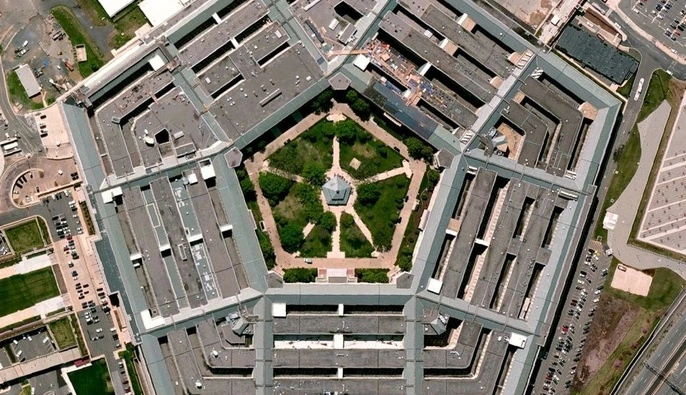
Reporting says the Pentagon has directed CENTCOM to complete preparations for possible renewed large-scale operations against Iran, but President Donald Trump has not made a final strike decision and no date is reported. A US strike before 3 November is unlikely; further attacks or harassment affecting shipping in the Strait of Hormuz are likely over the next 14 days.
Executive summary
Reports published on 8 October describe US contingency planning for renewed operations against Iran, including possible strikes on Iranian energy and nuclear facilities. Other reporting says striking before the US midterm elections is among the options under consideration, while an Israeli official assesses that action before the elections is unlikely. The reporting does not establish that Trump has authorised a strike. Qatar is awaiting Iran’s response to a US counterproposal that includes nuclear concessions. In the Strait of Hormuz, maritime sources report a recent rise in attacks on tankers, although their count differs from the IMO’s incident total. The attacker in the reported strike on the tanker On Peace has not been identified.
Change from previous assessment
Since the 7 October brief, reporting has added a Pentagon directive for CENTCOM to complete preparations for possible renewed operations and reports that plans include strikes on Iranian energy and nuclear facilities. This raises confidence that US planning is active, but does not establish authorisation. The assessment that a large-scale US strike before 3 November is unlikely remains, with low confidence because reports of options under consideration conflict with an Israeli official’s low pre-midterm estimate. The risk of further Hormuz shipping incidents remains likely; the newer incident reporting provides a higher reported count, but source totals differ. Initial reporting on US-Iran planning and the competing pre-election timing assessments is added to this update.
Key judgments
- The Pentagon has directed CENTCOM to complete preparations for possible renewed large-scale operations against Iran, with reported plans covering airstrikes on Iranian energy and nuclear facilities. Trump has not made a final decision, and reporting gives no strike date. These are media reports, including accounts based on unnamed officials, rather than a public confirmation of an authorised operation. (Confidence: medium · REPORTED)
- I&W: A public Pentagon or CENTCOM statement confirming completed preparations for renewed operations would corroborate the reported directive. (0-14 days)
- I&W: A public Pentagon denial that it issued the reported CENTCOM directive would weaken this judgment. (0-14 days)
- A new large-scale US strike on Iran before 3 November is unlikely, although the possibility remains under consideration. The report that pre-election strikes are an option conflicts with an Israeli official’s assessment that action before the US midterms is unlikely. Trump’s reported lack of a final decision and the absence of a strike date also weigh against an imminent attack. Confidence is low because the timing assessment relies on media reporting and an unnamed Israeli official. (Confidence: low · ASSESSED)
- I&W: A White House announcement that Trump has authorised strikes before 3 November would break this judgment. (0-26 days)
- I&W: Qatari mediators publicly confirming that Iran has accepted the US counterproposal’s nuclear terms would support the assessment that a pre-election strike is unlikely. (0-26 days)
- US-Iran diplomatic contact is likely to continue over the next 14 days, but an agreement is unlikely unless Tehran responds to the US counterproposal and addresses Washington’s demand to reduce Iran’s uranium enrichment capacity. Qatari mediators are awaiting Iran’s response, and reported exchanges have not yet produced an agreement. (Confidence: medium · ASSESSED)
- I&W: Qatari mediators publicly confirming that Tehran has delivered a response to the US counterproposal would confirm that the channel remains active. (0-14 days)
- I&W: Qatar or either government publicly announcing that the mediation channel has been suspended would break this judgment. (0-14 days)
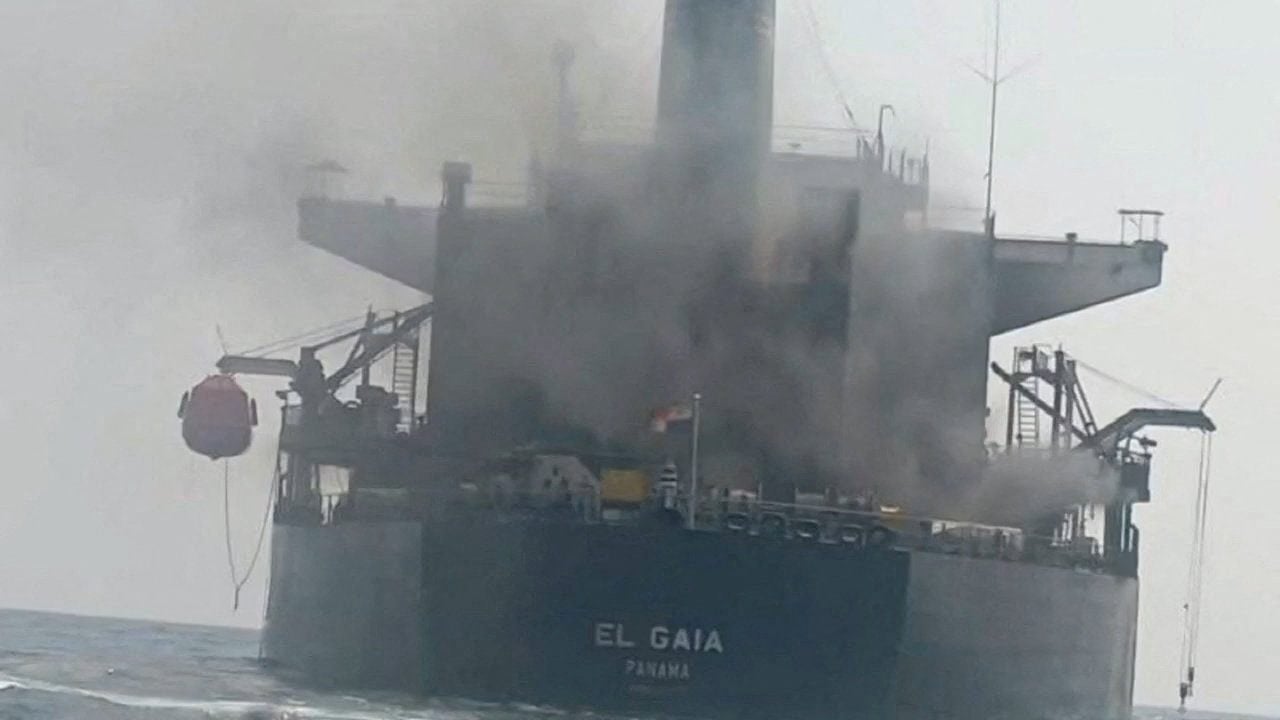
- Further attacks or harassment affecting commercial shipping in the Strait of Hormuz are likely over the next 14 days. Maritime security sources reported at least 12 tanker attacks between 28 September and 5 October, while IMO data recorded nine vessel incidents over the same period. India’s foreign ministry reported that an unknown projectile struck the Panama-flagged tanker On Peace and injured 12 crew members; the attacker remains unidentified. The difference between the incident totals limits confidence in the precise scale of activity. (Confidence: medium · ASSESSED)
- I&W: A new UKMTO or JMIC report confirming a projectile strike or an Iranian Revolutionary Guard harassment incident against a vessel in the Strait of Hormuz would confirm the forecast. (0-14 days)
- I&W: No new vessel incidents recorded by UKMTO or the IMO during the next 14 days would break the forecast. (0-14 days)
Outlook & scenarios
Mediated pause (35%)
Over the next two to four weeks, Iran responds to the US counterproposal through Qatar and the two governments maintain talks. No large-scale US strike occurs before 3 November. Shipping risks in the Strait of Hormuz persist, but the diplomatic channel remains open.
Continued pressure without an immediate US strike (45%)
The US continues military preparations while Iran delays or rejects the counterproposal’s nuclear terms. A large-scale US strike before 3 November remains unlikely, but further vessel incidents in the Strait of Hormuz are likely. This scenario is consistent with planning activity, the absence of a reported strike order and the unresolved talks.
US strikes Iran before the midterms (12%)
Trump authorises a strike before 3 November after deciding that diplomacy has not produced the required nuclear concessions. The reported planning identifies Iranian energy and nuclear facilities as possible targets. This remains an unlikely scenario because reporting says no final decision or strike date exists.
High-impact maritime miscalculation (8%)
A new attack on commercial shipping in the Strait of Hormuz is wrongly attributed or prompts a US response, accelerating direct military exchanges before diplomatic efforts produce a result. This is a very unlikely scenario, but it would carry high consequences for US-Iran tensions and shipping through the strait.
Recommendations
- Keep reporting on CENTCOM preparations separate from evidence of presidential authorisation. Do not treat contingency planning as a decision to strike.
- Track public statements from the White House, Pentagon and CENTCOM alongside Qatari updates on Iran’s response to the US counterproposal. Record any change in the stated enrichment conditions or strike timing.
- Maintain a daily Strait of Hormuz incident log using UKMTO, JMIC and IMO reporting. Record attacks separately from harassment and note differences in source counting methods.
- Do not attribute the strike on On Peace to Iran or another actor without corroborating evidence. Keep confirmed incident details separate from claims about responsibility.
Confidence & uncertainty
Overall confidence is high that US contingency planning has intensified and that US-Iran diplomatic contact remains active. Reporting on military preparations and strike options is supported by multiple media accounts, while the diplomatic picture is also reflected in reporting on Qatari mediation and US negotiating conditions. Confidence is lower on strike timing: the reports rely partly on unnamed officials, Trump has reportedly made no final decision, and an Israeli official assesses pre-midterm action as unlikely. Hormuz incident totals also differ between maritime security sources and IMO data.
Intelligence gaps
- [EEI 1.1 · UNCOVERED] Confirmed strikes, attacks, interceptions, or casualties involving US or Iranian forces, including location, timing, and weapon systems used. Recommended collection: military reporting/open-source imagery
- [EEI 1.2 · PARTIAL] Changes in US or Iranian force posture indicating preparation for further attacks, including aircraft dispersal, missile-unit movement, naval sortie activity, or air-defense activation. Recommended collection: satellite imagery/aviation and maritime tracking
- [EEI 1.3 · PARTIAL] Public or private warnings, ultimata, declared red lines, or force-protection directives issued by US or Iranian leadership. Recommended collection: official statements/diplomatic reporting
- [EEI 2.1 · UNCOVERED] Deployment or repositioning of Iranian ballistic missiles, cruise missiles, drones, fast-attack craft, or other strike assets within operational range of US or partner targets. Recommended collection: satellite imagery/signals intelligence
- [EEI 2.4 · UNCOVERED] Changes in Iranian military alert levels, command activity, weapons dispersal, or continuity-of-government measures. Recommended collection: signals intelligence/satellite imagery
- [EEI 3.1 · UNCOVERED] Arrival or departure of US carrier strike groups, bombers, air-defense units, special operations forces, or additional personnel in the region. Recommended collection: maritime and aviation tracking
- [EEI 3.2 · UNCOVERED] Changes to US force-protection conditions, base access, evacuation plans, embassy staffing, or noncombatant evacuation preparations. Recommended collection: official notices/diplomatic reporting
- [EEI 3.4 · UNCOVERED] US or coalition kinetic actions against Iranian territory, military infrastructure, or aligned groups following new exchanges. Recommended collection: military reporting/open-source imagery
- [EEI 4.3 · UNCOVERED] Regional government decisions to close airspace or waterways, raise military readiness, expel personnel, or request additional US or allied forces. Recommended collection: official statements/aviation and maritime notices
- [EEI 4.4 · PARTIAL] Sustained movements in oil and gas prices, tanker freight rates, or reported disruptions to production and export facilities attributable to the military exchanges. Recommended collection: energy-market reporting
Cited sources
[1] News Mail.ru · Axios: США готовят удары по энергетике и ядерным объектам Ирана (B) · 8 October 2026 · sha256:8013d50c6e73 [2] Apostrophe (apostrophe.ua) · США готовятся к возможному возобновлению масштабных ударов по Ирану. (B) · sha256:4ef1bf110783 [3] RT (russian.rt.com) · NBC News: США готовят новые варианты военных действий против Ирана (B) · 8 October 2026 · sha256:4f697012af39 [4] Reuters (republished by gCaptain) · Attacks on Tankers in Hormuz Hit Highest of Any Week Since Start of Iran War, Sources Say (A) · 7 October 2026 · sha256:ea46bef7d328
Source content hashes were computed at collection time; the cited text is preserved unmodified for the life of this product.
Red cell review: CONCUR WITH COMMENT
TLP:CLEAR