TLP:CLEAR · Disclosure is not limited.
US-Iran Tensions: Strike Timing, Houthi Attacks and Hormuz Disruption
Time window: Last 1 day · Audience: General analyst · Type: Situation report · DTG: 2026-10-27 08:43Z · Overall confidence: HIGH
BLUF
A US strike on Iran before 3 November is unlikely, although US forces are reported ready to act within 96 hours of an order and President Donald Trump has not made a decision. Houthi missile and drone activity against Saudi Arabia, reduced LNG shipments through the Strait of Hormuz and stalled ceasefire efforts keep regional and energy risks elevated.
Executive summary
Reporting now places a potential US strike more likely after the 3 November midterm elections than before them, while describing US forces as prepared to act if ordered. On 27 October, the Saudi-led coalition reported intercepting three ballistic missiles and four drones headed towards Saudi Arabia; it also reported intercepting three additional drones the previous evening. A Houthi claim of an attack on King Khalid International Airport on 26 October is not confirmed by the coalition's account. LNG shipments through the Strait of Hormuz remain around 80% below pre-conflict levels. Saudi Arabia, Türkiye and Pakistan met Iranian officials in Tehran on 26 October and agreed to continue dialogue, but President Trump rejected Iran's recent seven-day ceasefire proposal. Iranian officials have also voiced support for, or left open, the possibility of nuclear weapons development; those statements do not establish a decision by Tehran to build a weapon.
Change from previous assessment
Since the 26 October brief, the assessment of a US strike before 3 November has shifted from roughly even chance to unlikely. New reporting places a potential strike more likely after the midterm elections, while still describing Trump as undecided and US forces as ready to act if ordered. The Tehran meeting has now taken place and produced an agreement to continue dialogue, but Trump rejected Iran's seven-day ceasefire proposal. New reporting also records Saudi-led coalition interceptions on 26 and 27 October, LNG shipments through Hormuz around 80% below pre-conflict levels, and more explicit Iranian nuclear weapons rhetoric. The reported Houthi airport claim remains unverified.
Key judgments
- A US strike on Iran before 3 November is unlikely; if President Donald Trump orders military action, a strike after the midterm elections is more likely. Current and former US administration officials described post-election timing as most likely, while reporting says Trump has not decided what steps to take. US forces are reported able to begin operations within 96 hours of an order, and the Pentagon and US Central Command are compiling a target list covering Iranian military, energy and nuclear facilities. These preparations show readiness, not authorisation. (Confidence: medium · ASSESSED)
- I&W: A US strike on an Iranian target before 3 November would break the assessment that pre-election action is unlikely. (0-7 days)
- I&W: A public White House or Pentagon statement confirming that no strike decision has been made by 3 November would support the assessment that action is being deferred. (0-7 days)
- Iran and the Houthis are unlikely to launch a pre-emptive attack on US forces in the current phase, but reporting identifies a separate threat to US personnel and facilities. A 23 October intelligence memo says Iranian lethal plotting against US citizens has reached advanced stages in the Middle East and certain other countries; the memo does not name specific targets. US officials are also reported to be adjusting staffing at regional facilities and withdrawing some diplomatic personnel. (Confidence: medium · ASSESSED)
- I&W: A confirmed Iranian or Houthi attack on US personnel or a US facility before 10 November would break the low-immediate-risk assessment. (0-14 days)
- I&W: A further public US mission evacuation order beyond Riyadh, explicitly linked to Iranian plotting or Houthi attacks, would confirm that Washington continues to assess a direct threat to its personnel. (0-30 days)
- Saudi Arabia faced a renewed Houthi missile and drone threat on 26 and 27 October. The Saudi-led coalition reported intercepting three ballistic missiles and four drones on 27 October, then reported three additional drone interceptions on the evening of 26 October. The coalition said the 27 October missiles caused no casualties. The Houthi claim of an attack on King Khalid International Airport on 26 October remains unverified; the coalition's interception account does not confirm a strike on the airport. (Confidence: medium · REPORTED)
- I&W: The Saudi-led coalition reports another Houthi missile or drone interception aimed at Riyadh, the Eastern Province or southern Saudi Arabia. (0-14 days)
- I&W: Saudi authorities or the coalition formally revise the attribution of the 27 October launches or confirm the claimed airport strike. (0-14 days)
- Commercial shipping and energy exposure remains high: LNG shipments through the Strait of Hormuz are reported around 80% below pre-conflict levels, and October 2026 is reported as the worst month for commercial shipping attacks in the Strait and nearby waterways. Brent spot was $115.22 per barrel on 20 October, while European wholesale gas prices briefly exceeded €97 per megawatt-hour on 26 October. These figures indicate sustained market pressure, but the reporting does not establish that every price movement resulted from Hormuz disruption. (Confidence: medium · ASSESSED)
- I&W: Published LNG transit figures remain near 80% below pre-conflict levels, or fall further, while new commercial vessel attacks are reported in the Strait of Hormuz or nearby waterways. (1-3 months)
- I&W: LNG transit figures return to pre-conflict levels and published reporting records no further commercial vessel attacks in the Strait or nearby waterways. (1-3 months)
- Regional mediation is likely to continue, but a US-Iran agreement in the next 14 days is unlikely. Saudi Defence Minister Khalid bin Salman, Pakistan Army Chief Asim Munir and Türkiye's intelligence chief Ibrahim Kalin met Iranian officials in Tehran on 26 October; the four governments agreed to continue dialogue. The meeting did not include US representatives. President Trump rejected Iran's recent seven-day ceasefire proposal, and Vice President JD Vance said any agreement must include a reduction in Iran's uranium enrichment capacity. A Pakistani-source account says Munir presented a settlement proposal with Trump's approval, but that report is not corroborated in the available claims. (Confidence: medium · ASSESSED)
- I&W: Washington and Tehran publicly announce a direct negotiation date and matching terms for a ceasefire and reopening the Strait of Hormuz. (0-14 days)
- I&W: Iran, Saudi Arabia, Türkiye and Pakistan announce a follow-up meeting without a US-Iran negotiation date or agreed ceasefire terms. (0-30 days)
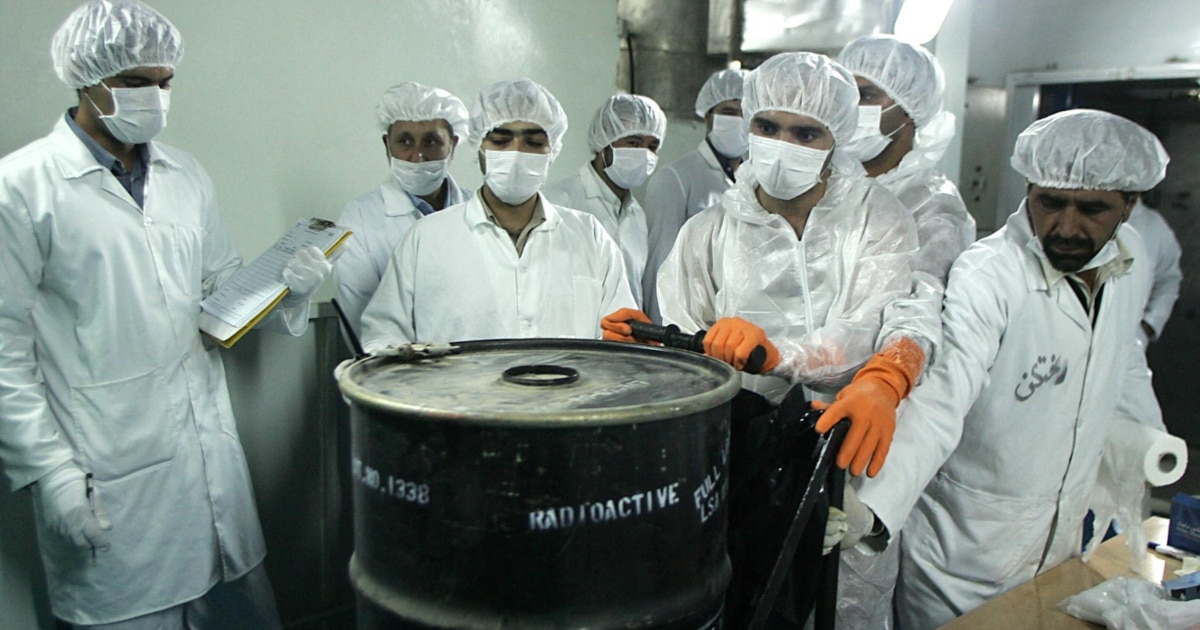
- Iranian public debate about nuclear weapons is more explicit, but the available reporting does not establish that Tehran has decided to build a weapon. Iranian MP Ahmad Bakhshayesh Ardestani called for Iran to build one, and Supreme National Security Council Secretary Mohsen Rezaei said the option was not excluded. The IAEA has reported that more than 200 kilograms of Iran's 60%-enriched uranium stockpile is in tunnels in Isfahan and that it lost oversight of the stockpiles more than a year earlier. These reports raise uncertainty about Iran's programme, but do not confirm a weapons decision. (Confidence: medium · ASSESSED)
- I&W: Iran's Supreme National Security Council formally announces a decision to pursue nuclear weapons or publicly confirms an operational weapon-development programme. (1-3 months)
- I&W: Iran's government formally reaffirms that it will not pursue nuclear weapons and the IAEA reports restored access to the enriched uranium stockpile at Isfahan. (1-3 months)
Outlook & scenarios
US decision deferred through the midterm elections (55%)
The most likely near-term path is no US strike before 3 November. Trump keeps the decision open while Saudi Arabia, Türkiye and Pakistan continue regional diplomacy. Houthi attacks on Saudi Arabia and reduced LNG traffic through the Strait of Hormuz sustain pressure on regional security and energy markets.
US strikes Iran after the midterm elections (30%)
The White House orders action after 3 November against Iranian military, energy or nuclear facilities. Iranian retaliation and further Houthi attacks then increase risk to US personnel, Saudi targets and commercial shipping. This scenario aligns with reporting that post-election action is the most likely timing if Trump chooses to strike.
Pre-election strike triggers a wider escalation (15%)
A US strike occurs before 3 November despite current reporting that places the likeliest timing after the election. Iranian retaliation, additional Houthi attacks and further disruption to LNG traffic through the Strait of Hormuz follow. This is the low-probability, high-impact scenario.
Recommendations
- Track public White House and Pentagon statements through 3 November for an order, a stated delay or a change in the reported 96-hour readiness posture. Keep operational readiness separate from evidence of presidential authorisation.
- Maintain a daily incident log distinguishing Saudi-led coalition reports of interceptions from Houthi claims of successful strikes. Record the target, location, date and casualty count, and keep the 26 October airport claim marked unverified unless Saudi authorities confirm it.
- Update the shipping and energy picture with published Strait of Hormuz LNG transit figures, commercial vessel attack reports, Brent prices and European wholesale gas prices. Treat any attribution of the UAE oil spill to an attack as unconfirmed unless authorities identify the tanker and cause.
- Seek confirmation of the reported Asim Munir settlement proposal and monitor for an announced US-Iran negotiation date, agreed ceasefire terms or a follow-up Tehran meeting. Track statements on uranium enrichment alongside any reported IAEA access to the Isfahan stockpile.
Confidence & uncertainty
Overall confidence is high for the broad situation picture because official US energy data, coalition statements reported by major media, and separate reporting on the 26 October Tehran meeting support the main reported developments. Confidence in individual judgements is lower where reporting relies on a single account, including the timing of any US strike, intelligence on Iranian plotting and the reported settlement proposal. The Houthi airport claim remains unverified, and the available reporting does not establish a US strike order or a decision by Tehran to build a nuclear weapon.
Intelligence gaps
- [EEI 1.1 · UNCOVERED] Concentrations or unusual movements of IRGC-Navy fast attack craft, small boat swarms, or escort vessels within 200 km of US/allied ships, including approach distances and formation changes. Recommended collection: maritime/AIS
- [EEI 1.2 · UNCOVERED] Detected pre-launch activity at coastal missile or rocket batteries (vehicle dispersal, fuel/warhead handling, radars powering up, transport erector launchers moving to firing positions). Recommended collection: imagery/signals
- [EEI 1.3 · UNCOVERED] Increased launch/arming/positioning of armed UAVs (MALE/loitering munitions) or tactical aircraft at Iranian coastal bases with sortie generation rates and munitions loadouts. Recommended collection: air/ADS-B/imagery
- [EEI 1.4 · UNCOVERED] Command-and-control indications of attack orders or elevated rules-of-engagement from IRGC/General Staff (intercepted communications, internal order messages, force-wide alert messages). Recommended collection: signals/human
- [EEI 2.2 · UNCOVERED] Issuance of formal orders, mobilization directives, travel restrictions, or official internal communications within IRGC/Armed Forces indicating escalation posture or stand-down. Recommended collection: human/diplomatic
- [EEI 2.3 · UNCOVERED] Directives, logistics movements, or communications from Iranian commanders to regional proxy militias (Houthis, Iraqi Shia militias, Lebanese groups) that change their threat posture or task them with specific operations. Recommended collection: signals/human
- [EEI 3.2 · UNCOVERED] Discovery or reporting of naval mines, unexploded ordnance, or damage to fixed maritime infrastructure (oil platforms, terminals, pipelines) with geolocated imagery or on-scene assessments. Recommended collection: imagery/open-source
- [EEI 3.3 · UNCOVERED] Commercial indicators of disruption: sudden increases in war-risk insurance premiums for Gulf transits, vessel re-routing decisions, port throughput reductions, or charter cancellations for Gulf shipments. Recommended collection: financial/commercial
- [EEI 3.4 · PARTIAL] Movements or posture changes of regional state navies/air forces (Saudi, UAE, Kuwait, Bahrain, UK) such as task group departures, airbase dispersals, or announced maritime patrols near choke points. Recommended collection: open-source/imagery
Red cell review: CONCUR WITH COMMENT
TLP:CLEAR