TLP:CLEAR · Disclosure is not limited.
US-Iran: Tit-for-tat strikes and Hormuz shipping risk escalate, 27 June, 4 July 2026
Time window: Last 7 days · Audience: General analyst · Type: Situation report · DTG: 2026-07-04 00:14Z · Overall confidence: MEDIUM
BLUF
US and Iranian forces traded strikes from 26-28 June around the Strait of Hormuz and across the Gulf, while the maritime threat level rose and a tanker was hit. The ceasefire framework is fraying, regional fronts in Lebanon and Syria are active, and shipping and freight markets are tightening.
Executive summary
Between 26 and 28 June, US aircraft struck Iranian military infrastructure linked to missiles, drones and surveillance, and Iran launched missiles and drones at US military sites in Kuwait and Bahrain, prompting intercepts and limited damage in Bahrain. The Joint Maritime Information Center raised Hormuz to substantial threat on 27 June after a tanker was struck, while official assessments call the strait far from safe. Tehran has publicly threatened US-linked sites in the UAE, and US travel and aviation advisories remain elevated. Fighting involving Israel and Hezbollah, and Israeli fire into southern Syria on 28 June, is undermining the 17 June Islamabad Memorandum. Freight indices rose 7-11 percent on key lanes and analysts expect further gains as risk premia persist.
Key judgments
- US and Iranian forces very likely exchanged strikes between 26 and 28 June, with US aircraft hitting Iranian missile, drone and surveillance sites around the Strait of Hormuz and Iran launching missiles and drones at US military sites in Kuwait and Bahrain. (Confidence: high · REPORTED)
- I&W: CENTCOM publishes battle damage imagery or target details for the 26-28 June strikes (0-14 days)
- I&W: No new launch, intercept, or siren reports from Kuwait or Bahrain militaries for 14 consecutive days (0-14 days)
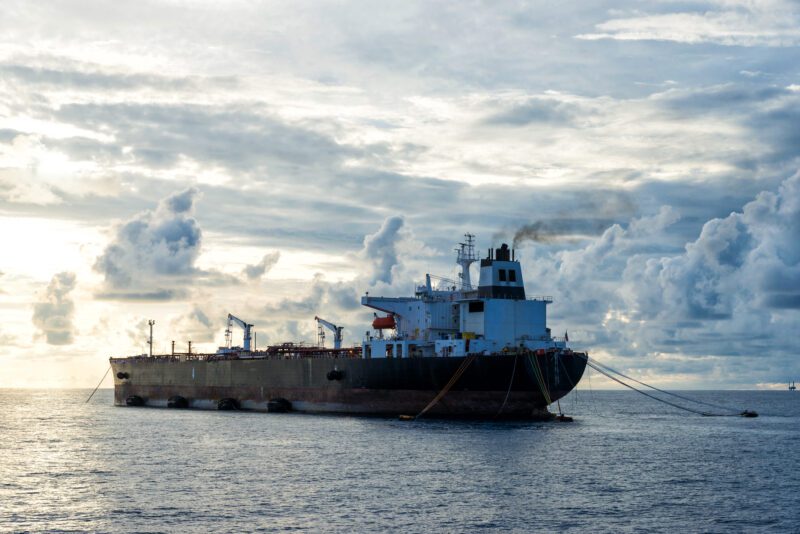
- The Strait of Hormuz is very likely to remain hazardous in the near term, given a tanker was struck on 27 June, the maritime threat level rose to substantial, and official assessments judge the waterway far from safe despite resumed commercial traffic. (Confidence: high · REPORTED)
- I&W: UKMTO issues further incident alerts for attacks or suspicious approaches in Hormuz (0-14 days)
- I&W: JMIC lowers the Hormuz threat level below substantial and FAA cancels the regional NOTAM for Middle East operations (1-3 months)
- Threat to US-linked sites in the United Arab Emirates is likely elevated, given Tehran’s public intent to target such locations and standing US travel and aviation warnings. (Confidence: medium · ASSESSED)
- I&W: Iranian state channels or the IRGC claim or attempt an attack on US-linked assets in Abu Dhabi or Dubai (0-14 days)
- I&W: Public Iranian statements rescind UAE targeting threats and State Department reduces the UAE advisory level (1-3 months)
- Cross-border fighting involving Israel, Hezbollah and Israeli fire into southern Syria very likely undermined implementation of the 17 June Islamabad Memorandum. (Confidence: high · REPORTED)
- I&W: Additional Hezbollah and IDF fatalities along the Blue Line and further IDF artillery into southern Syria (0-14 days)
- I&W: Hezbollah publicly orders a sustained halt to attacks and the IDF ceases cross-border fires for at least 14 days (1-3 months)
- Global container freight rates are likely to remain elevated in the coming weeks as Hormuz risk persists, with composite and lane-specific indices up 7-11 percent and trade analysts expecting further rises. (Confidence: medium · ASSESSED)
- I&W: Drewry’s weekly WCI posts further increases on Shanghai, Europe and Shanghai, US lanes (0-30 days)
- I&W: JMIC reduces the Hormuz threat level and UKMTO records no incidents for 30 consecutive days (1-3 months)
- US counter-ISIS activities in Syria and Iraq almost certainly remain degraded, given Operation Epic Fury slowed support to a near halt and US forces closed their remaining Syrian bases in mid-April. (Confidence: high · REPORTED)
- I&W: CJTF-OIR public reporting shows sustained low tempo of partnered operations (1-3 months)
- I&W: Public reporting of resumed US-partnered operations and logistics into northeast Syria (1-3 months)
- Additional tit-for-tat strikes are likely in the next two weeks, given Iranian warnings that negotiations will halt if US strikes continue, US leadership’s threats of further action, and the 27-28 June exchange. (Confidence: medium · ASSESSED)
- I&W: Public announcements or credible reports of new US or IRGC strikes, or fresh intercepts in Kuwait or Bahrain (0-14 days)
- I&W: Both capitals publicly recommit to the Islamabad Memorandum and a verified 14-day lull in cross-border attacks (0-14 days)
Outlook & scenarios
Managed escalation around Hormuz and the northern Gulf (60%)
Short, geographically bounded exchanges persist near Hormuz and against US sites in Kuwait and Bahrain, without broadening to the UAE or deep inland in Iran. JMIC holds the strait at substantial threat, UKMTO continues to post sporadic incident alerts, and freight rates stay elevated. Negotiations remain on life support as both sides balance coercion and talks.
Broader regional flare-up and temporary shipping halt (35%)
Iran targets US-linked sites in the UAE after further US strikes, triggering expanded US target sets inside Iran. Bahrain and Kuwait experience repeat launches and intercepts, and insurers pull back. Commercial transits through Hormuz slow sharply pending new escorts or deconfliction arrangements.
Fragile de-escalation under an updated ceasefire (30%)
Washington and Tehran reaffirm the Islamabad framework under pressure from Gulf partners. The IRGC curtails launches, CENTCOM pauses strikes, and JMIC lowers the threat level. Hormuz traffic improves but retains heightened procedures, and freight indices plateau rather than surge.
Recommendations
- Maintain a daily watch on JMIC threat levels and UKMTO incident alerts for Hormuz, and brief any change within 12 hours to maritime, energy and diplomatic stakeholders.
- Task rapid satellite collection, including IR and SAR, over Hormuz approaches and Iranian littoral sites linked to missiles and drones; cross-cue with NASA FIRMS thermal detections for time-of-strike corroboration.
- Request CENTCOM and OSD public affairs amplifying details on 26-28 June targets and battle damage to refine the assessed Iranian order of battle near Hormuz.
- Update evacuation and shelter-in-place triggers for US missions, contractors and dependants in the UAE, Kuwait and Bahrain in light of Tehran’s targeting statements and recent launches.
- Build a standing indicator deck for escalation and de-escalation: IRGC and White House statements on talks, JMIC levels, UKMTO alerts, and Kuwaiti or Bahraini intercept reporting.
- Track weekly Drewry indices and carrier advisories to quantify logistics cost impacts; share a rolling 30-day freight risk outlook with interagency supply and humanitarian planners.
- On the northern front, monitor IDF and Hezbollah operational channels for changes in tempo; flag any two-day lull or, conversely, any cross-border fatality cluster that would threaten MOU implementation.
Confidence & uncertainty
Multiple judgments rest on mutually reinforcing reporting from official US sources, Iranian statements via state media, and major media coverage of strikes, intercepts and maritime incidents. Maritime risk assessments and the tanker strike are corroborated by UKMTO/JMIC references and trade sources. There are uncertainties and minor inconsistencies in dates, target types and attributions across sources, and some elements rely on medium-confidence or expectation reporting from trade analysts. These factors warrant an overall medium confidence, despite strong corroboration on the core exchange of strikes.
Alternative analysis (red cell)
The available reporting in the run is a mix of declaratory government statements, media accounts, and economic indicators with several medium/adversarial admiralty grades and unresolved contradictions. Independent, time-stamped ISR, on-scene forensic attribution, AIS/eyewitness data, and diplomatic/operational indicators are required to confidently attribute kinetic events, assess maritime hazard persistence, and forecast near-term retaliatory strikes; absent such corroboration, more conservative estimates that allow for alternative explanations (misattribution, market drivers unrelated to Hormuz, or managed de-escalation) are reasonable.
Cited sources
[1] globalbankingandfinance.com · US carries out fresh strikes against Iran after tanker struck in (B) · sha256:b1dfeff43f5f [2] USA Today · Trump again threatens Iran with warning it will 'no longer exist': What to know (A) · sha256:cd1d4ce7f846 [3] Houston Public Media · U.S. and Iran exchange strikes, underscoring the fragility of the ceasefire (A) · sha256:bf755d3053bf [4] Los Angeles Times · Iran attacks Bahrain and Kuwait following U.S. strikes and threatens to halt talks - Los Angeles Times (A) · sha256:eaa2a93a25b7 [5] UALR Public Radio · U.S. and Iran exchange strikes, underscoring the fragility of the ceasefire (A) · sha256:6706129f6858 [6] cnn.com · Iran and US exchange strikes as Hormuz tensions stress agreement | CNN (A) · sha256:5ea7a19e4825 [7] News18 Urdu · LIVE: Iran Fires Drones at Bahrain | Mystery Strike Hits Hormuz Tanker Amid US Clash | خلیج میں جنگ (B) · sha256:1673106bad95 [8] aljazeera.net · أمريكا وإيران. هدنة هشة بعد حرب لم تحقق أهدافها (A) · sha256:04e651b9a59d [9] gcaptain.com · Japan Weighs Return to Iranian Oil as Shipping Risks Cloud Sanctions Waiver (A) · sha256:4467a59018c1 [10] U.S. Department of State · United Arab Emirates Travel Advisory (A) · sha256:7a0c71f2991b [11] gcaptain.com · Global Container Spot Rates Jump 9% as Transpacific, Asia-Europe Trades Tighten (C) · sha256:71bbb9b4d643 [12] Wikipedia · 2025–2026 Iran–United States negotiations (B) · sha256:6cb2db25cb33 [13] New Democrat Coalition · [PDF] New Dem Letter on Iran MOU - New Democrat Coalition (A) · sha256:4769f0c11087 [14] Atlantic Council · What the US-Iran deal means for the rest of the Middle East (and beyond) (C) · sha256:5f93318fe142 [15] U.S. Department of Defense Inspector General · [PDF] Operation Inherent Resolve, Report to Congress, January 1, 2026.. (A) · sha256:1c9be440a3dd [16] News18 Urdu · US-Iran War LIVE: Trump Issues New Attack Warning To Iran, Says ‘We May Hit Iran Again’ | N18G (B) · sha256:06c6efb11d75
Source content hashes were computed at collection time; the cited text is preserved unmodified for the life of this product.
Red cell review: PARTIAL DISSENT
TLP:CLEAR