TLP:CLEAR · Disclosure is not limited.
US-Israel-Iran Conflict: Hormuz Restrictions and Regional Spillover
Time window: Last 1 day · Audience: General analyst · Type: Situation report · DTG: 2026-09-20 22:39Z · Overall confidence: HIGH
BLUF
US-Israel-Iran hostilities are very likely to remain coercive over the next 0-14 days, with Donald Trump warning Iran of economic ruin or leadership removal and Iran's military central command threatening sustained retaliation. The Strait of Hormuz is likely to remain severely constrained but not fully closed: four tankers transited the Omani lane on 19 September and 26 vessels crossed the strait between 15 and 19 September, while Iran said it would not reopen the waterway.
Executive summary
The conflict is placing simultaneous pressure on maritime traffic, Saudi energy exports and regional diplomacy. Ansar Allah, also known as the Houthis, reportedly captured Mokha and Perim Island and launched missile and drone strikes towards Riyadh on 19 September. Saudi Arabia has diverted more than 70% of its usual daily crude exports towards Yanbu, although reporting conflicts over the current use of the East-West pipeline. Qatar and Pakistan continue mediation efforts, but Iran's conditions for negotiations remain difficult to reconcile with Washington's public demands. The immediate outlook is therefore one of continued coercion, restricted shipping and elevated spillover risk rather than a comprehensive settlement.
Change from previous assessment
Compared with the 19 September brief, this assessment adds reported Houthi missile and drone strikes towards Riyadh on 19 September, the reported capture of Mokha and Perim Island, satellite evidence of four tankers using the Omani lane, a count of 26 Hormuz crossings between 15 and 19 September, and Iran's renewed statement that it will not reopen the strait. It also raises headline confidence from the prior brief's medium assessment set to high for the broad situation because the current reporting provides stronger corroboration. The prior judgments on unresolved hostilities, restricted Hormuz traffic, Houthi pressure, regional spillover, energy disruption and continuing mediation remain active, with their individual confidence still medium where reporting is contested.
Key judgments
- US-Israel-Iran hostilities are very likely to remain unresolved and coercive over the next 0-14 days. On 20 September, Donald Trump warned that Iran would fail economically or face the removal of its leadership if it did not make a deal, while Iran's military central command threatened sustained retaliation against US bases, US interests and regional allies after any new attack. Trump also indicated openness to meeting Iranian President Masoud Pezeshkian. The outlook rests mainly on direct political and military statements reported by wire services and major media. The supplied reporting does not establish that a new major US, Israeli or Iranian strike occurred on 20 September, so confidence in the forward assessment is medium. (Confidence: medium · ASSESSED)
- I&W: Confirm: a new US or Israeli strike on Iran, or an Iranian strike on US bases, US interests or a regional ally, is publicly confirmed. (0-14 days)
- I&W: Break: Washington and Tehran publicly accept a halt to attacks linked to Iran's stated conditions, including ending the war on all fronts, unfreezing Iranian funds and ending the naval blockade. (0-14 days)
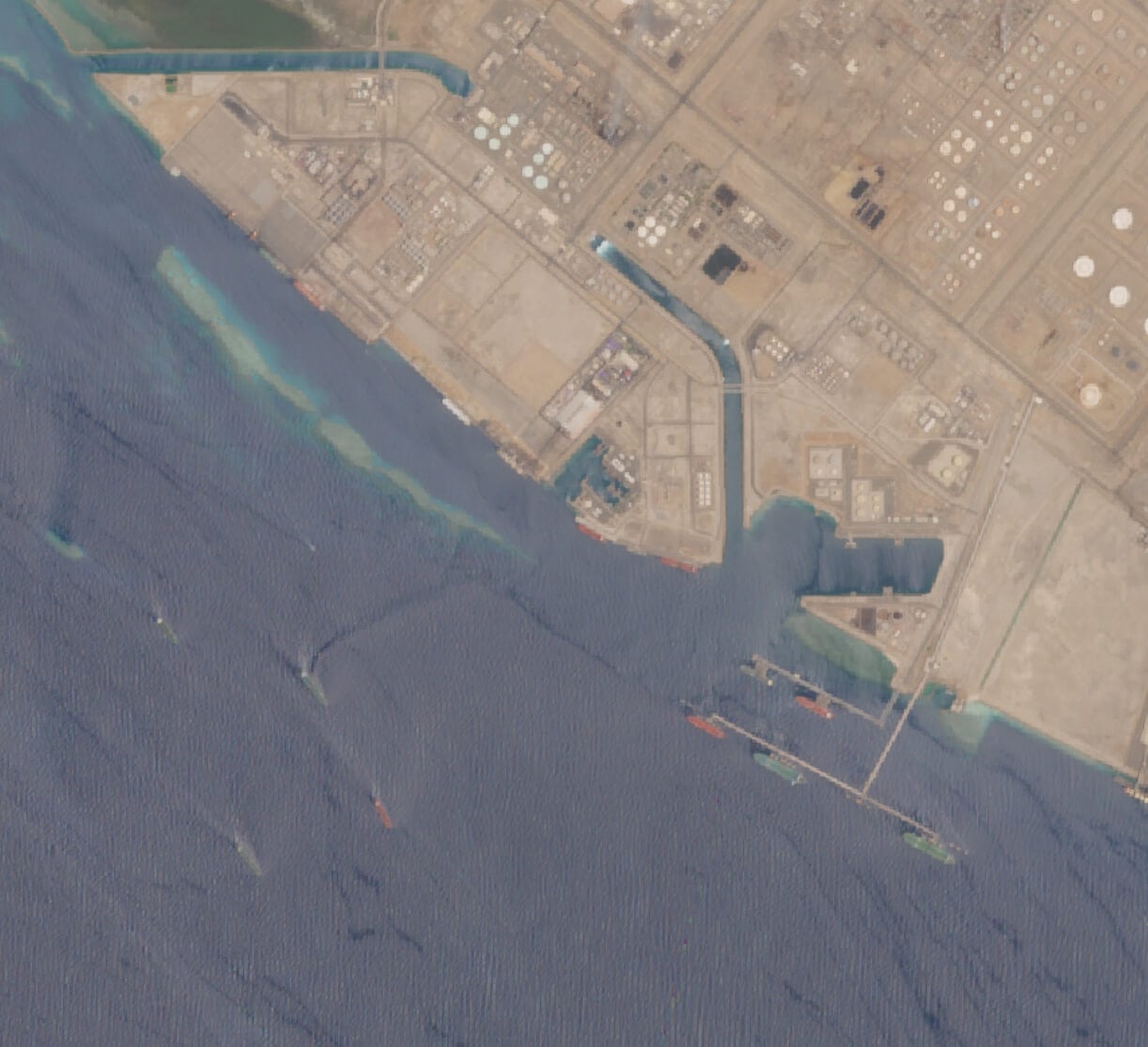
- The Strait of Hormuz is very likely to remain severely constrained but partially open over the next 0-14 days. Iran reiterated on 20 September that it would not reopen the strait until its interpretation of the June ceasefire terms was met, and satellite imagery from 19 September showed at least 22 naval boats near Iranian territorial waters. At the same time, four oil tankers transited the Omani lane in both directions, and Marine Traffic recorded 26 crossings between 15 and 19 September, including nine via that lane. The evidence therefore supports restricted passage rather than a complete closure. Confidence is medium because reported claims of a blockade or near-total export cutoff conflict with observed tanker movements, and the use of AIS-off vessels probably makes the transit count incomplete. (Confidence: medium · ASSESSED)
- I&W: Confirm: crossings remain materially below the reported normal level of approximately 80 daily transits, while additional confirmed ship damage is recorded around Hormuz or the Gulf of Oman. (0-14 days)
- I&W: Break: Iran announces that the strait is reopening and observed traffic approaches the reported normal level for several consecutive days without new confirmed ship damage. (0-14 days)
- Ansar Allah is likely to sustain direct pressure on Saudi Arabia and shipping near the Bab el-Mandeb over the next 0-14 days. The group reportedly launched missile and drone strikes towards Riyadh on 19 September, captured Mokha and Perim Island, and gained positions near the Bab el-Mandeb. Its reported pledge to avoid US and Israeli ships did not cover Saudi vessels. The US State Department has warned of unforeseen escalation linked to Houthi hostilities, while Saudi Crown Prince Mohammed bin Salman reportedly asked Donald Trump twice to strike Ansar Allah and Trump refused. Confidence is medium because the Riyadh attack and captured locations are supported by high-confidence reporting, but the extent of Ansar Allah's ability to control or blockade the waterway remains less firmly corroborated. (Confidence: medium · ASSESSED)
- I&W: Confirm: Ansar Allah conducts another missile or drone attack against Riyadh, a Saudi military base or Saudi energy infrastructure, or targets a Saudi-flagged or Saudi-linked vessel. (0-14 days)
- I&W: Break: Ansar Allah extends its shipping pledge to Saudi vessels and no further Saudi alerts, attacks or reported Houthi coastal advances occur during the next 14 days. (0-14 days)
- Energy and maritime logistics disruption is likely to persist for the next 1-3 months. Saudi Arabia has diverted more than 70% of its usual daily crude exports towards the East-West pipeline and Yanbu, while reporting also says the pipeline was attacked and taken out of service for weeks. Tanker earnings on the Middle East-to-China route reached about USD 1.035 million per day, and other Arabian Gulf-to-Asia routes reached around USD 1 million per day. The evidence is mixed on the current operating status of the East-West pipeline: one account describes available diversion capacity, while another says Saudi Arabia has returned to Persian Gulf terminals. Attribution for the pipeline attack also remains unconfirmed because reporting differs between an established attribution to Iran-backed militias and a Saudi accusation against Iranian-backed Iraqi factions. Confidence is medium. (Confidence: medium · ASSESSED)
- I&W: Confirm: Saudi Arabia continues diverting more than 70% of usual crude exports towards Yanbu, the East-West pipeline remains out of service, or VLCC earnings remain around USD 1 million per day. (1-3 months)
- I&W: Break: Saudi Arabia confirms restoration of the East-West pipeline and sustained crude exports through Yanbu without renewed reliance on Persian Gulf terminals. (1-3 months)
- A comprehensive agreement between Washington and Tehran is very unlikely over the next 0-14 days, while diplomatic contacts are likely to continue. Mohsen Rezaei said consultations with Qatari and Pakistani mediators were ongoing and that Iran had conveyed its conditions, including an end to the war on all fronts, the unfreezing of Iranian funds and termination of the naval blockade. Qatar's Foreign Ministry spokesman Majed Al-Ansari separately said Qatari mediation efforts to restart talks remained active. Donald Trump said he was open to meeting President Pezeshkian during the UN General Assembly, but Iran continues to condition the reopening of Hormuz on its demands. The postponement of Oman's Salalah meeting on a new maritime lane adds to uncertainty over regional deconfliction. Confidence is medium because mediation activity is corroborated by major-media reporting, while the parties' public conditions remain incompatible. (Confidence: medium · ASSESSED)
- I&W: Confirm: Qatar or Pakistan reports another substantive consultation involving Tehran and Washington, or Trump and Pezeshkian meet during the UN General Assembly. (0-14 days)
- I&W: Break: Iran, the United States and Israel publicly accept a comprehensive ceasefire that addresses Iran's stated conditions and permits unrestricted Hormuz traffic. (0-14 days)
Outlook & scenarios
Sustained coercive conflict with restricted maritime traffic (60%)
This is the most likely scenario over the next 0-14 days. Washington and Tehran continue threats without a comprehensive agreement, Iran maintains severe restrictions on Hormuz while allowing selected traffic through the Omani lane, and Ansar Allah sustains pressure on Saudi Arabia and shipping near the Bab el-Mandeb. Energy and tanker costs remain elevated.
Mediated pause without a comprehensive settlement (30%)
Qatar and Pakistan sustain mediation, and a meeting between Donald Trump and Masoud Pezeshkian or further indirect contacts produce a limited pause. Iran retains leverage through restricted Hormuz access, while Washington maintains economic and maritime pressure. The pause does not resolve the demands over sanctions, Iranian funds or the naval blockade.
Multi-front regional expansion (20%)
Ansar Allah expands attacks against Saudi energy infrastructure or Saudi-linked shipping, while Iran or Iran-aligned actors sustain pressure on US facilities, regional allies or maritime traffic. Saudi Arabia seeks additional external support, and the conflict produces wider disruption across the Red Sea, Bab el-Mandeb and Gulf energy routes. Attribution for individual attacks remains contested.
Wildcard: direct US-Iran escalation and near-total Hormuz shutdown (10%)
A new US or Israeli strike triggers the sustained Iranian retaliation threatened against US bases, US interests and regional allies. Iran sharply reduces the remaining Hormuz traffic, while the United States intensifies maritime enforcement. This low-probability, high-impact scenario would worsen energy export disruption and raise the risk of wider regional conflict.
Recommendations
- Report the Strait of Hormuz as severely restricted but partially passable unless new evidence shows that observed traffic has ceased. Keep the 26 crossings recorded between 15 and 19 September separate from broader claims that the strait is completely blocked.
- Maintain a daily maritime dashboard tracking total crossings against the reported normal level of approximately 80 per day, use of the Omani lane, AIS-off transits, naval boat deployments and confirmed ship damage reported by the International Maritime Organization.
- Prioritise collection on Ansar Allah activity around Riyadh, Mokha, Perim Island and the Bab el-Mandeb. Separate confirmed attacks from claims about territorial control and record whether any Houthi shipping pledge is extended to Saudi vessels.
- Verify Saudi East-West pipeline operations, Yanbu loadings and Persian Gulf terminal activity before assessing the volume of crude exports that remains available. Treat responsibility for the pipeline attack as unconfirmed pending independent attribution.
- Track Qatar and Pakistani mediation separately from public rhetoric. Give priority to evidence of direct US-Iran contact, a Trump-Pezeshkian meeting, changes to Iran's Hormuz conditions and any agreed pause in attacks.
- Use the expected Gulf leaders' meeting with Donald Trump during the UN General Assembly as a collection opportunity for evidence of coordinated regional security measures or changes in US policy towards Ansar Allah.
- Issue an immediate warning update if a new US or Israeli strike, an Iranian attack on US facilities or regional allies, or a Houthi strike on Saudi energy infrastructure is confirmed.
Confidence & uncertainty
Overall confidence is high for the broad assessment that the conflict is sustaining maritime, energy and regional security pressure. The reporting includes high-confidence wire-service and major-media claims, direct statements from Donald Trump, Iranian officials, Qatar and Oman, maritime traffic data, satellite-derived observations and US government security reporting. The main uncertainties concern the precise degree of Hormuz disruption, the operational status of Saudi Arabia's East-West pipeline, attribution for attacks on energy infrastructure and the extent of Ansar Allah's control near the Bab el-Mandeb. These uncertainties lower confidence in individual forward-looking judgments but do not overturn the overall situation assessment.
Intelligence gaps
- [EEI 1.1 · PARTIAL] Observed repositioning, sustained increases, or new forward basing of Iranian conventional or IRGC forces (armored units, missile batteries, aircraft, naval vessels) toward borders or regional launch points. Recommended collection: IMINT/satellite
- [EEI 1.4 · UNCOVERED] Interdicted or observed shipments (air, sea, land manifests, seizures, satellite imagery of transfers) of advanced weapons or missile components from Iran toward proxy groups or forward staging points. Recommended collection: maritime/AIS
- [EEI 2.4 · PARTIAL] Rapid increases in war-risk insurance premiums for Middle East routes, shipping company advisories to avoid region, or major charter cancellations tied to the conflict. Recommended collection: financial/open-source
- [EEI 3.2 · UNCOVERED] Official expedited arms transfers, basing/overflight agreements, or declarations of operational support (formal government announcements, defense ministry releases, logistics flight manifests). Recommended collection: open-source/diplomatic
- [EEI 3.3 · PARTIAL] Embassy evacuations, large-scale personnel movements, issuance of government travel bans/advisories, or multinational security alerts affecting foreign nationals and diplomatic posture in the region. Recommended collection: diplomatic/open-source
Cited sources
[1] Reuters (republished by Global Banking and Finance) · Iran-US Threats Escalate Regional Conflict and Impact Finance Markets (A) · Sun Sep 20 2026 17:27:35 GMT+0000 (Coordinated Universal Time) · sha256:f7b8b25f36fa [2] aljazeera.com · Iran war live: Tehran warns of ‘painful’ response if US launches new attack (F) · Sun Sep 20 2026 00:00:00 GMT+0000 (Coordinated Universal Time) · sha256:882d99333983 [3] Al Jazeera (aljazeera.net) · ناقلات وانتشار مكثف للزوارق. ماذا تكشف صور الأقمار الصناعية بمضيق هرمز؟ (A) · Sun Sep 20 2026 13:49:52 GMT+0000 (Coordinated Universal Time) · sha256:7d22b87a0ec6 [4] Euronews (Arabic) · ضغوط إيران والحوثيين تدفع السعودية لإعادة حساباتها. هل تتجه نحو تعاون أمني مع إسرائيل؟ (B) · Sun Sep 20 2026 15:00:36 GMT+0000 (Coordinated Universal Time) · sha256:268c1fd3b76f [5] The Maritime Executive (analysis courtesy of Poten & Partners) · Running Out of Options: Conflict Restricts Saudi Oil Exports (C) · sha256:0a92040a0126 [6] MARINO PH · MARINO PH - The largest maritime community. (D) · sha256:939ec7adbe40 [7] AnewZ · Iran says it will not reopen the Strait of Hormuz until its conditions are met and that U.S. commitments are implemented, Iran's Parliament Speaker Mohammad Bagher Ghalibaf said on Sunday. Iran must both fight and negotiate, Ghalibaf said, adding that Tehran would use military force to push back its enemies and diplomacy to consolidate battlefield gains when the time is right. Meanwhile, Iran’s security chief Mohsen Rezaei told Al Jazeera on Saturday, that Tehran’s conditions for resuming negotiations include ending the war on all fronts, unfreezing Iranian funds and ending the naval blockade. He added that consultations were continuing with Qatari and Pakistani mediators and that Tehran was awaiting a response from U.S. President Donald Trump. | AnewZ (E) · sha256:46ed8e13c185 [8] Al Jazeera · Qatar PM describes fallout of US-Israel war on Iran as ‘earthquake’ (A) · Sun Sep 20 2026 20:13:18 GMT+0000 (Coordinated Universal Time) · sha256:2100a84744a0
Source content hashes were computed at collection time; the cited text is preserved unmodified for the life of this product.
Red cell review: CONCUR WITH COMMENT
TLP:CLEAR