TLP:CLEAR · Disclosure is not limited.
Venezuela: Controlled Transition Under Humanitarian Strain
Time window: Last 7 days · Audience: General analyst · Type: Situation report · DTG: 2026-08-24 18:22Z · Overall confidence: MEDIUM
BLUF
Venezuela is likely to remain in a controlled but unresolved transition over the next 1-3 months. Washington's telecommunications licensing and resumed oil sales indicate selective engagement, but the available record does not show a fully competitive political opening. Earthquake recovery, disputed death figures and continued pressure on opposition participation will limit the scope of concessions.
Executive summary
The available record points to selective US engagement with the Delcy Rodríguez authorities, centred on telecommunications licensing and resumed oil sales while retaining restrictions on counterparties and reporting requirements. Rodríguez's authorities have combined prisoner releases with continued pressure on opposition participation, while student demonstrations have returned to Caracas and political actors are discussing a possible roadmap and transition board. The political outlook remains uncertain because accounts conflict over US recognition of the Venezuelan government, Rodríguez's official role and the chronology of Nicolás Maduro's removal. Earthquake damage, humanitarian needs and a disputed death toll will continue to absorb state capacity in La Guaira, Caraballeda, Playa Grande and surrounding areas.
Change from previous assessment
Compared with the 24 August prior brief, the controlled-transition assessment is unchanged. Confidence in the political-control and electoral-transition judgements is lowered where the current record contains conflicting leadership accounts, recognition claims and prisoner-release figures. The earthquake recovery and unresolved death-toll judgements are retained. No additional high-confidence political opening is established in the available reporting.
Key judgments
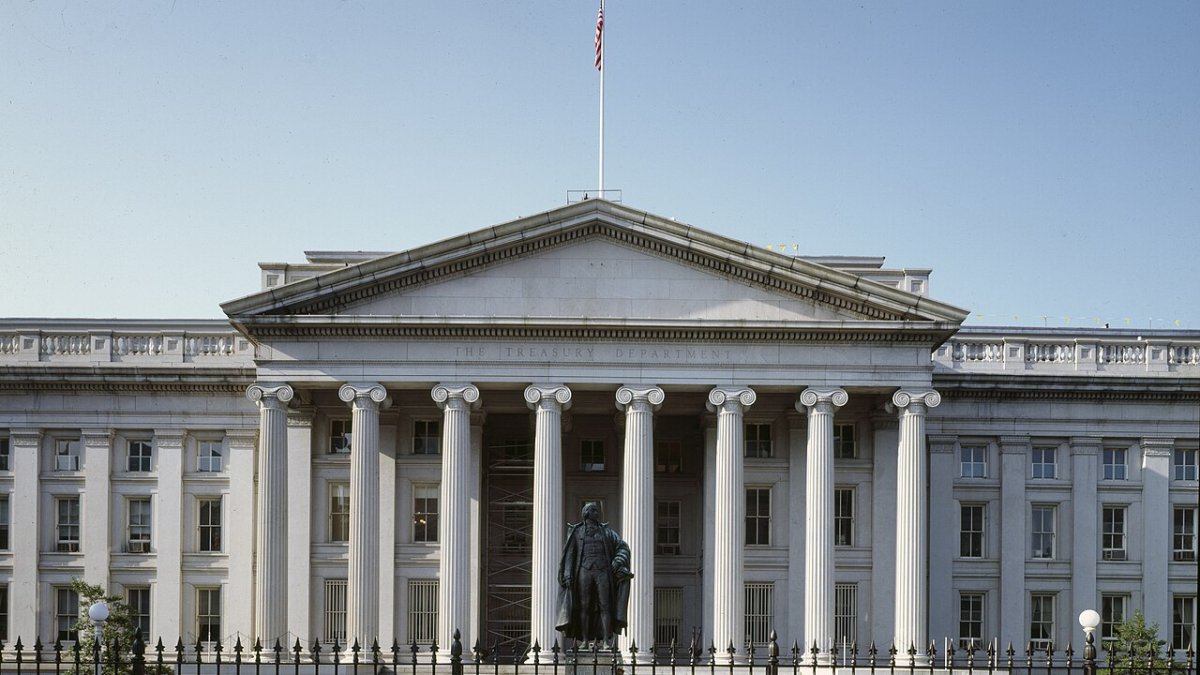
- Washington is likely to maintain selective economic engagement with the Delcy Rodríguez authorities rather than broad sanctions normalisation over the next 1-3 months. General Licence No. 61 authorises US entities to provide telecommunications goods and services, including internet connectivity and telephony, while excluding transactions involving China, Russia, Iran, Cuba and North Korea. Exporting companies must submit detailed reports every 90 days. Resumed oil sales and the House-passed fiscal 2027 appropriations bill, which would provide $50 million for democracy programmes in Venezuela, indicate parallel economic and political channels. Official Treasury reporting strongly supports the licence mechanics, but conflicting accounts of US support for Rodríguez and recognition of the Venezuelan government leave Washington's intended political end-state unresolved. (Confidence: medium · ASSESSED)
- I&W: Confirm: OFAC retains General Licence No. 61, and exporting companies begin or continue the required 90-day reporting cycle without a comparable licence for oil or sovereign finance. (0-14 days)
- I&W: Break: OFAC issues a broader licence covering Venezuelan oil or state finance, or the Trump administration formally withdraws support for Rodríguez's authorities. (1-3 months)
- Delcy Rodríguez's authorities are likely to combine prisoner releases with continued restrictions on opposition participation over the next 1-3 months. The acting government reported an amnesty law that enabled more than 800 releases between January and May, while a separate report counted 621 releases as of 8 March. Student demonstrations have returned to Caracas, and available reporting alleges that Rodríguez has targeted the opposition and prevented its participation in the political process. The release totals and political-control reporting are inconsistent and rely partly on medium-confidence or low-provenance sources, so confidence is low. (Confidence: low · ASSESSED)
- I&W: Confirm: Rodríguez's authorities publish further release lists while student demonstrations continue at the Central University in Caracas and opposition figures report new participation restrictions. (0-14 days)
- I&W: Break: a non-government tally reconciles the release figures and the authorities authorise opposition parties to participate openly in a scheduled political process. (1-3 months)
- A fully competitive electoral transition in Venezuela is unlikely in the next 1-3 months. Political actors are discussing a possible roadmap and transition board, but the available reporting does not establish a formal process. The record also describes continuing political disputes, the exclusion of major opposition parties during the May 2018 presidential election and Maduro's declaration as the winner. Confidence is low because the roadmap reporting is single-source social-media material and the record contains unresolved contradictions over Maduro's status, Rodríguez's acting presidency and US recognition of the Venezuelan government. (Confidence: low · ASSESSED)
- I&W: Confirm: discussion of a roadmap or transition board continues without a published election date or clear rules permitting major opposition parties to compete. (0-14 days)
- I&W: Break: the authorities publish a dated electoral timetable and permit major opposition parties to organise and contest the process. (1-3 months)
- Earthquake recovery is very likely to continue constraining governance in La Guaira, Caraballeda, Playa Grande and surrounding northern areas over the next 1-3 months. UNICEF estimates that 1.8 million people, including 680,000 children, require support, while United Nations reporting places direct physical damage above $37 billion. Satellite imagery and ground reporting show collapsed buildings in La Guaira, destruction in Caraballeda and flattened structures in Playa Grande. Engineers warn that standing buildings remain vulnerable, and international rescuers continue to arrive. Multiple reporting streams support the scale of the damage, but the humanitarian needs and financial estimates remain less firmly corroborated. (Confidence: medium · ASSESSED)
- I&W: Confirm: UNICEF maintains the 1.8 million support estimate, international rescuers continue arriving, and engineers or local authorities advance an audit of standing state housing. (0-14 days)
- I&W: Break: verified reporting records sustained restoration of essential services and a materially lower assessment of affected people in La Guaira and neighbouring coastal areas. (1-3 months)
- The reported death toll from the 24 June earthquakes is unlikely to stabilise in the near term. Available figures range from at least 1,719 deaths to more than 3,500, more than 6,000 and more than 6,100, while another report places the potential toll as high as 10,000. Delcy Rodríguez states that bodies are being processed through a forensic identification system, but reporting also describes unidentified bodies, burial activity near La Esperanza and a Venezuelan Attorney General's Office that did not respond to requests for comment. The direct contradictions and uneven source quality support low confidence. (Confidence: low · ASSESSED)
- I&W: Confirm: official and media reports continue to publish materially different totals, while forensic processing and temporary burial arrangements remain active. (0-14 days)
- I&W: Break: Venezuelan authorities release a public forensic register that reconciles identified and unidentified remains with a total verified by an independent reporting stream. (1-3 months)
Outlook & scenarios
Managed transition with selective economic opening (55%)
This is the likely outcome over the next 1-3 months. Rodríguez's authorities retain institutional control, Washington keeps General Licence No. 61 and oil-related engagement in place, and prisoner releases continue without a fully competitive electoral process. Earthquake relief remains the main source of practical international cooperation.
Partial political opening under domestic and external pressure (25%)
Student demonstrations in Caracas, further prisoner releases and discussion of a transition board produce limited concessions. The authorities publish elements of a roadmap and widen opposition participation, while preserving control over the timetable and institutions. US economic engagement expands incrementally rather than through broad sanctions normalisation.
Controlled consolidation and worsening legitimacy dispute (15%)
The authorities restrict opposition activity, keep the roadmap informal and use the disputed prisoner-release figures to claim progress. Demonstrations continue, while conflicting accounts of US recognition and Rodríguez's mandate deepen the legitimacy dispute. Humanitarian demands in La Guaira and surrounding areas increase pressure on state capacity.
Renewed US coercive action (5%)
This is a very unlikely, high-impact wildcard. A renewed US military operation or maritime blockade involving Venezuela would abruptly end the managed-transition pattern, disrupt oil and humanitarian channels and generate a new leadership crisis. The current record provides no corroborated indication that such action is imminent.
Recommendations
- Track OFAC implementation of General Licence No. 61 at 0-14 day intervals. Record authorised counterparties, activity involving CONATEL, CANTV and Movilnet, the treatment of Chinese, Russian, Iranian, Cuban and North Korean entities, and compliance with 90-day reporting requirements.
- Maintain separate political and humanitarian confidence tracks. Do not combine government prisoner-release figures with opposition or civil-society reporting until the totals and identities are reconciled.
- Monitor Caracas for two specific political signals: continuation of student demonstrations at the Central University and publication of a dated roadmap that defines opposition participation.
- Build a single earthquake casualty ledger separating confirmed deaths, reported deaths, missing people and projected totals. Cross-check Venezuelan forensic statements against burial-site imagery, reporting from La Esperanza and data from international humanitarian actors.
- Prioritise La Guaira, Caraballeda and Playa Grande for updates on building audits, essential services, rescue activity and humanitarian access. Treat standing structures as a separate risk category from confirmed building collapses.
- Review US statements and actions together rather than relying on a single recognition label. Compare Treasury licensing decisions, executive statements on Rodríguez, and State Department positions on Venezuela's withdrawal from the ICC.
Confidence & uncertainty
Overall confidence is medium. Official Treasury reporting provides strong support for the telecommunications licence and its restrictions, while satellite imagery, ground reporting, multilateral assessments and major-media coverage corroborate substantial earthquake damage. The political outlook relies partly on think-tank, NGO, blog and social-media reporting. The principal uncertainties are the scale of prisoner releases, the US recognition posture, the chronology of Maduro's removal and Rodríguez's mandate, and the earthquake death toll.
Intelligence gaps
- [EEI 1.2 · UNCOVERED] Public resignations, defections, detentions, or disciplinary actions naming specific senior military, intelligence, or police officers (name, rank, unit, date, supporting evidence). Recommended collection: open-source/social media
- [EEI 1.3 · UNCOVERED] Published orders, decrees, or personnel lists showing promotions, reassignments, or purges within the National Bolivarian Armed Forces, National Guard, or presidential protection units (document or official gazette reference). Recommended collection: open-source/diplomatic
- [EEI 1.4 · PARTIAL] Arrests, detentions, or restrictions on movement of named opposition leaders or political figures with detention location, custody authority, and detention conditions reported. Recommended collection: human/local media
- [EEI 2.1 · UNCOVERED] Verified protest activity by location and estimated turnout (street-level counts, police reports, hospital/ambulance logs, timestamped geolocated photos or videos) on specified dates. Recommended collection: social media/open-source
- [EEI 2.2 · UNCOVERED] Documented lists or communications naming regional protest coordinators, strike organizers, or logistics nodes (transport bookings, fuel/food supply movements) tied to opposition plans. Recommended collection: social media/human
- [EEI 2.3 · UNCOVERED] Financial movements to opposition-controlled organizations or individuals above defined thresholds (bank transfers, wire records, large cash seizures, crypto wallet transfers with timestamps and amounts). Recommended collection: financial/forensic
- [EEI 2.4 · PARTIAL] Public formation or activation of alternative governance bodies by the opposition (declared councils/ministries, named members, declared headquarters or offices) with supporting documentation or announcements. Recommended collection: open-source/diplomatic
- [EEI 3.1 · PARTIAL] Crude oil and refined product export volumes from Venezuelan ports by vessel (AIS-identified tankers), including flagged destinations and any ship-to-ship transfer events, by week. Recommended collection: maritime/AIS
- [EEI 3.2 · UNCOVERED] Notices of correspondent banking relationship changes for PDVSA, the Central Bank of Venezuela, or other state entities (account freezes, closures, new bank signings) with bank names and dates. Recommended collection: economic/finance
- [EEI 3.3 · UNCOVERED] Detected arrivals/deployments of foreign military personnel, equipment, or advisory teams (air/sea container manifests, port calls with cargo descriptions, geolocated imagery of military assets) originating from Russia, Cuba, Iran, or other external supporters. Recommended collection: imagery
- [EEI 3.4 · UNCOVERED] Export records or interdictions showing volumes and destinations of gold, diamonds, or other high-value commodities linked to state entities or proxies (customs manifests, seized shipments, buyer identities). Recommended collection: economic/finance
Cited sources
[1] voz.us · Treasury Department eases sanctions on telecommunications operations in Venezuela (A) · sha256:41d5e4160d30 [2] International Action Center · Venezuela: Don’t blame the victim - International Action Center (C) · sha256:59b9bc44b8b3 [3] legis1.com · Venezuela Transition Remains Incomplete Despite U.S. Policy Gains (C) · sha256:10ee2a31c053 [4] Wikipedia · 2026 United States intervention in Venezuela (B) · sha256:65dc9850ab04 [5] opensanctions.org · Delcy Rodriguez (F) · sha256:a6dff8029202 [6] foreignpolicy.com · Can Venezuela’s Opposition Find A Path to Power? (B) · sha256:ddb2c5b0073d [7] РусПойнт · HOJA DE RUTA, JUNTA DE TRANSICIÓN y el DESTINO de DIOSDADO: ¿Se Acerca un Nuevo Poder en Venezuela? (E) · sha256:66ab410a24e7 [8] Wikipedia · Venezuelan presidential crisis (B) · sha256:ed4971ae2bac [9] Wikipedia · Nicolás Maduro (B) · sha256:f4c389ccd028 [10] Atlantic Council · A Colombia-Venezuela agenda for recovery, security, and economic growth (C) · sha256:fd48713f128a [11] bellingcat.com · Satellite Imagery Shows Scale of Venezuela Earthquake Damage - bellingcat (A) · sha256:ce10579f7508 [12] bellingcat.com · Between Graves and Uncertainty: The Management of the Dead After Venezuela's Earthquake - bellingcat (A) · sha256:2b3267f01c10
Source content hashes were computed at collection time; the cited text is preserved unmodified for the life of this product.
TLP:CLEAR