TLP:CLEAR · Disclosure is not limited.
Venezuela: Dialogue Advances Without Institutional Reform
Time window: Last 7 days · Audience: General analyst · Type: Situation report · DTG: 2026-09-21 13:27Z · Overall confidence: HIGH
BLUF
Very likely, Venezuela's coercive institutions remain intact under Acting President Delcy Rodríguez despite releases, dialogue and announced access for the International Committee of the Red Cross. Likely, talks will produce limited concessions and monitoring mechanisms, while the reported US-Venezuela oil arrangement remains contested over its scope, signatory and sanctions terms.
Executive summary
The UN Fact-Finding Mission reported on 16 September that Venezuelan institutions responsible for repression remain fundamentally intact, with 64 new torture cases documented after 3 January, between 379 and 500 people still in political detention, and at least 19 officials implicated in gross violations retaining or receiving key posts. Government and opposition delegations continued negotiations in Caracas, announced mechanisms on freedom of expression and information, and agreed to create a parity-based follow-up commission. The UK welcomed these measures but urged continued cooperation with OHCHR and the Fact-Finding Mission. Reporting on the oil arrangement involving the Trump administration, the Venezuelan authorities and Alejandro Betancourt López remains internally inconsistent. US Southern Command also conducted a lethal strike against a go-fast vessel in the Caribbean on 19 September, while Venezuela's chronic electricity crisis continues to impose domestic pressure.
Change from previous assessment
Since the 20 September brief, the assessment of dialogue has been modestly upgraded from selective concessions without clear mechanisms to likely selective concessions accompanied by a Technical Table, a parity-based follow-up commission and an announcement expected by 23 September. The announced International Committee of the Red Cross access to detention centres is a new potential test of institutional change, but it has not yet been verified in practice. The assessment that the coercive apparatus remains intact is unchanged. The oil assessment remains low confidence and is now more explicitly tied to competing accounts of US control, Venezuelan authority and Alejandro Betancourt López's role. A new near-term judgement assesses that US Southern Command is likely to sustain lethal counternarcotics operations in the Caribbean and nearby waters.
Key judgments
- Very likely, Venezuelan State institutions responsible for repression remain fundamentally intact under Acting President Delcy Rodríguez. The UN Fact-Finding Mission documented 64 new cases of torture after 3 January 2026, between 379 and 500 people still in political detention, degrading confinement at Fuerte Guaicaipuro, and at least 19 officials implicated in gross violations remaining in or reassigned to key positions. No steps have been reported to disarm or dismantle the colectivos. (Confidence: high · REPORTED)
- I&W: Confirm: UN, OHCHR or ICRC reporting documents new arbitrary detentions, torture or continued confinement at Fuerte Guaicaipuro during the next reporting cycle. (0-14 days)
- I&W: Break: ICRC access to detention centres is completed and independent reporting verifies the closure of degrading detention facilities, transparent accounting for political detainees and removal of officials implicated in gross violations. (1-3 months)
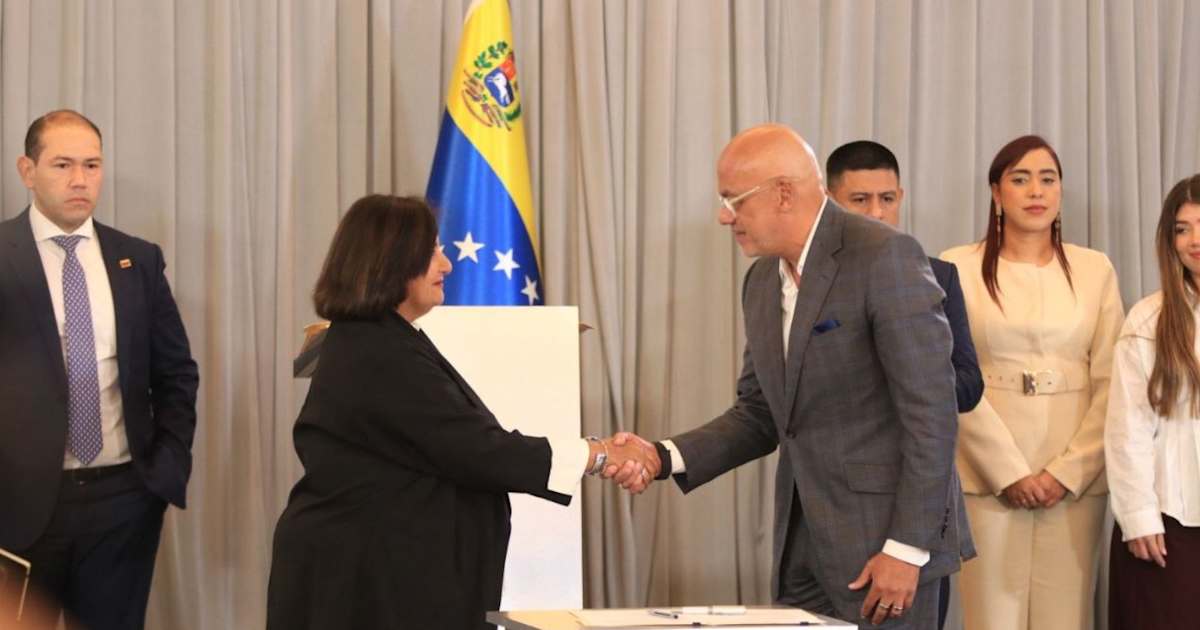
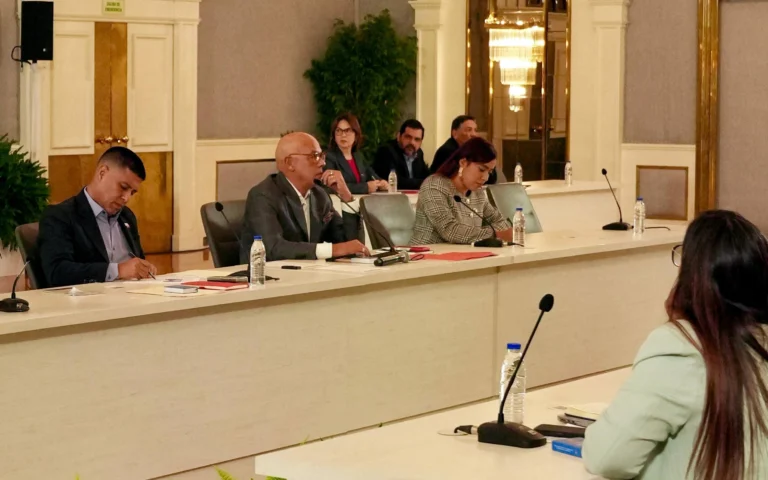
- Likely, the second-cycle talks led by Jorge Rodríguez and Dinorah Figuera will deliver selective confidence-building measures without near-term dismantling of Venezuela's repressive institutions. The delegations have announced a Technical Table on freedom of expression, a parity-based follow-up commission, mechanisms for access to information and implementation of commitments, and an expected announcement by 23 September. This remains an assessed inference because the reporting confirms announced mechanisms, not their implementation or institutional reform. (Confidence: medium · ASSESSED)
- I&W: Confirm: by 23 September, the delegations publish detailed agreements and the parity-based commission or Technical Table begins work with named members, deadlines and publicly verifiable outputs. (0-14 days)
- I&W: Break: Venezuelan authorities provide detention-centre access, restore broader media access, remove officials implicated in gross violations and begin dismantling the colectivos. (1-3 months)
- Likely, the reported US-Venezuela oil arrangement will remain contested over its scope, Venezuelan signatory and sanctions treatment. One account describes effective US control over about one-third of Venezuela's oil, roughly 65 billion barrels, while Donald Trump described majority control. Other reporting attributes the agreement variously to the Chavista regime or the Rodríguez government, and places Alejandro Betancourt López at the centre of the strategy despite reporting on his previous links to Juan Guaidó's opposition, Russian interests and Spanish investigations. This judgment rests on conflicting reporting, including low-reliability elements, and carries low confidence. (Confidence: low · ASSESSED)
- I&W: Confirm: the US administration and Venezuelan authorities publish a signed text identifying the Venezuelan signatory, the operator, the fields covered, the scale of US control and any sanctions relief. (0-3 months)
- I&W: Break: official statements disavow the reported arrangement, reject Betancourt's role or establish that no sanctions relief and no transfer of control were agreed. (0-3 months)
- Very likely, Venezuela's chronic electricity crisis will continue to impose domestic pressure on the Rodríguez government. Reporting describes daily, hours-long blackouts across the country for years, with effects on daily life and reported loss of life. The available evidence supports continuity of the crisis but does not provide a new nationwide estimate of its current severity. (Confidence: medium · ASSESSED)
- I&W: Confirm: credible reporting continues to record daily, hours-long blackouts across Venezuela and links them to disruption of essential services. (0-14 days)
- I&W: Break: Venezuelan authorities or independent monitors report sustained nationwide grid reliability with a measurable end to daily, hours-long outages. (1-3 months)
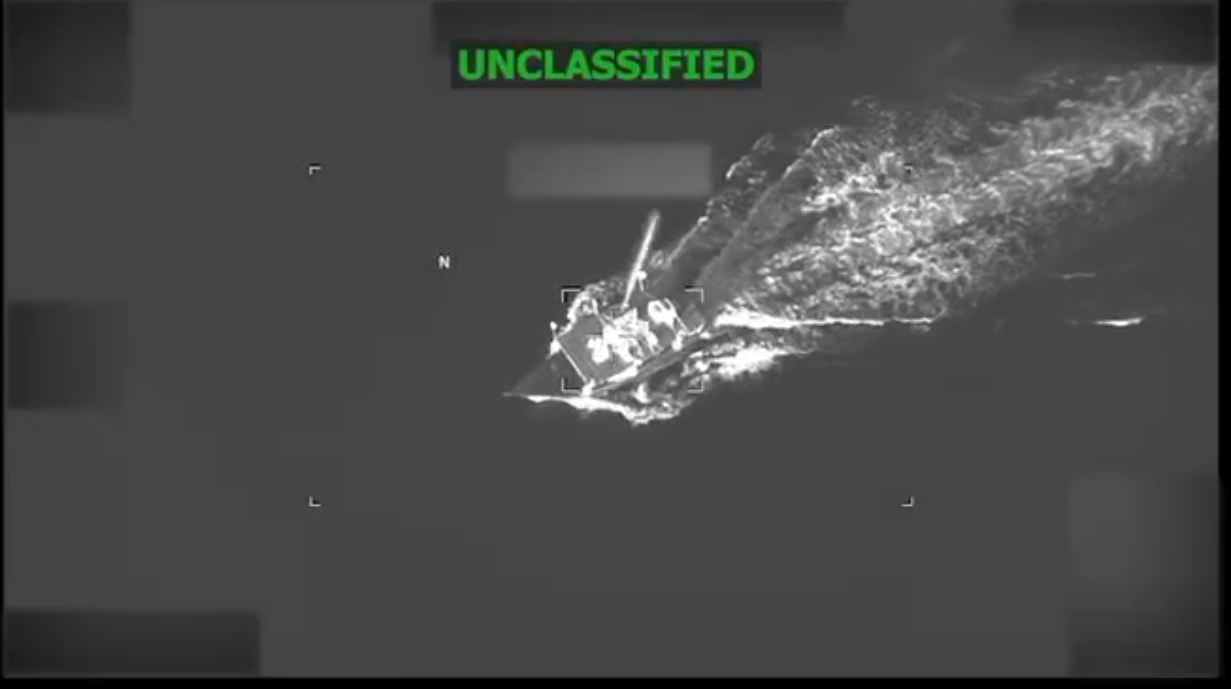
- Likely, US Southern Command will sustain lethal counternarcotics operations in the Caribbean and nearby waters, adding external security pressure while dialogue continues. On 19 September, Joint Task Force Western Hemisphere conducted a lethal strike against a go-fast vessel in the Caribbean, described as the 70th publicised lethal strike against a drug boat in the region. Separate reporting describes Marine Corps units boarding and destroying two fuel boats in the Eastern Pacific. This assessment relies mainly on medium-confidence trade reporting and official claims about suspected narcotics involvement. (Confidence: medium · ASSESSED)
- I&W: Confirm: SOUTHCOM or Joint Task Force Western Hemisphere announces another lethal strike, boarding operation or vessel destruction in the Caribbean or Eastern Pacific. (0-30 days)
- I&W: Break: SOUTHCOM announces a suspension of lethal maritime operations or shifts publicly to arrests and transfers without further vessel destruction. (1-3 months)
Outlook & scenarios
Managed dialogue with selective implementation (55%)
Likely, the government and opposition delegations announce additional measures after 23 September, including limited media access, detention-centre access and monitoring arrangements. The Rodríguez government preserves the existing coercive structure while using the dialogue to secure political and economic relief. The Technical Table and parity-based commission become the main tests of whether announced commitments produce observable change.
Dialogue stalls while repression persists (30%)
Likely, disagreements over political guarantees, judicial reform, electoral institutions and accountability prevent implementation beyond symbolic measures. Short-term arbitrary arrests, continued detention and the retention of officials implicated in gross violations remain the dominant pattern. UK calls for cooperation with OHCHR and the Fact-Finding Mission produce no verifiable institutional response.
Oil arrangement gains formal shape (10%)
Unlikely, the Trump administration and Venezuelan authorities publish a definitive oil agreement that resolves the disputed role of Alejandro Betancourt López, identifies the Venezuelan signatory and clarifies whether US control covers one-third or a majority of reserves. Formalisation would strengthen the Rodríguez government's access to external economic support, but political opposition to the arrangement would remain.
Security shock narrows the political opening (5%)
Very unlikely, another lethal US maritime operation in the Caribbean is followed by a breakdown in the Caracas talks and renewed short-term arrests of opposition activists, journalists or civil-society actors. This low-probability, high-impact outcome would place the announced confidence-building measures under immediate strain and increase pressure on the FANB and Rodríguez government to demonstrate control.
Recommendations
- Prioritise verification of the announced International Committee of the Red Cross access to Venezuelan detention centres. Seek evidence of dates, facilities visited, detainees interviewed and conditions documented, with particular attention to Fuerte Guaicaipuro.
- Track the 23 September dialogue announcement against concrete deliverables. Record whether the Technical Table and parity-based follow-up commission receive named members, operating procedures, deadlines and access to implementation data.
- Treat the oil arrangement as unconfirmed for sanctions and energy analysis until an official text identifies the signatory, covered fields, ownership or control rights, the role of Alejandro Betancourt López and the precise relationship to US sanctions.
- Maintain a separate indicator set for institutional repression and political opening. Compare new detention reports with the reported range of 379 to 500 political detainees and monitor whether the 19 officials implicated in gross violations remain in key posts.
- Do not infer the cause of Venezuela's NASA FIRMS thermal detections from the satellite data alone. Cross-check the three high-confidence detections and the wider total of 140 detections against local reporting before assessing fires as security incidents.
- Monitor SOUTHCOM releases for additional lethal maritime operations in the Caribbean and Eastern Pacific, and assess whether operational activity coincides with changes in the Caracas dialogue or Venezuelan detention behaviour.
Confidence & uncertainty
Overall confidence is high for the core assessment because the UN Fact-Finding Mission provides recent, high-reliability reporting on repression, the UK Government independently confirms the dialogue and confidence-building measures, and official Venezuelan and NASA reporting supplies additional corroboration on state and environmental activity. Confidence is lower on the oil arrangement because accounts conflict over its scale, signatory and terms, and lower on the forward-looking dialogue and maritime assessments because implementation and operational intentions remain uncertain. The exact start date of the second dialogue cycle and the cause of NASA thermal detections also remain unresolved.
Intelligence gaps
- [EEI 1.1 · UNCOVERED] Official or verifiable reporting of Maduro's location and movements (presidential appearances, travel manifests, security footprint changes) within specific dates and locations. Recommended collection: open-source
- [EEI 1.2 · PARTIAL] Public resignations, defections, detentions, or disciplinary actions naming specific senior military, intelligence, or police officers (name, rank, unit, date, supporting evidence). Recommended collection: open-source/social media
- [EEI 1.3 · PARTIAL] Published orders, decrees, or personnel lists showing promotions, reassignments, or purges within the National Bolivarian Armed Forces, National Guard, or presidential protection units (document or official gazette reference). Recommended collection: open-source/diplomatic
- [EEI 1.4 · PARTIAL] Arrests, detentions, or restrictions on movement of named opposition leaders or political figures with detention location, custody authority, and detention conditions reported. Recommended collection: human/local media
- [EEI 2.1 · UNCOVERED] Verified protest activity by location and estimated turnout (street-level counts, police reports, hospital/ambulance logs, timestamped geolocated photos or videos) on specified dates. Recommended collection: social media/open-source
- [EEI 2.2 · UNCOVERED] Documented lists or communications naming regional protest coordinators, strike organizers, or logistics nodes (transport bookings, fuel/food supply movements) tied to opposition plans. Recommended collection: social media/human
- [EEI 2.3 · UNCOVERED] Financial movements to opposition-controlled organizations or individuals above defined thresholds (bank transfers, wire records, large cash seizures, crypto wallet transfers with timestamps and amounts). Recommended collection: financial/forensic
- [EEI 2.4 · UNCOVERED] Public formation or activation of alternative governance bodies by the opposition (declared councils/ministries, named members, declared headquarters or offices) with supporting documentation or announcements. Recommended collection: open-source/diplomatic
- [EEI 3.1 · UNCOVERED] Crude oil and refined product export volumes from Venezuelan ports by vessel (AIS-identified tankers), including flagged destinations and any ship-to-ship transfer events, by week. Recommended collection: maritime/AIS
- [EEI 3.2 · UNCOVERED] Notices of correspondent banking relationship changes for PDVSA, the Central Bank of Venezuela, or other state entities (account freezes, closures, new bank signings) with bank names and dates. Recommended collection: economic/finance
- [EEI 3.3 · UNCOVERED] Detected arrivals/deployments of foreign military personnel, equipment, or advisory teams (air/sea container manifests, port calls with cargo descriptions, geolocated imagery of military assets) originating from Russia, Cuba, Iran, or other external supporters. Recommended collection: imagery
- [EEI 3.4 · UNCOVERED] Export records or interdictions showing volumes and destinations of gold, diamonds, or other high-value commodities linked to state entities or proxies (customs manifests, seized shipments, buyer identities). Recommended collection: economic/finance
Cited sources
[1] United Nations News · Repression continues in Venezuela in the face of ‘appalling’ human rights violations (A) · Wed Sep 16 2026 20:32:35 GMT+0000 (Coordinated Universal Time) · sha256:d7f50c27a325 [2] Ministerio del Poder Popular para la Defensa (Venezuela) · Ministerio del Poder Popular para la Defensa (A) · sha256:53bbc21e5312 [3] EWTN News · Venezuela: Talks with opposition, oil deal, Delcy Rodríguez in New York, and the Church’s stance (B) · Wed Sep 16 2026 20:52:02 GMT+0000 (Coordinated Universal Time) · sha256:7bca6aedce76 [4] teleSUR English · Venezuela Government Opposition Dialogue: 4 Promising Gains on Rights and Transparency - teleSUR English (B) · sha256:c0c67040358f [5] UK Government (gov.uk) · UN Human Rights Council 63: UK Statement for the Interactive Dialogue on Venezuela (A) · Mon Sep 21 2026 08:44:03 GMT+0000 (Coordinated Universal Time) · sha256:d55c6a524a22 [6] Stillwater Radio (syndicated ABC News content) · ABC - Politics News - Stillwater Radio (D) · sha256:31ff387a905b [7] International Viewpoint · Venezuela’s Process & Fall: The Legacy of Hugo Chávez (D) · sha256:906bbfd8a0f4 [8] Cuba Headlines · Alejandro Betancourt López: The Controversial Figure Behind Trump's Venezuelan Oil Deal (E) · Sun Sep 20 2026 12:25:20 GMT+0000 (Coordinated Universal Time) · sha256:f9ceb3449c96 [9] The Maritime Executive · U.S. Southern Command Destroys 70th Suspected Drug Boat (C) · sha256:291eec21e7b9
Source content hashes were computed at collection time; the cited text is preserved unmodified for the life of this product.
TLP:CLEAR