TLP:CLEAR · Disclosure is not limited.
Venezuela: Interim governance consolidates as oil ties with the United States deepen and election timing remains unresolved
Time window: Last 7 days · Audience: General analyst · Type: Situation report · DTG: 2026-06-14 16:13Z · Overall confidence: MEDIUM
BLUF
Delcy Rodríguez very likely remains Venezuela’s interim leader without committing to an election date, while opposition street pressure continues and energy, legal and diplomatic ties with Washington expand. Security risks in multiple states remain high, and satellite heat detections rose 12-14 June without clear attribution.
Executive summary
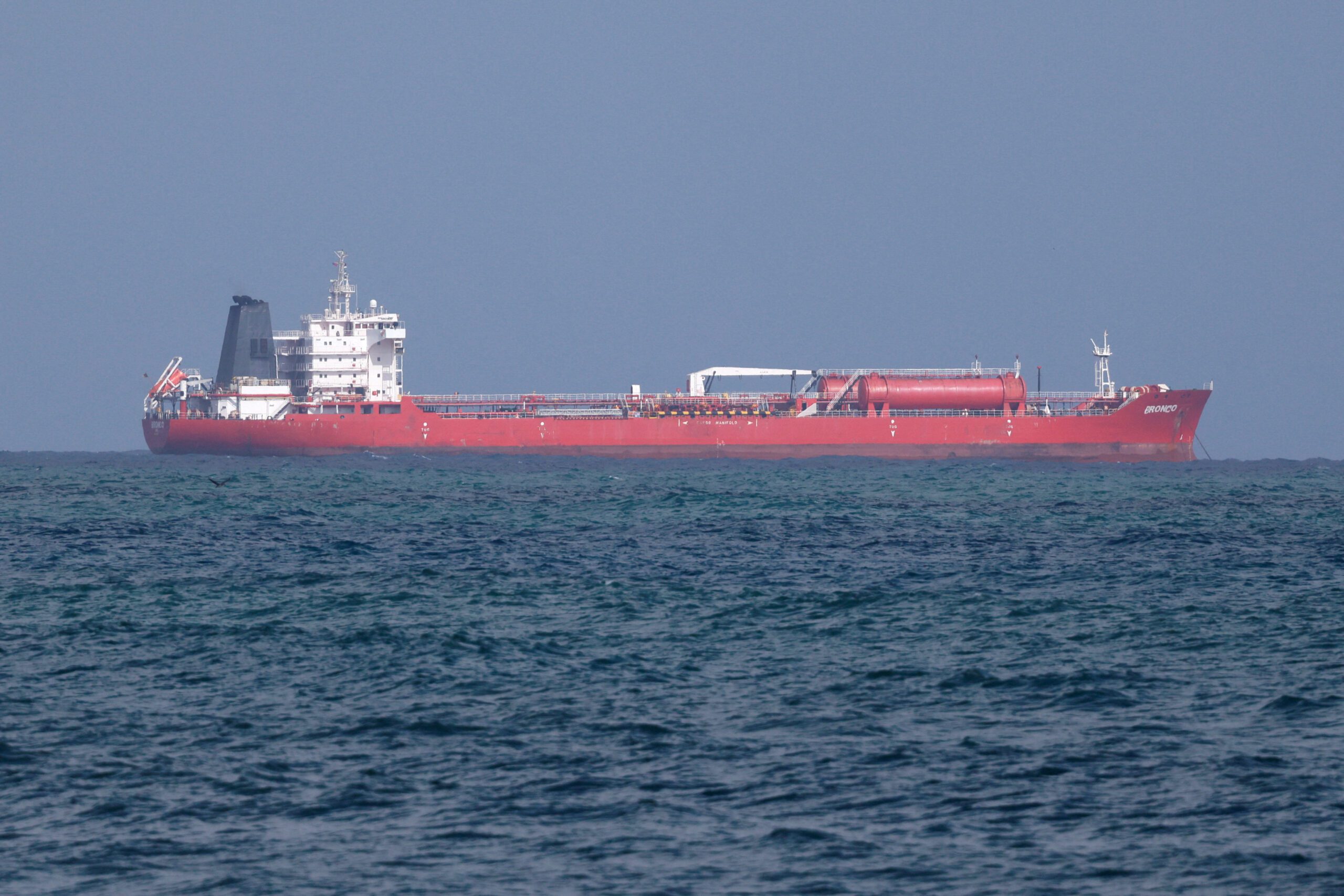
On 9 June, workers, students and opposition party members marched to the U.S. Embassy in Caracas demanding free presidential and parliamentary elections as Delcy Rodríguez marked roughly five months in power. Reporting indicates Rodríguez has not committed to a presidential election date. U.S., Venezuela engagement is widening: Washington has issued licences enabling oil trade, Venezuela is sending about half of 1.25 million barrels per day of exports to the United States, the U.S. Embassy in Caracas has reopened, a senior U.S. general visited Caracas, and Rodríguez extradited Alex Saab to the United States. Caracas is also pushing market-opening measures in oil and electricity. Travel advisories continue to flag elevated risks in several states and along the Colombia border. NASA recorded 201 thermal anomalies, including six high-confidence detections across Venezuela from 12-14 June, which register heat but do not identify cause.
Change from previous assessment
Since the 12 June brief, new reporting adds specificity: a 9 June march to the U.S. Embassy in Caracas pressed for elections; Rodríguez is reported not to have committed to an election date; Washington has lifted personal sanctions on Rodríguez; Rodríguez extradited Alex Saab to the United States; Venezuela’s Congress advanced electricity sector opening; the U.S. Embassy in Caracas is operating; and Venezuela is sending roughly half of 1.25 million bpd of exports to U.S. receivers. NASA logged 201 thermal anomalies, including six high-confidence detections, from 12-14 June. These developments raise confidence that interim governance is consolidating alongside expanding U.S. energy and legal ties, while electoral timing remains unresolved.
Key judgments
- Rodríguez is very likely serving as interim head of government in mid-June 2026 and has not committed to a presidential election date, while opposition street mobilisation persists in Caracas. (Confidence: high · REPORTED)
- I&W: National Electoral Council publishes a resolution setting firm dates for presidential and parliamentary elections. (0-3 months)
- I&W: Further large opposition-led marches announced for Caracas or state capitals demanding an electoral timetable. (0-8 weeks)
- U.S., Venezuela engagement is likely deepening, anchored in oil trade, legal cooperation and renewed diplomatic contact. (Confidence: medium · ASSESSED)
- I&W: U.S. Treasury publishes additional Venezuela-related general or specific licences and new company-level authorisations. (0-3 months)
- I&W: Sustained or rising weekly sailings of Venezuelan crude cargoes declared to U.S. receivers. (0-3 months)
- Venezuela’s sanctions posture has been fluid since 2023 and is likely to remain changeable for industry planning horizons. (Confidence: medium · ASSESSED)
- I&W: New U.S. guidance altering scope or duration of Venezuela oil and mining licences. (0-3 months)
- I&W: Public commitments by Washington or Caracas signalling multi-year predictability on sanctions relief. (1-6 months)
- The internal security environment remains high-risk across multiple states and the Venezuela, Colombia border region, very likely constraining movement by U.S. personnel and complicating observation missions. (Confidence: high · REPORTED)
- I&W: No change or tightening of U.S. travel advisories for Amazonas, Apure, Táchira, Aragua outside Maracay, Bolívar and Guárico, and the Colombia border region. (0-3 months)
- I&W: Official easing of movement restrictions for U.S. government employees inside Venezuela. (0-3 months)
- Caracas is likely advancing market-opening reforms in energy to stabilise supply and attract capital, including expanded private roles in oil production and the electricity sector. (Confidence: medium · ASSESSED)
- I&W: Publication of implementing regulations or new joint-venture agreements formalising private operational control in oil blocks. (1-6 months)
- I&W: Announcements of private investment tenders or concessions in generation, transmission or distribution. (1-6 months)
- Maduro’s capture and ongoing U.S. trial almost certainly removed him from domestic power, concentrating authority around Rodríguez. (Confidence: high · ASSESSED)
- I&W: Continued absence of decrees or public directives issued by Maduro from Venezuela. (0-3 months)
- I&W: Official state communications and foreign engagements consistently naming Rodríguez as president. (0-3 months)
- From 12-14 June, NASA recorded 201 thermal anomalies in Venezuela, including six high-confidence detections, which register heat but do not by themselves attribute cause or indicate combat activity. (Confidence: high · REPORTED)
- I&W: Local reporting, official releases or imagery linking specific detections to industrial incidents, wildfires or strikes. (0-6 weeks)
- I&W: Sustained clusters of new high-confidence detections proximate to named security-force facilities without corroborating ground reports. (0-6 weeks)
Outlook & scenarios
Protracted interim rule with incremental economic opening (60%)
Rodríguez maintains interim control without setting an election date this quarter. Opposition groups keep organising peaceful rallies in Caracas. Oil trade to the United States continues under U.S. licences, and Caracas issues follow-on measures to embed private participation in oil and electricity. Diplomatic contacts proceed via the reopened U.S. Embassy and senior defence channels.
Negotiated electoral timetable with calibrated sanctions easing (45%)
Caracas and interlocutors agree on an election calendar and minimal guarantees, prompting Washington to extend or broaden licences. Venezuelan exports to U.S. refiners remain strong. The government publicises implementing rules for private operators in the energy sector to bolster confidence ahead of polls.
Policy whiplash and street confrontation (25%)
A stalled dialogue and fresh arrests or delays spark larger opposition mobilisations. Washington signals tighter compliance or narrows licences, creating uncertainty for cargo scheduling. Security risks in border states increase, reducing access for observers and humanitarian actors.
Recommendations
- Track the National Electoral Council’s gazettes and resolutions daily for any presidential or parliamentary election calendar and candidate registration rules.
- Maintain a sanctions and licensing log: monitor U.S. Treasury licence issuances and company-specific authorisations affecting Venezuelan oil, gas and mining.
- Validate crude flows: fuse AIS tracking with customs declarations to verify the reported share of Venezuelan exports arriving at U.S. receivers.
- Map FIRMS thermal detections against oilfields, upgraders, power plants and known wildfire zones; prioritise any persistent clusters near critical infrastructure for follow-up collection.
- Engage the security desk to reassess route viability to Amazonas, Apure, Táchira, Aragua outside Maracay, Bolívar and Guárico; reflect prohibitions for U.S. employees in movement plans.
- Catalogue energy policy instruments: collect the full text of the 29 January oil law and recent electricity reforms, and watch for implementing regulations or tender announcements.
- Exploit diplomatic and defence reads: log senior U.S. visits to Caracas and Embassy engagements to gauge the pace of bilateral normalisation.
- Maintain a detainee ledger: cross-check reported prisoner releases with NGO tallies to assess human-rights signalling versus practice.
Confidence & uncertainty
Overall confidence is medium. Several judgments rest on high-reliability reporting from major media and official advisories, and multiple independent items corroborate interim governance, street mobilisation and U.S. engagement. Sanctions status and licensing remain dynamic across 2023-2026, introducing uncertainty for forward assessments. Satellite heat detections are authoritative but non-attributive, which limits inferences about causation. Wikipedia-sourced items are used for timeline context and are treated with caution.
Alternative analysis (red cell)
An alternative, defensible reading is that US–Venezuela interactions are transactional and uneven—limited licenses, isolated legal cooperation, and an embassy resumption point to pragmatic contacts rather than a broad institutional deepening. The capture of Maduro created a power vacuum, but the evidence does not provide high‑admiralty confirmation that Rodríguez has been formally or fully consolidated as interim head; domestic authority could remain fragmented or under military influence. Market‑opening measures appear under‑corroborated and could be partial or symbolic rather than comprehensive privatization.
Intelligence gaps
- [EEI 1.2 · UNCOVERED] Public resignations, defections, detentions, or disciplinary actions naming specific senior military, intelligence, or police officers (name, rank, unit, date, supporting evidence). Recommended collection: open-source/social media
- [EEI 1.3 · UNCOVERED] Published orders, decrees, or personnel lists showing promotions, reassignments, or purges within the National Bolivarian Armed Forces, National Guard, or presidential protection units (document or official gazette reference). Recommended collection: open-source/diplomatic
- [EEI 1.4 · PARTIAL] Arrests, detentions, or restrictions on movement of named opposition leaders or political figures with detention location, custody authority, and detention conditions reported. Recommended collection: human/local media
- [EEI 2.1 · PARTIAL] Verified protest activity by location and estimated turnout (street-level counts, police reports, hospital/ambulance logs, timestamped geolocated photos or videos) on specified dates. Recommended collection: social media/open-source
- [EEI 2.2 · UNCOVERED] Documented lists or communications naming regional protest coordinators, strike organizers, or logistics nodes (transport bookings, fuel/food supply movements) tied to opposition plans. Recommended collection: social media/human
- [EEI 2.3 · UNCOVERED] Financial movements to opposition-controlled organizations or individuals above defined thresholds (bank transfers, wire records, large cash seizures, crypto wallet transfers with timestamps and amounts). Recommended collection: financial/forensic
- [EEI 2.4 · PARTIAL] Public formation or activation of alternative governance bodies by the opposition (declared councils/ministries, named members, declared headquarters or offices) with supporting documentation or announcements. Recommended collection: open-source/diplomatic
- [EEI 3.1 · UNCOVERED] Crude oil and refined product export volumes from Venezuelan ports by vessel (AIS-identified tankers), including flagged destinations and any ship-to-ship transfer events, by week. Recommended collection: maritime/AIS
- [EEI 3.2 · UNCOVERED] Notices of correspondent banking relationship changes for PDVSA, the Central Bank of Venezuela, or other state entities (account freezes, closures, new bank signings) with bank names and dates. Recommended collection: economic/finance
- [EEI 3.3 · UNCOVERED] Detected arrivals/deployments of foreign military personnel, equipment, or advisory teams (air/sea container manifests, port calls with cargo descriptions, geolocated imagery of military assets) originating from Russia, Cuba, Iran, or other external supporters. Recommended collection: imagery
- [EEI 3.4 · PARTIAL] Export records or interdictions showing volumes and destinations of gold, diamonds, or other high-value commodities linked to state entities or proxies (customs manifests, seized shipments, buyer identities). Recommended collection: economic/finance
Cited sources
[1] Al Jazeera · Venezuelans flood capital Caracas streets, demanding free elections (A) · sha256:fc122989204c [2] cnn.com · Her boss is in US prison. How the woman running Venezuela got Trump on her side | CNN (A) · sha256:993714c41d6a [3] Wikipedia · Nicolás Maduro (B) · sha256:b4bff59a4b41 [4] Wikipedia · 2026 United States intervention in Venezuela (B) · sha256:5cfa49d30ffa [5] gcaptain.com · US Refiners Can Still Absorb More Venezuelan Oil (A) · sha256:43cb28c18c16 [6] U.S. Department of State · Venezuela Travel Advisory | Travel.State.gov (A) · sha256:56ec7c299e19 [7] Wikipedia · Sanctions during the Venezuelan crisis (B) · sha256:07a964b9395e [8] NASA · NASA FIRMS thermal detections — Venezuela (3d) (A) · sha256:74f2f2674103
Source content hashes were computed at collection time; the cited text is preserved unmodified for the life of this product.
Red cell review: PARTIAL DISSENT
TLP:CLEAR