TLP:CLEAR · Disclosure is not limited.
Venezuela: leadership uncertainty amid US engagement
Time window: Last 7 days · Audience: General analyst · Type: Situation report · DTG: 2026-11-23 16:06Z · Overall confidence: MEDIUM
BLUF
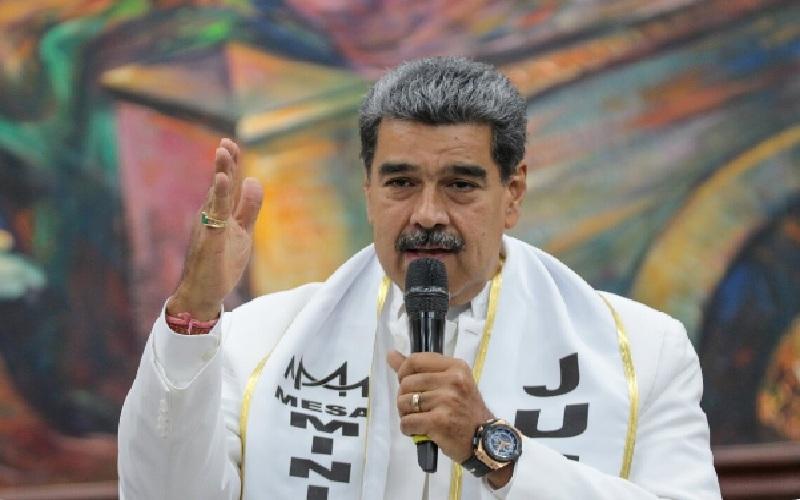
Nicolás Maduro is likely in US custody, with Delcy Rodríguez acting as Venezuela’s interim president, but conflicting Caracas messaging leaves Maduro’s status and personal role unresolved. The reported US-Venezuelan military agreement and fourth dialogue round indicate engagement, not yet an implemented security partnership or an agreed election timetable.
Executive summary
Reports describe Pete Hegseth meeting Delcy Rodríguez in Caracas and securing a military cooperation agreement that includes training for Venezuelan troops. The reporting does not establish an implementation schedule or completed joint activity, and accounts differ on the dates of Hegseth’s visit and statements. Government and opposition delegates have held a fourth dialogue round covering political rights, the National Electoral Council and laws used to disqualify candidates; the supplied reporting does not establish that the round produced a binding election calendar. Major-media reporting says Maduro is detained in the United States, while Venezuelan communications continue to attribute presidential statements to him. That contradiction, alongside inconsistencies in accounts of US proceedings, leaves his status short of settled.
Change from previous assessment
The assessment has shifted modestly on Maduro’s status: additional major-media reporting describes his detention in the United States and legal proceedings, so US custody is now assessed as likely, but confidence remains low because Venezuelan accounts attribute presidential communications to him and the supplied accounts conflict on his procedural status. The assessment of the military agreement and the dialogue is unchanged: reporting adds detail on proposed training and the issues under discussion, but still establishes neither implementation nor an election timetable. No settled past forecast outcomes were provided for calibration.
Key judgments
- Nicolás Maduro is likely in US custody while Delcy Rodríguez serves as acting president, but the supplied reporting does not resolve whether Maduro personally authored the 23 November reconciliation communiqué. Major-media reports describe his capture, detention in Brooklyn and US legal proceedings; other accounts attribute presidential statements to Maduro and Cilia Flores. The custody reporting includes an item read only in summary, and accounts of his legal status conflict. (Confidence: low · ASSESSED)
- I&W: US court records or an official custody update identify Maduro’s location and procedural status, confirming or materially revising the reported detention account. (0-14 days)
- I&W: A verifiable public appearance by Maduro in Venezuela, or an official correction of the communiqué’s authorship, would weaken the assessment that he remains in US custody or clarify his personal role. (0-14 days)
- Sustained US-Venezuelan operational integration over the next three months is unlikely. Pete Hegseth met Delcy Rodríguez at the Palacio de Miraflores on 18 November, and reporting describes an agreement for deeper military ties and US training of Venezuelan troops. Venezuela’s defence minister also referred to resuming technical-military cooperation. The supplied reporting gives no schedule, completed training or joint operation; accounts date the visit or related statements to 18, 19 or 20 November. (Confidence: medium · ASSESSED)
- I&W: A published training calendar naming dates, units and venues would indicate movement beyond the announced agreement and weaken the assessment. (0-30 days)
- I&W: Evidence of US-led training beginning with Venezuelan troops or a completed bilateral exercise would break the assessment that cooperation remains at the announcement or planning stage. (1-3 months)
- An agreed presidential-election timetable emerging from the fourth dialogue round is unlikely in the next three months. Government and opposition delegates, led by Jorge Rodríguez and Dinorah Figuera, discussed political-rights laws, the Financing of Terrorism law and reform of Article 105 of the Comptroller Law. Reporting also describes possible National Electoral Council renewal and advances on other institutional issues, but says many agreements remain pending and does not establish a binding election date. The accounts come mainly from local reporting and do not confirm the round’s final outcome. (Confidence: low · ASSESSED)
- I&W: A jointly issued agreement specifying an election date and a timetable for National Electoral Council changes would break this assessment. (0-3 months)
- I&W: No binding election calendar by 23 February 2027, alongside continued disagreement over National Electoral Council composition or Article 105, would confirm it. (0-3 months)
- The reported release of Yorman Acevedo is unlikely to mark a broad easing of political detention practices. A major-media account says Acevedo was released after five months and 21 days and describes harsh treatment during detention; separate supplied reporting says the Amnesty Law excluded TANCOL cases, while Foro Penal, Cecodap and Espacio Público documented more than 900 people charged under the Law Against Hatred or similar provisions. These reports do not establish a nationwide trend, and the Amnesty Law’s reach is described inconsistently. (Confidence: low · ASSESSED)
- I&W: Published, independently corroborated figures showing sustained releases and the legal status of people charged under the Law Against Hatred would test whether Acevedo’s release forms part of a broader change. (1-3 months)
- I&W: A formal amendment extending amnesty coverage to TANCOL cases, or an official list confirming those cases remain excluded, would clarify whether the law’s reported limits are changing. (1-3 months)
Outlook & scenarios
Managed engagement without an electoral breakthrough (50%)
US-Venezuelan military cooperation remains at the agreement and planning stage, while the government-opposition dialogue continues without a binding presidential-election calendar. Delcy Rodríguez remains the public-facing acting president as uncertainty over Maduro’s custody and personal role persists.
Limited institutional concessions (27%)
The dialogue produces concrete but partial changes, such as a negotiated step on Article 105 or National Electoral Council renewal. Those measures ease some political disputes but do not establish an election date or resolve the competing accounts of Maduro’s status.
Military agreement stalls (18%)
No training schedule or completed joint activity follows Hegseth’s visit. The agreement remains a diplomatic signal, while disagreements over the dialogue’s outcome and Maduro’s status constrain further engagement.
Essequibo dispute becomes a high-impact complication (5%)
This is an unlikely but high-impact scenario. If Caracas renews its claim over Essequibo after reports that Jeremy Lewin raised territorial discussions, Guyana’s rejection of bilateral talks and cession, combined with uncertainty over Washington’s position, would sharpen a regional diplomatic dispute.
Recommendations
- Separate confirmation of Maduro’s custody from claims about his political role. Monitor US court records and official custody statements, and reconcile the conflicting accounts of detention, trial status and venue before using them in further analysis.
- Track the military agreement by implementation rather than announcement. Seek a text or official summary identifying the scope, schedule, participating units and venues; record separately any confirmed start of US training or bilateral exercises.
- Maintain a dialogue tracker for the fourth round. Record whether government and opposition delegates publish a joint outcome, and distinguish proposals on Article 105 and National Electoral Council renewal from binding decisions or an agreed election calendar.
- Treat Acevedo’s release as an individual case, not a trend. Track independently corroborated release figures, the legal status of detainees covered by the Amnesty Law and whether TANCOL cases remain excluded.
- Verify Jeremy Lewin’s status and the substance of his reported September discussions before assessing a shift in US policy on Essequibo. Track public statements by Guyana, Venezuela and the US, alongside updates on the ICJ case.
Confidence & uncertainty
Major-media and official reporting corroborate the Hegseth-Rodríguez meeting, the announced military agreement and Delcy Rodríguez’s acting role. Confidence is constrained by conflicting accounts of Maduro’s custody and authorship of the 23 November communiqué, inconsistent dates for Hegseth’s visit and limited reporting on whether the dialogue produced decisions. Some detention and amnesty claims rely on individual accounts or a single organisation and are not independently confirmed in the supplied material.
Intelligence gaps
- [EEI 1.1 · PARTIAL] Official or verifiable reporting of Maduro's location and movements (presidential appearances, travel manifests, security footprint changes) within specific dates and locations. Recommended collection: open-source
- [EEI 1.2 · UNCOVERED] Public resignations, defections, detentions, or disciplinary actions naming specific senior military, intelligence, or police officers (name, rank, unit, date, supporting evidence). Recommended collection: open-source/social media
- [EEI 1.3 · UNCOVERED] Published orders, decrees, or personnel lists showing promotions, reassignments, or purges within the National Bolivarian Armed Forces, National Guard, or presidential protection units (document or official gazette reference). Recommended collection: open-source/diplomatic
- [EEI 1.4 · UNCOVERED] Arrests, detentions, or restrictions on movement of named opposition leaders or political figures with detention location, custody authority, and detention conditions reported. Recommended collection: human/local media
- [EEI 2.1 · UNCOVERED] Verified protest activity by location and estimated turnout (street-level counts, police reports, hospital/ambulance logs, timestamped geolocated photos or videos) on specified dates. Recommended collection: social media/open-source
- [EEI 2.2 · UNCOVERED] Documented lists or communications naming regional protest coordinators, strike organizers, or logistics nodes (transport bookings, fuel/food supply movements) tied to opposition plans. Recommended collection: social media/human
- [EEI 2.3 · UNCOVERED] Financial movements to opposition-controlled organizations or individuals above defined thresholds (bank transfers, wire records, large cash seizures, crypto wallet transfers with timestamps and amounts). Recommended collection: financial/forensic
- [EEI 2.4 · PARTIAL] Public formation or activation of alternative governance bodies by the opposition (declared councils/ministries, named members, declared headquarters or offices) with supporting documentation or announcements. Recommended collection: open-source/diplomatic
- [EEI 3.1 · UNCOVERED] Crude oil and refined product export volumes from Venezuelan ports by vessel (AIS-identified tankers), including flagged destinations and any ship-to-ship transfer events, by week. Recommended collection: maritime/AIS
- [EEI 3.2 · UNCOVERED] Notices of correspondent banking relationship changes for PDVSA, the Central Bank of Venezuela, or other state entities (account freezes, closures, new bank signings) with bank names and dates. Recommended collection: economic/finance
- [EEI 3.3 · UNCOVERED] Detected arrivals/deployments of foreign military personnel, equipment, or advisory teams (air/sea container manifests, port calls with cargo descriptions, geolocated imagery of military assets) originating from Russia, Cuba, Iran, or other external supporters. Recommended collection: imagery
- [EEI 3.4 · UNCOVERED] Export records or interdictions showing volumes and destinations of gold, diamonds, or other high-value commodities linked to state entities or proxies (customs manifests, seized shipments, buyer identities). Recommended collection: economic/finance
Red cell review: CONCUR WITH COMMENT
TLP:CLEAR