TLP:CLEAR · Disclosure is not limited.
Venezuela: Military Reset, Transition Uncertainty and Oil Deal Disputes
Time window: Last 7 days · Audience: General analyst · Type: Situation report · DTG: 2026-11-20 16:07Z · Overall confidence: HIGH
BLUF
The US-Venezuela military agreement announced in Caracas on 18 November is a confirmed political reset, but its operational scope remains unclear. The transition and oil arrangements remain contested, while new reporting on Jeremy Lewin’s Essequibo discussions sits uneasily alongside Washington’s public support for Guyana’s boundary position.
Executive summary
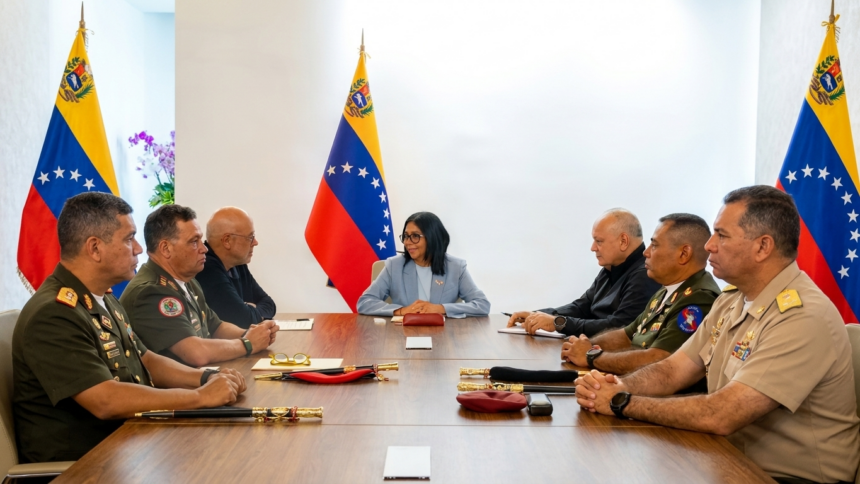
Pete Hegseth and Delcy Rodríguez announced a US-Venezuela military cooperation agreement in Caracas on 18 November. The stated scope includes joint training and intelligence sharing; Rodríguez’s government also described renewed technical-military cooperation, FANB training and equipment. Rodríguez’s government reported on 20 November that oil production had reached 1.269 million barrels per day and that the economy grew 7.42% by the end of the third quarter; these figures are government announcements, not independently corroborated in the supplied reporting. She also reported meetings in Antalya, Istanbul, Doha and the United Arab Emirates, followed by a meeting with Venezuela’s high-level political-military command. No election date appears in the supplied reporting, and María Corina Machado remains outside the Caracas transition negotiations. Reporting on the NABEP oil arrangement conflicts over its duration and the US entity receiving an equity stake. On Essequibo, reports of a US official discussing partial Venezuelan control contrast with public US support for the 1899 Arbitral Award and Guyana’s account that Washington said its position had not changed.
Change from previous assessment
Since the 19 November brief, reporting has added Rodríguez’s account that technical-military cooperation resumed, including FANB training and equipment, but has not established implementation. The oil assessment now includes a reported 50-year contract term that conflicts with the 100-year description, as well as conflicting attribution of the 35% stake to the State Department or Pentagon. On Essequibo, the brief now weighs the reported Lewin proposal against a US Embassy reaffirmation of the 1899 Arbitral Award and Guyana’s statement that Washington said its position had not changed. No election date is reported, and the transition judgment remains in place.
Key judgments
- The 18 November 2026 US-Venezuela military agreement is likely to restart limited defence coordination, but it does not yet demonstrate sustained operational integration. Pete Hegseth and Delcy Rodríguez announced joint training, intelligence sharing and other military cooperation in Caracas; Rodríguez’s government separately described resumed technical-military cooperation, FANB training and equipment. Public accounts do not specify an activity schedule or the agreement’s detailed operating arrangements. Some reporting dates Hegseth’s visit to 18-19 November, while the agreement announcement is generally dated 18 November. (Confidence: medium · ASSESSED)
- I&W: A published US-Venezuela schedule for joint training or a named intelligence-sharing mechanism within three months would confirm implementation beyond the announcement. (0-3 months)
- I&W: No publicly identified joint activity or implementing arrangement by February 2027 would weaken the assessment that the agreement is restarting practical coordination. (0-3 months)
- Venezuela’s political legitimacy dispute is likely to persist into early 2027. Rodríguez said in September that elections would be held but supplied reporting records no date; transition negotiations are continuing in Caracas under Dinorah Figuera, while Machado remains outside the process. An AtlasIntel poll reported in early November put Machado at 56% among respondents asked whom they would vote for in a new election, against 17% for Rodríguez. The poll is one measure of opinion, not evidence of an election outcome. (Confidence: medium · ASSESSED)
- I&W: A publicly announced election date, timetable and electoral process would weaken the assessment that the dispute is likely to persist into early 2027. (0-3 months)
- I&W: Machado’s formal entry into the Caracas negotiations or a published agreement between the negotiating parties would indicate movement towards a broader transition process. (0-3 months)
- The NABEP oil arrangement is likely to remain politically and legally contested. Reporting describes a 35% US stake and rights involving 17 Venezuelan oil fields, but conflicts over whether the concession lasts 100 years or 50 years and whether the equity stake went to the State Department or the Pentagon. ProPublica’s reported 50-year contract term also conflicts with the reported Venezuelan legal limit of 25 years. Congressional Democrats are preparing probes, and Machado has said she would review new oil deals. These discrepancies lower confidence in the precise terms, although the existence of a US-NABEP arrangement is reported by multiple outlets. (Confidence: medium · ASSESSED)
- I&W: Publication of the signed NABEP contract and its annexes, resolving the concession term and identifying the US equity holder, would reduce uncertainty around the arrangement. (0-3 months)
- I&W: A formal congressional inquiry or a public Venezuelan legal action specifically challenging the NABEP contract would confirm that scrutiny is moving beyond stated intent. (0-3 months)
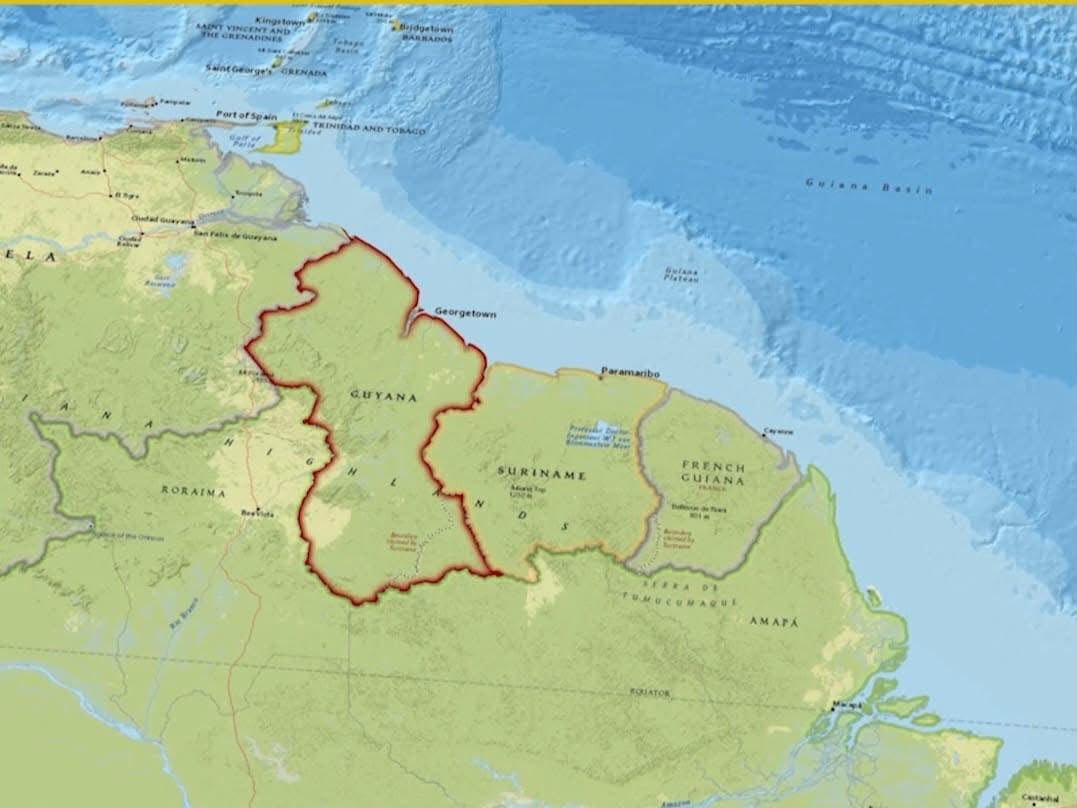
- Washington’s public position on the Guyana-Venezuela boundary is unlikely to have formally shifted, but the reported mediation proposal has created policy ambiguity. The US Embassy in Georgetown reaffirmed support for the 1899 Arbitral Award, and Guyana said Washington assured it that nothing had changed. Separate reporting says Jeremy Lewin floated partial Venezuelan control of Essequibo and discussed possible US business activity there with Rodríguez. The Lewin account is single-source local-media reporting in the supplied claims and is not independently corroborated; confidence is therefore low. (Confidence: low · ASSESSED)
- I&W: A new State Department or White House statement explicitly reaffirming the 1899 Arbitral Award and rejecting any change to the boundary position would support the assessment that public policy remains unchanged. (0-30 days)
- I&W: An on-record US endorsement of partial Venezuelan control or a publicly confirmed US commercial arrangement in Essequibo would break the assessment that Washington’s formal position has not shifted. (0-3 months)
Outlook & scenarios
Limited US-Venezuela cooperation advances (55%)
The two governments follow through on some announced training or intelligence-sharing activity, while the public record remains short of evidence for sustained operational integration. Rodríguez continues to present engagement as consistent with Venezuelan sovereignty.
Oil and transition disputes constrain the reset (35%)
Congressional scrutiny and the conflicting NABEP contract descriptions keep the oil arrangement contested. The absence of an election date and Machado’s exclusion from the Caracas negotiations sustain the legitimacy dispute and limit the political reach of US-Venezuela cooperation.
NABEP contract challenge becomes a bilateral crisis (10%)
A formal challenge based on the reported discrepancy between the contract’s 50-year term and the 25-year legal limit forces a suspension or renegotiation of the arrangement. The resulting dispute becomes a major test of the military and political reset.
Recommendations
- Treat the military agreement as an announced framework, not evidence of operational integration. Track public schedules for joint training, named intelligence-sharing arrangements and any implementing protocol.
- Seek the signed NABEP contract and annexes. Reconcile the reported 50-year and 100-year terms, the 25-year legal limit, the 35% equity stake, the identity of the US entity receiving it, and the stated oil purchase rights.
- Update the transition timeline only when an election date or formal process is announced. Track whether María Corina Machado enters Dinorah Figuera’s negotiations and whether the negotiating parties publish an agreed timetable.
- Compare future US statements on Essequibo with the Embassy in Georgetown’s reaffirmation of the 1899 Arbitral Award. Treat the report of Jeremy Lewin’s proposal as uncorroborated unless an additional source or official confirmation emerges.
- Label Rodríguez’s oil-production and economic-growth figures as government-reported until independent corroboration is available.
Confidence & uncertainty
Overall confidence is high in the underlying event picture because multiple major-media accounts corroborate the Caracas military agreement, while official Venezuelan statements document Rodríguez’s public description of cooperation and her diplomatic activity. Confidence is lower on implementation details, the exact NABEP contract terms and US equity recipient, and the reported Lewin proposal, which is not independently corroborated in the supplied claims.
Alternative analysis (red cell)
The evidence does not establish that Venezuela's legitimacy dispute is more likely than not to persist into early 2027. Claims 3426d112-612a-4c19-a492-31246804d5e2 and 21cc0a31-9f54-4f43-b7d5-d8567d4bbc78 are also consistent with a negotiated transition and eventual elections, while claim d06547d0-c5bc-4f8b-bec6-7423f5c9bd18 measures political preference rather than the durability of the dispute. The better-supported conclusion is substantial uncertainty about the trajectory, rather than a directional forecast of continued contestation.
Intelligence gaps
- [EEI 1.2 · UNCOVERED] Public resignations, defections, detentions, or disciplinary actions naming specific senior military, intelligence, or police officers (name, rank, unit, date, supporting evidence). Recommended collection: open-source/social media
- [EEI 1.3 · UNCOVERED] Published orders, decrees, or personnel lists showing promotions, reassignments, or purges within the National Bolivarian Armed Forces, National Guard, or presidential protection units (document or official gazette reference). Recommended collection: open-source/diplomatic
- [EEI 1.4 · PARTIAL] Arrests, detentions, or restrictions on movement of named opposition leaders or political figures with detention location, custody authority, and detention conditions reported. Recommended collection: human/local media
- [EEI 2.1 · UNCOVERED] Verified protest activity by location and estimated turnout (street-level counts, police reports, hospital/ambulance logs, timestamped geolocated photos or videos) on specified dates. Recommended collection: social media/open-source
- [EEI 2.2 · UNCOVERED] Documented lists or communications naming regional protest coordinators, strike organizers, or logistics nodes (transport bookings, fuel/food supply movements) tied to opposition plans. Recommended collection: social media/human
- [EEI 2.3 · UNCOVERED] Financial movements to opposition-controlled organizations or individuals above defined thresholds (bank transfers, wire records, large cash seizures, crypto wallet transfers with timestamps and amounts). Recommended collection: financial/forensic
- [EEI 2.4 · UNCOVERED] Public formation or activation of alternative governance bodies by the opposition (declared councils/ministries, named members, declared headquarters or offices) with supporting documentation or announcements. Recommended collection: open-source/diplomatic
- [EEI 3.1 · UNCOVERED] Crude oil and refined product export volumes from Venezuelan ports by vessel (AIS-identified tankers), including flagged destinations and any ship-to-ship transfer events, by week. Recommended collection: maritime/AIS
- [EEI 3.2 · UNCOVERED] Notices of correspondent banking relationship changes for PDVSA, the Central Bank of Venezuela, or other state entities (account freezes, closures, new bank signings) with bank names and dates. Recommended collection: economic/finance
- [EEI 3.3 · UNCOVERED] Detected arrivals/deployments of foreign military personnel, equipment, or advisory teams (air/sea container manifests, port calls with cargo descriptions, geolocated imagery of military assets) originating from Russia, Cuba, Iran, or other external supporters. Recommended collection: imagery
- [EEI 3.4 · UNCOVERED] Export records or interdictions showing volumes and destinations of gold, diamonds, or other high-value commodities linked to state entities or proxies (customs manifests, seized shipments, buyer identities). Recommended collection: economic/finance
Red cell review: PARTIAL DISSENT
TLP:CLEAR