TLP:CLEAR, Disclosure is not limited.
Venezuela: OFAC Opens Controlled Energy Channel as Post-Maduro Transition Remains Opaque
Time window: Last 7 days · Audience: General analyst · Type: Situation report · DTG: 2026-06-11 16:14Z · Overall confidence: MEDIUM
BLUF
On 10 June, OFAC activated a sweeping sanctions framework that very likely reopens a controlled path for Western firms to operate in Venezuela’s energy and mining sectors under U.S.-law contracts and strict reporting, while excluding Russia- and Iran-linked actors. Leadership remains contested in open-source reporting, several outlets say Nicolás Maduro was removed by U.S. forces in early January and replaced by Delcy Rodríguez, keeping political and compliance risk elevated.
Executive summary
The U.S. Treasury’s 10 June overhaul of Venezuela-related licenses explicitly authorizes oil, gas, electricity, and minerals activity for selected Western companies under stringent reporting and legal safeguards, and restricts participation by entities tied to Russia, Iran, Cuba, North Korea, or China. Open-source accounts continue to assert that Nicolás Maduro was captured/removed by U.S. forces in early January 2026 and that Delcy Rodríguez subsequently assumed leadership, but this remains imperfectly documented in official channels. Venezuela’s humanitarian and governance crisis persists against a backdrop of state repression, mass displacement, and opaque oil revenue reporting. Concurrently, recent U.S. sanctions on a Venezuelan firm linked to Iranian drone assembly underscore compliance risks that could complicate re-engagement under the new framework.
Change from previous assessment
New since the prior brief: OFAC’s updated Venezuela-related licenses took effect on 10 June, adding explicit authorizations, reporting duties, U.S.-law contract provisions, and exclusions for Russia/Iran/China-linked entities. We elevate the likelihood of near-term Western energy re-engagement under tight compliance and legal guardrails and add indicators for license utilization and potential enforcement. Our leadership assessment is unchanged in direction but clarified as medium confidence due to reliance on non-official reporting. We add a low-confidence note on 10-11 June NASA thermal anomalies as an observational item without attribution.
Key judgments
- OFAC’s 10 June framework very likely enables a controlled re-entry of Western energy and mining firms into Venezuela under U.S.-law-governed contracts and strict reporting, while limiting participation by Russia-, Iran-, Cuba-, North Korea-, and China-linked entities. (Confidence: high · REPORTED)
- I&W: Public announcements of GL 50B-covered work programs or cargo liftings by BP, Chevron, Eni, Maurel & Prom, Repsol, or Shell. (1-3 months)
- I&W: OFAC revokes or materially narrows GL 50B or related Venezuela licenses. (0-14 days)
- Maduro’s removal/capture in early January 2026 and a leadership handover to Delcy Rodríguez are likely, but rest on non-official and adversarial reporting, keeping confidence at medium. (Confidence: medium · ASSESSED)
- I&W: Official Venezuelan notices (e.g., gazette/CNE/Supreme Court) or OAS acknowledgment naming Delcy Rodríguez as head of state. (1-3 months)
- I&W: Credible broadcast or communique showing Nicolás Maduro exercising executive authority from Caracas. (0-14 days)
- Venezuela’s humanitarian and governance crisis very likely remains severe, with sustained repression of opposition, large-scale displacement since 2016-2021, and no transparent public reporting of oil revenues. (Confidence: medium · ASSESSED)
- I&W: Updated UN/NGO assessments show continued high humanitarian need and outbound migration pressures. (1-3 months)
- I&W: Government releases audited, disaggregated oil-revenue data with independent verification. (1-3 months)
- Transparency and control over Venezuela-related oil revenues are likely to remain contentious under the new framework, given PDVSA’s longstanding opacity and prior U.S. control mechanisms that drew congressional audit requests and yielded inconsistent public figures. (Confidence: medium · ASSESSED)
- I&W: GAO opens a Venezuela oil-exports audit or issues a notice of review. (1-3 months)
- I&W: OFAC or State publishes reconciled reporting on counterparties, volumes, and payments since 2019. (1-3 months)
- Iran, Venezuela defense ties and broader alignment likely constrain the depth of Western corporate re-engagement and elevate compliance risk under OFAC’s revised terms. (Confidence: medium · ASSESSED)
- I&W: New U.S. designations against Venezuela-based entities for Iran-related defense cooperation. (0-14 days)
- I&W: Western firms disclose enhanced screening or deal deferrals citing counterparties with restricted Russian/Iranian ties. (1-3 months)
- NASA’s 10-11 June detection of 119 thermal anomalies in Venezuela has unclear relevance to the political crisis; it is a roughly even chance these signatures reflect non-conflict heat sources (e.g., wildfires/industrial incidents) rather than political violence. (Confidence: low · ASSESSED)
- I&W: Local authorities or companies report wildfires/industrial incidents at the FIRMS coordinates. (0-14 days)
- I&W: Authoritative reporting links the coordinates to attacks, explosions, or security force operations. (0-14 days)
Outlook & scenarios
Managed energy thaw under U.S. oversight, 55%
Western operators covered by GL 50B (e.g., BP, Chevron, Eni, Maurel & Prom, Repsol, Shell) restart targeted activities under U.S.-law contracts, with detailed reporting to U.S. agencies. Cargoes of Venezuelan-origin oil, petrochemicals, and minerals resume under authorized logistics/insurance, while rivals tied to Russia/Iran/China remain excluded. Outcome: incremental revenue flow and operational presence constrained by compliance guardrails.
Compliance friction and partial snapback, 35%
Disclosure disputes over counterparties and payments, PDVSA opacity, and Iran-linked sanction actions trigger enforcement or license narrowing. Corporate boards delay investments; authorized volumes underperform expectations. Outcome: stalled re-engagement and renewed disputes over revenue control and transparency.
Leadership legitimacy shock (wildcard), 20%
Conflicting narratives around the January handover reemerge (e.g., new statements, imagery, or legal claims), amplifying domestic and external uncertainty. Outcome: risk-off posture by firms and partners; potential re-politicization of licensing and recognition debates.
Recommendations
- Map OFAC’s updated Venezuela licenses into a single compliance tracker: enumerate permitted activities, parties covered by GL 50B, reporting requirements, and exclusions tied to Russia/Iran/Cuba/North Korea/China; circulate to energy, shipping, and finance stakeholders.
- Stand up a counterparties vetting cell to prescreen Venezuelan government entities, PDVSA affiliates, and local partners against OFAC’s prohibited-ownership and control criteria; require documentary attestations aligned to U.S.-law contract and dispute-resolution clauses.
- Task liaison with GAO and congressional oversight staff to monitor the requested audit of U.S.-controlled Venezuela oil-exports systems; pre-draft lines of inquiry on 2019-2026 revenue flows and reconciliation of previously cited figures.
- Develop a leadership-recognition watchboard: track official Venezuelan gazette/CNE/Supreme Court outputs and statements by OAS/major governments for authoritative confirmation or contradiction of a Delcy Rodríguez-led executive.
- Integrate NASA FIRMS feeds for Venezuela into GEOINT triage: alert analysts to clustered anomalies near energy/mining infrastructure and cross-cue with local reporting before attributing causation.
- Update humanitarian baselines using UN-referenced indicators (population in need, displacement) to anticipate migration and assistance demand under each sanctions-implementation scenario; brief partners on potential cross-border impacts.
Confidence & uncertainty
Overall confidence is medium. The OFAC framework and license details are well-corroborated across multiple reports, supporting high confidence in the sanctions-policy shift. Assessments of leadership change rely on non-official and adversarial reporting, reducing confidence. Humanitarian and governance baselines are supported by prior UN and widely cited references but are temporally lagged. NASA thermal detections are reliable as observations of heat but do not indicate causation, limiting analytic confidence in their relevance to the political crisis.
Alternative analysis (red cell)
An alternative, defensible reading is that the June 10 OFAC changes may create narrow, administratively supervised pathways on paper but not guarantee broad practical re-entry by Western firms; reports of Maduro’s capture/leadership handover are insufficiently corroborated and could reflect adversarial or unverified reporting; PDVSA opacity and Iran-linked incidents show oversight activity and sanctions rather than conclusive evidence that transparency will remain intractable; and the VIIRS thermal anomalies are ambiguous absent ground corroboration.
Intelligence gaps
- [EEI 1.2 · UNCOVERED] Public resignations, defections, detentions, or disciplinary actions naming specific senior military, intelligence, or police officers (name, rank, unit, date, supporting evidence)., recommended collection: open-source/social media
- [EEI 1.3 · UNCOVERED] Published orders, decrees, or personnel lists showing promotions, reassignments, or purges within the National Bolivarian Armed Forces, National Guard, or presidential protection units (document or official gazette reference)., recommended collection: open-source/diplomatic
- [EEI 1.4 · PARTIAL] Arrests, detentions, or restrictions on movement of named opposition leaders or political figures with detention location, custody authority, and detention conditions reported., recommended collection: human/local media
- [EEI 2.1 · UNCOVERED] Verified protest activity by location and estimated turnout (street-level counts, police reports, hospital/ambulance logs, timestamped geolocated photos or videos) on specified dates., recommended collection: social media/open-source
- [EEI 2.2 · UNCOVERED] Documented lists or communications naming regional protest coordinators, strike organizers, or logistics nodes (transport bookings, fuel/food supply movements) tied to opposition plans., recommended collection: social media/human
- [EEI 2.3 · UNCOVERED] Financial movements to opposition-controlled organizations or individuals above defined thresholds (bank transfers, wire records, large cash seizures, crypto wallet transfers with timestamps and amounts)., recommended collection: financial/forensic
- [EEI 2.4 · PARTIAL] Public formation or activation of alternative governance bodies by the opposition (declared councils/ministries, named members, declared headquarters or offices) with supporting documentation or announcements., recommended collection: open-source/diplomatic
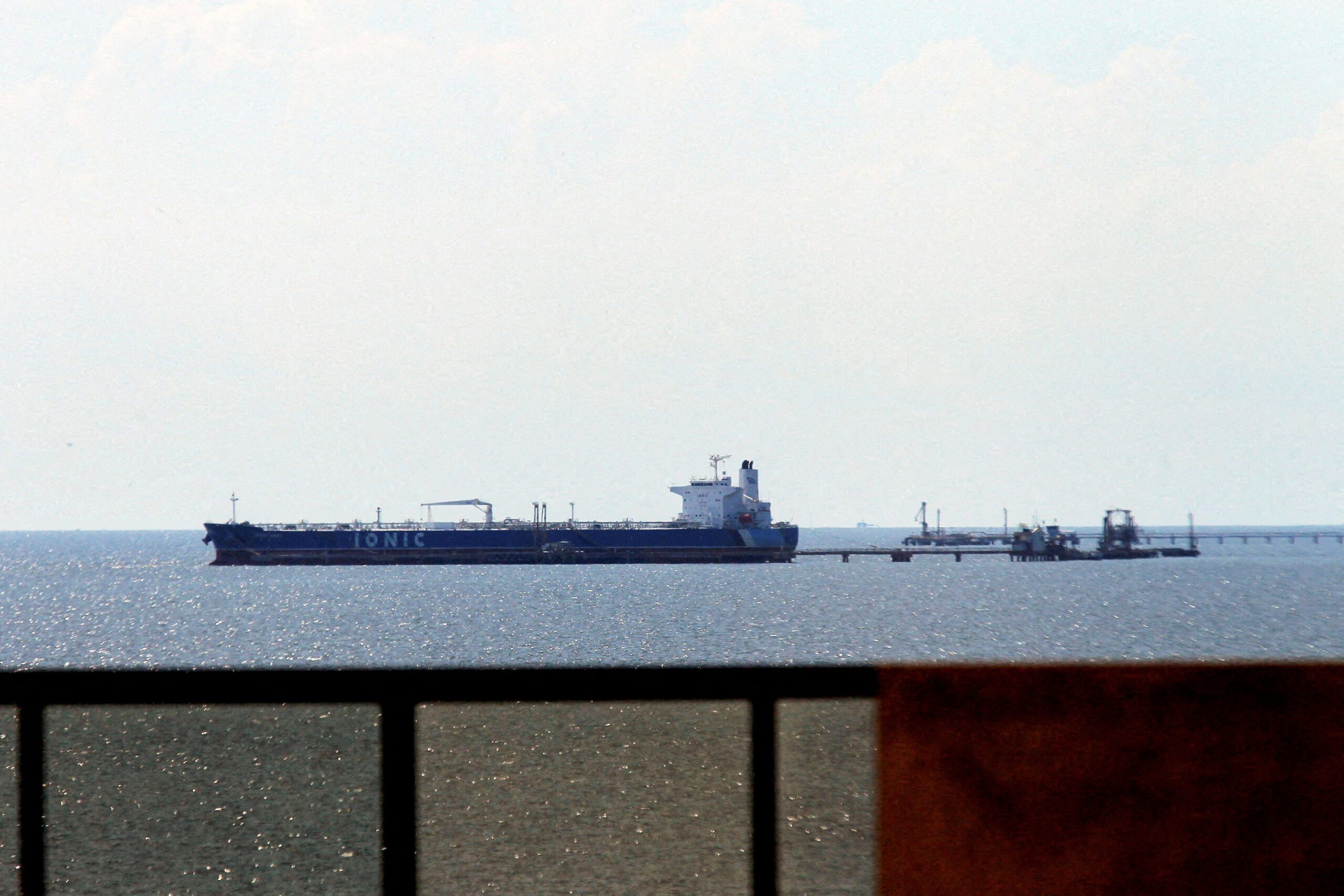
- [EEI 3.1 · PARTIAL] Crude oil and refined product export volumes from Venezuelan ports by vessel (AIS-identified tankers), including flagged destinations and any ship-to-ship transfer events, by week., recommended collection: maritime/AIS
- [EEI 3.2 · PARTIAL] Notices of correspondent banking relationship changes for PDVSA, the Central Bank of Venezuela, or other state entities (account freezes, closures, new bank signings) with bank names and dates., recommended collection: economic/finance
- [EEI 3.3 · PARTIAL] Detected arrivals/deployments of foreign military personnel, equipment, or advisory teams (air/sea container manifests, port calls with cargo descriptions, geolocated imagery of military assets) originating from Russia, Cuba, Iran, or other external supporters., recommended collection: imagery
- [EEI 3.4 · PARTIAL] Export records or interdictions showing volumes and destinations of gold, diamonds, or other high-value commodities linked to state entities or proxies (customs manifests, seized shipments, buyer identities)., recommended collection: economic/finance
Cited sources
[1] gcaptain.com, OFAC Unveils Sweeping Framework for Venezuela Oil, Gas and Mineral Exports (B) · sha256:e901ae3692d2 [2] Wikipedia, Crisis in Venezuela (B) · sha256:18c993dc3cdd [3] nypost.com, Don't buy Iran's charade, this regime can't afford peace at ANY price (B) · sha256:4c752350a632 [4] BeBeez International, Europe, data centers, and digital sovereignty, BeBeez International (D) · sha256:0952fd7ef733 [5] Congressman Hakeem Jeffries, 2026, Page 20, Congressman Hakeem Jeffries (A) · sha256:b34024db3748 [6] theprint.in, US selling Venezuelan oil worth billions. Nobody knows where it’s going (B) · sha256:96ee509dd98c [7] NASA, NASA FIRMS thermal detections, Venezuela (2d) (A) · sha256:c8a91acf1a9c
Source content hashes were computed at collection time; the cited text is preserved unmodified for the life of this product.
Red cell review: PARTIAL DISSENT
TLP:CLEAR