Venezuela: Opposition Mobilization and Interim Leadership Claims Amid Persistent Sanctions (2-9 Jun 2026)
Time window: Last 7 days · Audience: General analyst · Type: Situation report · DTG: 2026-06-09 16:16Z · Overall confidence: MEDIUM
BLUF
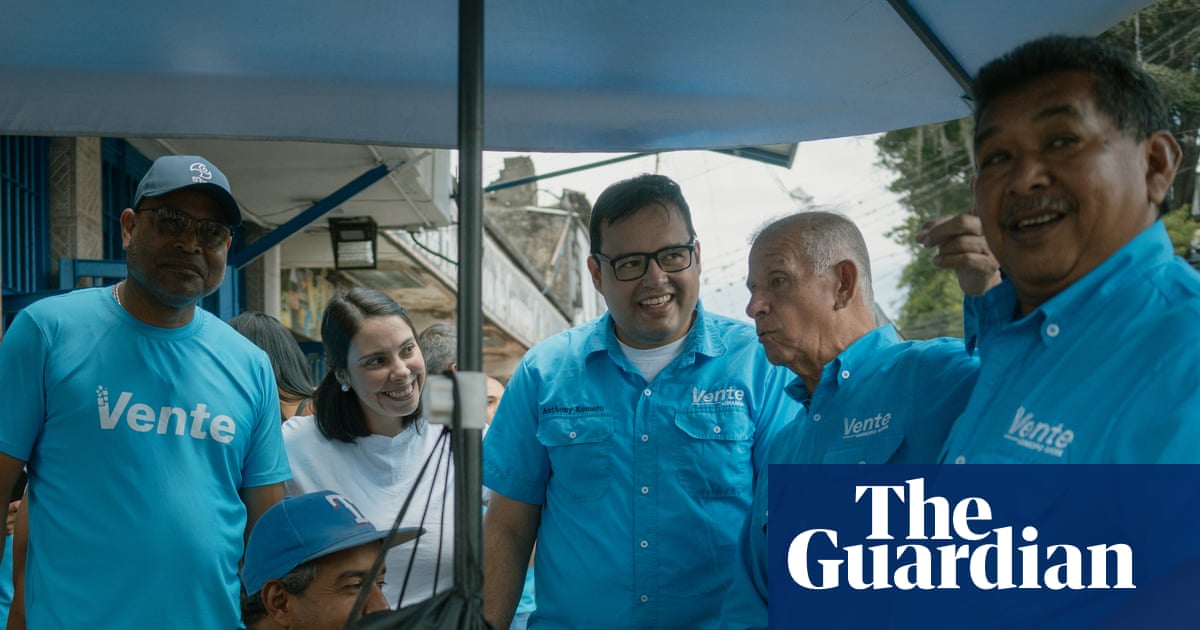
Very likely thousands participated in opposition-led demonstrations across Venezuela, including a 9 June march to the U.S. Embassy in Caracas demanding free elections. Leadership remains contested, with reports that Delcy Rodríguez has served as interim president for ~150 days, while sanctions pressure from the U.S., EU, and partners almost certainly persists, shaping regime and opposition incentives. The risk of renewed repression remains at roughly even chance despite recent tolerance of protests.
Executive summary
Between 2-9 June 2026, opposition groups and allied labor/student organizations very likely mounted large, coordinated protests nationwide, with thousands rallying in Caracas and a documented 9 June march to the U.S. Embassy demanding free presidential and parliamentary elections. Multiple outlets report Delcy Rodríguez marking 150 days as interim president, and opposition figure María Corina Machado is reported poised to lead talks with Rodríguez, while regime messaging has hinted at dialogue. However, the legitimacy crisis rooted in Venezuela’s disputed 2024 election endures, international monitors deemed the vote neither free nor fair, the leading opposition candidate María Corina Machado was barred, the National Electoral Council announced a narrow Maduro victory, the Carter Center reportedly rejected the results, and Canada recognized Edmundo González as president-elect, amid some conflicting dates in open sources. Extensive U.S., EU, and partner sanctions remain in effect (most U.S. sanctions reportedly reimposed in April 2024), and prior patterns of repression under Nicolás Maduro (including nearly 3,000 arrests and UN/HRW allegations of thousands of extrajudicial killings) keep the risk of renewed crackdowns salient even as recent reporting notes greater tolerance of protests by Maduro’s “successors.”
Key judgments
- Very likely opposition-led mass protests escalated nationwide in early June, with thousands rallying in Caracas and a confirmed 9 June march to the U.S. Embassy demanding free elections. (Confidence: high)
- Likely Delcy Rodríguez is functioning as interim president as of 9 June 2026 and is outwardly permitting space for opposition mobilization while signaling openness to talks, with María Corina Machado positioned to lead negotiations. (Confidence: medium)
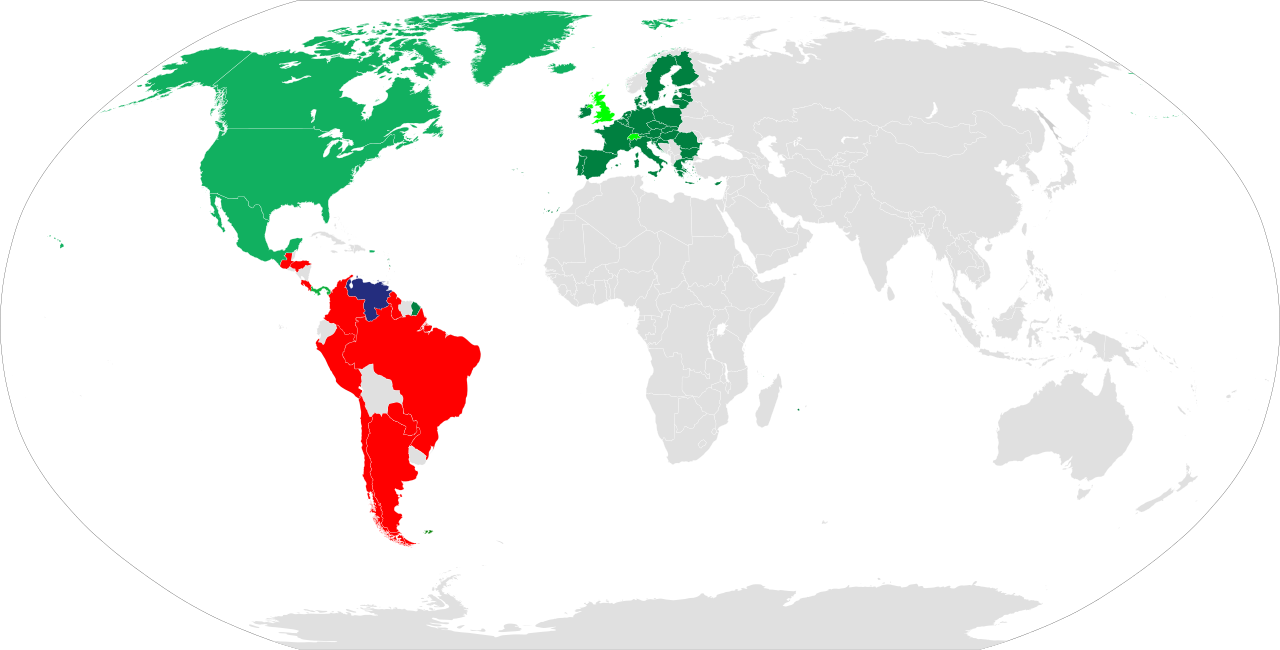
- Very likely Venezuela remains under extensive sanctions from the United States, European Union, Canada, and others, with most U.S. sanctions reportedly reimposed in April 2024 and long-standing restrictions on Venezuelan finance and oil. (Confidence: high)
- Likely the political legitimacy crisis from the 2024 presidential election remains unresolved: international monitors called the vote neither free nor fair; María Corina Machado was barred; the National Electoral Council claimed a narrow Maduro victory; the Carter Center reportedly rejected the results; and Canada recognized Edmundo González as president-elect, though conflicting dates in open sources lower confidence. (Confidence: medium)
- Roughly even chance that authorities revert to mass detentions or lethal force if protests intensify, given prior crackdowns and UN/HRW allegations of thousands of extrajudicial killings, despite recent reporting that Maduro’s successors have largely tolerated protests. (Confidence: medium)
- Likely investor risk perceptions remain elevated in the near term due to legal/institutional uncertainty and enforcement actions against PDVSA personnel, with a history of arbitration disputes further chilling sentiment. (Confidence: low)
- Very likely Venezuela’s humanitarian pressures remain severe, with cumulative displacement reaching millions and the National Assembly having declared a health humanitarian crisis in 2016. (Confidence: high)
Outlook & scenarios
Managed protest wave with exploratory negotiations, 45%
Protests continue but remain largely tolerated by authorities reported as Maduro’s successors, while María Corina Machado engages Delcy Rodríguez in talks. Regime messaging (e.g., Maduro’s stated willingness to open the palace) is used to project openness without ceding core power. Limited concessions (e.g., dialogue frameworks, procedural steps) emerge under sustained sanctions pressure but fall short of a credible electoral reset. Supporting indicators: tolerance of protests (af114e71), reported interim presidency, opposition negotiation posture (dad30e81), and dialogue signaling (49a5bf11).
Renewed crackdown to demobilize opposition, 35%
Security services reassert control with mass arrests and potential lethal force if demonstrations intensify or turn disruptive, drawing on prior patterns under Maduro (nearly 3,000 arrests; UN/HRW allegations of thousands of extrajudicial killings, including 5,287 attributed to FAES in 2017). Sanctions persist or tighten, international condemnation rises, and organized opposition activity is pushed back into semi-clandestine modes. Supporting indicators: prior crackdown (77910b0d), extrajudicial killing allegations.
Protracted stalemate and international split, 50%
Disputed 2024 election outcomes remain unresolved, with fragmented international recognition (e.g., Canada’s recognition of Edmundo González) and contested domestic legitimacy (CNE’s claimed narrow Maduro victory; monitors’ assessment that the vote was neither free nor fair; Carter Center’s reported rejection). Sanctions remain a long-term drag, protests ebb and flow, and negotiations yield little structural change. Supporting indicators:.
Wildcard: Chavista leadership fracture and rapid realignment, 15%
Conflicting open-source claims about Maduro’s status (including reports of his capture or earlier ouster) foreshadow a potential elite split that triggers abrupt leadership reshuffles, accelerating negotiations or prompting hardline retrenchment. While low probability, this pathway would carry high impact for protest dynamics, sanctions calculus, and external recognition. Supporting signals (contradictory):.
Recommendations
- Expand OSINT collection on protest turnout, leadership, routes, and tactical behavior in Caracas and secondary cities; geolocate and time-stamp 9 June rally imagery, and track calls-to-action from student, labor, and party accounts to assess mobilization capacity.
- Continuously monitor security force posture and rules-of-engagement indicators, including unit deployments linked historically to crackdowns (e.g., FAES references in UN reporting), to detect shifts from tolerance to coercion; flag mass-detention surges or lethal-force incidents early.
- Map negotiation signals and participants (María Corina Machado, Delcy Rodríguez) and capture text/audio/video of any dialogue frameworks announced; develop benchmarks to distinguish performative gestures from substantive steps.
- Maintain a current sanctions posture matrix (U.S., EU, Canada, Mexico, Panama, Switzerland; reimposition cycles; sectoral coverage) to anticipate regime and private-sector response options and potential humanitarian carve-outs.
- Track legal risk signals affecting the energy sector (PDVSA detentions, arbitration outcomes) and advise on exposure for U.S. and allied entities considering humanitarian, energy services, or pharmaceutical engagement.
- Refine indicators of political legitimacy trends: compile recognition statements (e.g., Canada’s position), international observation assessments, and domestic electoral body communications; highlight contradictions and gaps for leadership briefs.
- Integrate humanitarian displacement data into neighboring-state risk outlooks and migration planning; monitor protest-linked displacement spikes during peak mobilization periods.
Confidence & uncertainty
Overall confidence is medium. Protest activity is corroborated by multiple independent outlets with precise date/time references, supporting high confidence in mobilization assessments. Sanctions posture is well-documented across several sources, supporting high confidence it remains extensive. Confidence is lower on leadership status and negotiation dynamics: while there is a high-confidence report that Delcy Rodríguez marked 150 days as interim president, contradictory open-source claims about Nicolás Maduro’s status, plus uneven source quality on negotiations, reduce certainty. The 2024 election record is credible but contains date inconsistencies across open sources, tempering confidence in precise timelines; nonetheless, the weight of reporting supports an ongoing legitimacy dispute.