TLP:CLEAR · Disclosure is not limited.
Venezuela political crisis: governance consolidation, US re‑engagement, and persistent risks
Time window: Last 7 days · Audience: General analyst · Type: Situation report · DTG: 2026-06-21 16:14Z · Overall confidence: MEDIUM
BLUF
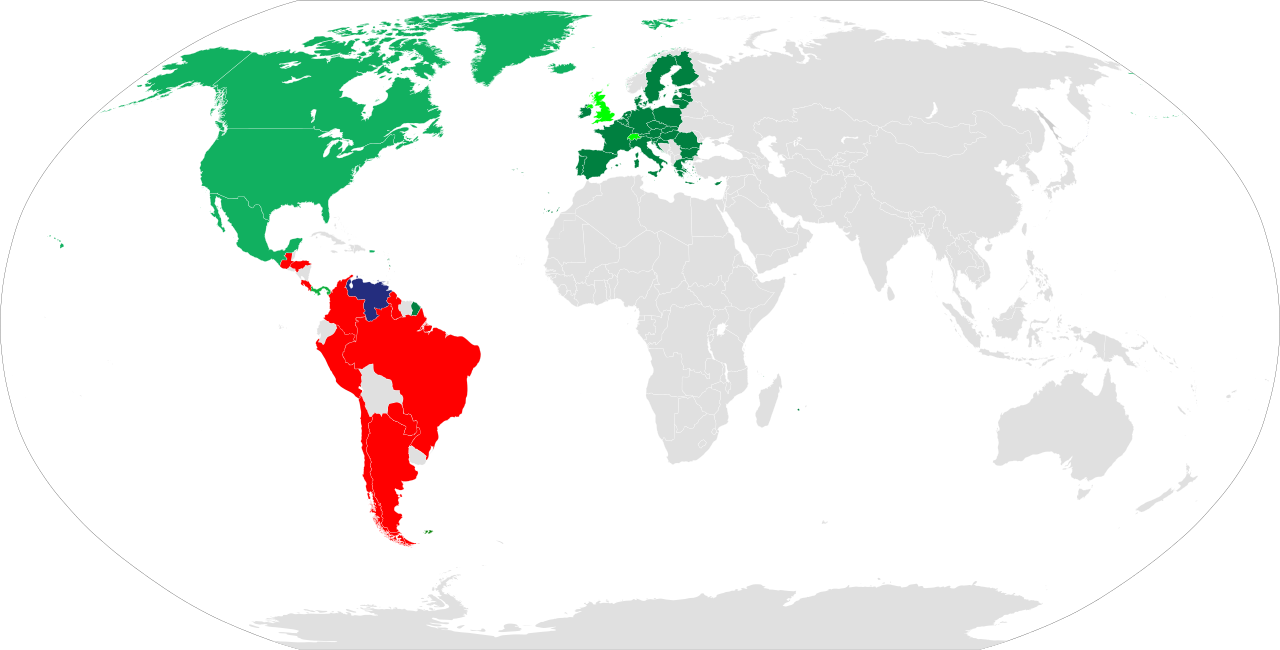
Delcy Rodríguez likely remains the effective authority in Caracas while Washington has re‑opened its embassy, but humanitarian and security conditions across Venezuela remain acute and will constrain near‑term stabilisation. Sanctions and oil‑trade openings are fluid, sustaining both opportunity and policy risk.
Executive summary
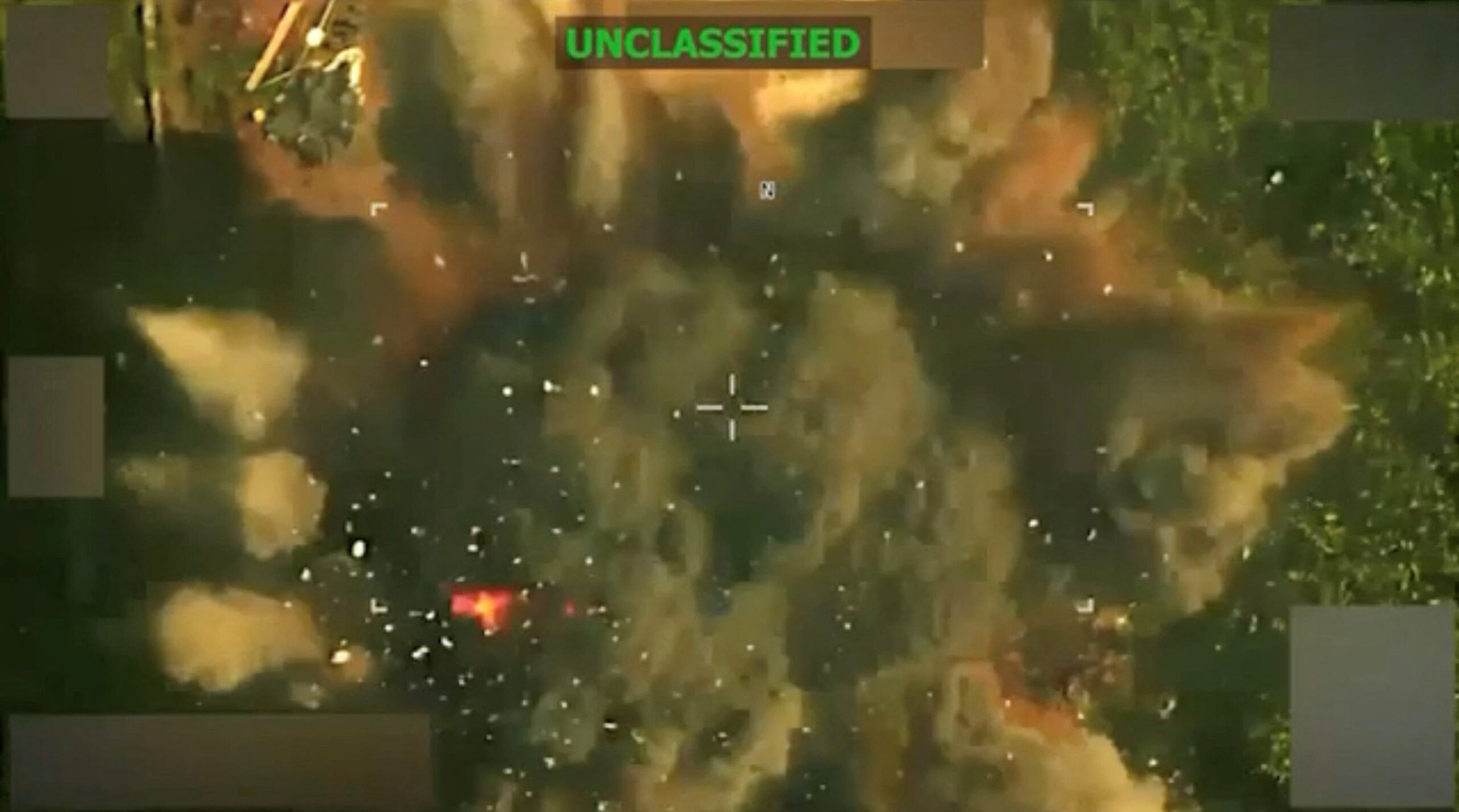
The political transition that followed early‑January 2026 events has left Delcy Rodríguez acting as head of government while Nicolás Maduro faces charges in New York, though capture dates conflict across reports. The United States resumed embassy operations in Caracas in March 2026 and think‑tank reporting indicates Washington’s leverage and de facto recognition of Rodríguez’s government. A measured political opening is suggested by an amnesty bill and hundreds of political‑prisoner releases. Security cooperation appears to be deepening against criminal groups, yet Venezuela’s humanitarian and personal security environment remains severe, with persistent medical system shortfalls, elevated crime and terrorism risks, and travel restrictions near the Colombia border. Sanctions remain layered and dynamic, even as licensing and a large oil‑supply deal signal practical openings. NASA’s 20-21 June thermal detections over Venezuela are non‑specific and do not, by themselves, indicate conflict activity.
Change from previous assessment
Since the 19 June brief, NASA FIRMS recorded new 20-21 June thermal detections over Venezuela that remain non‑diagnostic in the absence of corroboration. No new reporting in this window alters our assessments of governance, US diplomatic posture, sanctions dynamics, or the humanitarian and security baseline. Confidence levels are unchanged, with continued caution around single‑source recognition and collaboration claims.
Key judgments
- Delcy Rodríguez very likely exercises executive authority in Caracas since 5 January 2026 while Nicolás Maduro is in US custody facing charges in New York, though the timing of his early‑January capture is inconsistently reported. (Confidence: medium · ASSESSED)
- I&W: Continued presidential decrees and cabinet appointments issued in Caracas under Rodríguez. (1-3 months)
- I&W: Official notice from the Manhattan federal court altering Maduro’s custody status. (0-14 days)
- The United States almost certainly re‑engaged diplomatically by resuming operations at the US Embassy in Caracas in March 2026. (Confidence: medium · REPORTED)
- I&W: Public announcement of an ambassador’s arrival and credentialing in Caracas. (1-3 months)
- I&W: State Department notice suspending embassy operations again. (0-14 days)
- Washington likely treats the Rodríguez government as Venezuela’s authority and has leverage to press for a democratic transition, but this rests on think‑tank reporting rather than official statements. (Confidence: medium · ASSESSED)
- I&W: Formal US statement recognising Rodríguez’s government or an exchange of ambassadors. (1-3 months)
- I&W: US public reversion to recognising a different Venezuelan authority. (1-3 months)
- A measured political opening is likely underway, signalled by Rodríguez’s 30 January amnesty bill and at least 621 political‑prisoner releases confirmed by 8 March 2026. (Confidence: medium · REPORTED)
- I&W: Additional verified political‑prisoner releases or legislative progress on the amnesty bill. (1-3 months)
- I&W: Renewed mass arrest campaigns targeting opposition figures. (0-14 days)
- Security cooperation between Venezuelan security forces and Washington is likely deepening, reflected in reported collaboration on the strike against Tren de Aragua leader “Niño Guerrero” and Venezuelan military operations against criminal groups in Bolívar. (Confidence: medium · ASSESSED)
- I&W: Publicly acknowledged joint or coordinated operations inside Venezuela against transnational criminal groups. (1-3 months)
- I&W: Official Venezuelan denunciations of recent US security actions. (0-14 days)
- Humanitarian and personal security conditions are almost certainly acute nationwide, including critical medicine shortages, degraded hospital utilities, kidnapping and terrorism risks, and travel restrictions for US government personnel near the Colombia border. (Confidence: high · REPORTED)
- I&W: Continuation of US travel advisory language warning of crime, kidnapping, terrorism and poor health infrastructure. (1-3 months)
- I&W: Official downgrading of US risk posture for Venezuela. (1-3 months)
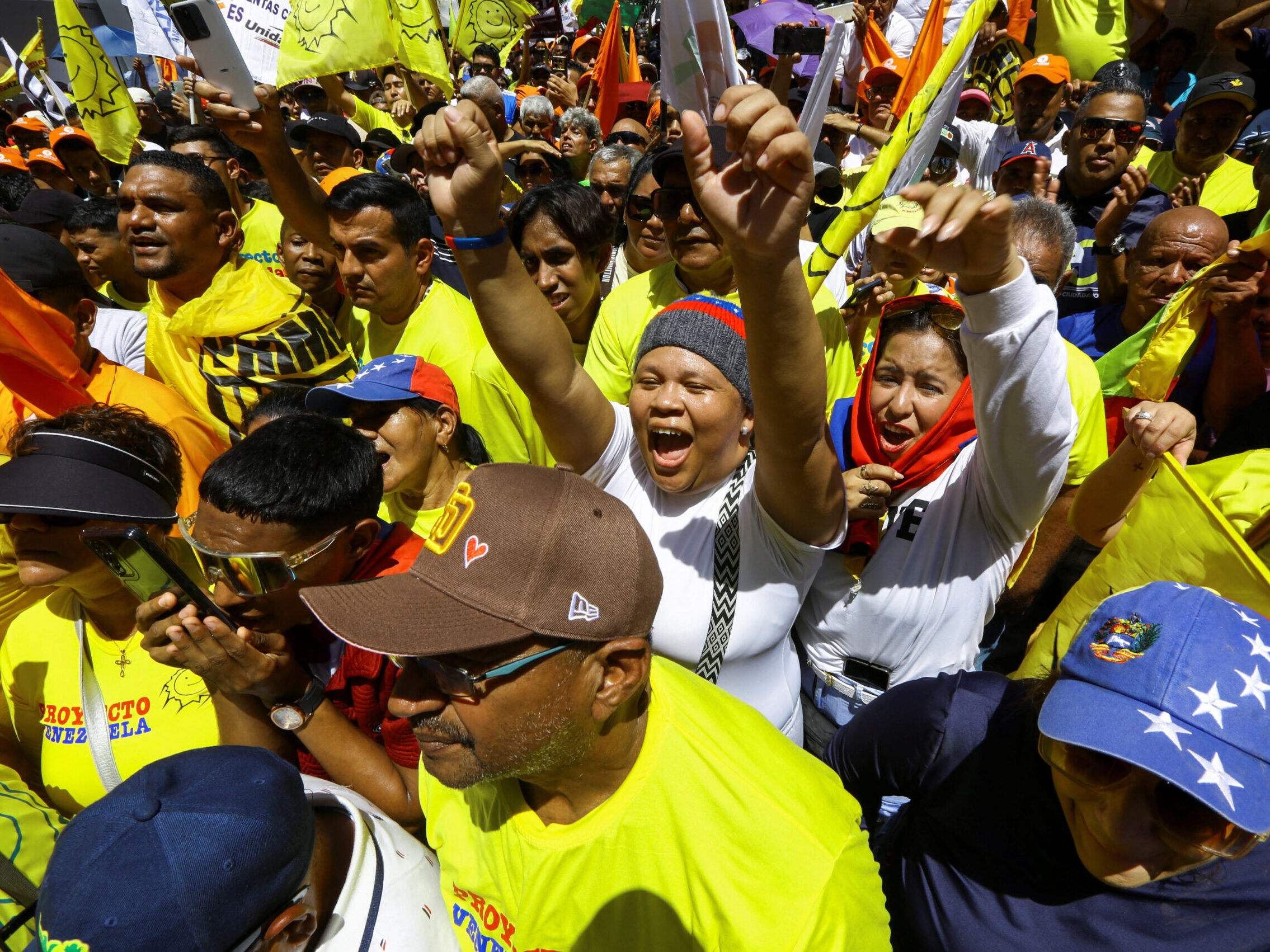
- The 2024 presidential vote remains contested and a source of volatility, with the electoral authority’s narrow‑victory claim, rejection by The Carter Center, nationwide protests after the announcement, and opposition candidate Edmundo González leaving for asylum following an arrest warrant. (Confidence: medium · ASSESSED)
- I&W: Renewed opposition mobilisation or international statements revisiting the 2024 results. (1-3 months)
- I&W: Consensus statements by major opposition factions accepting the 2024 outcome. (1-3 months)
- The sanctions environment is fluid, with a roughly even chance that practical openings for Venezuelan oil trade persist alongside layered US and partner sanctions and case‑by‑case licensing, including a 50‑million‑barrel US, Venezuela oil deal announced on 20 January 2026. (Confidence: medium · ASSESSED)
- I&W: New OFAC licences or publicised exemptions enabling additional Venezuelan cargoes or payments. (1-3 months)
- I&W: Fresh US or European listings targeting Venezuelan oil trade or finance. (0-14 days)
- NASA’s 20-21 June FIRMS detections in Venezuela almost certainly represent non‑specific heat sources and, without corroboration, do not indicate conflict activity. (Confidence: high · REPORTED)
- I&W: Geolocated imagery or local reporting tying detections to wildfires or industrial activity. (0-14 days)
- I&W: Independent reporting of armed clashes or strikes at the specific coordinates. (0-14 days)
Outlook & scenarios
Controlled consolidation and calibrated US engagement (60%)
Rodríguez consolidates day‑to‑day authority, the reopened US Embassy deepens engagement, and a limited political opening proceeds via amnesty implementation and additional releases. Energy dealings continue under licences and bespoke arrangements, while core sanctions remain.
Sanctions limbo with transactional oil flows (50%)
Policy remains unsettled: layered US and partner sanctions persist, but targeted licences and deals enable intermittent oil flows. Firms face compliance risk and stop‑start commercial windows as listings and licences shift.
Security shock stalls opening (35%)
A major criminal or terrorist incident, or a spike in kidnapping, triggers a security clampdown that slows prisoner releases and political gestures. Cross‑border and internal travel restrictions harden, further deterring external engagement.
Wildcard: courtroom‑driven rupture (20%)
Developments in Maduro’s New York case spark diplomatic backlash, complicating US, Caracas ties and potentially pausing embassy operations or cooperation against criminal groups. Political polarisation increases and commercial risk rises.
Recommendations
- Maintain a running indicator log on recognition and diplomatic posture: track ambassadorial appointments, exchange of credentials, and any State Department notices adjusting embassy operations.
- Task a sanctions and licensing watch: monitor new OFAC actions and partner listings alongside publicised oil‑deal milestones to map compliance risk and commercial openings.
- Build a political‑opening tracker: catalogue progress of the amnesty bill and verified political‑prisoner releases to assess momentum and reversals.
- Prioritise security risk baselining for travel and operations: integrate DoS warnings on crime, kidnapping, terrorism and border‑area restrictions into movement planning and vendor selection.
- Vet satellite‑derived heat detections with multisource corroboration before flagging conflict activity: cross‑check FIRMS hotspots with local reporting, imagery and known industrial or wildfire areas.
Confidence & uncertainty
Overall confidence is medium. Several core points rest on official US government reporting and major media, including embassy resumption, humanitarian and security advisories, the amnesty initiative, and prisoner releases. However, key elements on US recognition and the depth of US, Venezuelan security collaboration rely on think‑tank analysis rather than official communiqués, and early‑January timelines around Maduro’s capture are inconsistent across sources. These gaps and contradictions warrant a medium headline confidence despite strong sourcing on humanitarian and risk conditions.
Alternative analysis (red cell)
Given the contradictory timelines around Maduro’s capture and Rodríguez’s swearing‑in and the reliance on medium/analytic sources rather than primary government or operational documents, definitive claims about who exercises full executive authority, the extent of US recognition, and the depth of security cooperation are premature. The available evidence supports multiple interpretations — limited or symbolic engagement by the US, selective political concessions by Caracas, and unresolved attribution of thermal anomalies — and primary diplomatic, judicial, operational, and on‑the‑ground verification is needed to adjudicate them.
Intelligence gaps
- [EEI 1.2 · UNCOVERED] Public resignations, defections, detentions, or disciplinary actions naming specific senior military, intelligence, or police officers (name, rank, unit, date, supporting evidence). Recommended collection: open-source/social media
- [EEI 1.3 · UNCOVERED] Published orders, decrees, or personnel lists showing promotions, reassignments, or purges within the National Bolivarian Armed Forces, National Guard, or presidential protection units (document or official gazette reference). Recommended collection: open-source/diplomatic
- [EEI 1.4 · PARTIAL] Arrests, detentions, or restrictions on movement of named opposition leaders or political figures with detention location, custody authority, and detention conditions reported. Recommended collection: human/local media
- [EEI 2.1 · PARTIAL] Verified protest activity by location and estimated turnout (street-level counts, police reports, hospital/ambulance logs, timestamped geolocated photos or videos) on specified dates. Recommended collection: social media/open-source
- [EEI 2.2 · UNCOVERED] Documented lists or communications naming regional protest coordinators, strike organizers, or logistics nodes (transport bookings, fuel/food supply movements) tied to opposition plans. Recommended collection: social media/human
- [EEI 2.3 · UNCOVERED] Financial movements to opposition-controlled organizations or individuals above defined thresholds (bank transfers, wire records, large cash seizures, crypto wallet transfers with timestamps and amounts). Recommended collection: financial/forensic
- [EEI 2.4 · UNCOVERED] Public formation or activation of alternative governance bodies by the opposition (declared councils/ministries, named members, declared headquarters or offices) with supporting documentation or announcements. Recommended collection: open-source/diplomatic
- [EEI 3.1 · PARTIAL] Crude oil and refined product export volumes from Venezuelan ports by vessel (AIS-identified tankers), including flagged destinations and any ship-to-ship transfer events, by week. Recommended collection: maritime/AIS
- [EEI 3.2 · UNCOVERED] Notices of correspondent banking relationship changes for PDVSA, the Central Bank of Venezuela, or other state entities (account freezes, closures, new bank signings) with bank names and dates. Recommended collection: economic/finance
- [EEI 3.3 · UNCOVERED] Detected arrivals/deployments of foreign military personnel, equipment, or advisory teams (air/sea container manifests, port calls with cargo descriptions, geolocated imagery of military assets) originating from Russia, Cuba, Iran, or other external supporters. Recommended collection: imagery
- [EEI 3.4 · UNCOVERED] Export records or interdictions showing volumes and destinations of gold, diamonds, or other high-value commodities linked to state entities or proxies (customs manifests, seized shipments, buyer identities). Recommended collection: economic/finance
Cited sources
[1] Wikipedia · 2026 United States intervention in Venezuela (B) · sha256:2b56cfa20b68 [2] Wikipedia · Nicolás Maduro (B) · sha256:fcc8b325ca53 [3] Atlantic Council · Updating the Democratic Transition Framework to chart a way forward in Venezuela (C) · sha256:f328f5b01fb8 [4] U.S. Department of State · Venezuela Travel Advisory | Travel.State.gov (A) · sha256:56ec7c299e19 [5] Atlantic Council · The recent US-Venezuelan strike on Tren de Aragua’s leader will reverberate across Latin America (C) · sha256:8ea6d63d3e05 [6] Wikipedia · 2024 Venezuelan political crisis (B) · sha256:57e65190aea0 [7] Wikipedia · Crisis in Venezuela (B) · sha256:1d68b8eb1f83 [8] Wikipedia · Sanctions during the Venezuelan crisis (B) · sha256:07a964b9395e [9] NASA · NASA FIRMS thermal detections — Venezuela (2d) (A) · sha256:172a71093379
Source content hashes were computed at collection time; the cited text is preserved unmodified for the life of this product.
Red cell review: PARTIAL DISSENT — KJ-2 downgraded HIGH→MEDIUM (kj_thin)
TLP:CLEAR