TLP:CLEAR · Disclosure is not limited.
Venezuela Political Crisis: Repression Persists Amid Selective Opening
Time window: Last 7 days · Audience: General analyst · Type: Situation report · DTG: 2026-09-20 16:08Z · Overall confidence: MEDIUM
BLUF
Very likely, interim President Delcy Rodríguez retains an operational coercive apparatus despite releases, amnesty measures, media unblocking and dialogue with an opposition faction. Likely, negotiations will produce selective concessions while accountability remains unresolved; the proposed transfer of roughly $4 billion in gold is not finalised, and the reported oil concession remains contested.
Executive summary
The 16 September findings of the UN Independent International Fact-Finding Mission and Human Rights Watch reporting on 18 September both indicate that repression continues under Rodríguez. The UN documented 64 new torture cases after 3 January 2026, while reports place the number of political prisoners at least at 344 and possibly between 379 and 500. Dialogue led by Jorge Rodríguez and Dinorah Figuera has produced releases, an amnesty law, media access measures and proposed institutional reforms, but no evidence shows dismantling of the security, intelligence or judicial structures associated with abuse. Negotiations over approximately 31 metric tons of Venezuelan gold held by the Bank of England remain incomplete. Earthquake damage and pre-existing humanitarian needs continue to add pressure on the authorities.
Change from previous assessment
No material change from the 19 September prior brief. The assessment that Venezuela's coercive apparatus remains operational, that dialogue is producing selective concessions without demonstrated accountability, and that the gold arrangement is unresolved remains unchanged. Overall confidence remains medium, and no prior judgment has been retired or materially raised.
Key judgments
- Very likely, Venezuela's coercive apparatus remains operational under interim President Delcy Rodríguez despite reported releases and institutional reform measures. The UN Independent International Fact-Finding Mission documented 64 new torture cases after 3 January 2026, pit-like cells at Fuerte Guaicaipuro, continued patterns of arbitrary detention, enforced disappearance and torture, and at least 19 officials implicated in gross violations remaining in or reassigned to key positions. Human Rights Watch also reported mistreatment and torture at Rodeo I prison in Caracas. (Confidence: high · ASSESSED)
- I&W: Confirm: Within 0-14 days, the UN Mission or Human Rights Watch reports a new case of torture, enforced disappearance or mistreatment at Fuerte Guaicaipuro or Rodeo I prison. (0-14 days)
- I&W: Break: Within 1-3 months, Venezuelan authorities publish verified removal of the 19 implicated officials from key posts and independent monitors report that the security, intelligence and judicial structures enabling violations have been dismantled. (1-3 months)
- Very likely, Venezuelan authorities will continue using short-term arbitrary detention to intimidate opposition activists, journalists and civil-society actors, even though long-duration detentions have decreased since 3 January 2026. The UN Mission identified this pattern, and the detention and release of former opposition mayor Javier Oropeza on 18 September provides a recent example. (Confidence: high · ASSESSED)
- I&W: Confirm: Venezuelan authorities detain and release a named opposition activist, journalist or civil-society actor within 24 hours. (0-14 days)
- I&W: Break: For 1-3 months, the UN Mission and Human Rights Watch record no short-term arbitrary arrests involving these groups and report that the structures enabling such arrests no longer operate. (1-3 months)
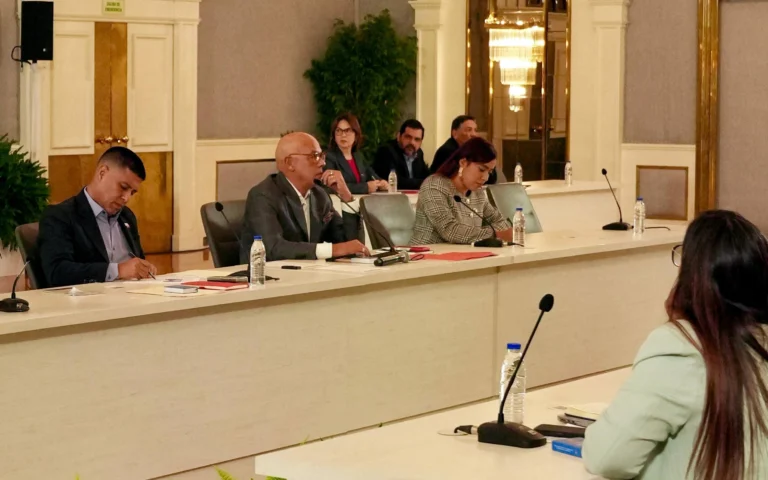
- Likely, dialogue between Venezuelan authorities and the opposition delegation led by Dinorah Figuera will produce selective concessions without effective political accountability. The government delegation led by Jorge Rodríguez has discussed freedom of expression, judicial reform and electoral institutions with the opposition, while authorities have released hundreds of political prisoners, passed an amnesty law, unblocked some media websites, announced reforms to the Supreme Tribunal of Justice and Electoral Council, and closed the case against Carlos Correa. The UN Mission's finding that sustained improvement requires dismantling repression mechanisms, restoring judicial guarantees and pursuing accountability, together with the continued presence of 19 implicated officials in key posts, indicates that the reported measures have not yet produced institutional transformation. (Confidence: medium · ASSESSED)
- I&W: Confirm: Within 1-3 months, authorities implement another release, amnesty application, media-unblocking measure or institutional reform announced through the dialogue without removing or prosecuting implicated officials. (1-3 months)
- I&W: Break: Venezuelan authorities publish and implement effective judicial or electoral reforms alongside verified removal or prosecution of officials implicated in gross violations. (1-3 months)
- Likely, the proposed transfer of Venezuelan gold will remain unresolved, limiting immediate access to liquidity for the Rodríguez government. The Bank of England holds approximately 31 metric tons of Venezuelan gold valued at roughly $4 billion, while people familiar with negotiations describe a possible transfer to a US-controlled account in New York subject to external audits for earthquake reconstruction; the arrangement has not been finalised. This assessment rests mainly on medium-confidence reporting about the negotiations. (Confidence: medium · ASSESSED)
- I&W: Confirm: Within 1-3 months, the negotiating parties continue to describe the transfer as under discussion or the Bank of England continues to hold the gold without published audit and transfer terms. (1-3 months)
- I&W: Break: The Bank of England and the negotiating parties publicly confirm transfer to a US-controlled account in New York and publish the external audit arrangements. (1-3 months)
- Likely, the reported US-Venezuelan oil concession will remain legally and politically contested, and any associated sanctions relief will remain uncertain. Available reporting conflicts over whether the operator is a new private company reportedly headed by Alejandro Betancourt or a US government deal with the Rodríguez government. The reported arrangement covers 17 oil fields and approximately 65 billion barrels, while the Venezuelan opposition calls it unconstitutional. The claim linking the agreement to lifting US sanctions is low-confidence, so this judgment is thinly supported and carries low confidence. (Confidence: low · ASSESSED)
- I&W: Confirm: Within 1-3 months, Venezuelan opposition representatives or courts continue to challenge the concession while official accounts differ over the operator or controlling authority. (1-3 months)
- I&W: Break: The United States and the Rodríguez government publish the signed concession terms, identify the operator and output allocation, and the opposition withdraws its constitutional objection. (1-3 months)
- Very likely, earthquake-related humanitarian stress will remain acute and continue to pressure Venezuelan authorities. HumVenezuela reported that more than 18 million of Venezuela's 28.5 million people were already unable to meet basic needs before the June earthquakes, which reportedly killed at least 6,300 people. The UN Mission also reported that the earthquakes had repercussions for human rights protection. This is a forward-looking assessment based on high-confidence reporting, but current reporting does not provide a fresh nationwide needs estimate after the earthquake. (Confidence: medium · ASSESSED)
- I&W: Confirm: Within 0-14 days, UN or Venezuelan civil-society monitors report that more than 18 million people remain unable to meet basic needs or identify new earthquake-related protection failures. (0-14 days)
- I&W: Break: Within 1-3 months, UN or civil-society reporting records fewer than 18 million people unable to meet basic needs and confirms functioning reconstruction support for earthquake-affected communities. (1-3 months)
Outlook & scenarios
Managed selective opening (55%)
Venezuelan authorities continue releases, amnesty measures, limited media access and dialogue with the faction led by Dinorah Figuera. Jorge Rodríguez's delegation announces additional institutional measures, but the security, intelligence and judicial structures identified by the UN Mission remain in place. Gold negotiations continue without final transfer.
Coercive continuity with calibrated intimidation (30%)
The Rodríguez government preserves the appearance of reform while security bodies continue short-term arrests of opposition activists, journalists and civil-society actors. The detention of Javier Oropeza becomes a model for intimidation without sustained detention. Dialogue continues but produces few measures beyond selective releases and administrative concessions.
Economic arrangements advance without accountability (20%)
The Venezuelan government and a US-controlled mechanism finalise terms for the gold transfer, while the reported oil concession moves towards implementation. The arrangements improve access to reconstruction finance or commercial activity, but the UN's accountability concerns and the opposition's constitutional objections remain unresolved.
Abrupt coercive reversal (10%)
Very unlikely, but high impact: dialogue breaks down and authorities expand short-term intimidation into sustained detention and wider torture of opposition and civil-society figures. The shift would invalidate the current selective-opening trajectory and intensify scrutiny of the Rodríguez government.
Recommendations
- Prioritise independent verification of detainee status at Fuerte Guaicaipuro and Rodeo I, including new cases of torture, enforced disappearance or mistreatment. Maintain separate totals for confirmed detainees and NGO estimates.
- Track dialogue implementation rather than announcements. Record each release, amnesty application, media-unblocking measure, Supreme Tribunal of Justice or Electoral Council reform step, and any removal or prosecution of officials implicated in gross violations.
- Keep the gold and oil issues on separate confidence tracks. Do not treat the proposed gold transfer as available finance until the parties publish an agreement, audit terms and transfer confirmation. Separately seek primary documentation on the oil concession's operator, field coverage, output allocation and sanctions implications.
- Monitor the next 14 days for short-term arrests involving named opposition activists, journalists and civil-society actors. Treat a new detention followed by release within 24 hours as confirmation of continued intimidatory use of the coercive apparatus.
- Request a refreshed humanitarian needs estimate after the June earthquakes and compare it with the reported baseline of more than 18 million people unable to meet basic needs. Use any confirmed gold or reconstruction financing announcement as a separate implementation indicator.
Confidence & uncertainty
Overall confidence is medium. High-reliability reporting from the UN Independent International Fact-Finding Mission and Human Rights Watch corroborates continued repression, detainee abuse and selective reform measures. The main uncertainties are the conflicting political-prisoner estimates of at least 344 versus 379 to 500, the tension between fewer long-duration detentions and 64 reported torture cases after 3 January 2026, and the unresolved gold and oil arrangements. The oil reporting in particular is contested and includes low-confidence claims about sanctions relief.
Intelligence gaps
- [EEI 1.2 · UNCOVERED] Public resignations, defections, detentions, or disciplinary actions naming specific senior military, intelligence, or police officers (name, rank, unit, date, supporting evidence). Recommended collection: open-source/social media
- [EEI 1.3 · PARTIAL] Published orders, decrees, or personnel lists showing promotions, reassignments, or purges within the National Bolivarian Armed Forces, National Guard, or presidential protection units (document or official gazette reference). Recommended collection: open-source/diplomatic
- [EEI 1.4 · PARTIAL] Arrests, detentions, or restrictions on movement of named opposition leaders or political figures with detention location, custody authority, and detention conditions reported. Recommended collection: human/local media
- [EEI 2.1 · PARTIAL] Verified protest activity by location and estimated turnout (street-level counts, police reports, hospital/ambulance logs, timestamped geolocated photos or videos) on specified dates. Recommended collection: social media/open-source
- [EEI 2.2 · UNCOVERED] Documented lists or communications naming regional protest coordinators, strike organizers, or logistics nodes (transport bookings, fuel/food supply movements) tied to opposition plans. Recommended collection: social media/human
- [EEI 2.3 · UNCOVERED] Financial movements to opposition-controlled organizations or individuals above defined thresholds (bank transfers, wire records, large cash seizures, crypto wallet transfers with timestamps and amounts). Recommended collection: financial/forensic
- [EEI 2.4 · UNCOVERED] Public formation or activation of alternative governance bodies by the opposition (declared councils/ministries, named members, declared headquarters or offices) with supporting documentation or announcements. Recommended collection: open-source/diplomatic
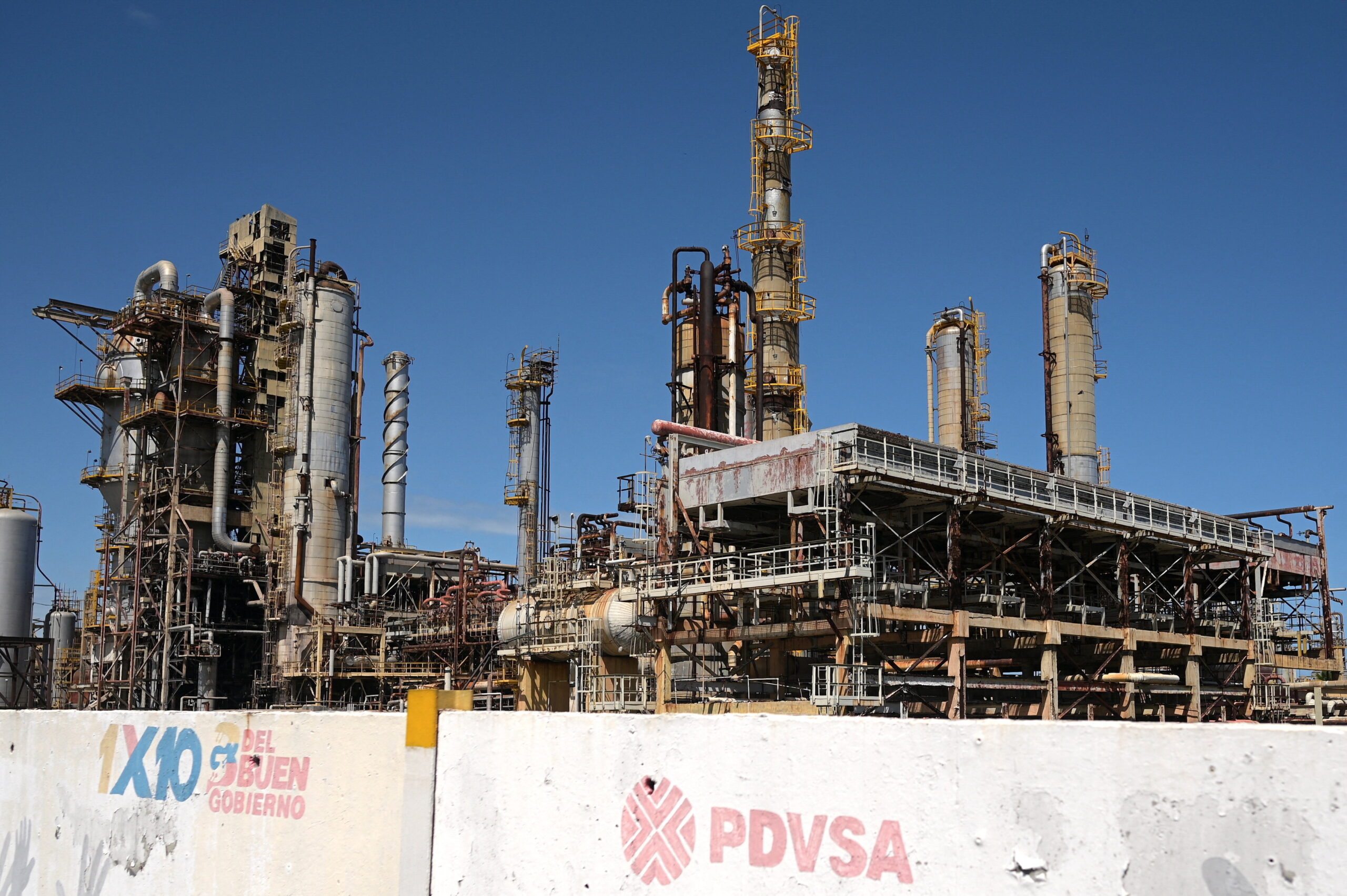
- [EEI 3.1 · UNCOVERED] Crude oil and refined product export volumes from Venezuelan ports by vessel (AIS-identified tankers), including flagged destinations and any ship-to-ship transfer events, by week. Recommended collection: maritime/AIS
- [EEI 3.2 · UNCOVERED] Notices of correspondent banking relationship changes for PDVSA, the Central Bank of Venezuela, or other state entities (account freezes, closures, new bank signings) with bank names and dates. Recommended collection: economic/finance
- [EEI 3.3 · PARTIAL] Detected arrivals/deployments of foreign military personnel, equipment, or advisory teams (air/sea container manifests, port calls with cargo descriptions, geolocated imagery of military assets) originating from Russia, Cuba, Iran, or other external supporters. Recommended collection: imagery
- [EEI 3.4 · PARTIAL] Export records or interdictions showing volumes and destinations of gold, diamonds, or other high-value commodities linked to state entities or proxies (customs manifests, seized shipments, buyer identities). Recommended collection: economic/finance
Cited sources
[1] United Nations (UN News) · Repression continues in Venezuela in the face of ‘appalling’ human rights violations (A) · Wed Sep 16 2026 20:32:35 GMT+0000 (Coordinated Universal Time) · sha256:d7f50c27a325 [2] Human Rights Watch · Venezuela: Reform Needed for Rights Progress (B) · Fri Sep 18 2026 18:20:00 GMT+0000 (Coordinated Universal Time) · sha256:5a2702af168e [3] UN Human Rights Council – Independent International Fact-Finding Mission on Venezuela (OHCHR) · [PDF] A/HRC/63/CRP.5 - ohchr (A) · sha256:d6ef8fae2005 [4] Human Rights Watch · Venezuela's Rights Progress Hinges on Reform (B) · sha256:50d7f4b33142 [5] teleSUR English · Venezuela Government Opposition Dialogue: 4 Promising Gains on Rights and Transparency - teleSUR English (B) · sha256:c0c67040358f [6] Atlantic Council · Four questions on the US-Venezuelan oil deal (C) · Tue Sep 01 2026 17:17:16 GMT+0000 (Coordinated Universal Time) · sha256:fb77640091ef [7] International Viewpoint · Venezuela’s Process & Fall: The Legacy of Hugo Chávez (D) · sha256:906bbfd8a0f4
Source content hashes were computed at collection time; the cited text is preserved unmodified for the life of this product.
TLP:CLEAR