TLP:CLEAR · Disclosure is not limited.
Venezuela political crisis: situation report, 15-22 June 2026
Time window: Last 7 days · Audience: General analyst · Type: Situation report · DTG: 2026-06-22 14:27Z · Overall confidence: MEDIUM
BLUF
Caracas remains under acting President Delcy Rodríguez while Washington fine‑tunes sanctions tools and keeps its embassy open; humanitarian and security risks stay acute, and NASA hotspot detections do not indicate conflict activity. Colombia’s unsettled presidential outcome keeps the Colombian side of the border volatile, warranting continued caution for movements near the frontier.
Executive summary
Delcy Rodríguez has been the acting authority since 5 January 2026 after the United States captured Nicolás Maduro in Caracas on 3 January and transported him to New York, where he pleaded not guilty on 5 January. The United States resumed operations at its embassy in Caracas in March 2026. Sanctions policy is being actively adjusted: OFAC issued GL 55F on 11 June and GL 5X on 18 June while core restrictions in E.O. 13835 remain in force. Earlier signals of opening under Rodríguez included a 29 January 2026 oil‑sector law expanding private control and at least 621 political‑prisoner releases by 8 March. Humanitarian and security conditions remain severe, with a degraded health system, violent crime risks and formal U.S. prohibitions on staff travel to the Venezuela, Colombia border. NASA FIRMS recorded 135 thermal anomalies in Venezuela on 21-22 June using VIIRS, which register heat rather than cause and do not themselves evidence combat. In neighbouring Colombia, Abelardo de la Espriella claimed a razor‑thin preliminary lead while Iván Cepeda urged waiting for the binding count; protests and clashes in Cali indicate near‑term volatility on the Colombian side of the border.
Change from previous assessment
New detail in this update includes June licence actions by OFAC (GL 55F on 11 June and GL 5X on 18 June) and fresh NASA FIRMS hotspot detections on 21-22 June that do not indicate conflict on their own. We add a forward look on Colombia’s unsettled presidential outcome and associated protest activity in Cali as a factor for the border environment. Our judgments on Rodríguez’s de facto authority, U.S. embassy operations in Caracas, and the acute humanitarian and security context are unchanged; confidence levels are maintained, with sanctions‑related judgments kept at medium given ongoing contradictions.
Key judgments
- Delcy Rodríguez very likely remains Venezuela’s acting executive authority since 5 January 2026 while Nicolás Maduro is in U.S. custody in New York following his 3 January 2026 capture and 5 January plea. (Confidence: medium · ASSESSED)
- I&W: Official decrees, cabinet reshuffles or budget acts signed by Rodríguez and published in Caracas. (1-3 months)
- I&W: Announcement in Caracas of an alternative acting president or legal suspension of Rodríguez’s authority. (1-3 months)
- The United States almost certainly resumed operations at the U.S. Embassy in Caracas in March 2026 after seven years of suspension. (Confidence: medium · REPORTED)
- I&W: Regular consular notices, security alerts and public‑facing services issued from the U.S. Embassy Caracas. (0-14 days)
- I&W: Official notice of a new suspension of operations in Caracas. (0-14 days)
- U.S. sanctions posture is being actively adjusted in June 2026: OFAC issued GL 55F on 11 June and GL 5X on 18 June, while E.O. 13835’s prohibitions on U.S. person dealings in Venezuelan government equity remain in effect. (Confidence: high · REPORTED)
- I&W: Further OFAC licences, FAQs or determinations updating Venezuela authorities or timing. (0-30 days)
- I&W: White House or Treasury announcement rescinding core E.O. 13835 prohibitions. (1-3 months)
- Given conflicting reporting on sanctions relief since late 2023, there is a roughly even chance that practical openings for Venezuelan oil trade persist via case‑by‑case licensing rather than wholesale relief. (Confidence: medium · ASSESSED)
- I&W: New or renewed transaction‑specific OFAC licences for oil lifting and payment processing involving Venezuelan barrels. (1-3 months)
- I&W: Comprehensive U.S. measures that curtail previously licensed Venezuelan oil liftings. (1-3 months)
- Humanitarian and personal security conditions are almost certainly acute nationwide, with a severe healthcare crisis, violent crime risks and formal U.S. prohibitions on staff travel to the Venezuela, Colombia border region. (Confidence: high · REPORTED)
- I&W: Updated U.S. travel advisories maintaining crime, kidnapping and health‑infrastructure warnings for Venezuela and the border region. (0-30 days)
- I&W: Official easing of U.S. government employee travel restrictions to the Venezuela, Colombia border. (1-3 months)
- Security cooperation between Washington and Venezuelan security forces likely deepened, reflected in reported collaboration on a strike against Tren de Aragua leader Hector Rusthenford “Niño” Guerrero and Venezuelan military operations against criminal groups in the Orinoco Mining Arc. (Confidence: medium · ASSESSED)
- I&W: Public joint readouts, liaison announcements or training engagements between U.S. and Venezuelan security services. (1-3 months)
- I&W: Official denunciations by Caracas of U.S. security actions or a halt in operations in the Orinoco Mining Arc. (1-3 months)
- Measured political and economic opening under Rodríguez likely included a 29 January 2026 oil‑sector law expanding private control and at least 621 political‑prisoner releases by 8 March 2026. (Confidence: medium · REPORTED)
- I&W: Further verified prisoner releases or court actions consistent with earlier amnesty implementation. (1-3 months)
- I&W: Re‑arrests of released detainees or formal rollback of private‑sector oil authorities. (1-3 months)
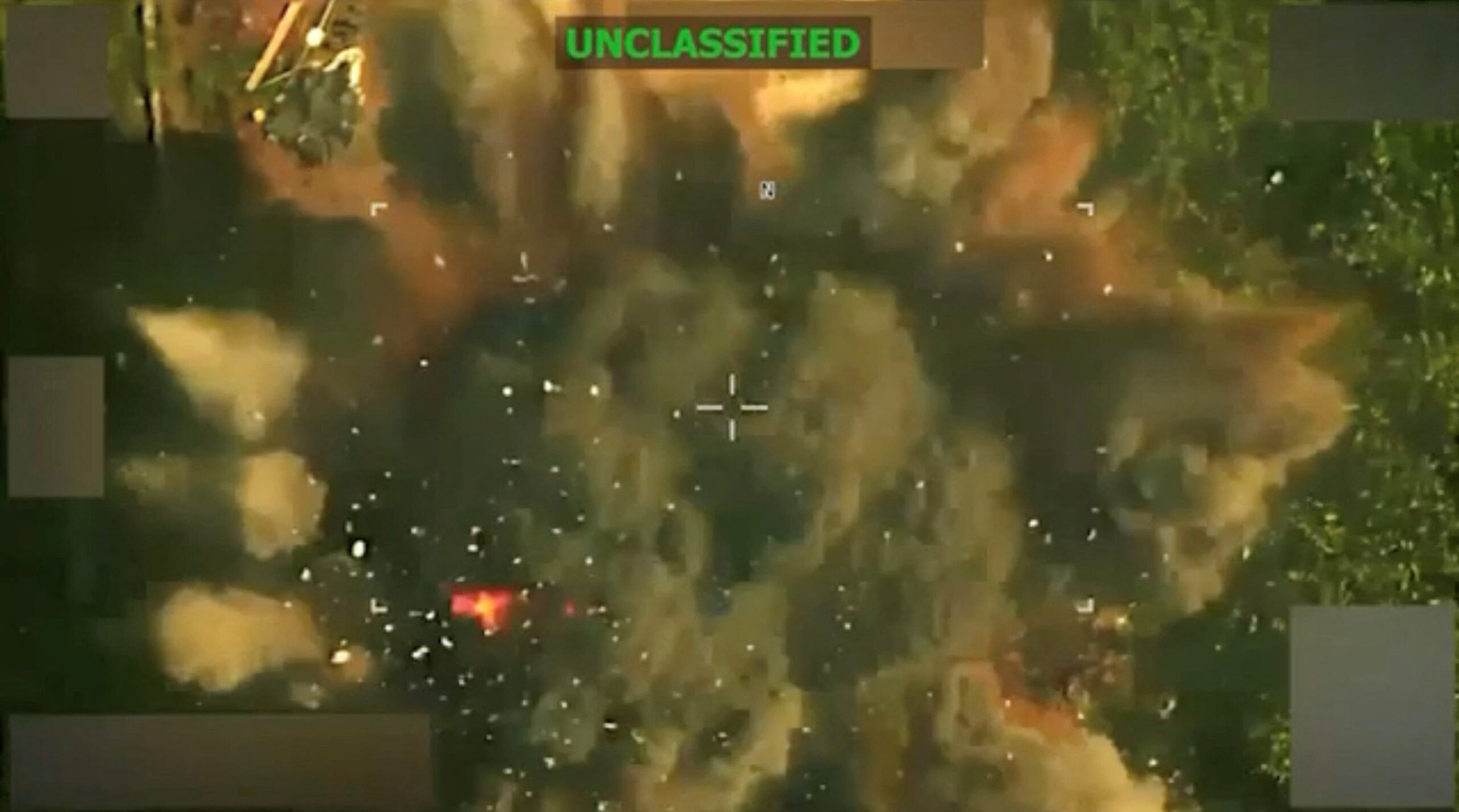
- NASA’s 21-22 June FIRMS detections of 135 thermal anomalies in Venezuela almost certainly indicate non‑specific heat sources and do not by themselves evidence combat activity. (Confidence: high · REPORTED)
- I&W: Local authorities or media confirm wildfires, agricultural burns or industrial fires at FIRMS coordinates. (0-14 days)
- I&W: Geolocated imagery independently corroborates strikes or shelling co‑located with FIRMS hotspots. (0-14 days)
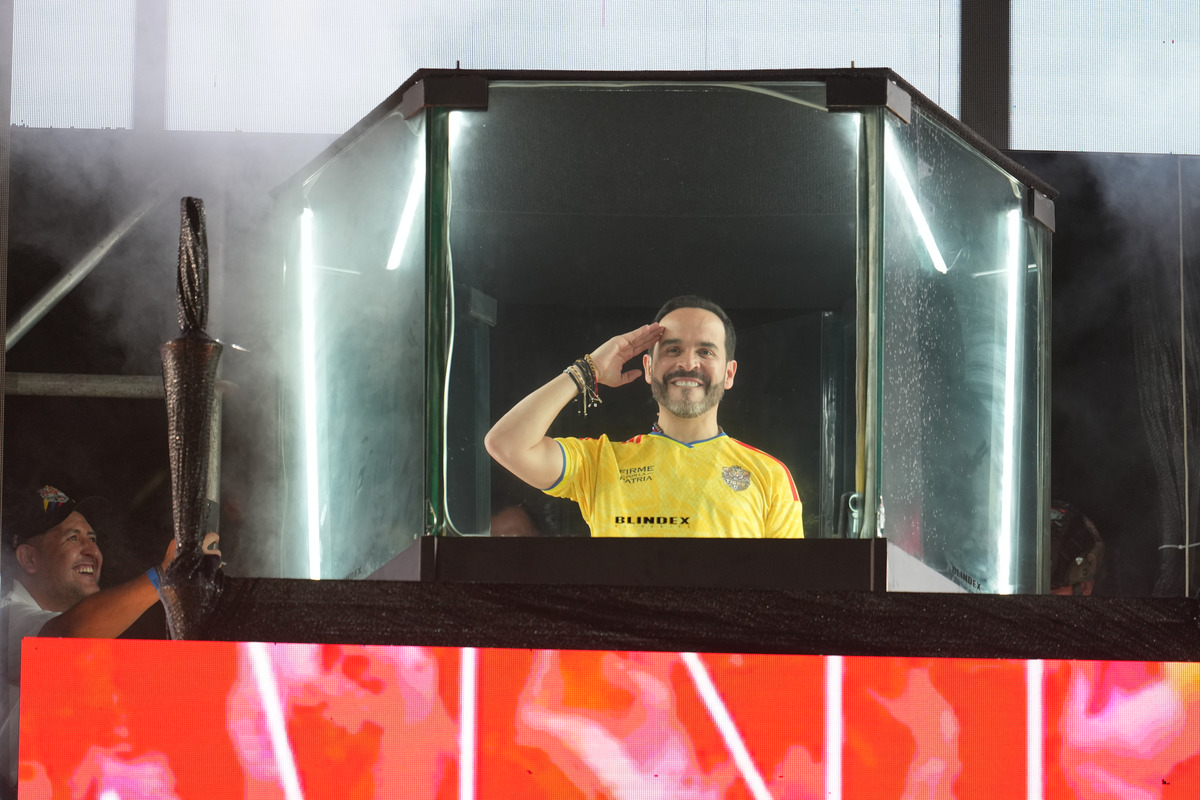
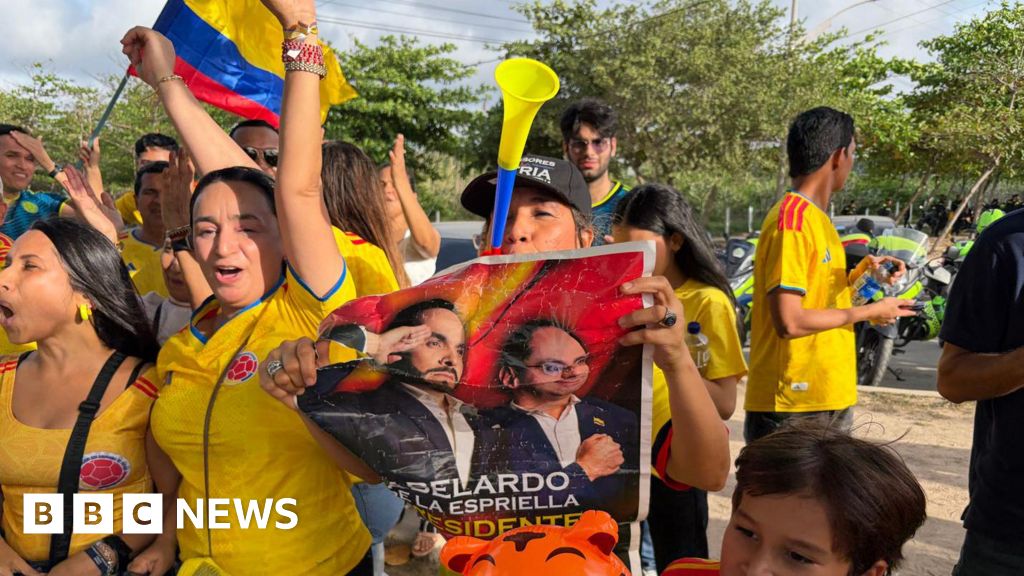
- Post‑election tensions in Colombia, including protests and clashes in Cali after Abelardo de la Espriella declared victory while Iván Cepeda urged waiting for the binding count, likely keep the Colombian side of the border volatile in the near term. (Confidence: medium · ASSESSED)
- I&W: Official final certification of the Colombian result and acceptance or rejection by principal candidates. (0-30 days)
- I&W: Reported protests or security incidents in Colombian border departments following the final tally. (0-30 days)
Outlook & scenarios
Calibrated engagement under Rodríguez continues with selective openings (40%)
Rodríguez consolidates day‑to‑day governance while Washington maintains an embassy presence and modulates sanctions through targeted licences. Earlier releases of political detainees and the January oil‑sector law are followed by incremental, reversible steps that attract cautious commercial activity under U.S. licensing and E.O. 13835 limits.
Sanctions tightening returns despite licence adjustments (35%)
Conflicting reporting around relief and reimposition resolves toward tighter enforcement, shrinking practical space for oil trade and payments. OFAC issues further clarifications narrowing General Licence scope and emphasising core prohibitions, chilling counterparties’ risk appetite.
Border volatility persists as Colombia finalises its count (25%)
A razor‑thin Colombian outcome sustains protests and sporadic clashes on the Colombian side, prompting continued restrictions on official travel near land borders. Caracas manages to avoid immediate spillover but raises alert levels along the Táchira and Zulia crossings.
Recommendations
- Stand up a sanctions watch function to track OFAC updates in real time, incorporating GL 55F, GL 5X and enduring E.O. 13835 prohibitions into a living compliance matrix for all Venezuela‑exposed activity.
- Task geospatial and local OSINT teams to cross‑cue NASA FIRMS hotspots in Venezuela with ground reporting and commercial imagery before treating detections as indicators of conflict.
- Maintain strict movement controls within 50 km of the Venezuela, Colombia border consistent with U.S. restrictions, and pre‑clear any border‑adjacent travel with refreshed risk assessments.
- Leverage the reopened U.S. Embassy in Caracas for continuous updates on consular posture and local security conditions, and integrate their alerts into organisational tripwire dashboards.
- Monitor and log verified political‑prisoner releases and any re‑arrests to assess the trajectory of opening under Rodríguez and to inform human‑rights engagement lines.
- Map exposure to Venezuelan oil trade across supply chains; require documentary evidence of applicable OFAC licensing before engagement, and rehearse contingency off‑ramps if sanctions tighten.
Confidence & uncertainty
Overall confidence is medium because core elements rest on authoritative sources, including official U.S. government reporting on embassy operations, travel advisories, and OFAC licences, and NASA instrumentation data for thermal detections. Judgments on security cooperation and the trajectory of political opening rely on multiple think‑tank reports rather than official communiqués. The sanctions outlook contains internally conflicting reporting on relief and reimposition, which we reflect as an assessed, balanced estimate rather than a firm call. These mixed source types and areas of contradiction warrant a medium headline confidence.
Alternative analysis (red cell)
The evidence supports that Delcy Rodríguez was sworn in (72ee6455) and there are reports of Maduro’s capture and transfer, but medium‑confidence and contested sourcing leave Maduro’s custody/location and the domestic durability of Rodríguez’s authority plausibly ambiguous. On sanctions, recent GL issuances and contradictory earlier reports point toward targeted, case‑by‑case licensing being the more likely mechanism for practical openings rather than wholesale relief. Reports of U.S.–Venezuelan operational collaboration may reflect tactical, limited coordination rather than deep strategic cooperation. Post‑election unrest in Colombia is credible in specific locales (e.g., Cali) but heavy reliance on a single reporting cluster (cf1ebaf7) makes a border‑wide sustained volatility judgment less certain.
Intelligence gaps
- [EEI 1.2 · UNCOVERED] Public resignations, defections, detentions, or disciplinary actions naming specific senior military, intelligence, or police officers (name, rank, unit, date, supporting evidence). Recommended collection: open-source/social media
- [EEI 1.3 · UNCOVERED] Published orders, decrees, or personnel lists showing promotions, reassignments, or purges within the National Bolivarian Armed Forces, National Guard, or presidential protection units (document or official gazette reference). Recommended collection: open-source/diplomatic
- [EEI 1.4 · PARTIAL] Arrests, detentions, or restrictions on movement of named opposition leaders or political figures with detention location, custody authority, and detention conditions reported. Recommended collection: human/local media
- [EEI 2.1 · PARTIAL] Verified protest activity by location and estimated turnout (street-level counts, police reports, hospital/ambulance logs, timestamped geolocated photos or videos) on specified dates. Recommended collection: social media/open-source
- [EEI 2.2 · UNCOVERED] Documented lists or communications naming regional protest coordinators, strike organizers, or logistics nodes (transport bookings, fuel/food supply movements) tied to opposition plans. Recommended collection: social media/human
- [EEI 2.3 · UNCOVERED] Financial movements to opposition-controlled organizations or individuals above defined thresholds (bank transfers, wire records, large cash seizures, crypto wallet transfers with timestamps and amounts). Recommended collection: financial/forensic
- [EEI 2.4 · UNCOVERED] Public formation or activation of alternative governance bodies by the opposition (declared councils/ministries, named members, declared headquarters or offices) with supporting documentation or announcements. Recommended collection: open-source/diplomatic
- [EEI 3.1 · PARTIAL] Crude oil and refined product export volumes from Venezuelan ports by vessel (AIS-identified tankers), including flagged destinations and any ship-to-ship transfer events, by week. Recommended collection: maritime/AIS
- [EEI 3.2 · PARTIAL] Notices of correspondent banking relationship changes for PDVSA, the Central Bank of Venezuela, or other state entities (account freezes, closures, new bank signings) with bank names and dates. Recommended collection: economic/finance
- [EEI 3.3 · UNCOVERED] Detected arrivals/deployments of foreign military personnel, equipment, or advisory teams (air/sea container manifests, port calls with cargo descriptions, geolocated imagery of military assets) originating from Russia, Cuba, Iran, or other external supporters. Recommended collection: imagery
- [EEI 3.4 · UNCOVERED] Export records or interdictions showing volumes and destinations of gold, diamonds, or other high-value commodities linked to state entities or proxies (customs manifests, seized shipments, buyer identities). Recommended collection: economic/finance
Cited sources
[1] Wikipedia · 2026 United States intervention in Venezuela (B) · sha256:2b56cfa20b68 [2] Wikipedia · Venezuela under Nicolás Maduro (B) · sha256:711ba6cb3603 [3] U.S. Department of State · Venezuela Travel Advisory | Travel.State.gov (A) · sha256:56ec7c299e19 [4] Office of Foreign Assets Control (OFAC) · Frequently Asked Questions - Recently Updated (A) · sha256:9ce59176bd63 [5] Wikipedia · Sanctions during the Venezuelan crisis (B) · sha256:07a964b9395e [6] Atlantic Council · The recent US-Venezuelan strike on Tren de Aragua’s leader will reverberate across Latin America (C) · sha256:8ea6d63d3e05 [7] NASA · NASA FIRMS thermal detections — Venezuela (2d) (A) · sha256:9d783ff394c4 [8] abc17news.com · Trump-backed de la Espriella wins preliminary count in razor-tight Colombian presidential runoff (A) · sha256:75b5db0265b8 [9] CNN · Trump-backed de la Espriella wins preliminary count in razor-tight Colombian presidential runoff | CNN (A) · sha256:176d2c2e636f [10] newsweek.com · Colombia's Trump-backed presidential candidate claims victory in nail-biting election (B) · sha256:f2f01c468b98 [11] bbc.com · Trump-backed political outsider wins Colombia election, initial count shows (A) · sha256:b27a88995106
Source content hashes were computed at collection time; the cited text is preserved unmodified for the life of this product.
Red cell review: PARTIAL DISSENT — KJ-2 downgraded HIGH→MEDIUM (kj_thin)
TLP:CLEAR