TLP:CLEAR · Disclosure is not limited.
Venezuela political crisis: situation report for 17-24 June 2026
Time window: Last 7 days · Audience: General analyst · Type: Situation report · DTG: 2026-06-24 16:14Z · Overall confidence: HIGH
BLUF
Nicolás Maduro has almost certainly been out of power since 3 January 2026, and Washington has re-opened its embassy in Caracas, but the security, humanitarian and governance environment remains fragile. Reporting points to likely deepening US-Venezuelan security cooperation against Tren de Aragua, though attribution is contested, while oil exports are rising under a still compliance-heavy trade regime.
Executive summary
Reporting in the period indicates a post-Maduro environment with continued international scrutiny, persistent security constraints, and mixed economic signals. The United States announced the resumption of embassy operations in March 2026. Multilateral pressure from the OAS continues. The security picture for US personnel in Venezuela remains restrictive, particularly along border and interior states. NASA’s FIRMS recorded numerous thermal detections that do not, by themselves, indicate combat. In the economy, May oil exports rose to about 1.25 million barrels per day and PDVSA signed output-raising agreements with Repsol, even as Venezuelan crude remains documentation heavy and historic sanctions costs weigh. The humanitarian condition is severe, with millions having emigrated and a stressed health system, although local authorities in Sucre Municipality reported small-scale service deliveries and civil protection training. In the Orinoco Mining Arc, a 9 June explosion at Las Claritas and reporting on Tren de Aragua presence sustain concerns about criminality and instability.
Change from previous assessment
Initial assessment of this topic for this run. New developments since the prior brief include: updated NASA FIRMS detections across Venezuela; municipal reporting from Sucre Municipality on gas cylinder deliveries, civil protection training and a Carabobo commemoration on 23-24 June; an OAS call on 22 June for expanded democratic space; trade reporting of PDVSA-Repsol agreements aimed at raising output; and media reporting of a 9 June explosion in Las Claritas alongside continued references to Tren de Aragua presence. These updates did not alter the headline judgment on Maduro’s ouster but sharpened assessments on security, humanitarian and energy dynamics.
Key judgments
- Maduro has almost certainly been out of power since 3 January 2026, and the United States resumed embassy operations in Caracas in March 2026, creating a renewed diplomatic channel. (Confidence: high · REPORTED)
- I&W: Public-facing Venezuelan government communications that do not feature Maduro in executive decision roles (0-14 days)
- I&W: US Embassy Caracas publishes routine consular and diplomatic activity notes from in-country operations (0-14 days)
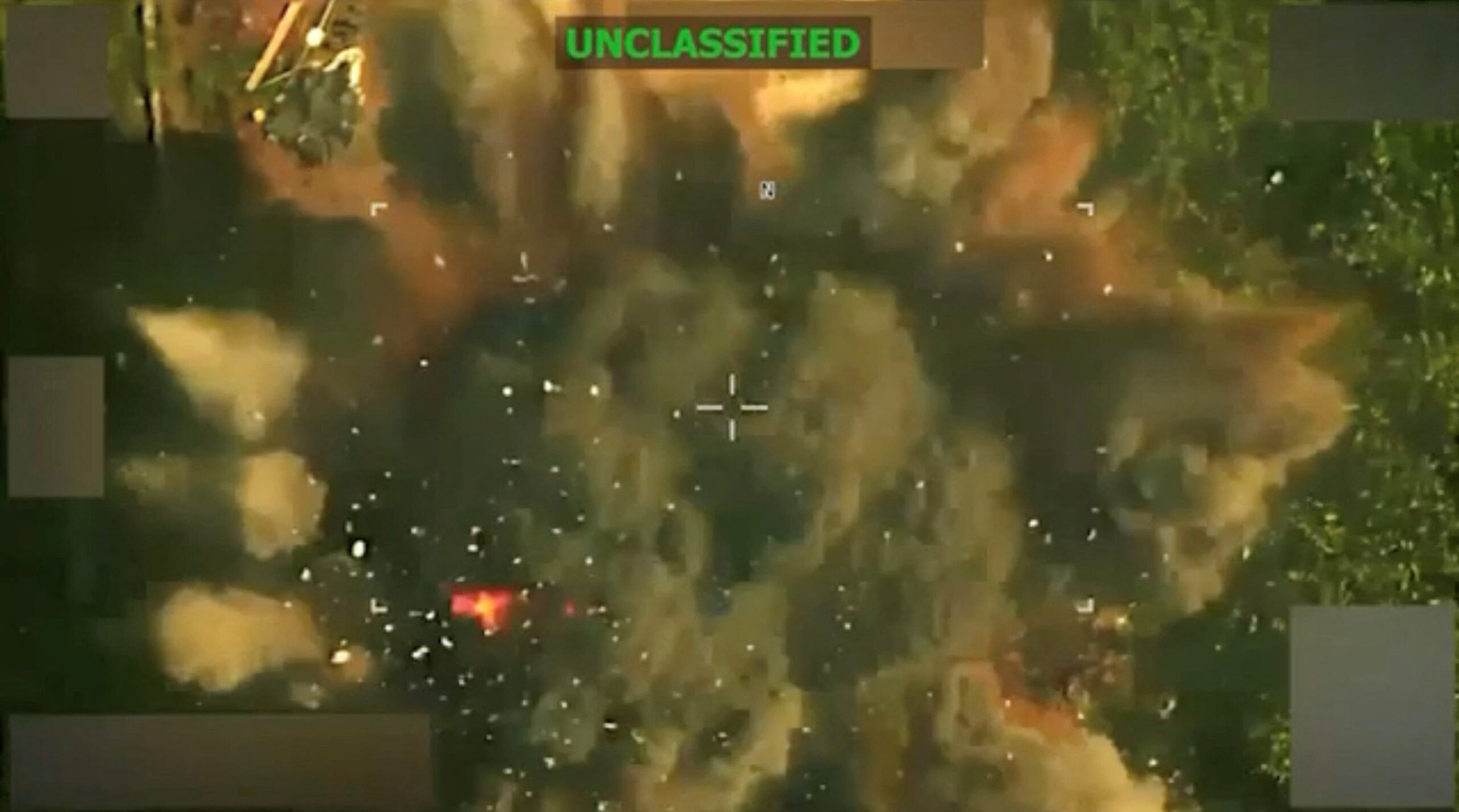
- US-Venezuelan security cooperation against Tren de Aragua is likely deepening, although attribution of the Niño Guerrero strike is contested between collaborative and unilateral accounts. (Confidence: medium · ASSESSED)
- I&W: A joint Caracas-Washington statement or briefings referencing coordinated targeting or deconfliction mechanisms against Tren de Aragua (0-14 days)
- I&W: Official Venezuelan denial of any coordination on the strike paired with corroborated unilateral US operational details (0-14 days)
- Personal security risks for US government personnel remain high nationwide, with prohibitions on travel to the Venezuela-Colombia border region and multiple interior states due to crime, kidnapping and terrorism threats. (Confidence: high · REPORTED)
- I&W: Updated State Department advisory adjusting the list of restricted Venezuelan states for official travel (0-14 days)
- I&W: Verified kidnapping or armed group incidents against travellers in Apure, Amazonas, Bolívar, Guárico, Aragua or along the Colombia frontier (0-14 days)
- NASA’s recent thermal detections almost certainly do not, on their own, indicate combat activity; the dataset records heat sources across a defined bounding box and requires corroboration. (Confidence: high · REPORTED)
- I&W: Geolocated imagery or official reports linking specific FIRMS pixels to combat damage or artillery strikes (0-14 days)
- I&W: Local fire service or industrial incident reports matching the timing and locations of FIRMS detections (0-14 days)
- The hydrocarbons sector is likely on a modest recovery path, with May exports around 1.25 million barrels per day and PDVSA-Repsol agreements to boost output, although Venezuelan crude remains documentation heavy and past sanctions costs continue to weigh. (Confidence: medium · ASSESSED)
- I&W: Sustained reported liftings above 1.3 million barrels per day by trade trackers (1-3 months)
- I&W: Evidence of reduced documentary frictions on Venezuelan cargoes reported by traders and shippers (1-3 months)
- Humanitarian conditions remain severe nationwide, with a health system in crisis and millions having emigrated, although municipal authorities in Sucre reported small-scale service deliveries and emergency training. (Confidence: medium · ASSESSED)
- I&W: Health sector reporting on medicine and equipment availability in major public hospitals (1-3 months)
- I&W: Verified continuation of municipal aid distributions and civil protection training programmes (0-14 days)
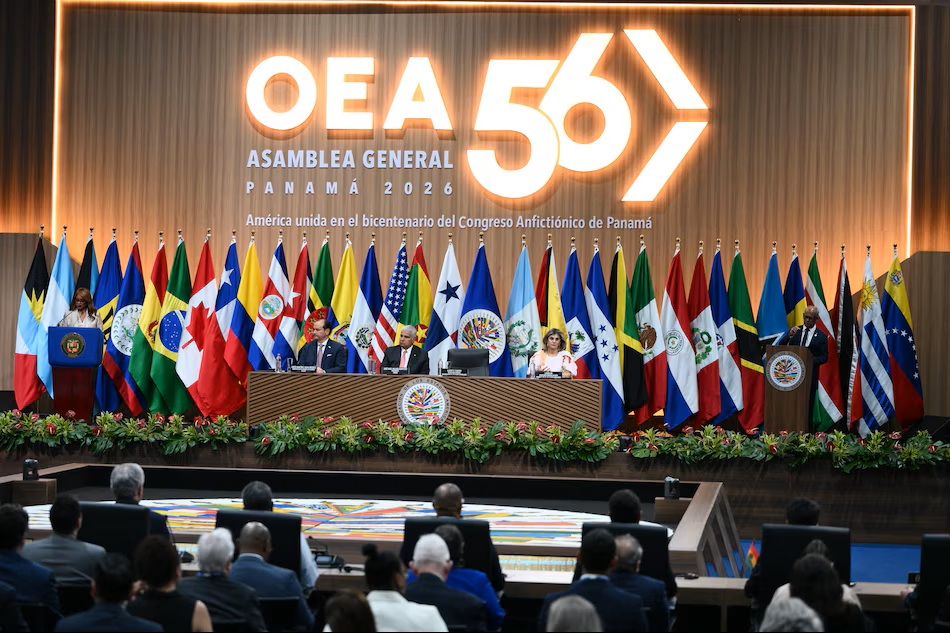
- Regional and multilateral political pressure on Caracas remains steady, with the OAS calling for expanded democratic space and condemning human rights abuses. (Confidence: high · REPORTED)
- I&W: New OAS resolutions or hearings specific to Venezuela’s political process and rights situation (1-3 months)
- I&W: Public engagement by OAS envoys with Venezuelan authorities or opposition figures (0-14 days)
- Instability in the Orinoco Mining Arc is likely to persist, as indicated by the 9 June Las Claritas explosion and reporting that Tren de Aragua controls Las Claritas. (Confidence: medium · ASSESSED)
- I&W: Additional reported blasts or armed confrontations in Bolívar state mining settlements (0-14 days)
- I&W: Official announcements of arrests or territorial roll-back of Tren de Aragua from Las Claritas (1-3 months)
Outlook & scenarios
Security-energy rapprochement bedded in (50%)
Post-Maduro authorities maintain practical cooperation with Washington against Tren de Aragua while pursuing pragmatic energy deals. PDVSA-Repsol agreements help stabilise output from a low base and exports edge up as operators work through documentation burdens. OAS pressure continues but the focus shifts to electoral and governance benchmarks rather than isolation.
Mining Arc flare-up strains governance (35%)
Fragmentation within Tren de Aragua after the killing of its leader prompts turf fighting in the Orinoco Mining Arc. Further explosions or clashes are reported around Las Claritas and nearby settlements, triggering Venezuelan security operations and short-lived curfews. Humanitarian access worsens in remote mining communities.
Compliance drag on oil rebound (40%)
Despite PDVSA’s deals and refinery demand for heavy crude, sanctions legacies and documentation-heavy trade processes cap loadings and complicate sales. Cargo diversions, delayed payments and insurance hesitancy keep exports choppy, limiting fiscal relief and heightening pressure for policy concessions.
Recommendations
- Use the re-opened US Embassy platform to map post-Maduro lines of authority and liaison channels across security, energy and humanitarian portfolios, and to validate cooperation claims with Venezuelan counterparts.
- Task collection on the Orinoco Mining Arc, prioritising Las Claritas: fuse FIRMS detections with local reporting, commercial satellite imagery and law enforcement channels to distinguish wildfires, industrial incidents and violence.
- Build an OSINT-IMINT workflow for FIRMS in Venezuela that flags clusters near critical infrastructure and populated areas, and requires corroboration before any conflict tagging.
- Track Venezuelan export flows and PDVSA-Repsol implementation by combining AIS, bills of lading and trader reports, and maintain a sanctions-compliance watchlist for documentation anomalies on Venezuelan cargoes.
- Maintain diplomatic watch on OAS proceedings regarding Venezuela and produce early-warning notes on any resolutions or visits that could shift external pressure or create engagement opportunities.
- Reinforce duty-of-care measures for US personnel by mirroring State Department travel prohibitions in internal movement policies, with a 14-day review cadence keyed to incident reporting in Apure, Amazonas, Bolívar, Guárico, Aragua and the Colombia frontier.
Confidence & uncertainty
Overall confidence is high because multiple official and major media sources corroborate the headline elements: Maduro’s ouster date and the US Embassy’s resumption of operations are directly reported by high-reliability outlets and official channels. The security posture for US personnel relies on US government advisories. NASA FIRMS data and methodology are authoritative. Economic signals on exports and corporate agreements are supported by trade publications, though with normal market-reporting uncertainty. Key uncertainties remain around the exact level of US-Venezuelan operational collaboration against Tren de Aragua, where reporting is contested, and around precise emigration totals, which vary by source, so judgments touching those points are carried at medium confidence.
Intelligence gaps
- [EEI 1.1 · UNCOVERED] Official or verifiable reporting of Maduro's location and movements (presidential appearances, travel manifests, security footprint changes) within specific dates and locations. Recommended collection: open-source
- [EEI 1.2 · UNCOVERED] Public resignations, defections, detentions, or disciplinary actions naming specific senior military, intelligence, or police officers (name, rank, unit, date, supporting evidence). Recommended collection: open-source/social media
- [EEI 1.3 · UNCOVERED] Published orders, decrees, or personnel lists showing promotions, reassignments, or purges within the National Bolivarian Armed Forces, National Guard, or presidential protection units (document or official gazette reference). Recommended collection: open-source/diplomatic
- [EEI 1.4 · UNCOVERED] Arrests, detentions, or restrictions on movement of named opposition leaders or political figures with detention location, custody authority, and detention conditions reported. Recommended collection: human/local media
- [EEI 2.1 · UNCOVERED] Verified protest activity by location and estimated turnout (street-level counts, police reports, hospital/ambulance logs, timestamped geolocated photos or videos) on specified dates. Recommended collection: social media/open-source
- [EEI 2.2 · UNCOVERED] Documented lists or communications naming regional protest coordinators, strike organizers, or logistics nodes (transport bookings, fuel/food supply movements) tied to opposition plans. Recommended collection: social media/human
- [EEI 2.3 · UNCOVERED] Financial movements to opposition-controlled organizations or individuals above defined thresholds (bank transfers, wire records, large cash seizures, crypto wallet transfers with timestamps and amounts). Recommended collection: financial/forensic
- [EEI 2.4 · UNCOVERED] Public formation or activation of alternative governance bodies by the opposition (declared councils/ministries, named members, declared headquarters or offices) with supporting documentation or announcements. Recommended collection: open-source/diplomatic
- [EEI 3.1 · PARTIAL] Crude oil and refined product export volumes from Venezuelan ports by vessel (AIS-identified tankers), including flagged destinations and any ship-to-ship transfer events, by week. Recommended collection: maritime/AIS
- [EEI 3.2 · UNCOVERED] Notices of correspondent banking relationship changes for PDVSA, the Central Bank of Venezuela, or other state entities (account freezes, closures, new bank signings) with bank names and dates. Recommended collection: economic/finance
- [EEI 3.3 · UNCOVERED] Detected arrivals/deployments of foreign military personnel, equipment, or advisory teams (air/sea container manifests, port calls with cargo descriptions, geolocated imagery of military assets) originating from Russia, Cuba, Iran, or other external supporters. Recommended collection: imagery
- [EEI 3.4 · UNCOVERED] Export records or interdictions showing volumes and destinations of gold, diamonds, or other high-value commodities linked to state entities or proxies (customs manifests, seized shipments, buyer identities). Recommended collection: economic/finance
Cited sources
[1] Wikipedia · Nicolás Maduro (B) · sha256:35f4bcb40742 [2] U.S. Department of State · Venezuela Travel Advisory | Travel.State.gov (A) · sha256:56ec7c299e19 [3] The Guardian · Mystery of hit on Tren de Aragua leader: is it linked to US mining plans in Venezuela? (A) · sha256:e1c6183c033f [4] Atlantic Council · The recent US-Venezuelan strike on Tren de Aragua’s leader will reverberate across Latin America (C) · sha256:8ea6d63d3e05 [5] NASA · NASA FIRMS thermal detections — Venezuela (2d) (A) · sha256:ea0fdd5ca83d [6] Ship Universe · Venezuelan Crude Export Surge Sends Fresh Signal to Tanker Markets – Ship Universe (C) · sha256:6df6139b2a15 [7] Wikipedia · Crisis in Venezuela (B) · sha256:881247d57166 [8] Alcaldía del Municipio Sucre · Alcaldia del Municipio Sucre (A) · sha256:6811940edc72 [9] newsroompanama.com · The OAS Offers Support to Bolivia and Sets its Sights on Cuba, Nicaragua, and Venezuela - Newsroom Panama (A) · sha256:92c008093028
Source content hashes were computed at collection time; the cited text is preserved unmodified for the life of this product.
TLP:CLEAR