TLP:CLEAR · Disclosure is not limited.
Venezuela: Repression Persists as Dialogue and US Bargaining Advance
Time window: Last 7 days · Audience: General analyst · Type: Situation report · DTG: 2026-09-21 16:09Z · Overall confidence: HIGH
BLUF
Very likely, Delcy Rodríguez’s government retains the coercive machinery that sustained repression, even as talks with Dinorah Figuera’s opposition delegation deliver releases, an announced ICRC access arrangement and new monitoring mechanisms. Washington is pursuing engagement on oil and counter-narcotics while keeping economic sanctions and entry restrictions; the oil deal’s counterparty and terms remain unresolved.
Executive summary
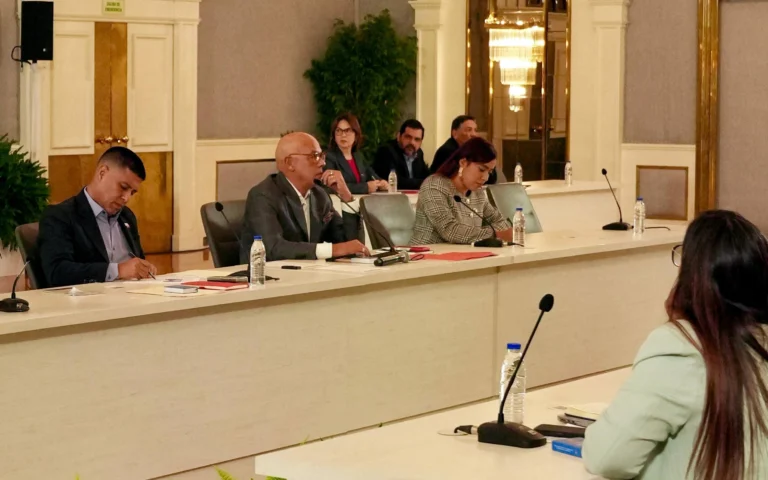
The UN Fact-Finding Mission reported 64 new cases of torture after 3 January 2026, 379 to 500 political prisoners still detained, degrading treatment at Fuerte Guaicaipuro and 19 officials implicated in gross violations remaining in, or reassigned to, key positions. The second cycle of government-opposition talks began in Caracas on 17 September and produced proposals on freedom of expression, access to information and implementation monitoring, while the UK reported prisoner releases and an announcement of ICRC access to detention centres. The United States removed Venezuela from its list of countries that had demonstrably failed in counter-narcotics efforts, but economic sanctions and partial entry restrictions remain. An oil agreement involving Washington, the Rodríguez government and Alejandro Betancourt’s NABEP remains opaque, with conflicting reporting over its signatories and scope.
Change from previous assessment
Since the 21 September prior brief, the central judgment that Venezuela’s coercive institutions remain intact is unchanged, as is the medium-confidence assessment that dialogue will produce limited concessions rather than systemic reform. New reporting adds the UK’s confirmation of prisoner releases and the ICRC access announcement, the US removal of Venezuela from its counter-narcotics blacklist while sanctions remain, and sharper evidence that the oil agreement’s counterparty is disputed. This brief adds a judgment on the continuing US legal pressure involving Maduro, Flores and Saab. No new reliable evidence in this reporting window changes the prior assessments on the electricity crisis or US lethal counternarcotics operations.
Key judgments
- Very likely, Venezuela’s coercive institutions remain fundamentally intact under interim President Delcy Rodríguez despite prisoner releases and dialogue. The UN Fact-Finding Mission reported 64 new cases of torture after 3 January 2026, 19 officials implicated in gross violations still in or reassigned to key positions, and degrading treatment at Fuerte Guaicaipuro. Non-governmental organisations estimate that 379 to 500 political prisoners remain detained. This is a reported judgment based on high-reliability multilateral reporting, although the supplied reporting does not establish the current status of every detention facility or security unit. (Confidence: high · REPORTED)
- I&W: Confirm: within 0-14 days, Venezuelan security bodies report additional short-term arrests of opposition activists, journalists or civil society actors, or retain the 19 officials identified in key posts. (0-14 days)
- I&W: Break: within 1-3 months, independent monitors receive repeated access to detention facilities and verified removals or prosecutions of officials implicated in gross violations begin. (1-3 months)
- Likely, the second-cycle talks led by Jorge Rodríguez and Dinorah Figuera will produce selective confidence-building measures without near-term reform of Venezuela’s coercive institutions. The delegations have announced a Technical Table on freedom of expression, a parity-based follow-up commission and mechanisms for access to information and implementation of commitments. The assessment remains medium confidence because the reporting confirms announcements, prisoner releases and an ICRC access pledge, but not sustained implementation. (Confidence: medium · ASSESSED)
- I&W: Confirm: within 0-14 days, the parity-based commission publishes its membership, meeting schedule and first compliance report, and the Technical Table begins recorded work. (0-14 days)
- I&W: Break: within 1-3 months, announced mechanisms remain inactive, digital news restrictions resume or ICRC and OHCHR do not receive verified access to detention centres. (1-3 months)
- Very likely, Washington will maintain a dual-track policy towards Venezuela, combining engagement on stabilisation, oil and counter-narcotics with continued pressure through sanctions and entry restrictions. The United States removed Venezuela from the list of countries that had demonstrably failed in counter-narcotics efforts, while official reporting still places Venezuela under economic sanctions and partial entry restrictions. The State Department says its Caracas mission is focused on stabilisation, economic recovery, reconciliation and democratic transition. This is an assessed judgment with medium confidence because the evidence supports the policy strands but leaves the sequence and conditions of US support for Rodríguez disputed. (Confidence: medium · ASSESSED)
- I&W: Confirm: within 1-3 months, US agencies maintain sanctions and entry restrictions while continuing formal engagement with the Rodríguez government on stabilisation, oil or counter-narcotics. (1-3 months)
- I&W: Break: within 0-14 days, Washington announces a broad sanctions removal or publicly disavows the Rodríguez government as a partner in the transition. (0-14 days)
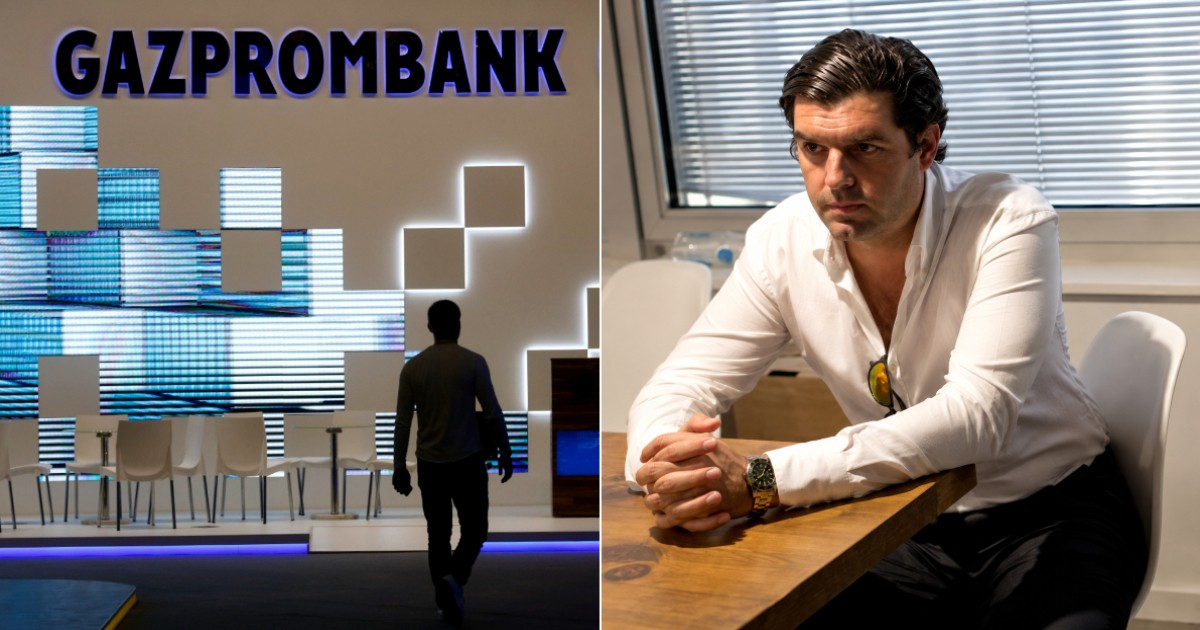
- Likely, the US-Venezuela oil agreement will remain contested over its counterparty, scope and sanctions treatment. One account describes an opaque agreement between Washington and the Rodríguez government, while Marco Rubio says it is with Alejandro Betancourt’s private NABEP rather than the Venezuelan regime. NABEP is reported to operate fields with reserves estimated at more than 65 billion barrels, while Betancourt faces a Spanish investigation linked to an alleged 4.35 billion dollar PDVSA loan fraud and has past ties to a Russian bank-linked oil venture. This judgment carries low confidence because the agreement’s terms are undisclosed and the reporting contains a direct contradiction over the signatories. (Confidence: low · ASSESSED)
- I&W: Confirm: within 0-14 days, Washington, Caracas or NABEP publishes a signed text naming the parties, defining control of the oil fields and specifying sanctions treatment. (0-14 days)
- I&W: Break: within 1-3 months, official statements continue to assign the agreement to different counterparties or deny that a binding agreement exists. (1-3 months)
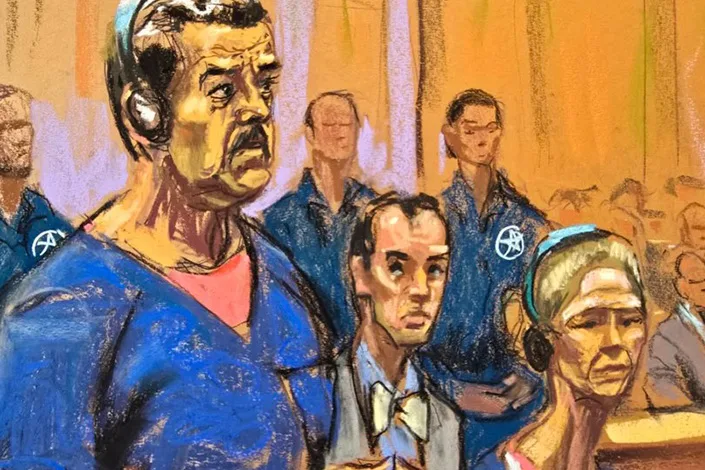
- Likely, US legal proceedings involving Nicolás Maduro, Cilia Flores and Alex Saab will remain an active constraint on Venezuela’s political normalisation through the next reporting cycle. Maduro and Flores are reported to remain detained without bail in Brooklyn, with their next court appearance scheduled for 17 November 2026, while Saab pleaded guilty on 15 September 2026 and agreed to cooperate with the US Department of Justice. This is an assessed inference that relies mainly on medium-confidence local reporting for the Maduro and Flores proceedings. (Confidence: medium · ASSESSED)
- I&W: Confirm: within 0-14 days, US prosecutors file additional motions or cooperation-related material connected to Saab’s guilty plea or Maduro’s four federal charges. (0-14 days)
- I&W: Break: on 17 November 2026, the scheduled Maduro and Flores hearing is cancelled because the defendants are released, the charges are dismissed or the proceedings are formally suspended. (1-3 months)
Outlook & scenarios
Managed transactional transition (55%)
Likely, the Rodríguez government and the opposition continue the Caracas dialogue while implementing limited measures on digital access, detention monitoring and information rights. Washington keeps sanctions and entry restrictions in place while advancing a stabilisation programme and negotiating the practical operation of the oil arrangement. Coercive institutions remain largely intact.
Stalled dialogue and sustained coercion (30%)
Likely, the follow-up commission and Technical Table fail to move beyond announcements. Political detention, domain blocking and intimidation of opposition activists, journalists and civil society actors continue, while the oil agreement remains opaque and disputed. The United States preserves engagement but withholds broader sanctions relief.
Genuine political opening (10%)
Unlikely, the Rodríguez government converts confidence-building measures into sustained institutional change. ICRC and OHCHR access becomes routine, political prisoners are released in larger numbers, officials implicated in gross violations lose key positions and the promised free elections receive a defined timetable.
Abrupt rupture over oil or US backing (5%)
Very unlikely, but high impact, Washington and the Rodríguez government break over the oil agreement’s counterparty, sanctions treatment or the terms of political transition. Conflicting claims about US backing for Rodríguez harden into a public dispute, disrupting dialogue and removing the basis for the current transactional alignment.
Recommendations
- Prioritise verification of actual ICRC access to Venezuelan detention centres. Distinguish a government announcement from documented visits, detainee interviews and access granted to OHCHR or the UN Fact-Finding Mission.
- Track the parity-based follow-up commission and the Technical Table as separate deliverables. Record membership, meeting dates, published decisions and implementation of each commitment rather than treating the dialogue statement as evidence of reform.
- Maintain a dedicated oil-agreement file that identifies the signatories, NABEP’s legal role, the Rodríguez government’s role, the affected fields, sanctions waivers and control arrangements. Do not attribute the agreement to the Venezuelan state or to NABEP alone until an authoritative text resolves the conflict.
- Monitor US policy for evidence that the removal of Venezuela from the counter-narcotics blacklist is being converted into sanctions relief. Report any change in economic sanctions or partial entry restrictions separately from diplomatic engagement.
- Track the 17 November 2026 Maduro and Flores hearing, the status of the defence motions and developments arising from Alex Saab’s cooperation agreement. Treat local-media reporting on court dates and detention status as requiring confirmation.
- Use the UN findings as the baseline for repression reporting and update three measures separately: political detainees, officials implicated in gross violations who retain key posts, and verified access to detention facilities.
Confidence & uncertainty
Overall confidence is high for the core assessment because the UN Fact-Finding Mission, the UK government, AFP and major-media reporting independently corroborate the continuation of repression, the existence of dialogue, the announced confidence-building measures and the main US policy changes. Confidence is lower on the oil agreement, the sequence of US support for Rodríguez and details of the Maduro proceedings because those areas rely on conflicting or medium-confidence reporting. The main uncertainty is whether announced access and dialogue mechanisms produce verifiable institutional change.
Intelligence gaps
- [EEI 1.2 · UNCOVERED] Public resignations, defections, detentions, or disciplinary actions naming specific senior military, intelligence, or police officers (name, rank, unit, date, supporting evidence). Recommended collection: open-source/social media
- [EEI 1.3 · PARTIAL] Published orders, decrees, or personnel lists showing promotions, reassignments, or purges within the National Bolivarian Armed Forces, National Guard, or presidential protection units (document or official gazette reference). Recommended collection: open-source/diplomatic
- [EEI 1.4 · UNCOVERED] Arrests, detentions, or restrictions on movement of named opposition leaders or political figures with detention location, custody authority, and detention conditions reported. Recommended collection: human/local media
- [EEI 2.1 · UNCOVERED] Verified protest activity by location and estimated turnout (street-level counts, police reports, hospital/ambulance logs, timestamped geolocated photos or videos) on specified dates. Recommended collection: social media/open-source
- [EEI 2.2 · UNCOVERED] Documented lists or communications naming regional protest coordinators, strike organizers, or logistics nodes (transport bookings, fuel/food supply movements) tied to opposition plans. Recommended collection: social media/human
- [EEI 2.3 · UNCOVERED] Financial movements to opposition-controlled organizations or individuals above defined thresholds (bank transfers, wire records, large cash seizures, crypto wallet transfers with timestamps and amounts). Recommended collection: financial/forensic
- [EEI 2.4 · UNCOVERED] Public formation or activation of alternative governance bodies by the opposition (declared councils/ministries, named members, declared headquarters or offices) with supporting documentation or announcements. Recommended collection: open-source/diplomatic
- [EEI 3.1 · UNCOVERED] Crude oil and refined product export volumes from Venezuelan ports by vessel (AIS-identified tankers), including flagged destinations and any ship-to-ship transfer events, by week. Recommended collection: maritime/AIS
- [EEI 3.2 · UNCOVERED] Notices of correspondent banking relationship changes for PDVSA, the Central Bank of Venezuela, or other state entities (account freezes, closures, new bank signings) with bank names and dates. Recommended collection: economic/finance
- [EEI 3.3 · UNCOVERED] Detected arrivals/deployments of foreign military personnel, equipment, or advisory teams (air/sea container manifests, port calls with cargo descriptions, geolocated imagery of military assets) originating from Russia, Cuba, Iran, or other external supporters. Recommended collection: imagery
- [EEI 3.4 · PARTIAL] Export records or interdictions showing volumes and destinations of gold, diamonds, or other high-value commodities linked to state entities or proxies (customs manifests, seized shipments, buyer identities). Recommended collection: economic/finance
Cited sources
[1] AFP (Agence France-Presse) · EEUU premia la colaboración antidrogas de Venezuela y alienta los esfuerzos de Colombia y Bolivia (A) · Wed Sep 16 2026 21:20:27 GMT+0000 (Coordinated Universal Time) · sha256:191df6e0a0a1 [2] United Nations (UN News) · Repression continues in Venezuela in the face of ‘appalling’ human rights violations (A) · Wed Sep 16 2026 20:32:35 GMT+0000 (Coordinated Universal Time) · sha256:d7f50c27a325 [3] teleSUR English · Venezuela Government Opposition Dialogue: 4 Promising Gains on Rights and Transparency - teleSUR English (B) · sha256:c0c67040358f [4] UK Government (gov.uk) · UN Human Rights Council 63: UK Statement for the Interactive Dialogue on Venezuela (A) · Mon Sep 21 2026 08:44:03 GMT+0000 (Coordinated Universal Time) · sha256:d55c6a524a22 [5] El País (English edition) · Venezuelans self‑censor because of US power: ‘Now I don’t know whether I should fear the CIA’ (A) · Mon Sep 21 2026 12:40:25 GMT+0000 (Coordinated Universal Time) · sha256:3db1d0a1205a [6] International Viewpoint · Venezuela’s Process & Fall: The Legacy of Hugo Chávez (C) · sha256:906bbfd8a0f4 [7] Cuba Headlines · Alejandro Betancourt López: The Controversial Figure Behind Trump's Venezuelan Oil Deal (D) · Sun Sep 20 2026 12:25:20 GMT+0000 (Coordinated Universal Time) · sha256:f9ceb3449c96 [8] El Estímulo · El juicio a Maduro en Estados Unidos: todo lo que hay que saber | El Estímulo (D) · Thu Sep 17 2026 19:16:06 GMT+0000 (Coordinated Universal Time) · sha256:91b69b4ca3fb
Source content hashes were computed at collection time; the cited text is preserved unmodified for the life of this product.
TLP:CLEAR