TLP:CLEAR · Disclosure is not limited.
Venezuela: Transition under Rodríguez amid quake emergency, constrained opposition and sharpened US electoral pressure
Time window: Last 7 days · Audience: General analyst · Type: Situation report · DTG: 2026-07-17 16:12Z · Overall confidence: MEDIUM
BLUF
Delcy Rodríguez is very likely consolidating authority after the January removal of Nicolás Maduro to US custody, while her government constrains opposition activity as the country grapples with a mass‑casualty earthquake emergency. Washington appears to be coupling energy engagement with heightened pressure on election integrity following the declassification of CIA reporting.
Executive summary
US forces captured Nicolás Maduro and Cilia Flores on 3 January 2026, after which Delcy Rodríguez assumed the role of acting leader; Maduro and Flores pleaded not guilty in Manhattan on 5 January. In parallel, the government has taken or tolerated actions that restrict opponents, including terrorism and treason charges against Vente Venezuela’s deputy leader Henry Alviárez, the looting of the party’s Caracas office by regime supporters, and blocking María Corina Machado’s return in June, even as an amnesty law was advanced and 621 political prisoners were released by early March. The twin earthquakes of 24 June left thousands displaced and a death toll that is at least in the thousands and could reach 10,000, with mortuary capacity under strain; IOM has launched an appeal, is scaling operations, and warns El Niño could worsen conditions for survivors. The United States is intensifying its strategy around Venezuela’s electoral scenario while engaging on oil, and has publicly released CIA reporting describing the Venezuelan state’s interest and capabilities related to electronic vote manipulation.
Change from previous assessment
Initial assessment of this topic for this run, incorporating new reporting within the window on CIA materials related to Venezuelan electronic voting manipulation, fresh small protest activity in Caracas under police monitoring, and expanded IOM warnings and appeals in the wake of the 24 June earthquakes. Earlier characterisations of sanctions relief were not directly corroborated in this set; this update therefore emphasises US electoral pressure alongside energy engagement.
Key judgments
- Very likely Nicolás Maduro remains in US custody following a 3 January 2026 US operation, with Delcy Rodríguez acting as head of government since January and Maduro and Cilia Flores having pleaded not guilty in New York on 5 January. (Confidence: medium · REPORTED)
- I&W: Official Venezuelan decrees or public addresses by Delcy Rodríguez in an executive capacity continue without interruption. (1-3 months)
- I&W: Credible court records or government statements show a change in Maduro’s custody status or his physical return to Venezuela. (0-14 days)
- Very likely the Rodríguez government is constraining opposition activity through legal pressure and intimidation, reflected in terrorism and treason charges against Henry Alviárez, the looting of Vente Venezuela’s Caracas office by regime supporters, obstacles to María Corina Machado’s return, and tight policing of small protest rallies in Caracas. (Confidence: high · ASSESSED)
- I&W: New arrests or indictments targeting Vente Venezuela or María Corina Machado’s network are announced. (0-14 days)
- I&W: Authorities drop or suspend charges against Henry Alviárez and restore control of Vente Venezuela’s Caracas office. (1-3 months)
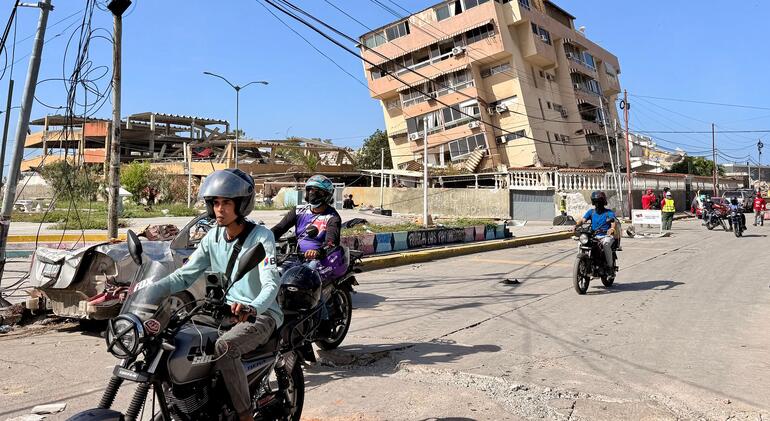
- Almost certainly a severe post‑earthquake humanitarian emergency is ongoing: thousands remain displaced three weeks after the 24 June quakes, confirmed fatalities are already in the thousands and could rise toward 10,000, mortuary and burial systems are strained, and IOM is scaling operations and warning that El Niño could worsen conditions. (Confidence: medium · ASSESSED)
- I&W: UN or IOM situation updates report rising casualty or displacement figures and expanded appeal requirements. (0-14 days)
- I&W: Government and UN jointly certify stabilised displacement and restored mortuary capacity in affected districts. (1-3 months)
- Likely Washington is pursuing a dual‑track approach that deepens energy engagement while increasing pressure on electoral integrity, reflected in a January oil‑for‑cash arrangement and a new Venezuelan oil law, coupled with an intensified US electoral focus and public release of CIA reporting on the state’s interest and capabilities to manipulate electronic voting. (Confidence: medium · ASSESSED)
- I&W: US officials publicly tie additional oil arrangements to verifiable electoral benchmarks. (1-3 months)
- I&W: US statements de‑emphasise election concerns or suspend oil‑related arrangements with Caracas. (0-14 days)
- Reported small protest gatherings for free elections, roughly 100 people in Caracas on two occasions this month, are being closely monitored by armed police. (Confidence: medium · REPORTED)
- I&W: Further small opposition rallies take place in Caracas with visible shotgun‑armed police monitoring. (0-14 days)
- I&W: Authorities authorise a large opposition rally without a heavy police presence. (1-3 months)
- The Bolivarian National Guard’s nationwide footprint and history of alleged abuses very likely sustain the state’s capacity to enforce control during unrest and disaster response. (Confidence: high · ASSESSED)
- I&W: Documented GNB deployments to manage protests or to secure earthquake‑affected zones across multiple states. (0-14 days)
- I&W: Official directives shift crowd‑control responsibilities from GNB to civilian police with a drawdown of GNB presence. (1-3 months)
Outlook & scenarios
Managed authoritarian continuity with controlled electoral process (40%)
Rodríguez maintains central control, opposition figures remain constrained, and elections proceed with procedural concessions but limited competitiveness. US engagement on oil continues alongside pressure on electoral practices. Earthquake response stabilises but leaves long‑term displacement.
Repression hardens as security organs take primacy (35%)
Authorities escalate prosecutions of opposition activists, expand restrictions on party operations, and rely on the National Guard to deter gatherings. International criticism grows and Washington links energy engagement to tighter conditions.
Negotiated incremental opening tied to humanitarian relief (25%)
The government applies the amnesty framework more broadly, eases constraints on some opposition activities, and cooperates closely with the UN and IOM to shelter the displaced, trading limited political openings for resources and legitimacy.
Wildcard: Fresh proof of past e‑vote manipulation sparks mass mobilisation (15%)
Newly public technical evidence convinces larger segments of society and fence‑sitting elites, triggering larger protests and institutional pushback. The state doubles down on security control, creating a volatile confrontation risk.
Recommendations
- Reconcile earthquake casualty and displacement figures across UN, government and media reporting; maintain a rolling dataset to flag sudden upward revisions and geographic clusters of mortality.
- Task OSINT to track the legal trajectory of Henry Alviárez and property control of Vente Venezuela’s Caracas office; catalogue new indictments against opposition figures to map repression patterns.
- Maintain a watch on attempted returns or movements by María Corina Machado, noting any newly erected administrative or physical obstacles at ports of entry.
- Engage IOM and UN counterparts for near‑term El Niño impact scenarios on displacement sites; prioritise mapping of high‑risk shelters in La Guaira, Caraballeda and Playa Grande using recent imagery.
- Monitor US government statements and filings for linkage between electoral benchmarks and oil cooperation; log any additional cash‑for‑oil instalments or contract shifts following the January arrangement.
- Track CIA‑related public discourse on electronic voting manipulation and compile a concise brief on alleged capabilities and timelines to support election‑focused policy planning.
- Develop a standing indicator list for GNB deployments across states and crowd‑control posture in Caracas to anticipate protest‑response cycles over the next quarter.
- Update internal travel and safety guidance for field staff in earthquake‑affected areas, incorporating evidence of overwhelmed mortuary capacity and ad hoc burial practices.
Confidence & uncertainty
Overall confidence is medium. Several judgments rest on multiple, mutually reinforcing sources with high reliability, including multilateral agencies and detailed media reporting on the earthquakes, opposition constraints and the January custody and court proceedings involving Nicolás Maduro and Cilia Flores. Confidence is tempered by known inconsistencies in casualty figures and by timeline ambiguities around leadership and governance references, as well as the analytic nature of assessments on US policy intent. The CIA reporting on electronic voting focuses on capabilities and intent rather than confirmed operational use, which also limits certainty on electoral manipulation.
Alternative analysis (red cell)
The available reporting on Maduro's alleged capture and U.S. custody is predominantly B1-level and contains unresolved inconsistencies (see contradictions entries and tradecraft_lint_findings). An alternative, defensible assessment is that these accounts are either incomplete or misattributed and do not yet confirm sustained US custody or a settled Venezuelan leadership transition. Similarly, the supposed US 'dual-track' of deepened energy engagement paired with intensified electoral pressure can be read as a sequence of transactional or politically timed actions rather than coherent, coordinated policy absent direct interagency or contractual corroboration.
Intelligence gaps
- [EEI 1.2 · UNCOVERED] Public resignations, defections, detentions, or disciplinary actions naming specific senior military, intelligence, or police officers (name, rank, unit, date, supporting evidence). Recommended collection: open-source/social media
- [EEI 1.3 · UNCOVERED] Published orders, decrees, or personnel lists showing promotions, reassignments, or purges within the National Bolivarian Armed Forces, National Guard, or presidential protection units (document or official gazette reference). Recommended collection: open-source/diplomatic
- [EEI 1.4 · PARTIAL] Arrests, detentions, or restrictions on movement of named opposition leaders or political figures with detention location, custody authority, and detention conditions reported. Recommended collection: human/local media
- [EEI 2.1 · PARTIAL] Verified protest activity by location and estimated turnout (street-level counts, police reports, hospital/ambulance logs, timestamped geolocated photos or videos) on specified dates. Recommended collection: social media/open-source
- [EEI 2.2 · UNCOVERED] Documented lists or communications naming regional protest coordinators, strike organizers, or logistics nodes (transport bookings, fuel/food supply movements) tied to opposition plans. Recommended collection: social media/human
- [EEI 2.3 · UNCOVERED] Financial movements to opposition-controlled organizations or individuals above defined thresholds (bank transfers, wire records, large cash seizures, crypto wallet transfers with timestamps and amounts). Recommended collection: financial/forensic
- [EEI 2.4 · PARTIAL] Public formation or activation of alternative governance bodies by the opposition (declared councils/ministries, named members, declared headquarters or offices) with supporting documentation or announcements. Recommended collection: open-source/diplomatic
- [EEI 3.1 · PARTIAL] Crude oil and refined product export volumes from Venezuelan ports by vessel (AIS-identified tankers), including flagged destinations and any ship-to-ship transfer events, by week. Recommended collection: maritime/AIS
- [EEI 3.2 · UNCOVERED] Notices of correspondent banking relationship changes for PDVSA, the Central Bank of Venezuela, or other state entities (account freezes, closures, new bank signings) with bank names and dates. Recommended collection: economic/finance
- [EEI 3.3 · UNCOVERED] Detected arrivals/deployments of foreign military personnel, equipment, or advisory teams (air/sea container manifests, port calls with cargo descriptions, geolocated imagery of military assets) originating from Russia, Cuba, Iran, or other external supporters. Recommended collection: imagery
- [EEI 3.4 · UNCOVERED] Export records or interdictions showing volumes and destinations of gold, diamonds, or other high-value commodities linked to state entities or proxies (customs manifests, seized shipments, buyer identities). Recommended collection: economic/finance
Cited sources
[1] Wikipedia · 2026 United States intervention in Venezuela (B) · sha256:c57e9f808b30 [2] us.headtopics.com · Venezuela's earthquake recovery overshadows its push for democracy (B) · sha256:113b229ed82b [3] npr.org · Venezuela's earthquake recovery overshadows its push for democracy (A) · sha256:ebf371cf9c85 [4] es.wikipedia.org · Guardia Nacional Bolivariana (A) · sha256:3d89174d9536 [5] International Organization for Migration (IOM) · Venezuela: IOM warns of potential El Niño threat to families displaced by earthquake (A) · sha256:8ce75029519f [6] bellingcat.com · Between Graves and Uncertainty: The Management of the Dead After Venezuela's Earthquake - bellingcat (A) · sha256:2b3267f01c10 [7] bellingcat.com · Satellite Imagery Shows Scale of Venezuela Earthquake Damage - bellingcat (A) · sha256:ce10579f7508 [8] CNN · Venezuelans reflect on devastating earthquakes | CNN (A) · sha256:708f411c35b4 [9] Canal Noticias 24 · EE.UU. acelera el escenario electoral en Venezuela: nuevas presiones y expectativas políticas (B) · sha256:53d2ee60e48d [10] military.com · Trump Declassifies CIA Intelligence on Alleged Maduro Election-Rigging Efforts (B) · sha256:0023d89a8a72
Source content hashes were computed at collection time; the cited text is preserved unmodified for the life of this product.
Red cell review: PARTIAL DISSENT — KJ-3 downgraded HIGH→MEDIUM (estimative_mismatch)
TLP:CLEAR