TLP:CLEAR · Disclosure is not limited.
West Africa and the Sahel: Jihadist Threat Persists as Strikes Reach Niamey and Northern Mali
Time window: Last 1 day · Audience: General analyst · Type: Situation report · DTG: 2026-07-15 13:17Z · Overall confidence: LOW
BLUF
The terrorist threat remains serious across the central Sahel and northern Nigeria, with attacks reported against Niamey’s airport and a base in Tahoua, continued fighting in northern Mali, and ongoing violence in Burkina Faso’s north and east. Near‑term risk to capitals, air hubs and military installations is elevated while regional leaders seek collective responses and external support.
Executive summary
UN reporting highlights a sustained and changing terrorist threat in the central Sahel and northern Nigeria. In Niger, attackers have targeted Diori Hamani International Airport in Niamey and a military base in Tahoua. Fighting continues in northern Mali after earlier multi‑city strikes by JNIM and the Azawad Liberation Front that caused civilian and military casualties, including the Malian defence minister. Burkina Faso’s northern and eastern regions continue to suffer attacks, sometimes using drones. Nigeria’s north and the Middle Belt remain plagued by kidnappings and repeated attacks with a heavy civilian toll. ECOWAS has appointed Lansana Kouyaté to negotiate with Sahel states, while UN officials stress the region cannot succeed without sustained international support. Displacement remains high, previously assessed at about 6.8 million IDPs, and there are reports of rising Burkinabé movements to Liberia.
Change from previous assessment
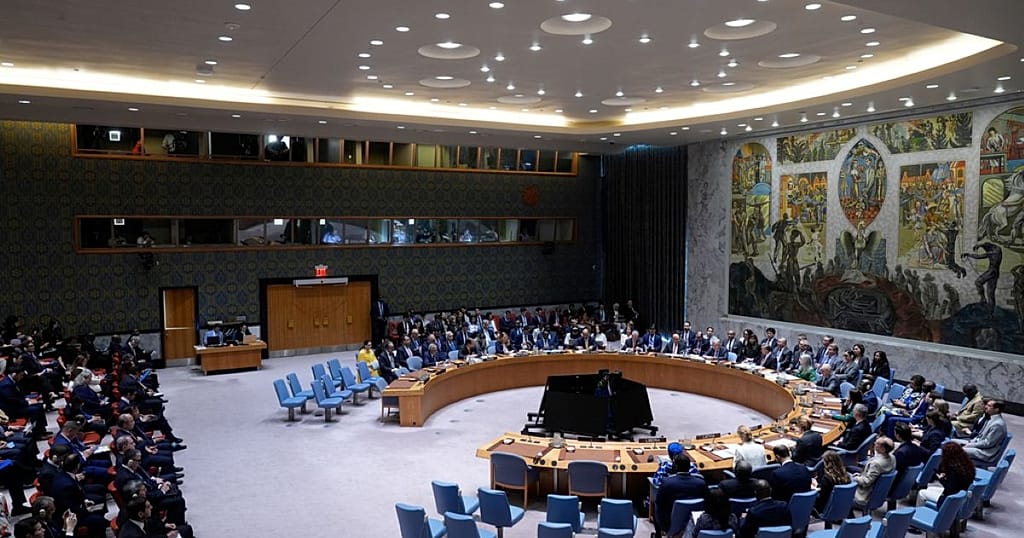
Since the 14 July brief, reporting has added detail on Niger with the targeting of Niamey airport and a military base in Tahoua, and on Burkina Faso where attacks in the north and east reportedly include drone use. UN engagement intensified with a Security Council session and fresh warnings that the terrorist threat remains serious in the central Sahel and northern Nigeria. ECOWAS named Lansana Kouyaté as negotiator with Sahel states, opening a potential political channel absent from the prior brief. Confidence is lower given the reliance on single‑source, aggregated updates and fewer field‑level corroborations than previously.
Key judgments
- JNIM and the Azawad Liberation Front very likely retain the capability for coordinated, multi‑location operations in Mali, and fighting is continuing in the north from Gao to Kidal with past attacks having killed civilians and soldiers, including the Malian defence minister. (Confidence: medium · ASSESSED)
- I&W: Official or credible communiqués by JNIM or the FLA claiming near‑simultaneous attacks against two or more of Gao, Kidal, Mopti, Bamako or Kati. (1-3 months)
- I&W: A verified 30‑day lull in reported clashes in Kidal and Gao acknowledged by Malian authorities. (1-3 months)
- Armed actors are likely expanding attack options against strategic and urban targets in Niger, given the reported targeting of Diori Hamani International Airport in Niamey and a military base in Tahoua. (Confidence: medium · ASSESSED)
- I&W: Additional attempted or successful attacks or security disruptions publicly reported at Niamey airport or Tahoua base. (0-14 days)
- I&W: No reported incidents and visible force‑hardening measures at Niamey airport and Tahoua base sustained for 30 days. (1-3 months)
- Burkina Faso’s northern and eastern regions are likely to face sustained attack pressure, including occasional drone‑enabled strikes. (Confidence: medium · ASSESSED)
- I&W: Burkinabè authorities or credible local reporting cite UAV use or debris in attacks in the north or east. (0-14 days)
- I&W: A documented reduction in reported attacks in the north and east sustained for 30 days. (1-3 months)
- In Nigeria, kidnappings and repeated attacks very likely will continue across the north and the Middle Belt, with a heavy civilian toll. (Confidence: medium · REPORTED)
- I&W: State or federal police report mass abductions or coordinated raids in northern or Middle Belt states. (0-14 days)
- I&W: A sustained 30‑day decline in incident reporting by Nigerian authorities in the north and Middle Belt. (1-3 months)
- Regional and UN messaging indicates the terrorist threat remains serious in the central Sahel and northern Nigeria, and without sustained international support and stronger regional intelligence‑sharing, security conditions are unlikely to improve materially in the near term. (Confidence: medium · ASSESSED)
- I&W: Public pledges of funding, training or joint border operations by ECOWAS members or partners explicitly focused on Mali, Burkina Faso or Niger. (1-3 months)
- I&W: Measured falls in attack frequency in the central Sahel and northern Nigeria in the absence of new external support. (1-3 months)
- Displacement and cross‑border movements are likely to grow if violence persists, from a previously reported baseline of about 6.8 million IDPs in West Africa and the Sahel and reported surges of Burkinabé nationals relocating to Liberia. (Confidence: low · ASSESSED)
- I&W: Updated UN or government datasets show rising IDP totals or increased Burkinabé arrivals recorded by Liberian authorities. (1-3 months)
- I&W: Stable or declining IDP and refugee figures across key Sahelian states despite continued attacks. (1-3 months)
- ECOWAS’s appointment of Lansana Kouyaté as negotiator with the Sahel states creates a roughly even chance of limited diplomatic engagement that could enable security coordination or de‑escalation steps. (Confidence: medium · ASSESSED)
- I&W: Public announcement of a negotiation timetable or communiqués from ECOWAS and Sahel state counterparts. (1-3 months)
- I&W: Official rejection of mediation by any Sahel state government. (0-14 days)
Outlook & scenarios
Urban and base targeting expands in Niger, while northern Mali combat persists (60%)
Attack planning in Niger focuses on capital‑adjacent and strategic infrastructure, with further attempts against Niamey airport or the Tahoua base, while active fighting continues in northern Mali amid the demonstrated capacity of JNIM and the FLA for coordinated operations. UN assessments keep the regional threat level elevated.
Limited political openings via ECOWAS mediation temper cross‑border friction (35%)
The ECOWAS appointment of Lansana Kouyaté leads to early engagement with Sahel state authorities. While not resolving insurgencies, talks create channels for information‑sharing and humanitarian access that marginally reduce cross‑border flashpoints and improve response coherence along key frontiers.
Criminal economies expand along the coast as insecurity endures inland (40%)
With violence sustained in northern Nigeria and the Sahel, drug production and trafficking in coastal states grow, strengthening revenue streams for armed networks and stressing law enforcement. Inland kidnapping and attack patterns persist across Nigeria’s north and the Middle Belt.
Recommendations
- Prioritise collection on attempted or actual incidents at Diori Hamani International Airport and the Tahoua base; set alerts for official notices to airmen, airport advisories and Nigerien government security updates.
- Task OSINT and imagery review to verify reports of drone‑enabled attacks in northern and eastern Burkina Faso; catalogue UAV debris imagery and local witness accounts to establish patterns.
- Map and regularly update a watchlist of strategic nodes at risk in Mali, Niger and Burkina Faso, including airports, forward operating bases and major road junctions, and apply near‑term risk weighting for protection planning.
- Track ECOWAS mediation efforts with Sahel states; capture milestones such as announced meeting dates, communiqués and agreed confidence‑building measures to reassess prospects for security coordination.
- Refresh displacement baselines: request or pull the latest UN and government IDP and cross‑border movement datasets, and specifically validate the reported increase of Burkinabé nationals in Liberia before integrating into planning assumptions.
- Align indicators and warnings: maintain a short list of concrete tripwires per country, with weekly checks against state security statements and reputable local media to adjust likelihoods quickly.
Confidence & uncertainty
Overall confidence is low because much of the evidence consists of aggregated multilateral reporting and diplomatic statements rather than multi‑source, time‑stamped incident data. Several key points, such as drone use in Burkina Faso and the targeting of Niamey airport and the Tahoua base, rest on single reporting lines without independent corroboration. Displacement figures are partly dated, and the reported surge of Burkinabé nationals in Liberia lacks cross‑checks. While there is no direct contradiction among the West Africa claims used here, the dataset contains broader inconsistencies in other theatres, reinforcing caution about uncorroborated elements.
Alternative analysis (red cell)
The claims largely document discrete incidents and a cluster of coordinated messaging but rely on episodic event reports and, in at least one judgement, a single reporting origin (kj_single_origin). A more cautious analytic posture is defensible: the record supports that violent events and regional concern exist, but it does not consistently establish sustained, systemic changes in adversary capability, broad trends toward urban/strategic targeting, or quantified probabilities of diplomatic success without additional, independent corroboration.
Intelligence gaps
- [EEI 1.1 · PARTIAL] Recent jihadist attack incidents in the last 72 hours: exact locations (GPS or nearest town), date/time, target type (market, military base, convoy, village, border post), weapon systems used, and reported casualty counts. Recommended collection: open source/social_media
- [EEI 1.2 · UNCOVERED] Observed jihadist force movements and posture within 100 km of major towns or critical infrastructure: convoy sightings, checkpoints established/removed, concentrations of fighters, and annotated route preparations. Recommended collection: aerial ISR/imagery
- [EEI 1.3 · UNCOVERED] Host-nation and partner military defensive measures near population centers and key infrastructure: troop redeployments, new checkpoints/curfews, roadblocks, air sortie launches, and activation of rapid reaction units (locations and unit IDs if available). Recommended collection: military liaison/satellite
- [EEI 1.4 · PARTIAL] Humanitarian indicators of imminent threat to civilians: sudden internal displacement flows or mass movements within 72 hours, shelter/IDP site openings, and major road closures affecting civilian evacuation routes. Recommended collection: humanitarian/NGO
- [EEI 2.1 · PARTIAL] Reports or imagery confirming weapons and materiel holdings: number and types of heavy weapons observed or seized (mortars, artillery, technicals, IED caches, MANPADS), locations of caches, and recent rearmament deliveries. Recommended collection: imagery/HUMINT
- [EEI 2.2 · UNCOVERED] Active recruitment and propaganda indicators: new recruitment messages/accounts, numbers of claimed/new recruits by region, youth/ethnic group targeting, and physical recruitment events or forced conscriptions. Recommended collection: social_media/HUMINT
- [EEI 2.3 · PARTIAL] Cross-border operational indicators: seizures or sightings of convoys crossing borders, capture/abandonment of border posts, patterns of fighters moving between neighboring countries, and use of transnational smuggling routes. Recommended collection: border_patrol/satellite
- [EEI 2.4 · PARTIAL] Financing and logistics flows that sustain operations: recent seizures of cash/drugs/minerals, transactions or remittances linked to identified networks, and commercial transport companies or ports repeatedly used for shipments to insurgent-held areas. Recommended collection: financial/customs
- [EEI 3.1 · PARTIAL] Force posture and sustainment: foreign and host-nation troop deployments (unit types, strength estimates, bases used), changes in airbase activity (sortie rates, aircraft types, times), and frequency of logistics convoys or resupply flights. Recommended collection: diplomatic/military_reporting/satellite
- [EEI 3.3 · PARTIAL] Critical sustainment vulnerabilities: reported ammunition/fuel shortages, road/bridge interdictions affecting supply lines, strikes on logistics hubs, and closure rates of key supply routes. Recommended collection: logistics/imagery
Cited sources
[1] United Nations · West Africa and the Sahel: Terrorism is changing its face (A) · sha256:b2ef6c13ee57 [2] United Nations · Afrique de l’Ouest et Sahel: le terrorisme change de visage (A) · sha256:ef61d9372a3c [3] Yahoo News France · L'ONU tire la sonnette d'alarme sur la sécurité en Afrique de l'Ouest et au Sahel (A) · sha256:c3808345443c [4] fr.africanews.com · L'ONU tire la sonnette d'alarme sur la sécurité en Afrique de l'Ouest et au Sahel (A) · sha256:d647ccd892eb
Source content hashes were computed at collection time; the cited text is preserved unmodified for the life of this product.
Red cell review: PARTIAL DISSENT
TLP:CLEAR