TLP:CLEAR · Disclosure is not limited.
West Africa: Expansion of Jihadist Violence into Coastal States
Time window: Last 1 day · Audience: General analyst · Type: Situation report · DTG: 2026-08-01 18:53Z · Overall confidence: MEDIUM
BLUF
Jihadist violence in West Africa has expanded into coastal states (Benin, Nigeria, Togo) and intensified in the Sahel core, with JNIM doubling attacks in Burkina Faso and killing Mali's defence minister in April 2026. The Alliance of Sahel States has not improved security coordination, and the humanitarian situation is deteriorating with at least 30,000 migrants stranded.
Executive summary
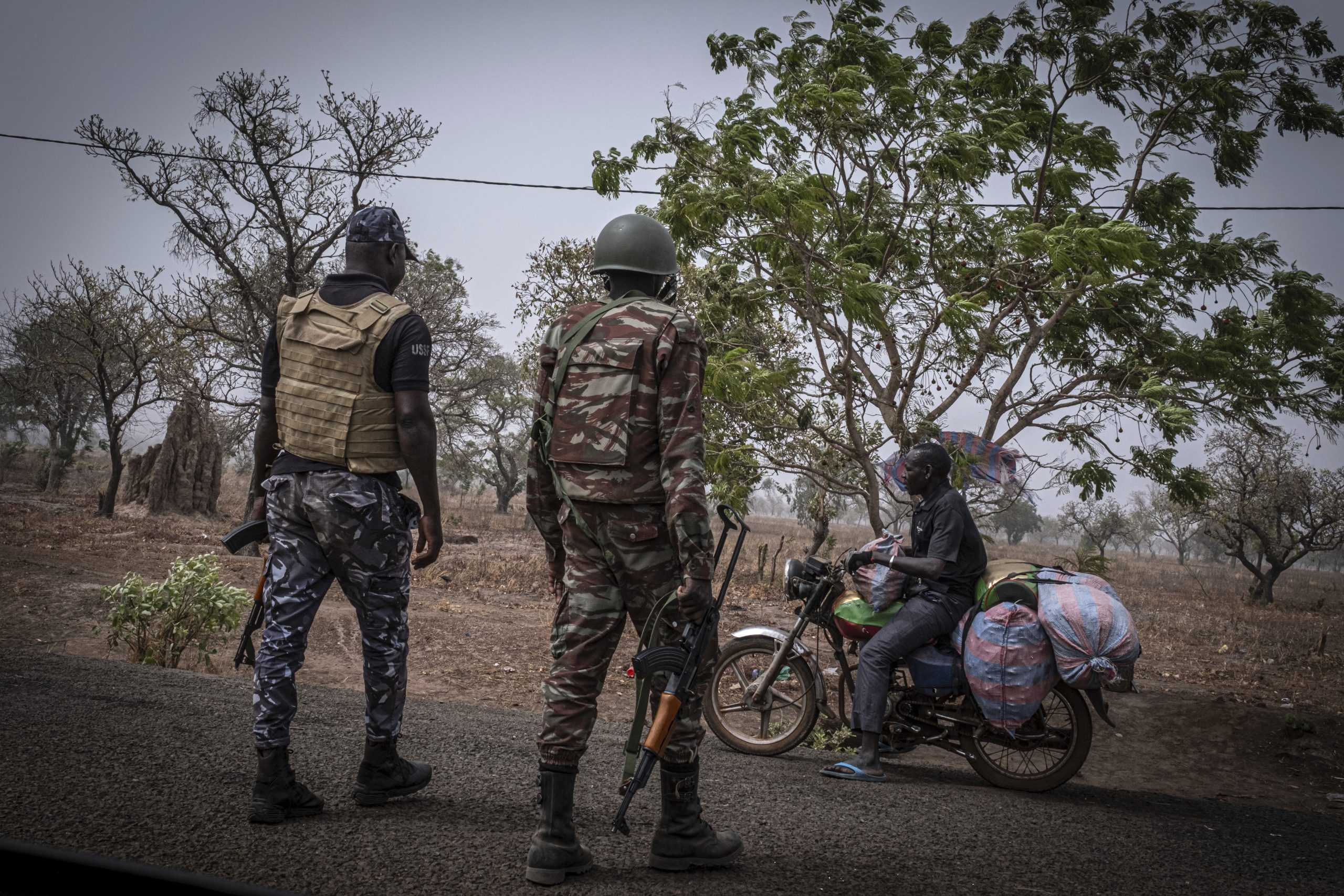
Recent reporting confirms a significant expansion of jihadist activity from the Sahel core into coastal West Africa, with JNIM claiming attacks in Benin and Nigeria. In Burkina Faso, JNIM carried out over 280 attacks in the first half of 2025, double the previous year. The April 2026 killing of Mali's defence minister Sadio Camara by JNIM and the Azawad Liberation Front marks a major escalation. The humanitarian impact is severe, with at least 30,000 migrants stranded and hundreds of extrajudicial killings reported in Mali since April 2025. The Alliance of Sahel States, formed after the January 2024 withdrawal from ECOWAS, has not improved regional security coordination.
Change from previous assessment
This brief updates the assessment to include the April 2026 killing of Mali's defence minister Sadio Camara by JNIM and the Azawad Liberation Front, which represents a significant escalation not covered in the prior brief. Additionally, the prior brief noted limited evidence of a region wide surge beyond Mali, but current reporting confirms expansion into coastal West Africa (Benin, Nigeria, Togo) with attacks occurring in the past six months.
Key judgments
- It is very likely that jihadist violence has expanded from the Sahel core (Mali, Burkina Faso, Niger) into coastal West Africa (Benin, Nigeria, Togo, and Ivory Coast) since the prior brief, with JNIM claiming attacks in Benin and Nigeria in the past year. (Confidence: medium · ASSESSED)
- I&W: JNIM claims responsibility for an attack in Ghana within the next 30 days (0-30 days)
- I&W: Benin or Togo reports a significant increase in military casualties from jihadist attacks compared to the previous quarter (1-3 months)
- It is almost certain that JNIM killed Mali's defence minister Sadio Camara during a major offensive on 25 April 2026, marking a significant escalation in the group's capabilities and a major blow to Malian military leadership. (Confidence: high · REPORTED)
- I&W: Mali's military leadership structure undergoes a major reshuffle within 14 days (0-14 days)
- I&W: JNIM claims a follow-on attack targeting another senior Malian military official within 60 days (0-60 days)
- It is likely that the Alliance of Sahel States (AES), formed by Mali, Burkina Faso, and Niger after their January 2024 withdrawal from ECOWAS, has not improved regional security coordination against jihadist groups and may have weakened it due to the absence of ECOWAS structures and the continued presence of Russian mercenaries. (Confidence: medium · ASSESSED)
- I&W: Mali, Burkina Faso, or Niger requests military assistance from a non AES country within 30 days (0-30 days)
- I&W: A major cross border attack by jihadists occurs in a border area between two AES countries without coordinated response within 60 days (0-60 days)
- It is very likely that JNIM has doubled its attack tempo in Burkina Faso, carrying out over 280 attacks in the first half of 2025 compared to the same period in 2024. (Confidence: medium · REPORTED)
- I&W: JNIM claims over 300 attacks in Burkina Faso in the second half of 2025 within the next 30 days (0-30 days)
- I&W: Burkina Faso's government reports a 25 percent increase in displaced persons in the second half of 2025 compared to the first half (1-3 months)
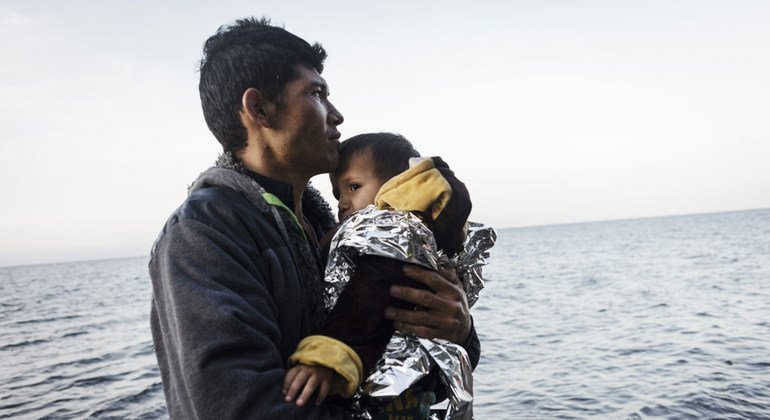
- It is very likely that the humanitarian situation has deteriorated, with at least 30,000 migrants stranded at West African borders and hundreds of extrajudicial killings reported in Mali since April 2025. (Confidence: high · REPORTED)
- I&W: UNHCR reports an increase to 40,000 stranded migrants at West African borders within 60 days (0-60 days)
- I&W: Malian authorities report a formal investigation into extrajudicial killings within 30 days (0-30 days)
Outlook & scenarios
Continued Expansion into Coastal West Africa (60%)
JNIM continues to expand operations southward into coastal West Africa, with attacks increasing in Benin, Togo, and Ghana. This expansion is facilitated by weakened state security and the absence of regional coordination through ECOWAS. By early 2027, Ghana experiences its first major jihadist attack.
Stalemate in the Sahel Core (30%)
Despite the formation of the Alliance of Sahel States and the presence of Russian mercenaries, the security situation in Mali, Burkina Faso, and Niger remains stagnant. JNIM maintains control over large rural areas, but major cities are relatively secure. The conflict becomes protracted, with no significant territorial gains by either side.
Wildcard Regional Coalition Revival (10%)
ECOWAS, with support from international partners, brokers a reconciliation with the Alliance of Sahel States, leading to renewed regional security cooperation. This results in a coordinated military campaign that degrades JNIM and ISGS capabilities in the Sahel by mid 2027.
Recommendations
- Monitor JNIM communications for claims of attacks in Ghana and Togo as an early indicator of expansion.
- Assess the impact of Russian mercenary withdrawals on local security dynamics in Mali and Niger.
- Track displacement figures and migrant flows at West African borders to gauge humanitarian deterioration.
Confidence & uncertainty
Overall confidence is medium due to multiple medium reliability sources corroborating key events such as attacks in Burkina Faso and coastal expansion. However, some claims about specific attack figures and group capabilities are single source or from think tanks with lower reliability. Uncertainties include the exact strength of jihadist groups and the effectiveness of the Alliance of Sahel States.
Intelligence gaps
- [EEI 1.1 · UNCOVERED] Intercepted or captured operational messages, orders, or timelines indicating planned attacks, named targets, or attack windows (dates/times) for specific towns, facilities, or convoys. Recommended collection: SIGINT
- [EEI 1.2 · UNCOVERED] Observed movement of armed groups, armed convoys, or weapons caches toward or within 20–100 km of named population centers, military bases, border crossing points, or major road/rail routes. Recommended collection: IMINT
- [EEI 1.3 · UNCOVERED] Recent local reporting, social‑media posts, or detainee/source statements claiming operational readiness, recruitment of attack teams, or calls for immediate attacks against specific targets. Recommended collection: OSINT
- [EEI 2.1 · UNCOVERED] Estimated numbers of fighters (by group) present in defined districts/regions and recent trends (increasing, stable, decreasing) based on ground reports, detainee statements, or biometric registration. Recommended collection: HUMINT
- [EEI 2.2 · UNCOVERED] Identification and geolocation of training camps, safe havens, or arms depots, including imagery of training activity, firing ranges, or stockpiled weapons and explosives. Recommended collection: IMINT
- [EEI 2.3 · UNCOVERED] Seizures, battlefield recoveries, or credible reports describing types and quantities of weapons and munitions in use (e.g., RPGs, mortars, MANPADS, vehicle‑borne IED components) and recent changes in lethality. Recommended collection: LAW_ENFORCEMENT
- [EEI 2.4 · UNCOVERED] Reports of foreign fighter arrivals/departures, external trainers or advisors present, or documented external technical assistance (IED construction, communications encryption) to named groups. Recommended collection: SIGINT
- [EEI 3.1 · UNCOVERED] Documented instances and amounts of extortion/taxation on towns, markets, transporters, or humanitarian agencies, including receipts, lists of taxed goods, and affected road segments. Recommended collection: HUMINT
- [EEI 3.2 · UNCOVERED] Seizures or interdictions showing volumes and origins/destinations of trafficked commodities used for revenue (gold, drugs, charcoal, timber), and intercepted communications detailing smuggling routes or buyers. Recommended collection: LAW_ENFORCEMENT
- [EEI 3.3 · UNCOVERED] Financial intelligence on suspicious cross‑border transfers, known money‑courier movements, or identified donor networks linked to named groups, including remittance patterns and intermediary accounts. Recommended collection: FININT
- [EEI 4.1 · UNCOVERED] Changes in government/security force posture: troop deployments/withdrawals by unit and location, declared states of emergency, curfews, checkpoints established or removed, and equipment transfers/arrivals. Recommended collection: OSINT
- [EEI 4.2 · UNCOVERED] Evidence of improved or degraded cross‑border security cooperation: joint patrols, information‑sharing agreements, troop movements across borders, or closing/opening of border crossings. Recommended collection: HUMINT
- [EEI 4.3 · UNCOVERED] Humanitarian indicators: numbers of newly displaced persons by location, reported access denials to aid organizations, closures of clinics/schools, and routes experiencing mass civilian flight. Recommended collection: UN/HUMANITARIAN
- [EEI 4.4 · UNCOVERED] Documented incidents of security‑force abuses or communal reprisals (dates, locations, victims), and reports of local grievances exploited by jihadist recruiters. Recommended collection: LAW_ENFORCEMENT
Cited sources
[1] The Guardian · How al-Qaida-linked jihadist group JNIM is bringing Mali to its knees (A) · sha256:39a06916e32a [2] The Soufan Center · Sub-Saharan Africa Remains an Epicenter of Violent Jihadist Terrorism (C) · sha256:5dad2012a822 [3] BBC · JNIM in Mali: How an al-Qaeda offshoot became one of Africa's deadliest militant groups (A) · sha256:63c499ff3d8a [4] Lawfare Media · The Jihadist Wave in West Africa (B) · sha256:042b10930165 [5] The Guardian · Mali in turmoil after insurgents seize towns and kill defence minister (A) · sha256:2dc26c242cf3 [6] The Guardian · Al-Qaida affiliate attacks Mali army bases as junta struggles to contain jihadist threat (A) · sha256:42033911f466 [7] United Nations · Retour sur l'année 2021: le nombre de réfugiés et de migrants augmente, malgré les restrictions de voyage (A) · sha256:a47a107622c6 [8] United Nations · Mali: Volker Türk dénonce la dérive autoritaire et la répression croissante (A) · sha256:6363b869b58f
Source content hashes were computed at collection time; the cited text is preserved unmodified for the life of this product.
TLP:CLEAR