TLP:CLEAR · Disclosure is not limited.
West Africa: Intensifying Jihadist Campaign in Mali, Persistent Border Threat to Côte d’Ivoire
Time window: Last 1 day · Audience: General analyst · Type: Situation report · DTG: 2026-06-29 09:43Z · Overall confidence: LOW
BLUF
Mali’s conflict has intensified since late April, with al-Qaeda-linked JNIM and allied FLA mounting coordinated attacks, threatening Bamako’s access routes and harming civilians. Côte d’Ivoire’s northern border remains at elevated risk from JNIM and AQIM despite Abidjan’s strengthened counter-terror architecture.
Executive summary
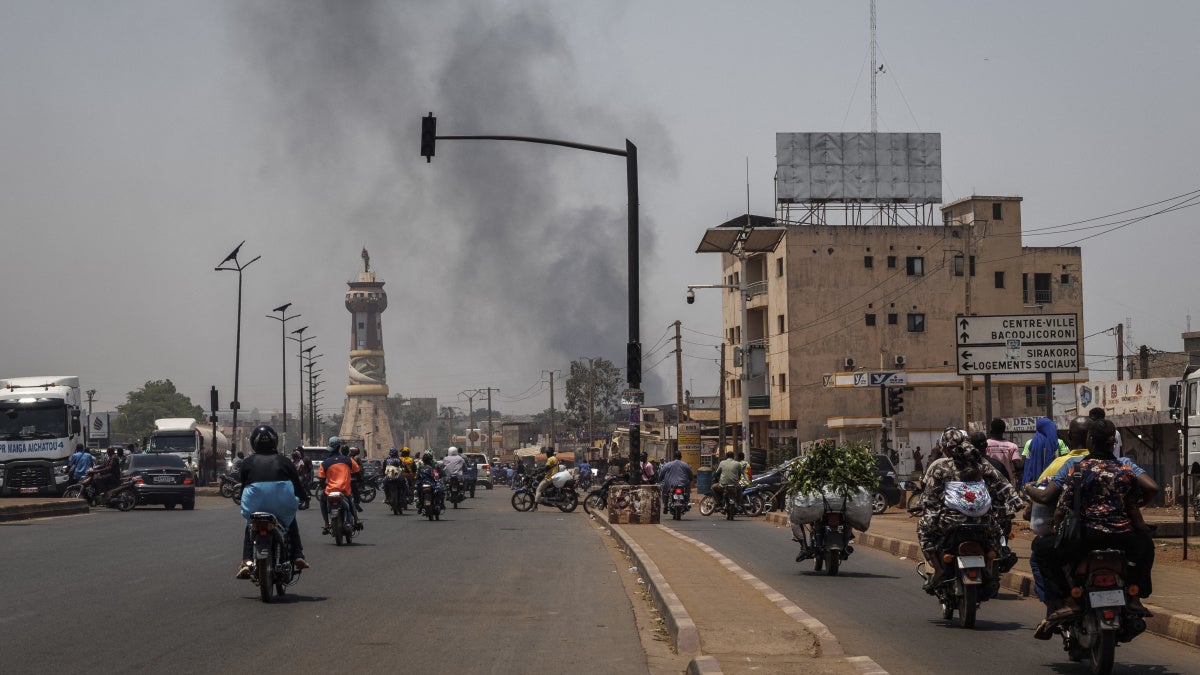
Since 25 April 2026, al-Qaeda-linked Jama’at Nusrat al-Islam wal-Muslimin (JNIM, also known as GSIM) and allied Azawad Liberation Front (FLA) have stepped up operations across Mali, including coordinated attacks and clashes in Gao and Kidal that killed 13 civilians and injured at least 25, a declared “total siege” of Bamako three days later, and the arson of more than 40 civilian vehicles on routes into the capital between 6 and 21 May. Reporting also points to aerial strikes by Malian forces in the north on 17 May and credible open-source evidence of banned cluster submunitions discovered at Tadjmart thereafter, alongside a drone-dropped munition that killed at least 10 civilians in Tené the same night. In Côte d’Ivoire, official advisories continue to flag JNIM and AQIM as the main threats in the north, with prior cross-border incursions from Burkina Faso, even as Abidjan has stood up the Counterterrorism Operational Intelligence Center (CROAT) and the Northern Operational Zone to harden its frontier.
Change from previous assessment
Since the 28 June brief, open-source reporting has expanded detail on GSIM operations in Mali: coordinated attacks on 25 April, a 28 April ‘total siege’ declaration of Bamako, arson of more than 40 vehicles on routes to the capital in May, and civilian harm in Gao and Kidal. New evidence indicates banned submunitions at Tadjmart after Malian-announced air operations on 17 May, and a drone-dropped munition killed at least 10 civilians in Tené the same night. For Côte d’Ivoire, official material reinforces that JNIM and AQIM remain the main northern threats while CROAT and the Northern Operational Zone are in place. Confidence on cluster-munition presence is raised to likely but remains medium due to attribution gaps.
Key judgments
- JNIM and the allied FLA have very likely escalated operations across Mali since late April 2026, degrading state control in Gao and Kidal and projecting intimidation toward Bamako through vehicle arson and a declared “total siege.” (Confidence: medium · REPORTED)
- I&W: Credible NGO or official communiqués report new GSIM-claimed checkpoints or arson attacks against civilian convoys on approaches to Bamako. (0-14 days)
- I&W: Regular fuel convoys into Mali resume without interdiction after prior GSIM blockade activity. (1-3 months)
- It is likely that cluster submunitions were used in northern Mali in May 2026, contravening Mali’s obligations under the Convention on Cluster Munitions, with remnants documented at Tadjmart after Malian-announced air operations. (Confidence: medium · ASSESSED)
- I&W: Independent demining or investigative organisations publish additional geolocated imagery of unexploded submunitions in or near Tadjmart. (1-3 months)
- I&W: Authoritative forensic analysis publicly rules out cluster submunitions in northern Mali incidents. (1-3 months)
- Côte d’Ivoire’s northern border threat from JNIM and AQIM remains elevated, but Abidjan has very likely improved resilience via CROAT and the Northern Operational Zone while partners maintain restrictive travel guidance. (Confidence: high · REPORTED)
- I&W: Ivoirian authorities report a foiled or attempted JNIM or AQIM incursion across the Burkina Faso border. (0-14 days)
- I&W: The U.S. revises downward its Do Not Travel advisory for Côte d’Ivoire’s northern border region. (1-3 months)
- Armed Islamist groups and Malian security forces and allies have likely committed serious abuses against civilians since April 2026, including civilian deaths in Gao and Kidal on 25 April and a drone-dropped munition killing at least 10 civilians in Tené on 17 May. (Confidence: medium · REPORTED)
- I&W: Further NGO or credible media reporting documents new civilian-harm incidents linked to GSIM/JNIM or Malian forces and allies. (0-14 days)
- I&W: Official investigations lead to public accountability actions against implicated units, with a halt in reported civilian-harm incidents. (1-3 months)
- Russia’s Africa Corps is likely supporting Malian army operations in the north, shaping the government’s counter-insurgency posture alongside clashes with GSIM and FLA. (Confidence: medium · REPORTED)
- I&W: Imagery or official Malian releases identify Africa Corps elements operating in Gao or Kidal. (1-3 months)
- I&W: Public statements announce withdrawal or suspension of Africa Corps support to Malian operations. (1-3 months)
Outlook & scenarios
Insurgents retain momentum in Mali and expand coercion campaign (55%)
JNIM/GSIM and FLA sustain pressure through periodic multi-point attacks, continued intimidation along approaches to Bamako, and economic warfare that impedes fuel convoys, keeping northern corridors insecure and forcing Malian forces to overextend.
Airpower-led pushback raises civilian costs (45%)
Malian forces, with Africa Corps support, intensify air and drone strikes in Gao, Kidal and surrounding areas. Civilian harm increases, and additional evidence of banned munitions surfaces, drawing sharper external criticism and complicating Bamako’s international partnerships.
Côte d’Ivoire border holds under enhanced posture (35%)
CROAT and the Northern Operational Zone improve interdiction of cross-border infiltrations from Burkina Faso. JNIM remains the principal threat, but incidents are deterred or disrupted while partner governments keep restrictive travel advisories in place.
Wildcard: Confirmed cluster-munition use triggers diplomatic fallout (20%)
Independent verification ties cluster submunitions found near Tadjmart to a state actor’s recent strikes. As Mali is a CCM signatory, condemnation follows and external partners reassess military support, constraining Bamako’s operational options.
Recommendations
- Prioritise collection on GSIM activity along approaches to Bamako: collate NGO incident logs and official communiqués for new checkpoints, vehicle arson, or road interdictions; map trends against reported dates from late April onward.
- Task geolocation and munitions specialists to validate open-source imagery from Tadjmart and nearby villages; build a reference set for ShOAB-0.5 submunitions and compare against May strike timelines.
- Engage Ivoirian counterparts on CROAT and Northern Operational Zone liaison channels to enhance alerting for cross-border movements from Burkina Faso; request periodic summaries on arrests, interdictions, and patrol patterns.
- Maintain a standing watch on official travel advisories for Côte d’Ivoire’s northern border region and internal restrictions on U.S. personnel movement to detect risk shifts relevant to field operations.
- Track Africa Corps indicators in Mali: monitor Malian military releases and Russian-language channels for unit identifiers, deployment locations, and mission sets in Gao and Kidal.
- Use NASA FIRMS thermal detections as a supporting, not determinative, cue for incident triage in Mali; cross-reference thermal hotspots with same-day reports to distinguish combat-related fires from other heat sources.
- Pre-draft policy and legal briefs on CCM implications should further cluster-munition evidence be confirmed, including potential impacts on security cooperation and arms transfers.
- Integrate fuel convoy disruption reporting into humanitarian impact assessments for Mali, given GSIM’s blockade tactics since 2025; coordinate with logistics actors on mitigation options for essential supplies.
Confidence & uncertainty
Much of the Mali reporting derives from credible NGOs and open-source investigations, but several elements are single-source and recent, including cluster submunition findings that, while well-documented, lack multi-source attribution. The escalation picture is consistent across multiple reports yet still has gaps on state and non-state casualty attribution. Côte d’Ivoire threat assessments rest on official advisories and government statements, which are reliable but precautionary. Given uneven corroboration, mixed source types, and some unresolved contradictions in background timelines, the overall confidence remains low.
Alternative analysis (red cell)
Available reporting documents an uptick in violent incidents and some forensic traces, but most supporting claims are analysis-grade or lack independent corroboration. Reasonable alternative assessments are that (1) violence and intimidation have increased episodically without clear evidence of sustained degradation of state control in Gao and Kidal; (2) observed bomblets at Tadjmart require forensic confirmation before attributing cluster-munition use to May strikes; (3) civilian casualties are credibly reported but culpability of state or allied forces remains unestablished; and (4) assertions of Russia’s Africa Corps support are plausible but currently rest on a single medium-confidence source.
Intelligence gaps
- [EEI 1.1 · PARTIAL] Intercepted or captured operational messages, orders, or timelines indicating planned attacks, named targets, or attack windows (dates/times) for specific towns, facilities, or convoys. Recommended collection: SIGINT
- [EEI 2.1 · PARTIAL] Estimated numbers of fighters (by group) present in defined districts/regions and recent trends (increasing, stable, decreasing) based on ground reports, detainee statements, or biometric registration. Recommended collection: HUMINT
- [EEI 2.2 · UNCOVERED] Identification and geolocation of training camps, safe havens, or arms depots, including imagery of training activity, firing ranges, or stockpiled weapons and explosives. Recommended collection: IMINT
- [EEI 3.1 · UNCOVERED] Documented instances and amounts of extortion/taxation on towns, markets, transporters, or humanitarian agencies, including receipts, lists of taxed goods, and affected road segments. Recommended collection: HUMINT
- [EEI 3.2 · UNCOVERED] Seizures or interdictions showing volumes and origins/destinations of trafficked commodities used for revenue (gold, drugs, charcoal, timber), and intercepted communications detailing smuggling routes or buyers. Recommended collection: LAW_ENFORCEMENT
- [EEI 3.3 · UNCOVERED] Financial intelligence on suspicious cross‑border transfers, known money‑courier movements, or identified donor networks linked to named groups, including remittance patterns and intermediary accounts. Recommended collection: FININT
- [EEI 4.2 · PARTIAL] Evidence of improved or degraded cross‑border security cooperation: joint patrols, information‑sharing agreements, troop movements across borders, or closing/opening of border crossings. Recommended collection: HUMINT
- [EEI 4.3 · PARTIAL] Humanitarian indicators: numbers of newly displaced persons by location, reported access denials to aid organizations, closures of clinics/schools, and routes experiencing mass civilian flight. Recommended collection: UN/HUMANITARIAN
Cited sources
[1] Human Rights Watch · Mali: De graves abus commis dans un contexte de reprise des combats (B) · sha256:ae0962ab9455 [2] Bellingcat · Banned Russian Submunitions Found After Mali's Military Announces Airstrikes - bellingcat (A) · sha256:6788d3465fd7 [3] U.S. Department of State · Cote d'Ivoire Travel Advisory (A) · sha256:d92eb303ef23
Source content hashes were computed at collection time; the cited text is preserved unmodified for the life of this product.
Red cell review: PARTIAL DISSENT
TLP:CLEAR