TLP:CLEAR · Disclosure is not limited.
West Africa: Jihadist Adaptation and Security Fragmentation
Time window: Last 1 day · Audience: General analyst · Type: Situation report · DTG: 2026-09-21 00:36Z · Overall confidence: LOW
BLUF
It is likely that JAS and ISWAP have organised access to major AI chatbots for technical advice and operational planning, but it is unlikely that the available reporting proves a measurable increase in attack lethality. The Mali-Burkina Faso-Niger bloc's break with ECOWAS and France's Sahel retrenchment are likely to constrain regional coordination, while evidence of JNIM arms gains and Patria-linked weapons transfers remains low confidence.
Executive summary
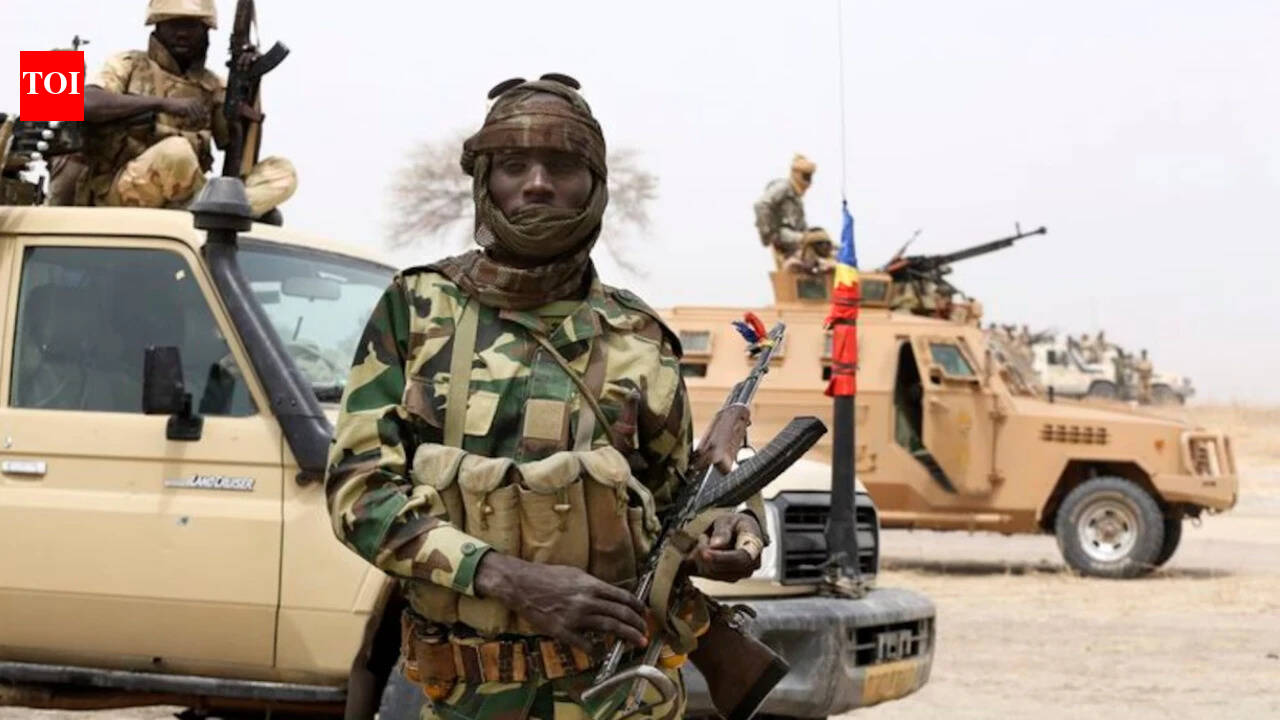
The strongest new reporting concerns organised AI use by JAS and ISWAP. A University of Cambridge study based on interviews with 27 former members describes a reported 23-member JAS AI unit, training for senior ISWAP members, use of six named chatbots, and one account involving body-camera imagery uploaded to ChatGPT. UN warnings and research by Tech Against Terrorism provide partial corroboration, but the operational detail remains retrospective and interview-based. Regional security coordination is weakened by the reported break between Mali, Burkina Faso, Niger and ECOWAS, alongside the end of France's Operation Barkhane. A low-confidence social-media report describes JNIM capturing weapons near Dioura, while NGO and AIS reporting links the sanctioned vessel Patria to West African port movements and earlier weapons deliveries intended for Africa Corps operations in Mali. The supplied reporting does not establish a new region-wide attack count during the current reporting window.
Change from previous assessment
Since the 20 September brief, the assessment of organised AI access has been raised from low to medium confidence because the new reporting specifies a 23-member JAS unit, ISWAP training activity and a battlefield body-camera use case, with partial corroboration from UN and forum reporting. Confidence remains low that AI has increased lethality or caused a current attack. The Dioura weapons seizure and Patria logistics lines are newly retained as low-confidence judgements. The prior medium-confidence assessment of sustained JNIM and Tuareg pressure is not upgraded because the current package adds no independently corroborated attack trend. The prior Niger Dasa uranium judgement is retired for this run because the current package contains no new Dasa evidence.
Key judgments
- It is likely that JAS and ISWAP have organised access to major AI chatbots for technical and military advice, including a reported 23-member JAS unit, dedicated AI expertise in both factions, and training for senior ISWAP members in ISWAP-controlled areas. The assessment rests chiefly on retrospective interviews with 27 former members and one major-media report. UN officials' warnings and Tech Against Terrorism's identification of pro-ISIL discussions provide partial corroboration, but not independent confirmation of every operational detail. (Confidence: medium · REPORTED)
- I&W: An independently sourced account or authenticated digital material identifies an active JAS AI unit or current ISWAP training activity involving ChatGPT, Claude, Gemini, Grok, Meta AI or DeepSeek. (0-14 days)
- I&W: Cambridge researchers or a second investigation report that the former-member accounts cannot be verified or that no dedicated JAS or ISWAP AI unit existed. (1-3 months)
- It is unlikely that the available reporting establishes that AI use has materially increased attack lethality or caused a named current attack in West Africa. About 10 of the 27 interviewees linked AI to explosives, and one account described a commander using ChatGPT to analyse body-camera footage and relay instructions, but neither account establishes operational causation. This is a low-confidence inference from thin, retrospective reporting. (Confidence: low · ASSESSED)
- I&W: Authenticated planning records or after-action material links chatbot output to a named attack, explosives outcome, targeting decision or battlefield instruction. (0-14 days)
- I&W: An independent review finds that the reported AI advice was generic, unused or unrelated to the outcome of any named attack. (1-3 months)
- It is likely that the Mali-Burkina Faso-Niger bloc's break with ECOWAS, combined with the end of France's Operation Barkhane and France's move towards smaller-scale coastal cooperation, will constrain cross-border security coordination over the next three months. Confidence is low because the political reporting comes chiefly from one local-media source and the cited ECOWAS security plan covered 2020-2024 rather than the current period. (Confidence: low · ASSESSED)
- I&W: A new ECOWAS-backed security operation excludes Mali, Burkina Faso and Niger while France maintains only the reported smaller-scale coastal cooperation model. (0-14 days)
- I&W: Mali, Burkina Faso and Niger publicly participate in an ECOWAS or French-supported operation, mechanism or joint security arrangement. (1-3 months)
- There is a roughly even chance that JNIM captured a large quantity of weapons and ammunition during its attack around Dioura in Mali's Mopti Region. The claim comes from a single low-confidence social-media source and does not establish that JNIM routinely obtains most of its basic weapons from captured military bases across the Sahel. (Confidence: low · REPORTED)
- I&W: Geolocated imagery, an official Malian account or independently authenticated JNIM material verifies weapons stockpiles captured at Dioura. (0-14 days)
- I&W: Independent imagery or records show that the weapons were not captured at Dioura, or fail to corroborate the reported scale of the seizure. (1-3 months)
- It is likely that the sanctioned vessel Patria, IMO 9159921, moved through West African ports during 2026, including Douala, Owendo and Lagos, and it is unlikely that the available evidence proves that its cargo movements supplied Africa Corps operations in Mali. Radio France International reported an earlier weapons delivery to Conakry intended for Africa Corps, while NGO analysis relies partly on AIS, satellite imagery and draught changes. Confidence remains low because the cargo is not directly identified and the reported port-call counts conflict. (Confidence: low · ASSESSED)
- I&W: New AIS, satellite or port evidence shows Patria loading at Owendo and discharging at Douala, Conakry or Lagos, with a documented cargo change. (0-14 days)
- I&W: Independent port records or imagery show no weapons cargo and no operational link between Patria's movements and Africa Corps. (1-3 months)
Outlook & scenarios
Sustained but uneven jihadist pressure (50%)
It is likely that jihadist groups retain operational pressure while Mali, Burkina Faso and Niger remain institutionally separated from ECOWAS and France continues its smaller-scale coastal posture. AI tools remain an enabling service for selected JAS and ISWAP personnel rather than a demonstrated driver of regional attack lethality.
AI capability remains latent (30%)
It is likely that JAS and ISWAP continue using AI for advice, training and battlefield interpretation without a publicly documented attack in which AI materially changes the outcome. Political fragmentation persists, but the available reporting does not show a clear increase in attack effectiveness.
Arms access reinforces operational pressure (15%)
It is unlikely but plausible that independently verified weapons gains at Dioura, combined with additional logistics activity through West African ports, improve JNIM's access to arms and ammunition. This scenario would raise the likelihood of repeated attacks against Malian military positions and movements.
AI-enabled high-impact attack (5%)
An AI-assisted attack involving explosives, body-camera analysis or chatbot-supported battlefield direction is unlikely but high impact. Confirmation would require authenticated evidence linking a named JAS or ISWAP attack to chatbot output and a measurable operational effect.
Recommendations
- Prioritise collection that validates the reported 23-member JAS AI unit and ISWAP training activity. Seek a second source, authenticated digital material or direct technical evidence within 14 days.
- Maintain a separate incident ledger for Mali, Burkina Faso, Niger and Nigeria. Do not use the reported first-half 2023 totals as evidence of a current surge without a new, regionally comparable count.
- Track Patria, IMO 9159921, across Douala, Owendo, Conakry and Lagos using AIS, satellite imagery and port records. Record draught changes separately from inferred cargo identity.
- Monitor official statements and operational records from ECOWAS, Mali, Burkina Faso, Niger and France for evidence of joint mechanisms, exclusions or renewed cooperation.
- Keep the JNIM Dioura weapons report in a low-confidence collection queue. Require geolocation, independent imagery or official documentation before using it to assess changes in JNIM's weapons supply.
- In future reporting, separate evidence of AI access from evidence of AI effectiveness. Attribute claims about explosives, targeting or battlefield direction to the specific source type and mark the absence of direct attack attribution.
Confidence & uncertainty
Overall confidence is low. The AI reporting is more detailed than in the previous brief and has partial support from UN warnings and forum research, but its operational claims remain retrospective and are chiefly based on interviews with 27 former members. The political fragmentation assessment relies mainly on local-media reporting. The JNIM weapons claim is single-source social-media reporting, while the Patria assessment combines stronger vessel-tracking methods with unproven cargo identification and conflicting port-call counts. No current, independently corroborated region-wide attack count is provided.
Intelligence gaps
- [EEI 1.1 · UNCOVERED] Intercepted or captured operational messages, orders, or timelines indicating planned attacks, named targets, or attack windows (dates/times) for specific towns, facilities, or convoys. Recommended collection: SIGINT
- [EEI 1.2 · UNCOVERED] Observed movement of armed groups, armed convoys, or weapons caches toward or within 20-100 km of named population centers, military bases, border crossing points, or major road/rail routes. Recommended collection: IMINT
- [EEI 1.3 · PARTIAL] Recent local reporting, social‑media posts, or detainee/source statements claiming operational readiness, recruitment of attack teams, or calls for immediate attacks against specific targets. Recommended collection: OSINT
- [EEI 2.1 · UNCOVERED] Estimated numbers of fighters (by group) present in defined districts/regions and recent trends (increasing, stable, decreasing) based on ground reports, detainee statements, or biometric registration. Recommended collection: HUMINT
- [EEI 2.2 · UNCOVERED] Identification and geolocation of training camps, safe havens, or arms depots, including imagery of training activity, firing ranges, or stockpiled weapons and explosives. Recommended collection: IMINT
- [EEI 2.3 · PARTIAL] Seizures, battlefield recoveries, or credible reports describing types and quantities of weapons and munitions in use (e.g., RPGs, mortars, MANPADS, vehicle‑borne IED components) and recent changes in lethality. Recommended collection: LAW_ENFORCEMENT
- [EEI 3.1 · UNCOVERED] Documented instances and amounts of extortion/taxation on towns, markets, transporters, or humanitarian agencies, including receipts, lists of taxed goods, and affected road segments. Recommended collection: HUMINT
- [EEI 3.2 · PARTIAL] Seizures or interdictions showing volumes and origins/destinations of trafficked commodities used for revenue (gold, drugs, charcoal, timber), and intercepted communications detailing smuggling routes or buyers. Recommended collection: LAW_ENFORCEMENT
- [EEI 3.3 · UNCOVERED] Financial intelligence on suspicious cross‑border transfers, known money‑courier movements, or identified donor networks linked to named groups, including remittance patterns and intermediary accounts. Recommended collection: FININT
- [EEI 4.1 · PARTIAL] Changes in government/security force posture: troop deployments/withdrawals by unit and location, declared states of emergency, curfews, checkpoints established or removed, and equipment transfers/arrivals. Recommended collection: OSINT
- [EEI 4.2 · PARTIAL] Evidence of improved or degraded cross‑border security cooperation: joint patrols, information‑sharing agreements, troop movements across borders, or closing/opening of border crossings. Recommended collection: HUMINT
- [EEI 4.3 · UNCOVERED] Humanitarian indicators: numbers of newly displaced persons by location, reported access denials to aid organizations, closures of clinics/schools, and routes experiencing mass civilian flight. Recommended collection: UN/HUMANITARIAN
- [EEI 4.4 · UNCOVERED] Documented incidents of security‑force abuses or communal reprisals (dates, locations, victims), and reports of local grievances exploited by jihadist recruiters. Recommended collection: LAW_ENFORCEMENT
Cited sources
[1] The Times of India · 'How can I build a bomb? It tells you how': How Boko Haram fighters are using AI to make explosives, plan attacks (B) · Sun Sep 20 2026 10:20:00 GMT+0000 (Coordinated Universal Time) · sha256:7c90dd0550a4 [2] The Rio Times (riotimesonline.com) · ECOWAS and France Discuss Terrorism Challenges Across West Africa (D) · Sun Sep 20 2026 19:57:41 GMT+0000 (Coordinated Universal Time) · sha256:605e2ba074c0 [3] facebook.com · Just contemplate the sheer magnitude of weapons and captured by JNIM during its attack around Dioura in Mali's Mopti Region. This is from a single operation. This is a major problem for the region. I doubt JNIM even needs to rely heavily on purchasing basic weapons given the sheer volume of arms and ammunition it routinely captures from military bases across the Sahel. | Soft News (E) · sha256:4c3498cac476 [4] Bellingcat · Tracking a Sanctioned Russian Vessel’s West African Odyssey - bellingcat (B) · Tue Aug 25 2026 08:52:50 GMT+0000 (Coordinated Universal Time) · sha256:cb5fed118272
Source content hashes were computed at collection time; the cited text is preserved unmodified for the life of this product.
Red cell review: CONCUR WITH COMMENT
TLP:CLEAR