TLP:CLEAR · Disclosure is not limited.
West Africa: Jihadist Pressure and Security Fractures
Time window: Last 1 day · Audience: General analyst · Type: Situation report · DTG: 2026-08-19 14:03Z · Overall confidence: MEDIUM
BLUF
Jihadist pressure is likely extending beyond the principal conflict locations of Mali, Niger and Burkina Faso into Northern Benin, but the evidence for a wider regional surge remains thin. The United States has lifted vessel security restrictions on Nigeria, indicating a likely improvement in maritime cooperation that does not establish a reduction in Boko Haram or Islamic State West Africa Province activity.
Executive summary
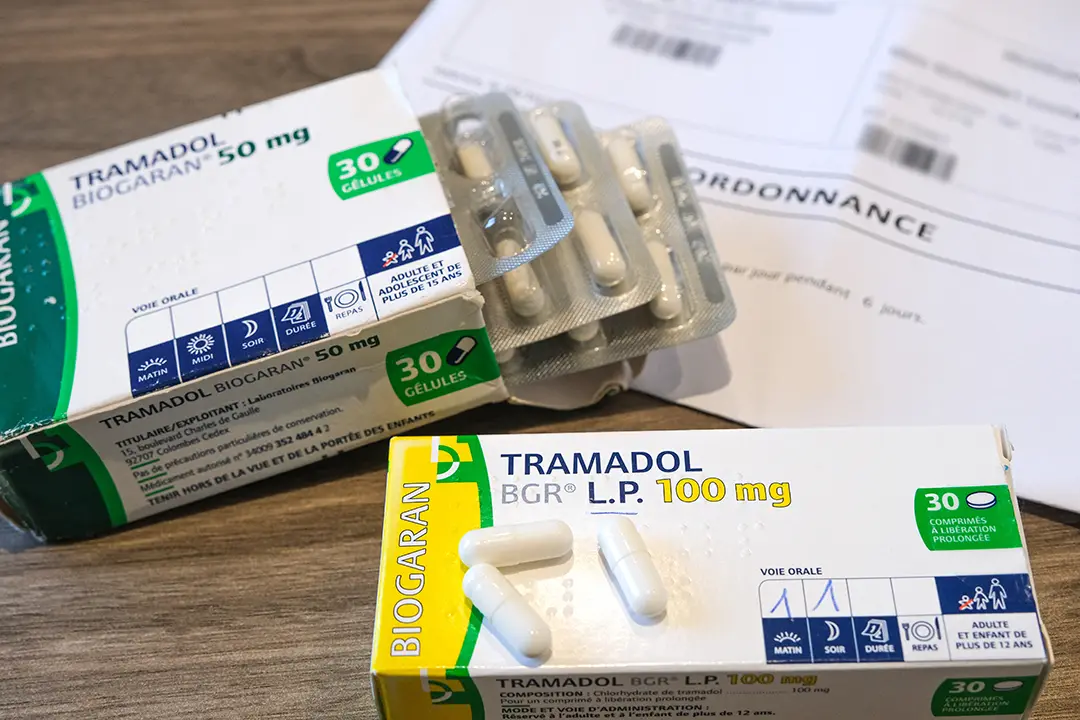
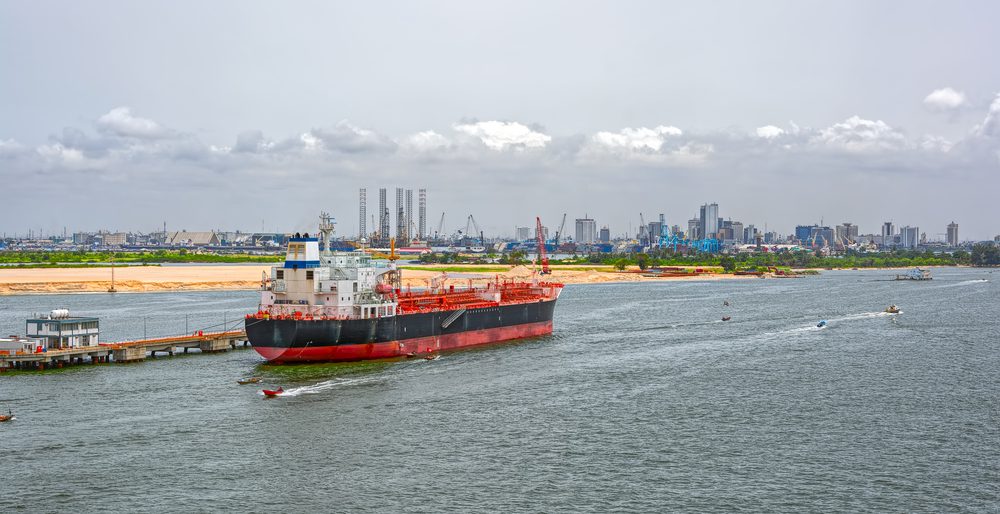
The supplied reporting places the long-running Sahel conflict mainly in Mali, Niger and Burkina Faso, while a medium-confidence claim records a rise in jihadist insurgency in Northern Benin. In Nigeria, Boko Haram and Islamic State West Africa Province fighters are reported to consume tramadol frequently, and tramadol use is reported to be increasing in Niger. The United States lifted security restrictions on vessels arriving from Nigeria on 18 August 2026, with Nigerian officials attributing the move to improvements in the maritime security framework. Separate reporting describes a Wagner-linked tramadol and illegal gold economy in the Central African Republic, but does not establish a connection to jihadist operations in West Africa. The evidence base provides no current regional attack count or independently corroborated casualty trend.
Change from previous assessment
Since the 12 August brief, the assessment adds Northern Benin as a possible extension of the jihadist threat beyond Mali, Niger and Burkina Faso, and adds tramadol use by Boko Haram and Islamic State West Africa Province fighters as a monitoring variable. The United States lifting vessel restrictions on Nigeria lowers confidence in the prior broad assessment of declining US-Nigeria security cooperation and narrows the change to maritime security. No revision is made to the overall severity of Nigerian jihadist violence because the current claims provide no new attack count or casualty trend. The reported Wagner-linked economy in the Central African Republic is treated as an adjacent risk, not as a demonstrated driver of jihadist violence in West Africa.
Key judgments
- Jihadist pressure is likely extending beyond Mali, Niger and Burkina Faso into Northern Benin, but the evidence is thin. The Northern Benin finding rests on a single medium-confidence report and the supplied material provides no current attack count or named organisation for that activity. (Confidence: low · ASSESSED)
- I&W: Confirm: two independent reports attribute a new attack in Northern Benin to a jihadist organisation, or document attacks in both Northern Benin and one of Mali, Niger or Burkina Faso. (0-14 days)
- I&W: Break: credible reporting reclassifies the Northern Benin trend as non-jihadist or provides no additional incident evidence over the next reporting cycle. (1-3 months)
- Tramadol is likely to warrant monitoring as a possible enabler of jihadist activity in Nigeria and Niger. Reporting says Boko Haram and Islamic State West Africa Province fighters in Nigeria frequently consume tramadol, while use is increasing in Niger; the evidence does not establish that tramadol caused any rise in attacks. (Confidence: low · ASSESSED)
- I&W: Confirm: Nigerian or Nigerien authorities, or independent media, again identify tramadol consumption by Boko Haram, Islamic State West Africa Province or young people in Niger. (0-14 days)
- I&W: Break: toxicology, seizure or investigative reporting explicitly disputes frequent tramadol use by Boko Haram or Islamic State West Africa Province fighters. (1-3 months)
- The United States has likely begun a narrow maritime-security reset with Nigeria by lifting Conditions of Entry restrictions on 18 August 2026. The policy change is directly reported, but the account linking it to four US Coast Guard assessments between March 2024 and April 2026 includes a low-confidence element, so this does not support a broader judgement that US-Nigeria security cooperation has fully recovered. (Confidence: medium · ASSESSED)
- I&W: Confirm: US Coast Guard or Nigerian authorities publish implementation details and vessels arriving from Nigeria enter US ports without the former Conditions of Entry measures. (0-14 days)
- I&W: Break: the United States reinstates the restrictions or states that the decision was administrative and unrelated to improvements in Nigeria's maritime security framework. (1-3 months)
- The reported Wagner-linked illicit economy in the Central African Republic is likely to remain an adjacent security risk, but no approved claim establishes a connection to jihadist operations in Mali, Niger, Burkina Faso, Northern Benin or Nigeria. The reporting alleges that Russian Wagner mercenaries organise tramadol trafficking, that up to 500 former Wagner personnel are based on the Oubangui River, and that Wagner earns $180 million annually from illegal gold exports, but these details are not independently corroborated in the supplied material. (Confidence: low · ASSESSED)
- I&W: Confirm: independent reporting corroborates Wagner involvement in both tramadol trafficking and illegal gold exports in the Central African Republic. (1-3 months)
- I&W: Break: reporting attributes the Central African Republic drug and gold trades to other actors and provides no evidence of Wagner control. (1-3 months)
Outlook & scenarios
Contained but persistent jihadist pressure (55%)
Jihadist pressure remains concentrated in Mali, Niger, Burkina Faso and Northern Benin. The United States and Nigeria continue the maritime-security opening without extending it to wider security cooperation. This is the likely baseline because the reporting identifies geographic pressure but does not provide evidence of a region-wide attack surge.
Northern Benin expansion (25%)
Repeated attacks in Northern Benin establish a durable extension of the Sahel conflict beyond its main locations. The security picture worsens if incidents are recorded in both Northern Benin and Mali, Niger or Burkina Faso during the same reporting period.
Maritime improvement without an internal security reversal (15%)
The United States maintains the vessel-access decision and Nigeria's maritime security framework receives further recognition, while the Boko Haram and Islamic State West Africa Province challenge remains unresolved. This would produce a split assessment, with improved port access alongside persistent jihadist risk inside Nigeria.
High-impact wildcard: illicit networks link to jihadist logistics (5%)
Wagner-linked tramadol and gold networks in the Central African Republic become operationally linked to jihadist logistics in the Sahel or Nigeria. The supplied claims do not report such a link, but its emergence would widen the threat picture from local insurgency to a connected illicit-finance and support network.
Recommendations
- Maintain a 14-day incident matrix covering Mali, Niger, Burkina Faso, Northern Benin and Nigeria. Record location, date, attributed organisation, attack method, casualties and any reported cross-border movement. Do not infer a regional surge from the Northern Benin claim alone.
- Seek two-source confirmation of the reported rise in Northern Benin and of tramadol consumption by Boko Haram and Islamic State West Africa Province fighters. Separate direct reporting from causal assessments about whether drug use affects attack capacity.
- Track implementation of the United States decision on Nigerian vessels. Monitor port-entry notices, US Coast Guard statements and Nigerian maritime-security announcements during the next 1-3 months.
- Keep Central African Republic reporting on Wagner-linked narcotics and gold activity in a separate analytic stream from jihadist incident reporting. Escalate the assessment only if independent reporting establishes an operational connection.
- Reassess the regional outlook at the next reporting cycle against the stated tripwires, with particular attention to repeated attacks in Northern Benin and any evidence that maritime cooperation with Nigeria extends beyond vessel-access measures.
Confidence & uncertainty
Overall confidence is medium because the evidence combines direct reporting from major media with medium- and low-confidence claims. The core Sahel geography, reported tramadol use among Boko Haram and Islamic State West Africa Province fighters, and the United States decision on Nigerian vessel restrictions are sufficiently grounded for a situation report. Confidence is lower for the regional extension into Northern Benin, the causal effect of tramadol on jihadist activity and any Wagner connection to West African jihadist operations. The supplied material also contains unresolved timing and attribution inconsistencies, and it lacks a current regional attack count.
Intelligence gaps
- [EEI 1.1 · UNCOVERED] Intercepted or captured operational messages, orders, or timelines indicating planned attacks, named targets, or attack windows (dates/times) for specific towns, facilities, or convoys. Recommended collection: SIGINT
- [EEI 1.2 · UNCOVERED] Observed movement of armed groups, armed convoys, or weapons caches toward or within 20-100 km of named population centers, military bases, border crossing points, or major road/rail routes. Recommended collection: IMINT
- [EEI 1.3 · UNCOVERED] Recent local reporting, social‑media posts, or detainee/source statements claiming operational readiness, recruitment of attack teams, or calls for immediate attacks against specific targets. Recommended collection: OSINT
- [EEI 2.1 · PARTIAL] Estimated numbers of fighters (by group) present in defined districts/regions and recent trends (increasing, stable, decreasing) based on ground reports, detainee statements, or biometric registration. Recommended collection: HUMINT
- [EEI 2.2 · UNCOVERED] Identification and geolocation of training camps, safe havens, or arms depots, including imagery of training activity, firing ranges, or stockpiled weapons and explosives. Recommended collection: IMINT
- [EEI 2.3 · PARTIAL] Seizures, battlefield recoveries, or credible reports describing types and quantities of weapons and munitions in use (e.g., RPGs, mortars, MANPADS, vehicle‑borne IED components) and recent changes in lethality. Recommended collection: LAW_ENFORCEMENT
- [EEI 2.4 · UNCOVERED] Reports of foreign fighter arrivals/departures, external trainers or advisors present, or documented external technical assistance (IED construction, communications encryption) to named groups. Recommended collection: SIGINT
- [EEI 3.1 · UNCOVERED] Documented instances and amounts of extortion/taxation on towns, markets, transporters, or humanitarian agencies, including receipts, lists of taxed goods, and affected road segments. Recommended collection: HUMINT
- [EEI 3.2 · PARTIAL] Seizures or interdictions showing volumes and origins/destinations of trafficked commodities used for revenue (gold, drugs, charcoal, timber), and intercepted communications detailing smuggling routes or buyers. Recommended collection: LAW_ENFORCEMENT
- [EEI 3.3 · UNCOVERED] Financial intelligence on suspicious cross‑border transfers, known money‑courier movements, or identified donor networks linked to named groups, including remittance patterns and intermediary accounts. Recommended collection: FININT
- [EEI 4.1 · UNCOVERED] Changes in government/security force posture: troop deployments/withdrawals by unit and location, declared states of emergency, curfews, checkpoints established or removed, and equipment transfers/arrivals. Recommended collection: OSINT
- [EEI 4.2 · UNCOVERED] Evidence of improved or degraded cross‑border security cooperation: joint patrols, information‑sharing agreements, troop movements across borders, or closing/opening of border crossings. Recommended collection: HUMINT
- [EEI 4.3 · UNCOVERED] Humanitarian indicators: numbers of newly displaced persons by location, reported access denials to aid organizations, closures of clinics/schools, and routes experiencing mass civilian flight. Recommended collection: UN/HUMANITARIAN
- [EEI 4.4 · UNCOVERED] Documented incidents of security‑force abuses or communal reprisals (dates, locations, victims), and reports of local grievances exploited by jihadist recruiters. Recommended collection: LAW_ENFORCEMENT
Cited sources
[1] Wikipedia · War in the Sahel (B) · sha256:9378519edd9b [2] adf-magazine.com · Les combattants de Wagner organisent un réseau d’opiacés gigantesque en Centrafrique (B) · sha256:2e7cacbf9b02 [3] gcaptain.com · U.S. Lifts Decade-Old Security Restrictions on Ships Arriving From Nigeria (A) · sha256:49db81ae5032
Source content hashes were computed at collection time; the cited text is preserved unmodified for the life of this product.
TLP:CLEAR