TLP:CLEAR · Disclosure is not limited.
West Africa: Jihadist Pressure Broadens Beyond Nigeria
Time window: Last 1 day · Audience: General analyst · Type: Situation report · DTG: 2026-08-28 16:38Z · Overall confidence: MEDIUM
BLUF
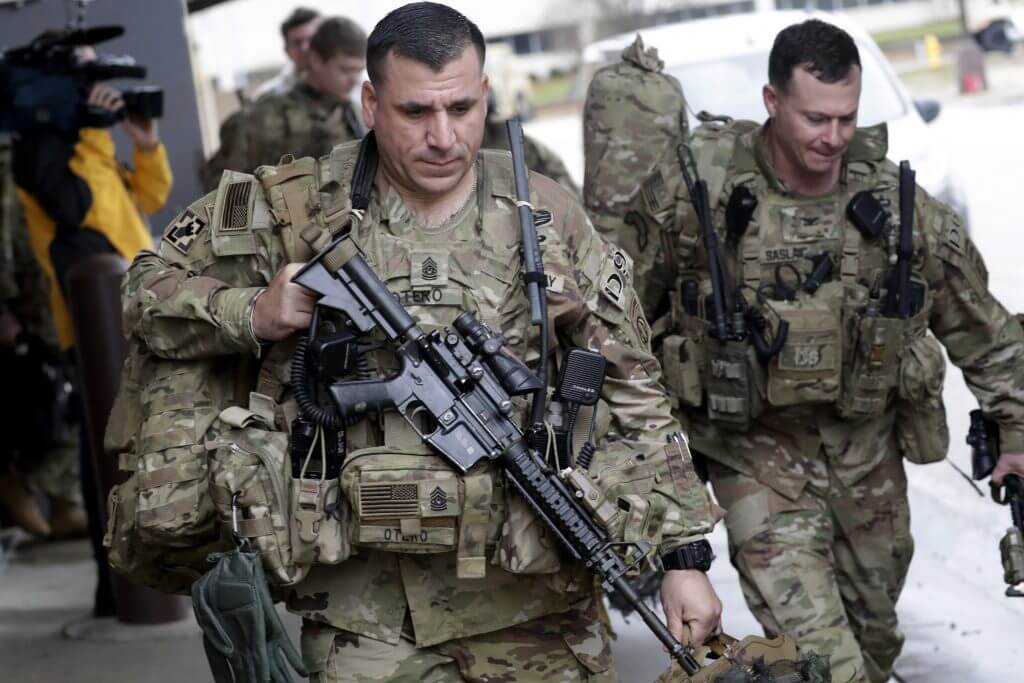
Nigeria is likely to remain the immediate centre of jihadist-linked security pressure, with recent reporting of civilian killings and a major assault on a military base. New reporting on Niger and Mali broadens the threat picture, but does not establish a coordinated West Africa-wide offensive. The United States is preparing to withdraw about 200 troops from Nigeria by late September, increasing uncertainty over intelligence support while smaller teams are expected to continue cooperation.
Executive summary
The collection reports continued terrorist attacks and other insecurity across Nigeria, including more than two dozen deaths in the northwest and a major assault on a military base in the northeast. Niger's security situation has deteriorated despite the junta's stated security rationale for taking power, with about 1,200 deaths recorded in Tillabéri from jihadist attacks and clashes in 2025. Lower-confidence reporting describes JNIM, FLA and Islamic State's Sahel Province operations across multiple locations in Mali during April and July 2026, including reported control of Kidal. The United States is preparing to withdraw about 200 troops from Nigeria by late September, although intelligence sharing and training are expected to continue through smaller teams. Reporting is internally inconsistent on whether the departing force is about 200 troops or a larger contingent.
Change from previous assessment
Since the 27 August 2026 brief, the assessment has broadened from a Nigeria-centred kidnapping picture to a regional jihadist security picture. New reporting on Niger and Mali weakens, but does not reverse, the prior low-confidence judgement that a coordinated West Africa-wide offensive is unlikely. A new low-confidence judgement has been added on Mali, and the Nigeria withdrawal assessment has been updated to reflect conflicting reporting on whether about 200 troops or a larger contingent will depart by late September. No new kidnapping figures are provided, so the prior kidnapping judgements are not materially revised.
Key judgments
- Nigeria is likely to remain the immediate centre of jihadist-linked security pressure over the next 0-14 days. Reporting identifies more than two dozen people killed in northwestern Nigeria and a major terrorist assault on a military base in northeastern Nigeria, while broader insecurity continues across the country. This is an assessed judgement with medium confidence. Major-media reporting supports the incident pattern, but the collection does not independently reconcile terrorist attribution with other forms of insecurity. (Confidence: medium · ASSESSED)
- I&W: CONFIRM: Nigerian authorities or major media report another attack on a military base or a mass-casualty attack in northeastern or northwestern Nigeria. (0-14 days)
- I&W: BREAK: new incident reporting attributes the relevant attacks to criminal organisations alone and identifies no jihadist activity in the same period. (0-14 days)
- Niger is likely to remain under severe jihadist pressure over the next 1-3 months. The collection states that jihadist violence has intensified despite the Nigerien junta's security justification for seizing power, and records about 1,200 deaths in Tillabéri during 2025 from jihadist attacks and clashes between Islamist groups. This is an assessed judgement with medium confidence. The supporting reporting is generally reliable, but the collection provides no dated 2026 incident tally for Tillabéri and relies on contextual rather than current operational measures. (Confidence: medium · ASSESSED)
- I&W: CONFIRM: reporting records additional jihadist attacks, civilian deaths or displacement in Tillabéri, or the Nigerien junta announces new security measures directed at jihadist groups there. (1-3 months)
- I&W: BREAK: independent reporting records a sustained decline in jihadist attacks and deaths in Tillabéri and describes an improving national security situation. (1-3 months)
- Mali is likely to remain vulnerable to multi-location jihadist pressure over the next 1-3 months, but the evidence is low confidence. Medium-confidence reporting attributes attacks on 25 April 2026 to JNIM and FLA in Bourem, Bamako, Kati, Sévaré, Senou and Mopti, reports the killing of Defence Minister Sadio Camara in Kati, and records Islamic State's Sahel Province attacks on 28 April. Separate reporting describes coordinated attacks in Mali on 4 July, including Anéfis. The underlying claims are lower-scoring, largely single-source and dated, while reporting on whether JNIM and FLA took control of Kidal or whether Malian and Russian forces withdrew remains unresolved. (Confidence: low · ASSESSED)
- I&W: CONFIRM: JNIM, FLA or Islamic State's Sahel Province conduct another attack in Bamako, Kati, Kidal, Mopti, Sévaré or Anéfis. (1-3 months)
- I&W: BREAK: Malian and Russian forces publicly re-enter and hold Kidal while reporting records no further multi-location attacks by the named groups. (1-3 months)
- The planned United States withdrawal from Nigeria is likely to increase the opportunity for terrorist groups to recover if intelligence support falls, although continued cooperation through smaller teams will limit the immediate effect. Reporting says the United States is preparing to withdraw about 200 troops by late September and places greater responsibility on Bola Tinubu's government and the Nigerian military. Other reporting describes a larger contingent leaving by the same period, while US officials expect intelligence sharing and training to continue. This is an assessed judgement with medium confidence. The withdrawal reporting is supported by several major-media claims, but the force size, timeline and likely operational effect remain contested. (Confidence: medium · ASSESSED)
- I&W: CONFIRM: Washington or Abuja confirms the departure of about 200 troops or a larger contingent by late September, followed by a documented reduction in intelligence support or training. (0-2 months)
- I&W: BREAK: US and Nigerian officials confirm that smaller teams maintain intelligence sharing and training at the existing level, with no reported recovery in terrorist operational activity. (0-2 months)
Outlook & scenarios
Persistent pressure without proven regional coordination (60%)
Likely. Nigeria remains the main near-term pressure point, Niger's jihadist violence remains severe, and Mali sees intermittent attacks in locations previously associated with JNIM, FLA and Islamic State's Sahel Province. The United States completes the planned Nigeria drawdown while smaller teams continue intelligence sharing and training. Evidence of a single coordinated West Africa-wide campaign remains absent.
Nigerian deterioration after the US drawdown (30%)
Less likely. The United States withdraws the larger contingent described in some reporting, intelligence support falls, and terrorist groups increase attacks against Nigerian civilians and military bases. Nigerian security forces retain responsibility for operations, but the recent assault pattern continues after the withdrawal.
Attribution remains unresolved in Nigeria (35%)
Roughly even chance. Violence continues in Nigeria, but reporting remains divided between terrorist-linked attacks and other forms of insecurity whose perpetrators are not identified. The number of security incidents rises without providing enough evidence to determine whether jihadist organisations or criminal organisations drive the wider caseload.
Regional synchronisation wildcard (10%)
Low probability, high impact. JNIM, FLA and Islamic State's Sahel Province conduct attacks across multiple Malian locations while jihadist pressure in Tillabéri and Nigeria increases during the same period. This would challenge the prior assessment that a coordinated West Africa-wide offensive is unlikely, although the current collection provides no direct evidence of operational coordination.
Recommendations
- For the next 14 days, maintain a named-location watchlist covering northeastern and northwestern Nigeria, with separate entries for military-base attacks, civilian attacks, casualties and perpetrator attribution.
- Reconcile the United States withdrawal scope with official reporting from Washington and Abuja. Track separately the departure of about 200 troops, any larger contingent movement, and the residual intelligence-sharing and training footprint.
- Keep Nigerian jihadist-linked violence analytically separate from unattributed insecurity and criminal activity until independent reporting confirms the perpetrators of each incident.
- Treat the Mali reporting as a low-confidence warning indicator. Seek independent confirmation of activity by JNIM, FLA and Islamic State's Sahel Province in Kidal, Bamako, Kati, Mopti, Sévaré, Senou, Bourem and Anéfis.
- Update the Niger assessment with a dated 2026 incident count for Tillabéri. Until that is available, use the 2025 casualty figure as a severity baseline rather than as a current activity measure.
Confidence & uncertainty
Overall confidence is medium. The Nigeria incident pattern and United States withdrawal reporting are supported by several major-media claims, including corroborating descriptions of continuing attacks, planned troop movements and ongoing cooperation. Niger is supported by major-media reporting and a quantified Tillabéri casualty figure, but the current collection lacks a dated 2026 incident count. Mali is less reliable because the relevant claims carry lower confidence scores, are largely single-source and include unresolved reporting on Kidal. Perpetrator attribution in Nigeria, the scope of the United States withdrawal and evidence of regional coordination remain the main uncertainties.
Intelligence gaps
- [EEI 1.1 · UNCOVERED] Intercepted or captured operational messages, orders, or timelines indicating planned attacks, named targets, or attack windows (dates/times) for specific towns, facilities, or convoys. Recommended collection: SIGINT
- [EEI 1.2 · UNCOVERED] Observed movement of armed groups, armed convoys, or weapons caches toward or within 20-100 km of named population centers, military bases, border crossing points, or major road/rail routes. Recommended collection: IMINT
- [EEI 1.3 · UNCOVERED] Recent local reporting, social‑media posts, or detainee/source statements claiming operational readiness, recruitment of attack teams, or calls for immediate attacks against specific targets. Recommended collection: OSINT
- [EEI 2.1 · UNCOVERED] Estimated numbers of fighters (by group) present in defined districts/regions and recent trends (increasing, stable, decreasing) based on ground reports, detainee statements, or biometric registration. Recommended collection: HUMINT
- [EEI 2.2 · UNCOVERED] Identification and geolocation of training camps, safe havens, or arms depots, including imagery of training activity, firing ranges, or stockpiled weapons and explosives. Recommended collection: IMINT
- [EEI 2.3 · PARTIAL] Seizures, battlefield recoveries, or credible reports describing types and quantities of weapons and munitions in use (e.g., RPGs, mortars, MANPADS, vehicle‑borne IED components) and recent changes in lethality. Recommended collection: LAW_ENFORCEMENT
- [EEI 2.4 · UNCOVERED] Reports of foreign fighter arrivals/departures, external trainers or advisors present, or documented external technical assistance (IED construction, communications encryption) to named groups. Recommended collection: SIGINT
- [EEI 3.1 · UNCOVERED] Documented instances and amounts of extortion/taxation on towns, markets, transporters, or humanitarian agencies, including receipts, lists of taxed goods, and affected road segments. Recommended collection: HUMINT
- [EEI 3.2 · UNCOVERED] Seizures or interdictions showing volumes and origins/destinations of trafficked commodities used for revenue (gold, drugs, charcoal, timber), and intercepted communications detailing smuggling routes or buyers. Recommended collection: LAW_ENFORCEMENT
- [EEI 3.3 · UNCOVERED] Financial intelligence on suspicious cross‑border transfers, known money‑courier movements, or identified donor networks linked to named groups, including remittance patterns and intermediary accounts. Recommended collection: FININT
- [EEI 4.2 · PARTIAL] Evidence of improved or degraded cross‑border security cooperation: joint patrols, information‑sharing agreements, troop movements across borders, or closing/opening of border crossings. Recommended collection: HUMINT
- [EEI 4.3 · PARTIAL] Humanitarian indicators: numbers of newly displaced persons by location, reported access denials to aid organizations, closures of clinics/schools, and routes experiencing mass civilian flight. Recommended collection: UN/HUMANITARIAN
- [EEI 4.4 · PARTIAL] Documented incidents of security‑force abuses or communal reprisals (dates, locations, victims), and reports of local grievances exploited by jihadist recruiters. Recommended collection: LAW_ENFORCEMENT
Cited sources
[1] thewhistler.ng · US To Withdraw 200 Troops From Nigeria As Mission Winds Down (B) · sha256:ae51f30906e1 [2] parallelfactsnews.com · Trump Set To Withdraw Last Batch of U.S. Troops Sent to Nigeria Over Continued Killings, Tinubu’s Failure to Complement American Efforts (B) · sha256:728070149f86 [3] engineeringnews.co.za · Niger’s economic resilience amid worsening insecurity (B) · sha256:dfbd24f8e0e4 [4] Wikipedia · 2026 Mali offensives (B) · sha256:f0fef959417d
Source content hashes were computed at collection time; the cited text is preserved unmodified for the life of this product.
TLP:CLEAR